Reading guide
Content guideOverview
Fa Wei Lun is a one-juan treatise by the Song scholar Cai Yuanding, included in the Siku Quanshu under the divination section, subcategory of dwelling and tomb siting. Written as a series of short essays, it examines mountain and water forms and burial methods through a set of paired concepts—yin and yang, firm and soft, motion and stillness, gathering and scattering, facing and backing, male and female, strong and weak, forward and reverse, life and death, subtle and manifest, division and union, floating and sinking, shallow and deep, and reduction and supplementation. The Siku editors summarize its aim as grounding everything in the single firm-soft nature of the earth, thereby clarifying these contrasts. The text uses analogies such as comparing water to pulses and mountain forms to the human body, and closes by linking geomancy to moral retribution and Confucian principle. It is a key source for understanding the theory of the form school of fengshui in the Song dynasty.
Contents
Siku abstract: Cai Yuanding and the book's main ideas
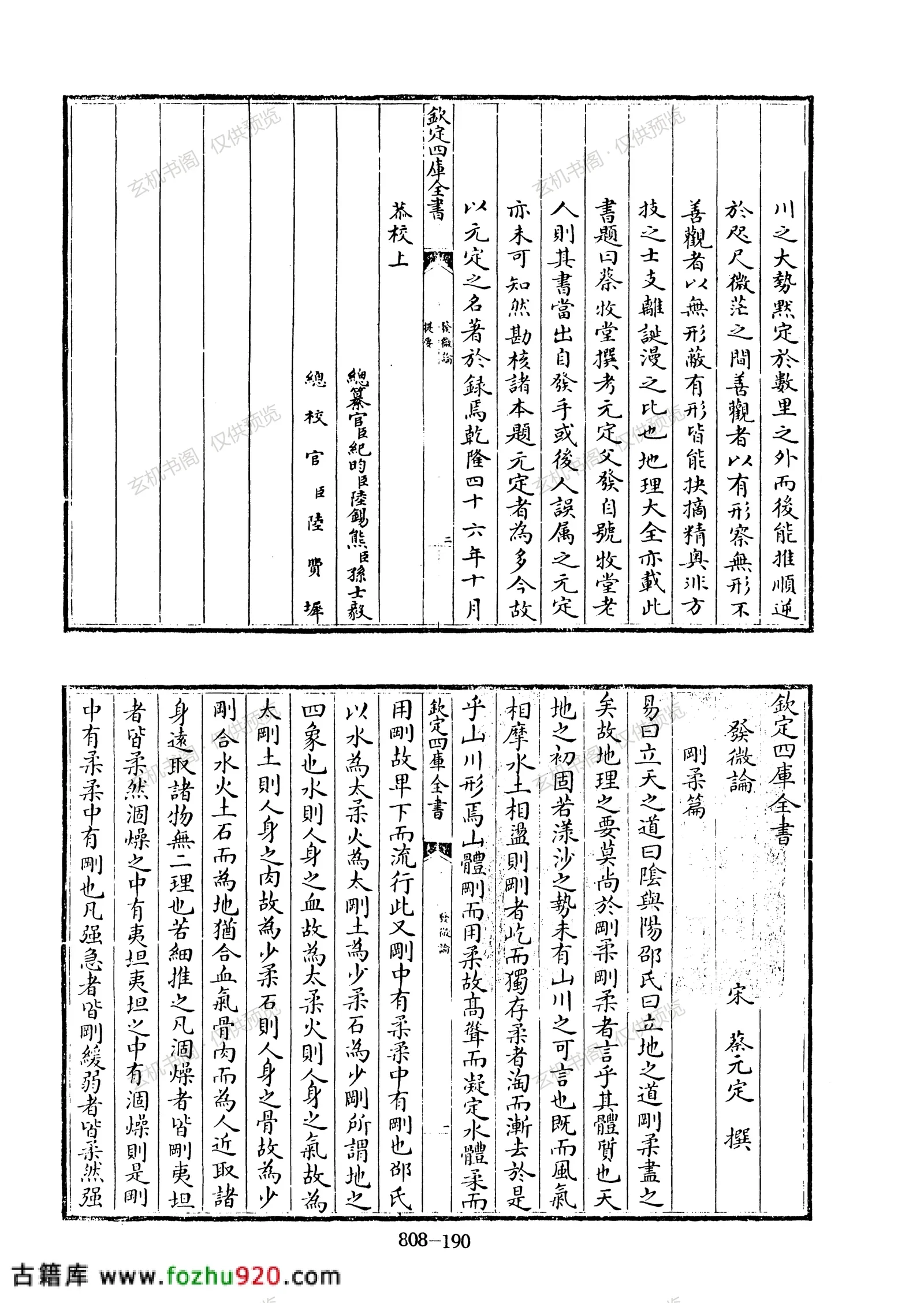
Firm and Soft: the way of heaven and earth
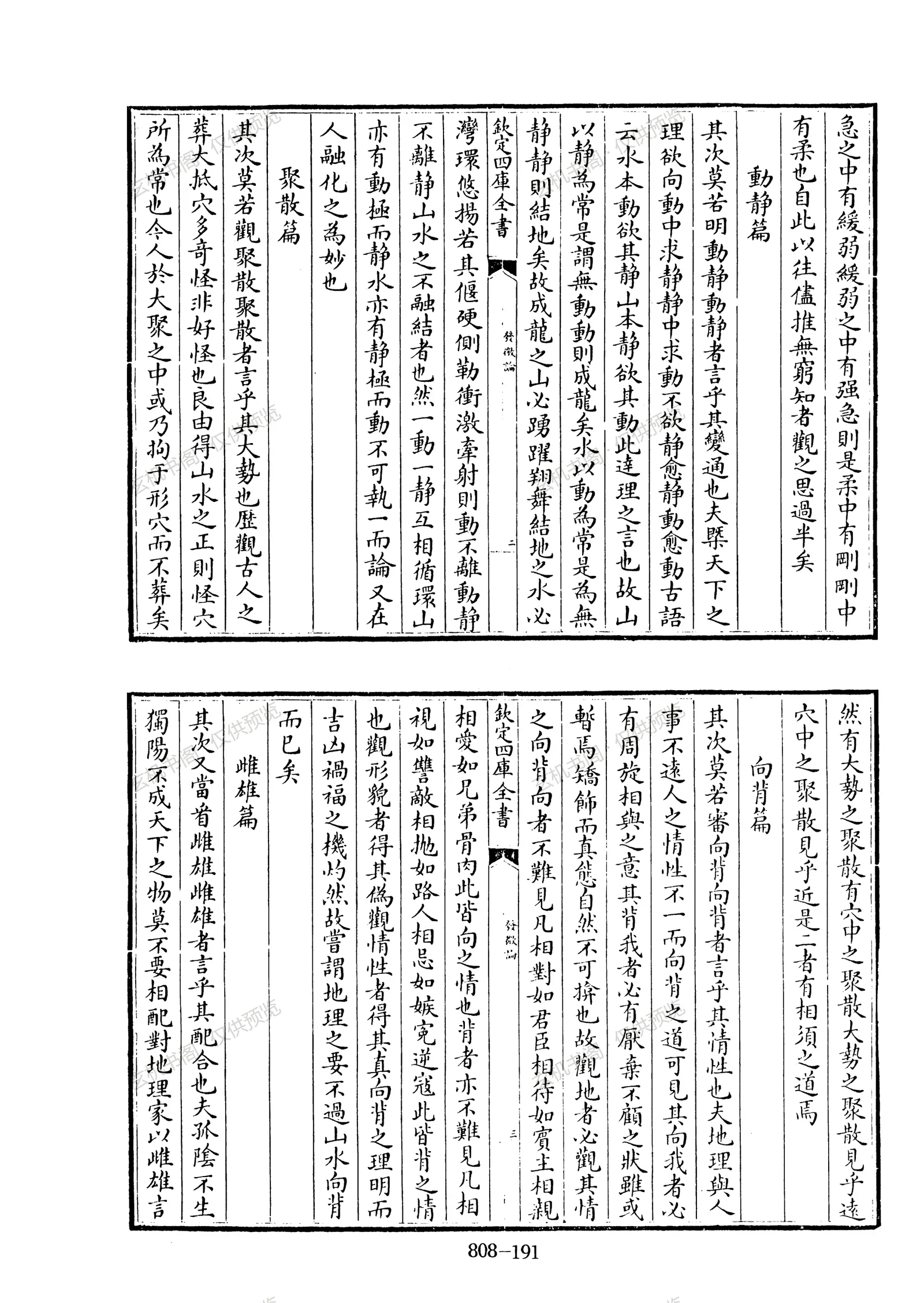
Motion and Stillness: still mountains, moving water
Gathering and Scattering: reading the overall configuration
Facing and Backing: landscape orientation and host-guest relations
Male and Female: yin-yang pairing and the danger of isolation
Strong and Weak: excess, deficiency, and adjustment
Forward and Reverse: dragons, water courses, and approaches
Life and Death: judging the dragon's vitality
Subtle and Manifest: qi, pulses, and forms
Division and Union: mingtang and water boundaries
Floating and Sinking: pulse depth and yin-yang surfaces
Shallow and Deep: burial depth and surrounding mountains
Reduction and Supplementation: balancing dragon and tiger
Key Points
A short Song-dynasty form-school fengshui treatise in the Siku Quanshu
Uses paired concepts to analyze dragon veins, acupoints, and burial methods
Grounds geomancy in the firm-soft nature of earth and yin-yang polarity
Explains landscape through analogies to pulses and the human body
Ends by tying geomancy to moral retribution and Confucian principle