Reading guide
Content guideOverview
This book introduces feng shui through the lens of the five elements and natural light. It begins by defining feng shui as wind and water—air movement and humidity—and notes that smooth, steady airflow is considered good feng shui. The “Nature” section explains the five basic elements of metal, wood, water, fire, and earth along with their generating and overcoming cycles. A major focus is sunlight: plants and animals depend on light and heat, and in yin-yang five-element theory, yang fire (bing fire) represents the fiercest sunlight. The author warns that rooms lacking sunlight accumulate yin energy and may affect reputation, relationships, health, and career. The book concludes with the “bright hall, dim room” principle: living rooms should be bright, with solar lamps used if needed, while bedrooms should have soft light—too dark leads to illness, too bright to irritability and marital strain. Presented in slide-style format, it suits readers seeking a quick, practical introduction to feng shui concepts.
Contents
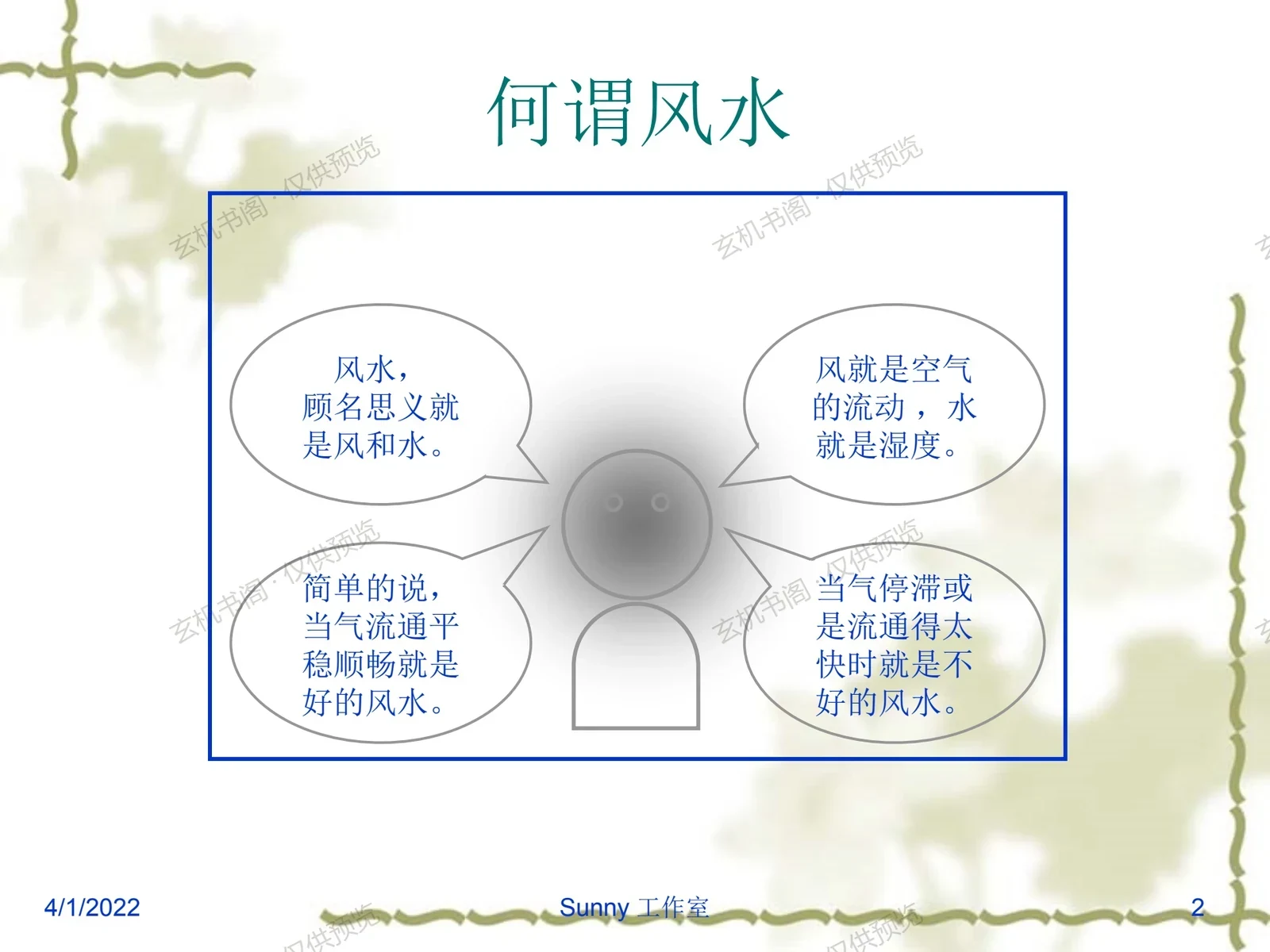
What is feng shui: wind, water, and airflow
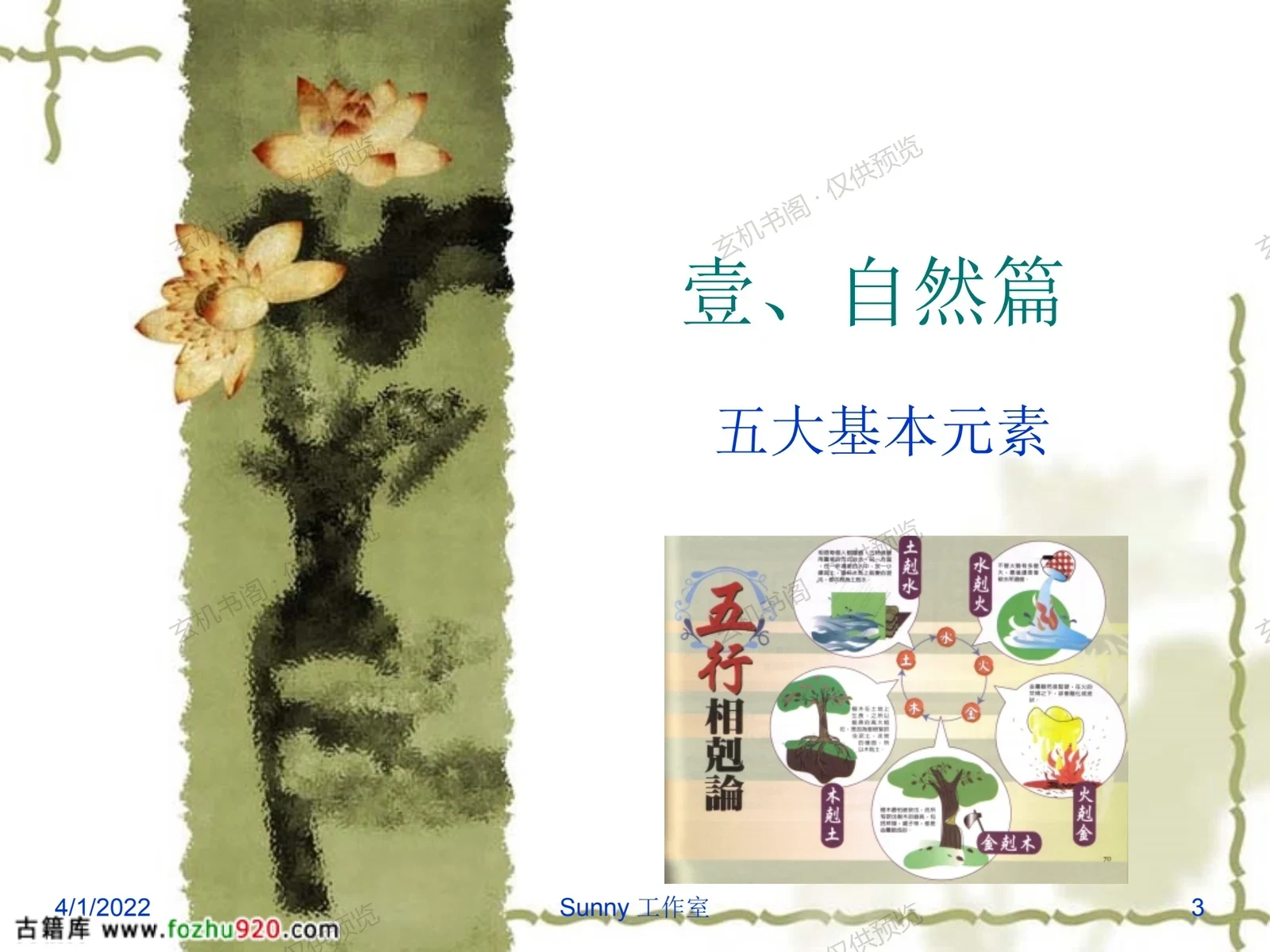
Nature: the five basic elements and their cycles
Sunlight: life-sustaining light and bing fire
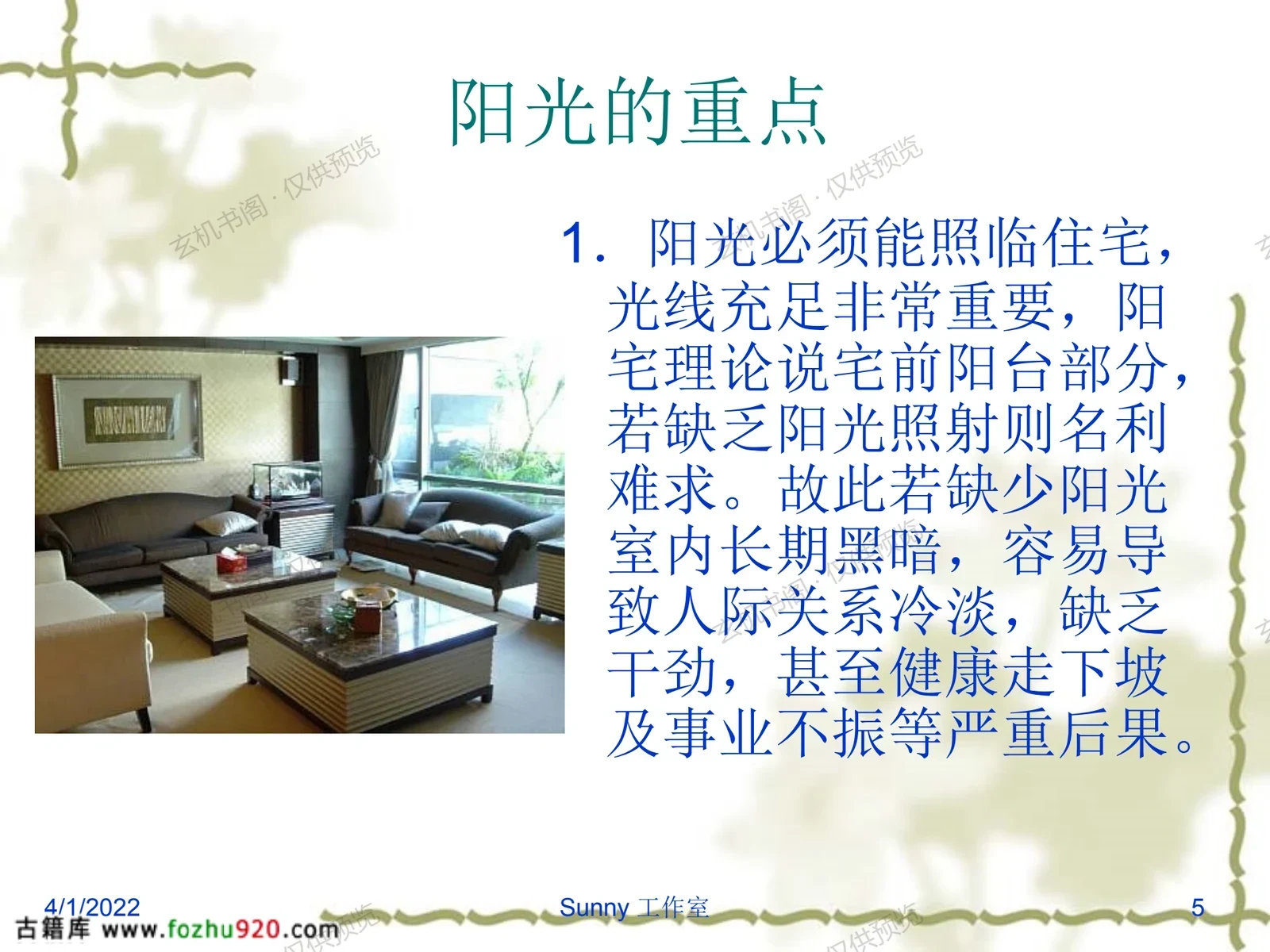
Key points on sunlight: home exposure and fortune
Bright hall, dim room: light rules for living room and bedroom
Key Points
Feng shui means wind and water; smooth airflow is good feng shui
The five-element cycles frame the nature section
Sunlight is represented by bing fire, the most intense yang fire
Lack of sunlight may affect reputation, relationships, and health
Living rooms should be bright; bedrooms should have soft light