Reading guide
Content guideOverview
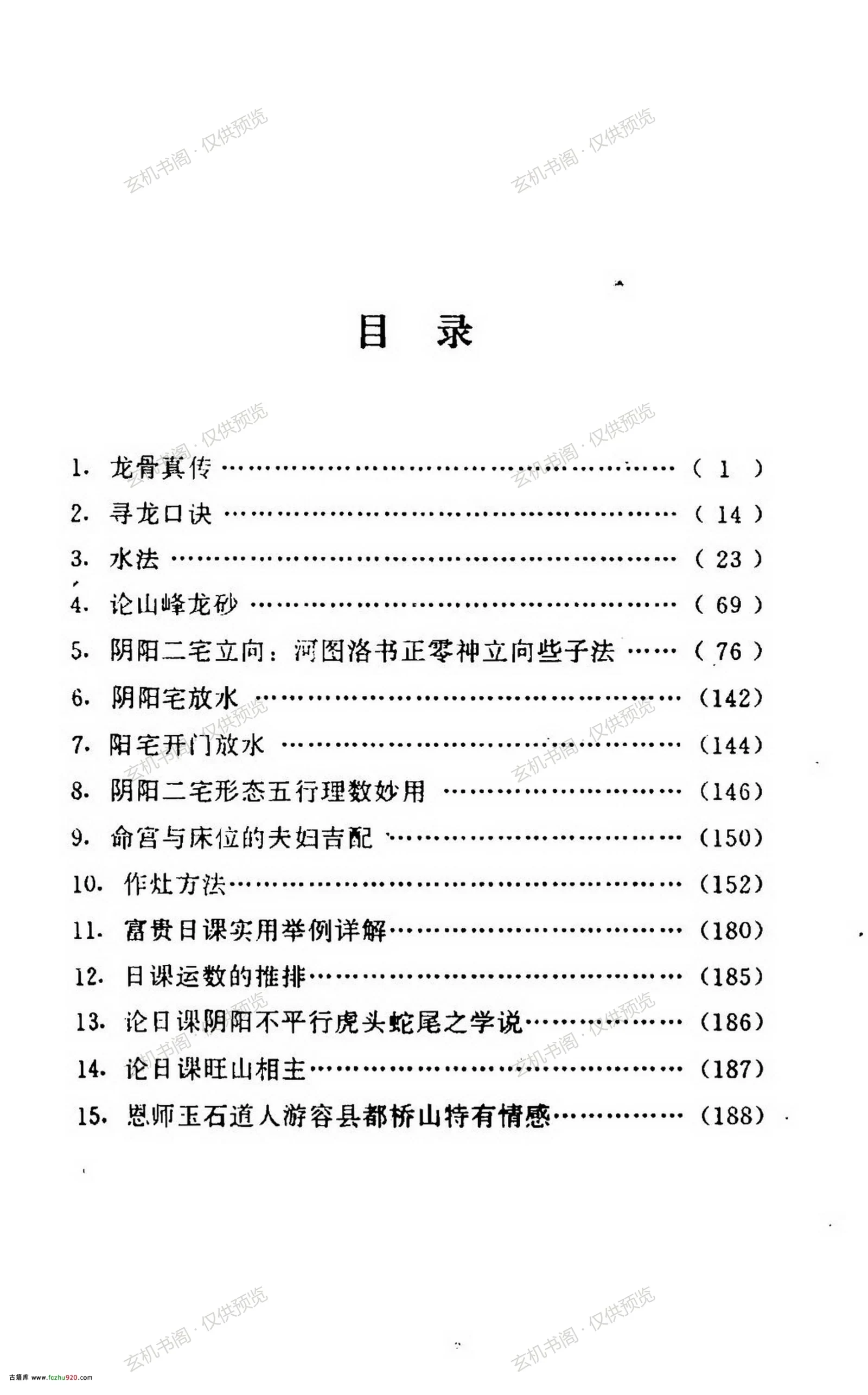
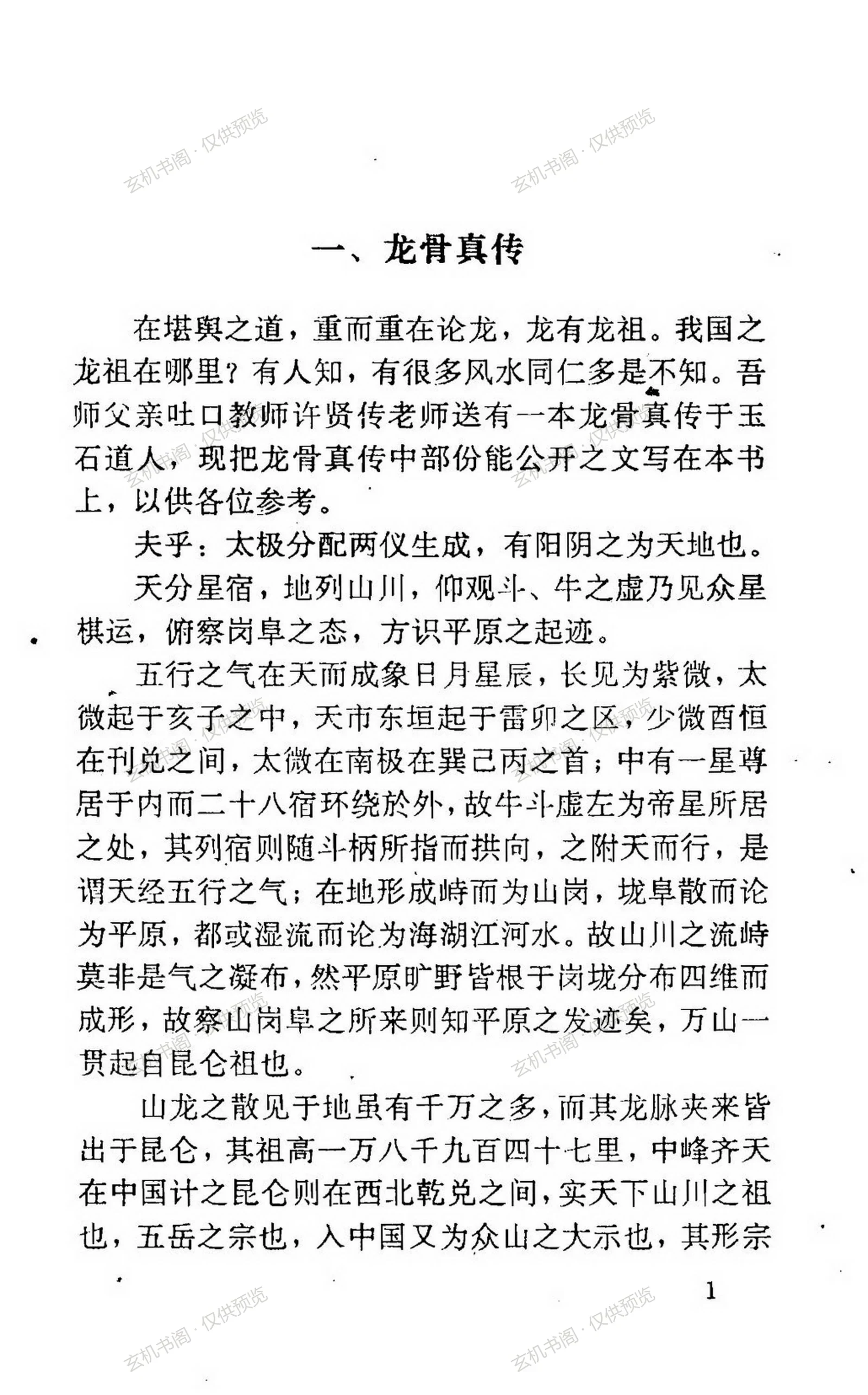
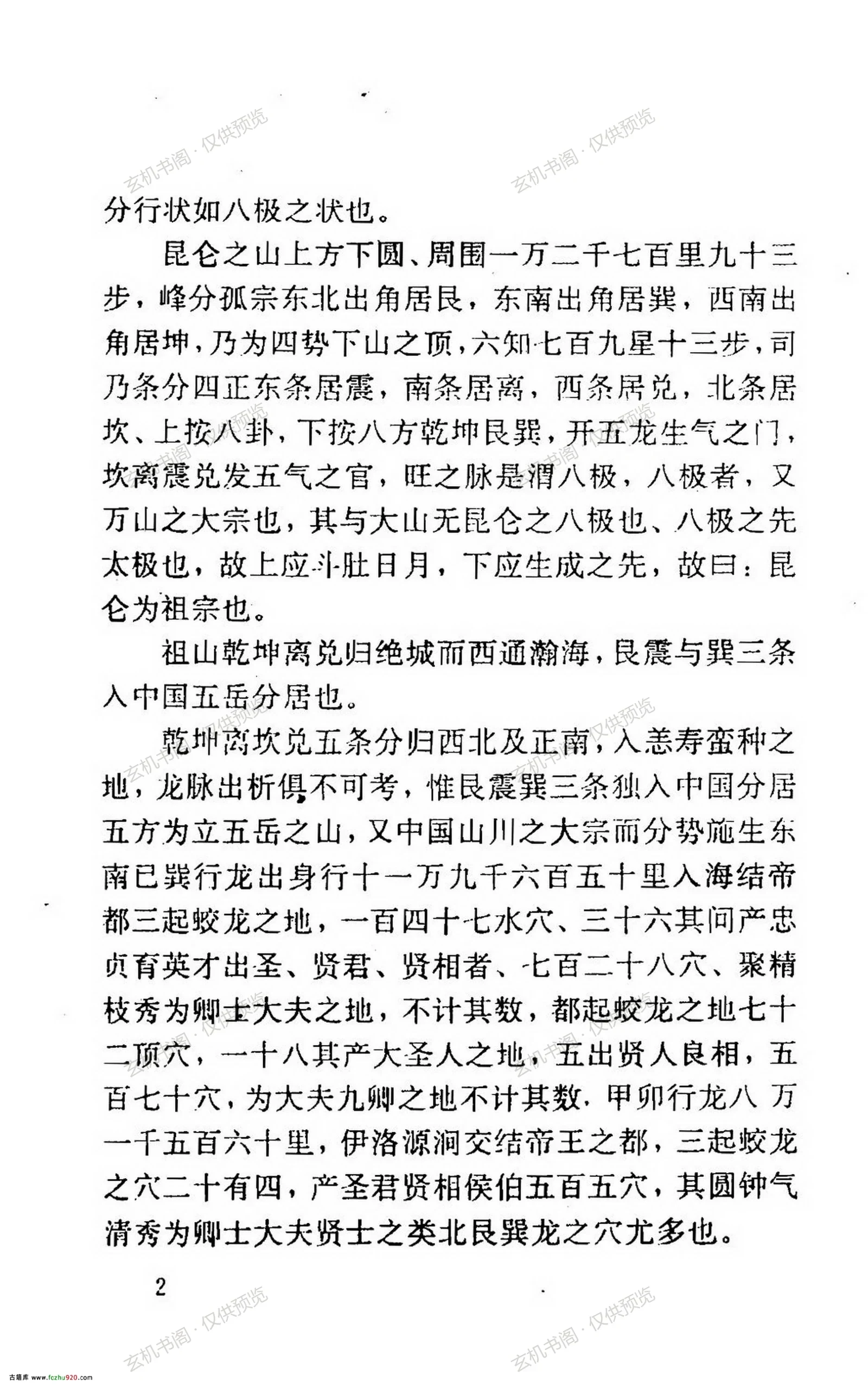
Written by Deng Weijie, the first disciple of the Daoist master Yushi Daoren, this book records feng shui and geography knowledge the author received through direct oral instruction. Its table of contents centers on the landscape (xingshi) tradition: chapters on the 'true transmission of the dragon bone,' dragon-seeking formulas, water methods, and mountain-and-sand formations open the work, followed by discussions of siting for yin and yang dwellings based on the Hetu-Luoshu and the zheng-ling-shen method. Later sections cover drainage and door placement for houses, the matching of life palace and bed position, stove placement, and a closing block on date selection with worked examples and calculations of day-course numbers. The opening chapter describes the Kunlun mountains as the ancestral source of China's dragon veins, using the twenty-eight lunar mansions and the eight trigrams. The book is organized by topic and combines landscape analysis with liqi theory, making it useful for readers who already know basic feng shui terms and want to compare formulas with practical methods.
Contents
True transmission of the dragon bone: Kunlun and dragon veins
Dragon-seeking formulas and water methods
Mountain peaks and sand formations
Siting for yin and yang dwellings with Hetu-Luoshu
Drainage and door placement for houses
Life palace, bed position, and stove methods
Date-selection examples and day-course calculations
Mountain-supporting day courses and miscellaneous notes
Key Points
Focuses on landscape feng shui: dragons, water, and sand
Siting chapters combine Hetu-Luoshu with zheng-ling-shen methods
Includes practical rules for doors, beds, and stoves
Ends with date selection, examples, and number calculations
Opening chapter explains Kunlun and the five sacred peaks