Reading guide
Content guideOverview
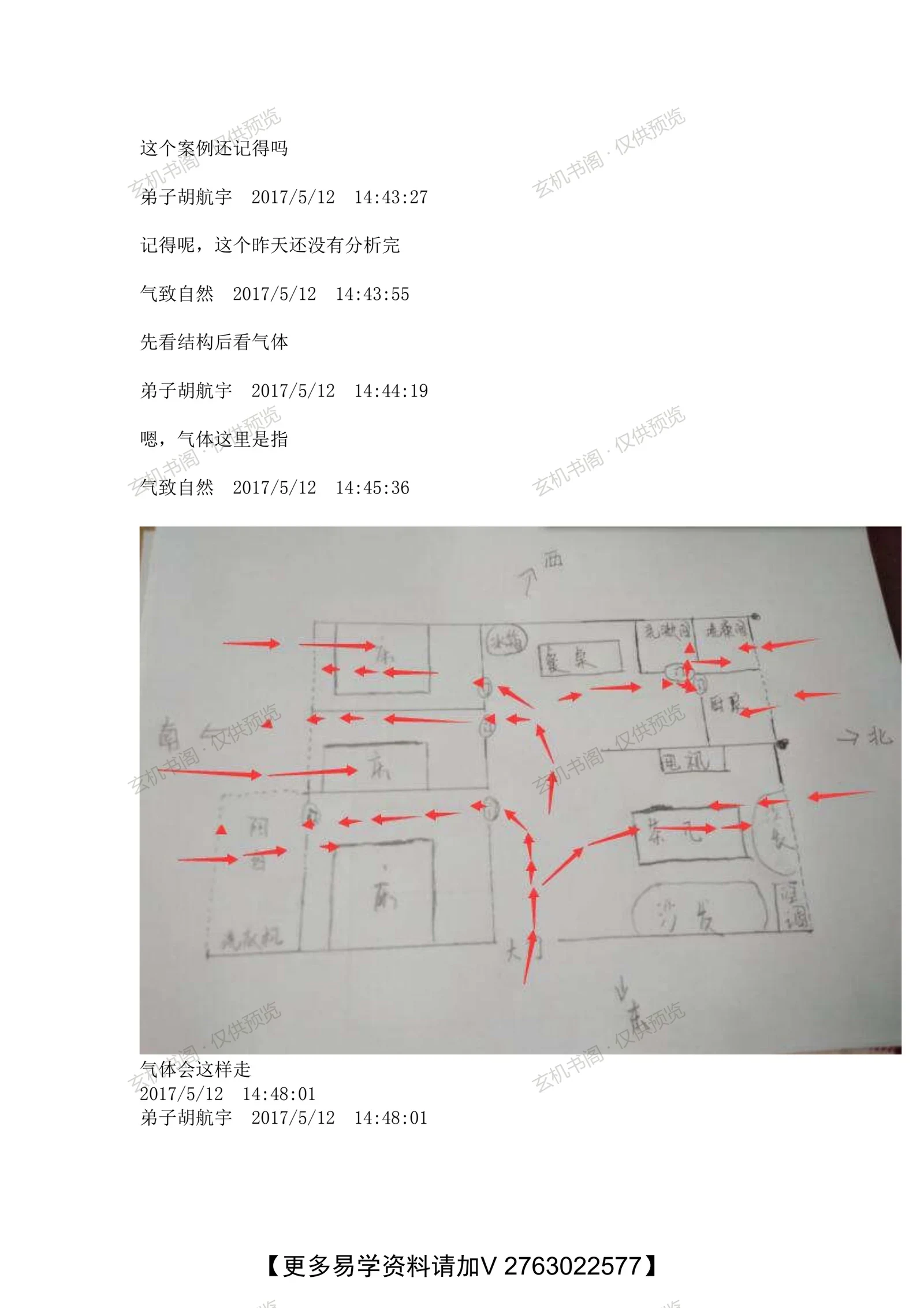
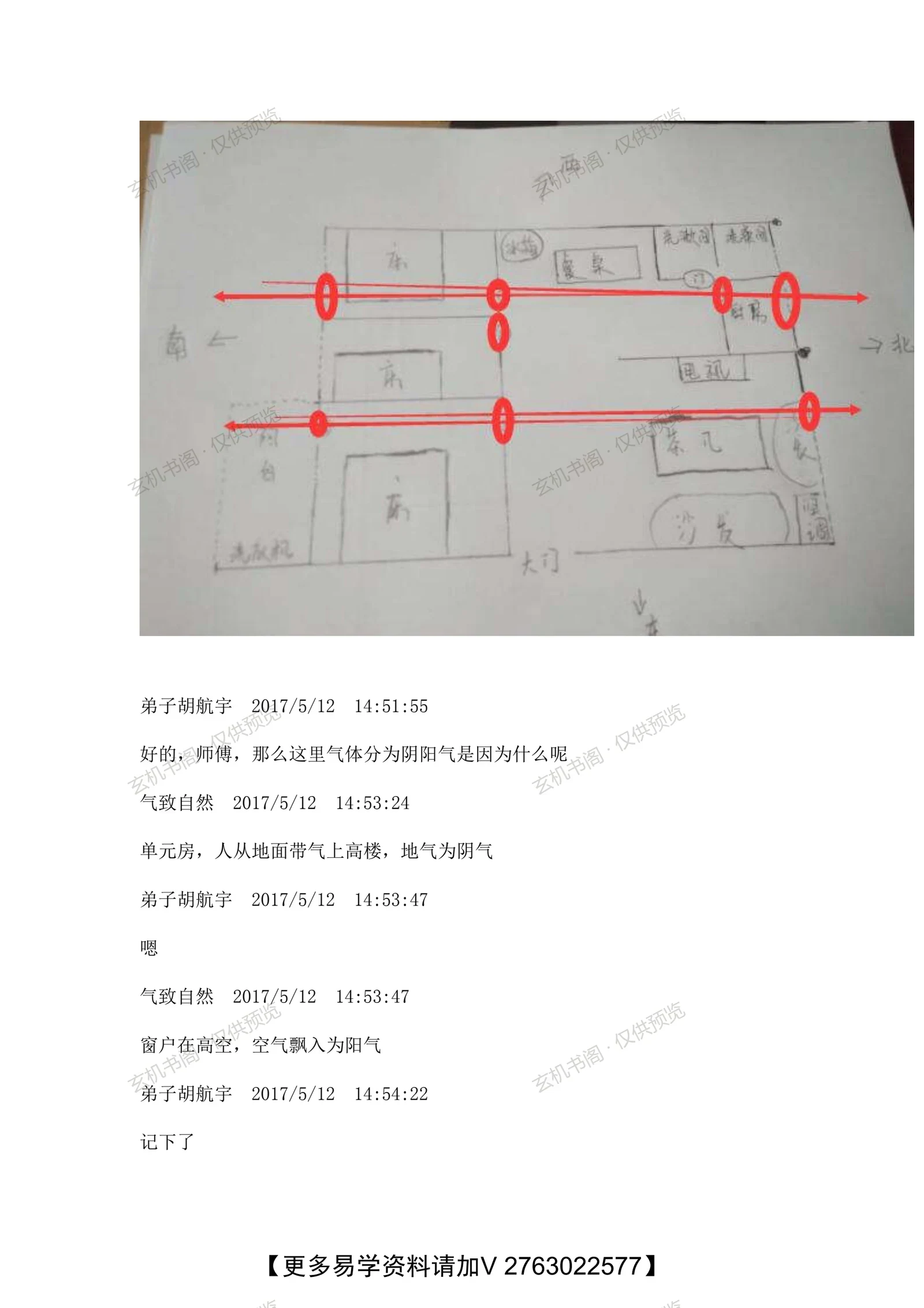
This is a transcript of a feng shui teaching exchange rather than a formally published book. Centered on a hand-drawn residential floor plan, the teacher 'Qizhi Ziran' and student 'Hu Hangyu' analyze the layout step by step: first examining the internal structure, then tracing the movement of qi. They explain that qi entering from the ground is yin qi and qi entering through windows is yang qi, using directional arrows to mark the flow routes. The dialogue further discusses 'direct incoming and outgoing' airflow, which is too strong and violates the feng shui principle of 'storing wind and gathering qi'—where wind is excessive, qi does not gather. The material also touches on 'form assessment,' with paired opposing red arrows representing 'piercing' (chuān), i.e., a straight-through channel. Presented as chat logs with full timestamps and exchanges, it serves as an introductory reference for feng shui form methods and yin-yang qi concepts, though it lacks systematic chapters and theoretical citations.
Contents
Hand-drawn floor plan: bedrooms, living room, kitchen, bathroom
Dialogue: examine structure first, then qi movement
Yin-yang qi sources: ground as yin, windows as yang
Qi flow routes and dashed lines as windows
Form and 'piercing': paired opposing direct flows
Storing wind and gathering qi: strong wind disperses qi
Key Points
Examine structure first, then qi flow
Ground-level qi is yin; window-level qi is yang
Dashed lines usually indicate windows as qi inlets
Paired opposing red arrows indicate piercing and direct flow
Feng shui values gathering qi; excessive direct wind disperses it