Reading guide
Content guideOverview
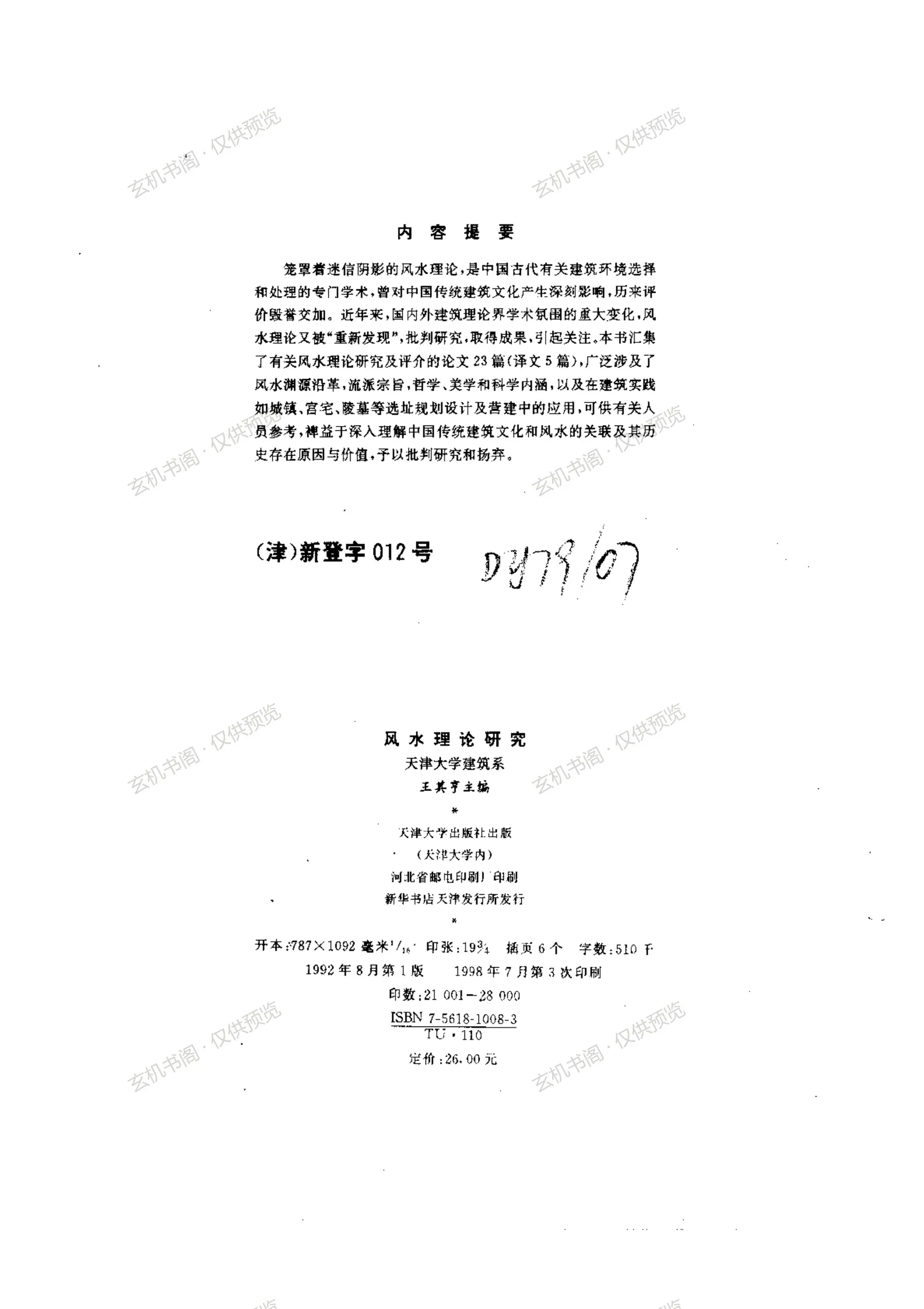
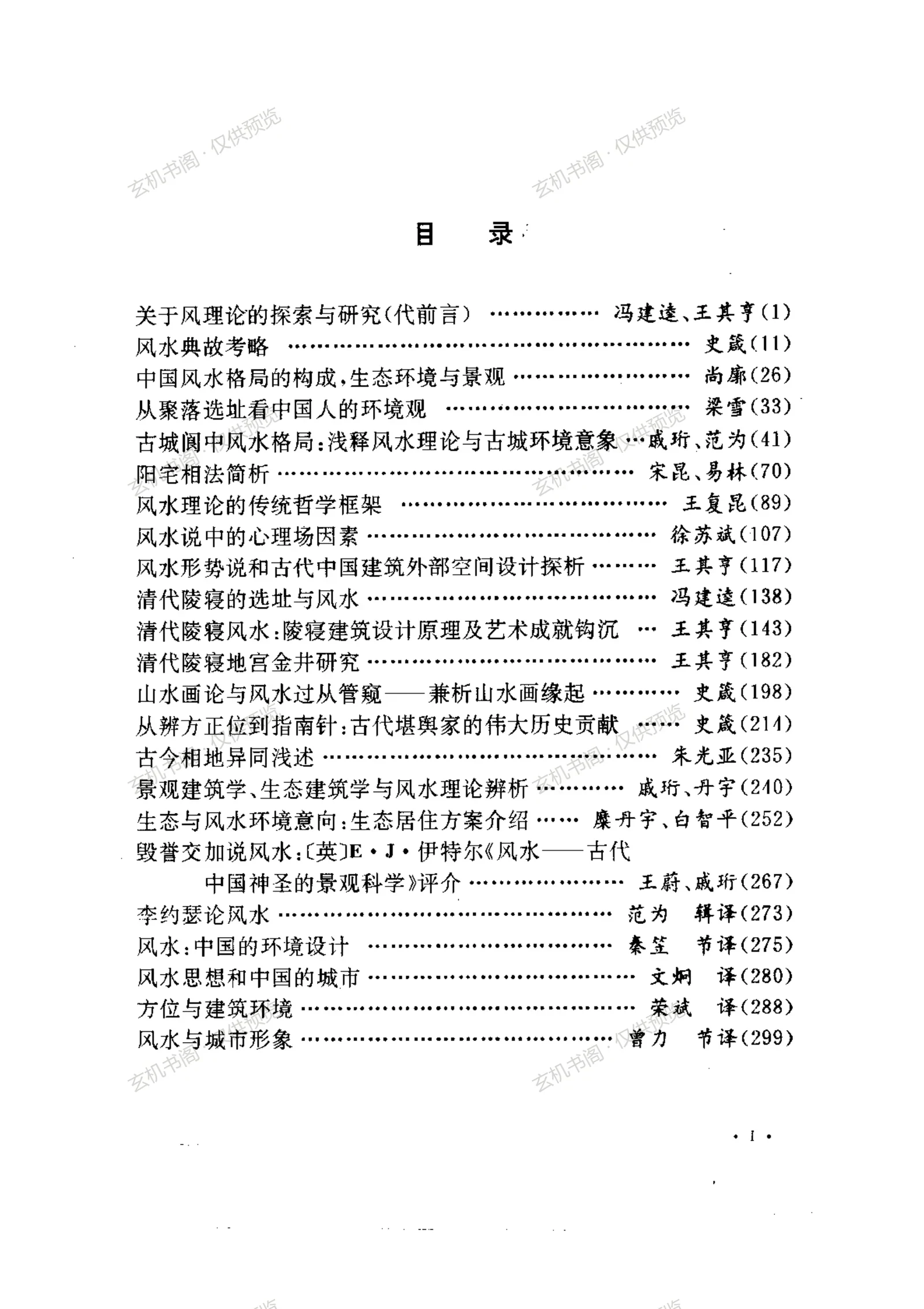
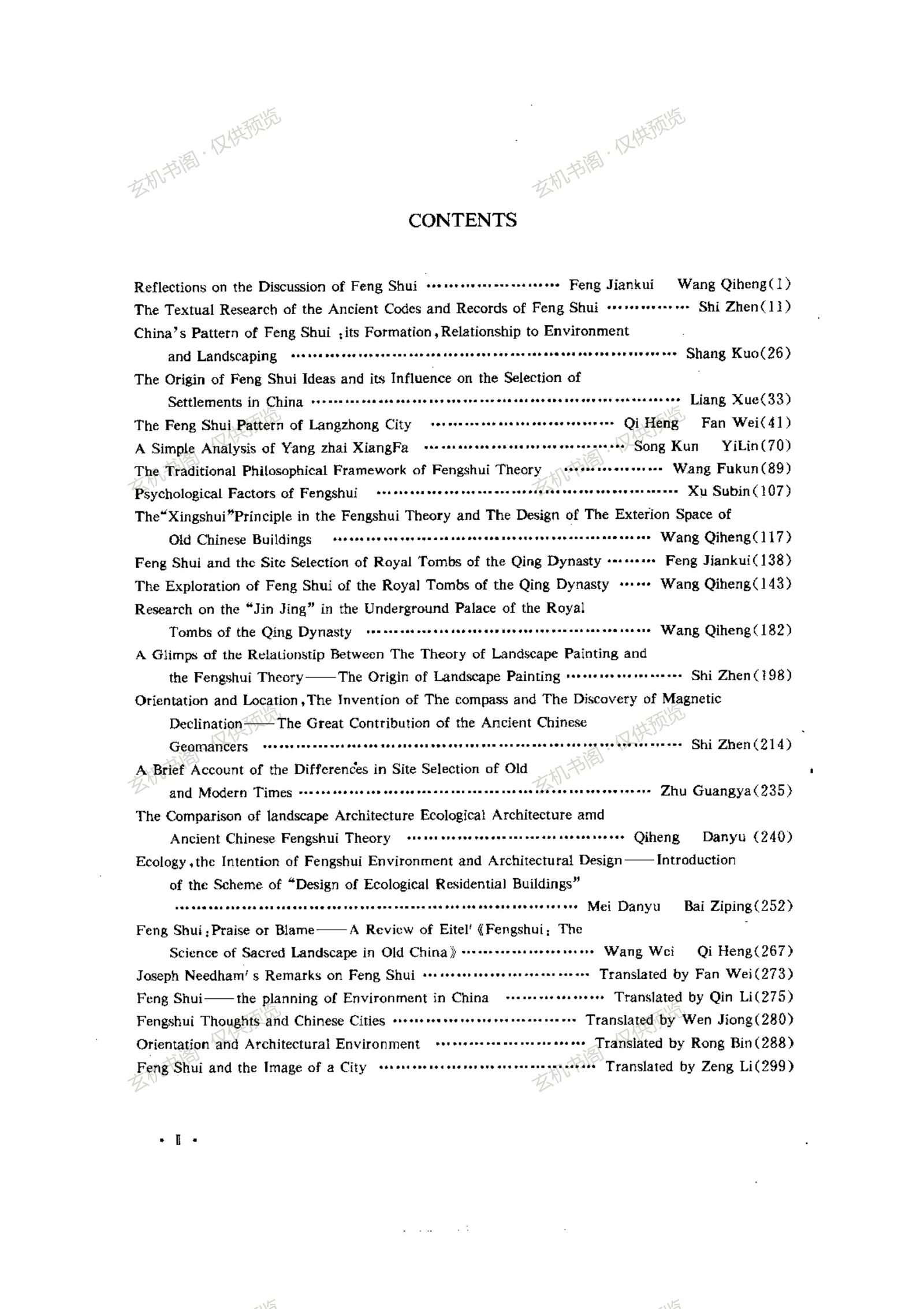
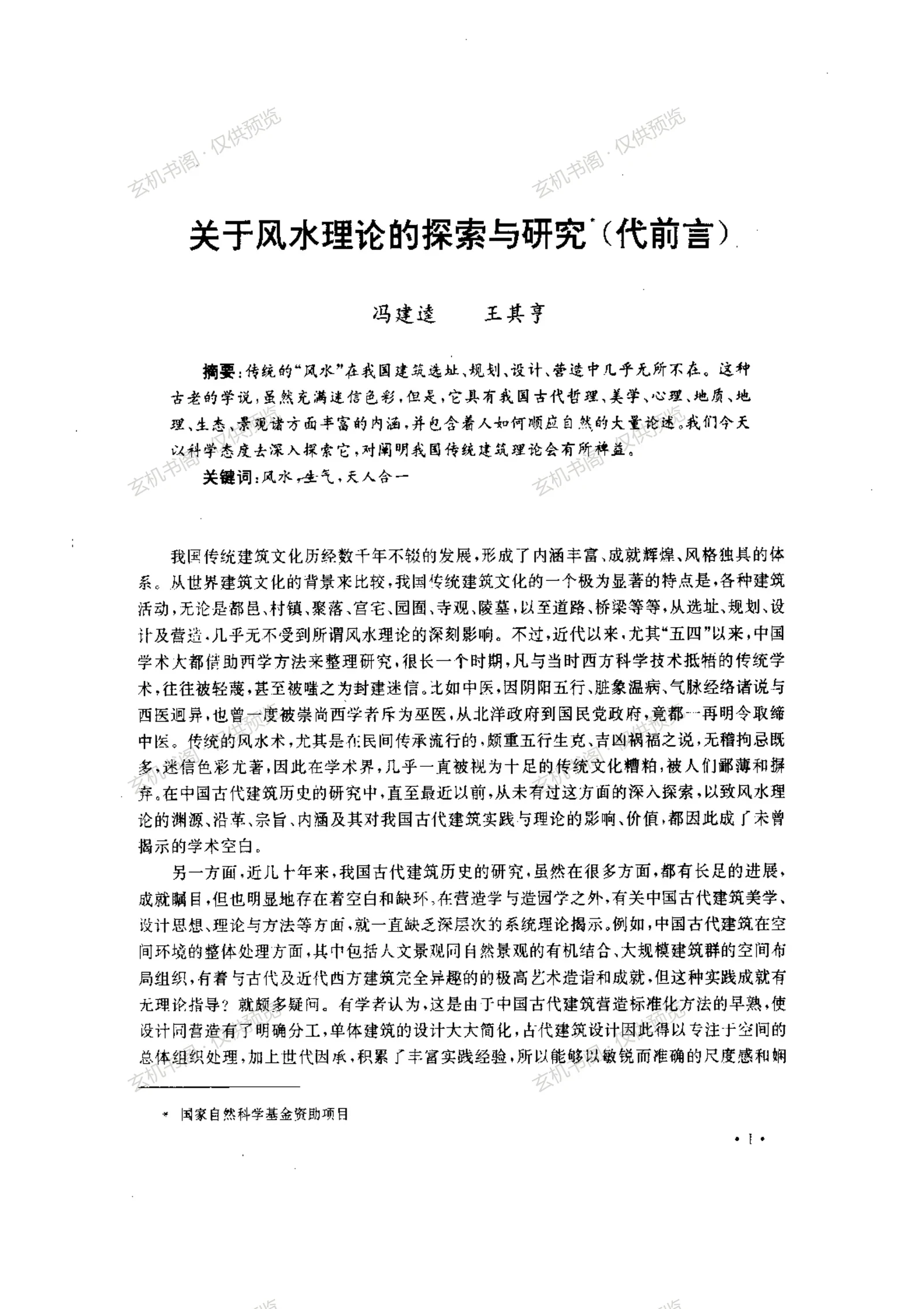
Edited by Wang Qiheng of Tianjin University's Department of Architecture, this volume gathers more than twenty essays and several translations on fengshui theory. The papers trace the origins and schools of fengshui, discuss its philosophical framework, aesthetics and psychological dimensions, and apply it to the siting and design of towns, residences and tombs. Contents include fengshui patterns and ecological environment, settlement siting and Chinese environmental views, urban spatial imagery, methods of house inspection, the 'xingshi' (form and configuration) principle in the design of exterior space, studies of Qing royal tomb siting and the underground palace's 'jinjing' well, the relation between landscape painting theory and fengshui, the history of the compass and magnetic declination, and reviews of Eitel's and Joseph Needham's writings on fengshui. The introductory essay by Feng Jiankui and Wang Qiheng argues for a scientific, critical reappraisal of fengshui, separating superstition from its insights into environmental adaptation.
Contents
Preface: exploring and researching fengshui theory
Fengshui codes, patterns, ecology and settlement siting
House inspection methods, philosophy and psychology
Form theory and exterior space design of old buildings
Qing royal tomb siting, design and underground palace research
Landscape painting, the compass and geomancy's contributions
Ecological architecture comparisons and translated overseas studies
Key Points
Reappraises fengshui from an architectural standpoint, drawing on philosophy, aesthetics and ecology
Several papers focus on Qing royal tomb siting, design and underground structures
Discusses the 'xingshi' principle and ancient exterior space design
Covers the history of the compass, magnetic declination and geomancers' contributions
Includes reviews and translations of Eitel and Needham on fengshui