Reading guide
Content guideOverview
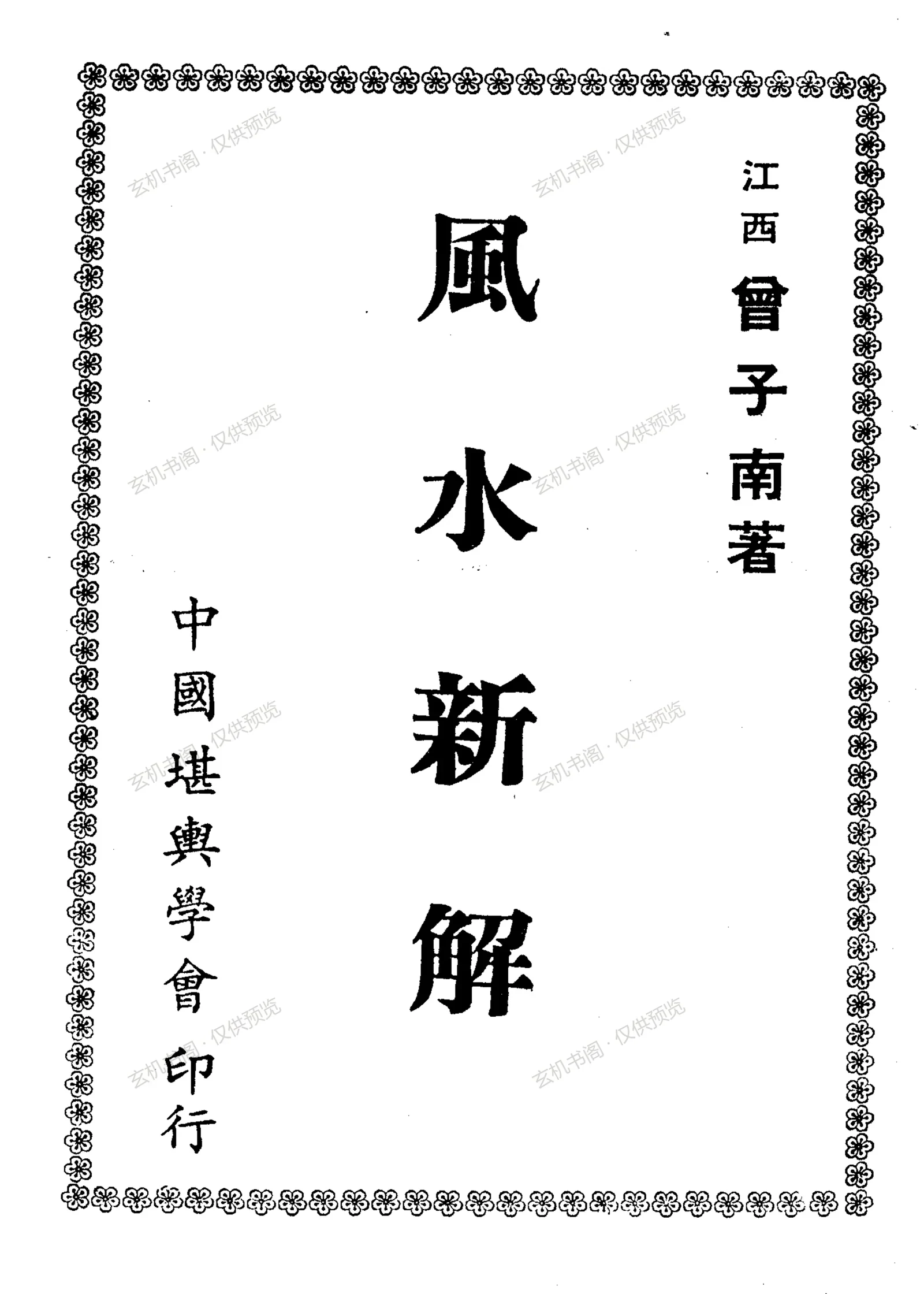
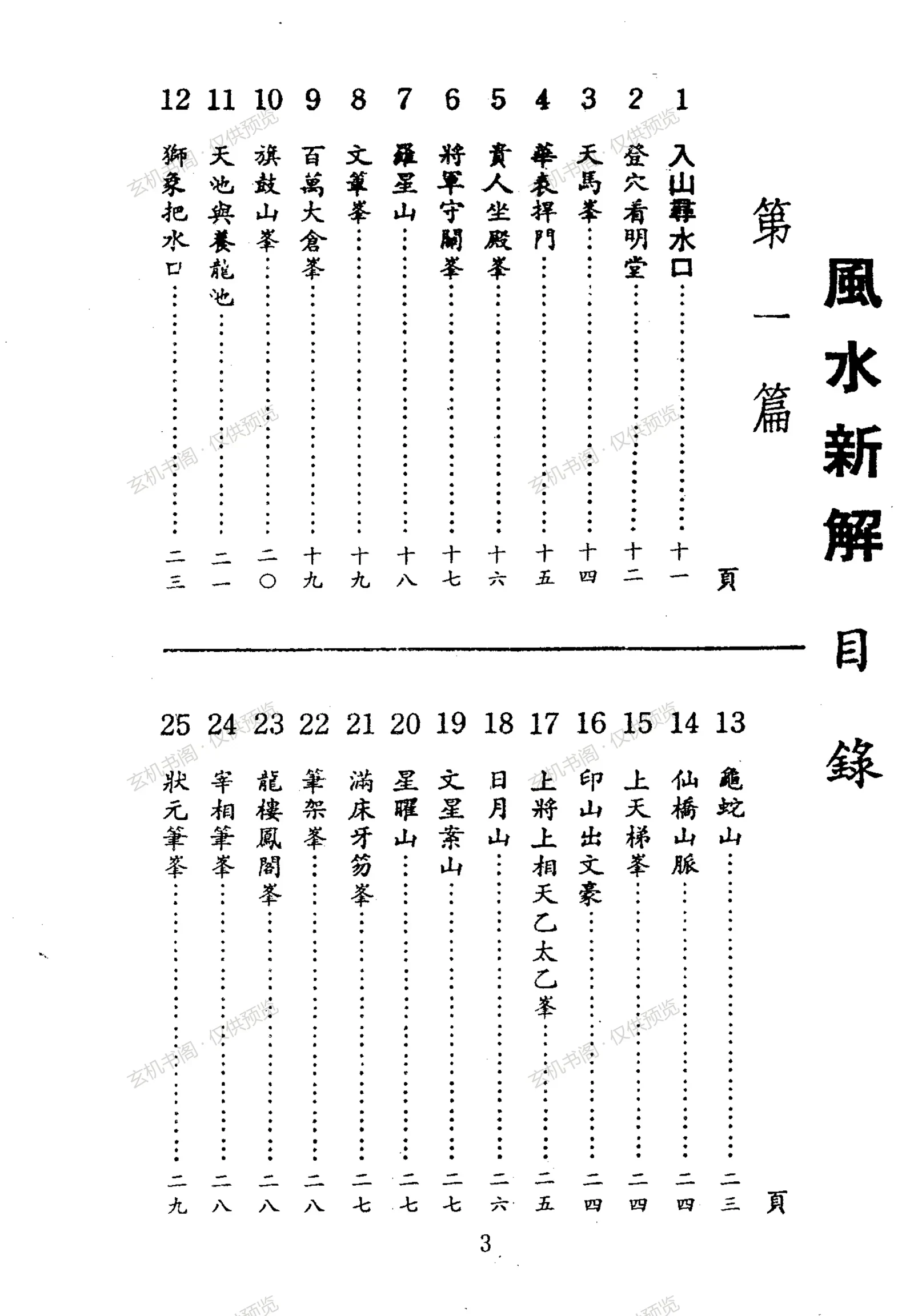
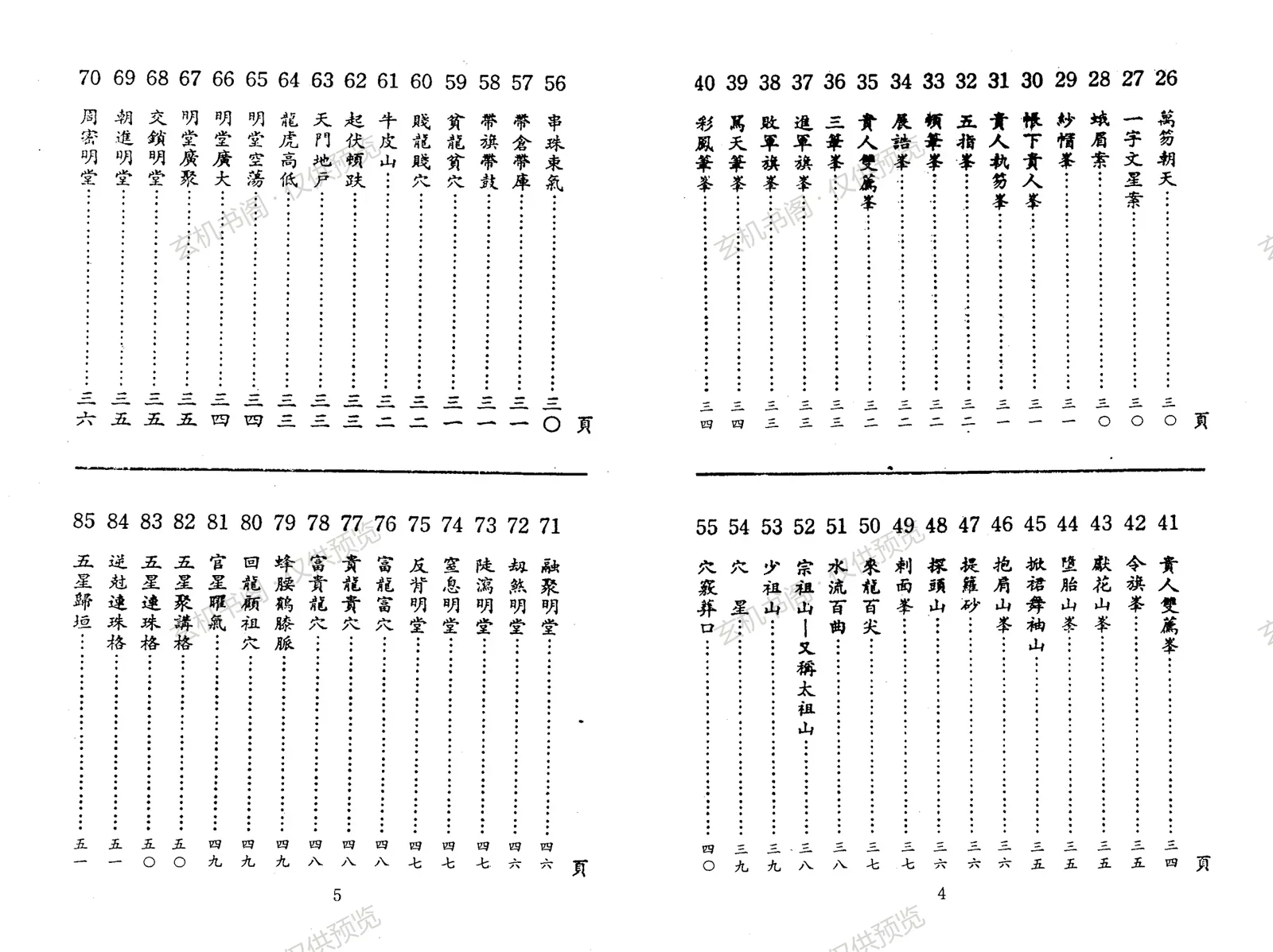
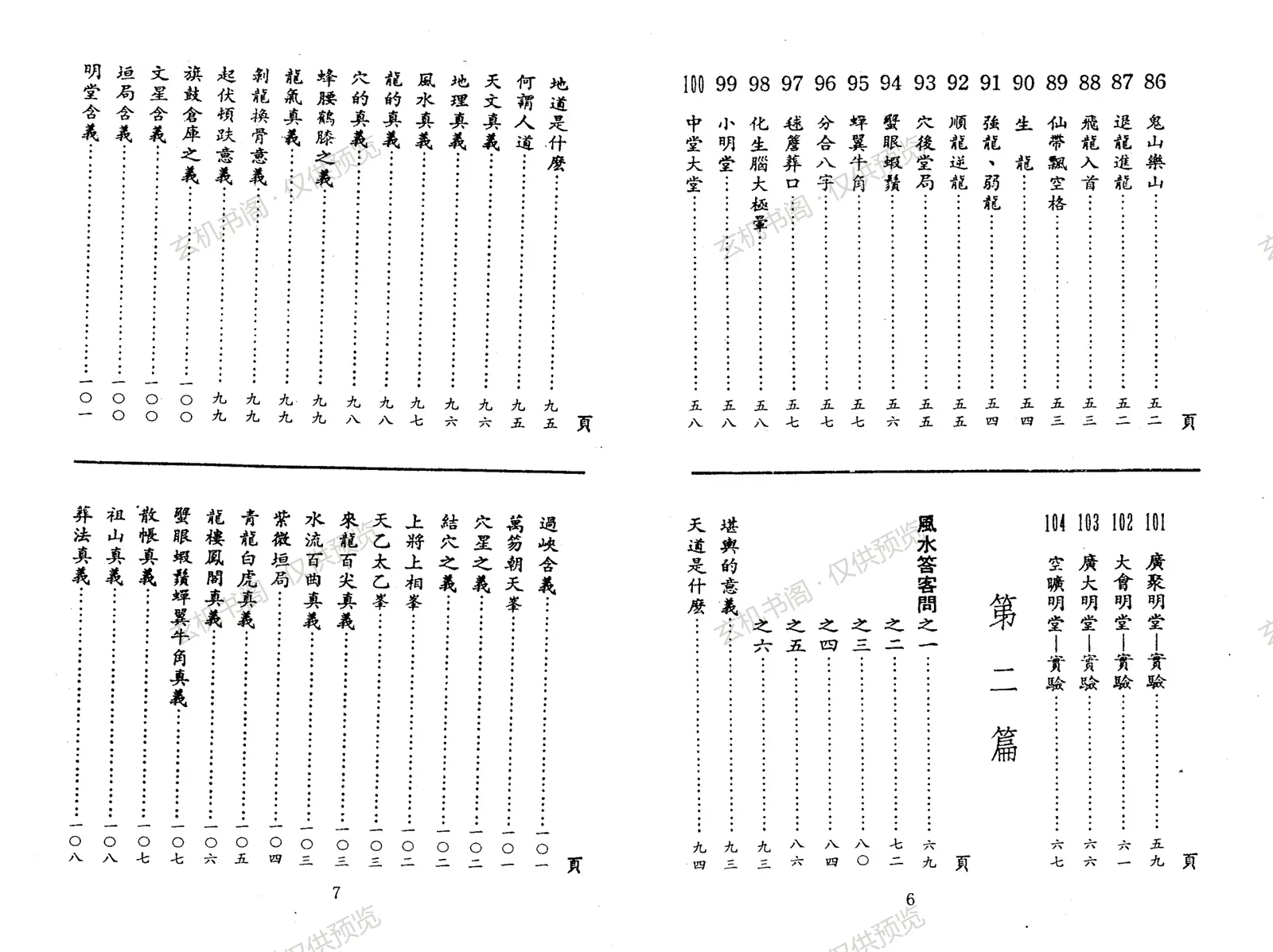
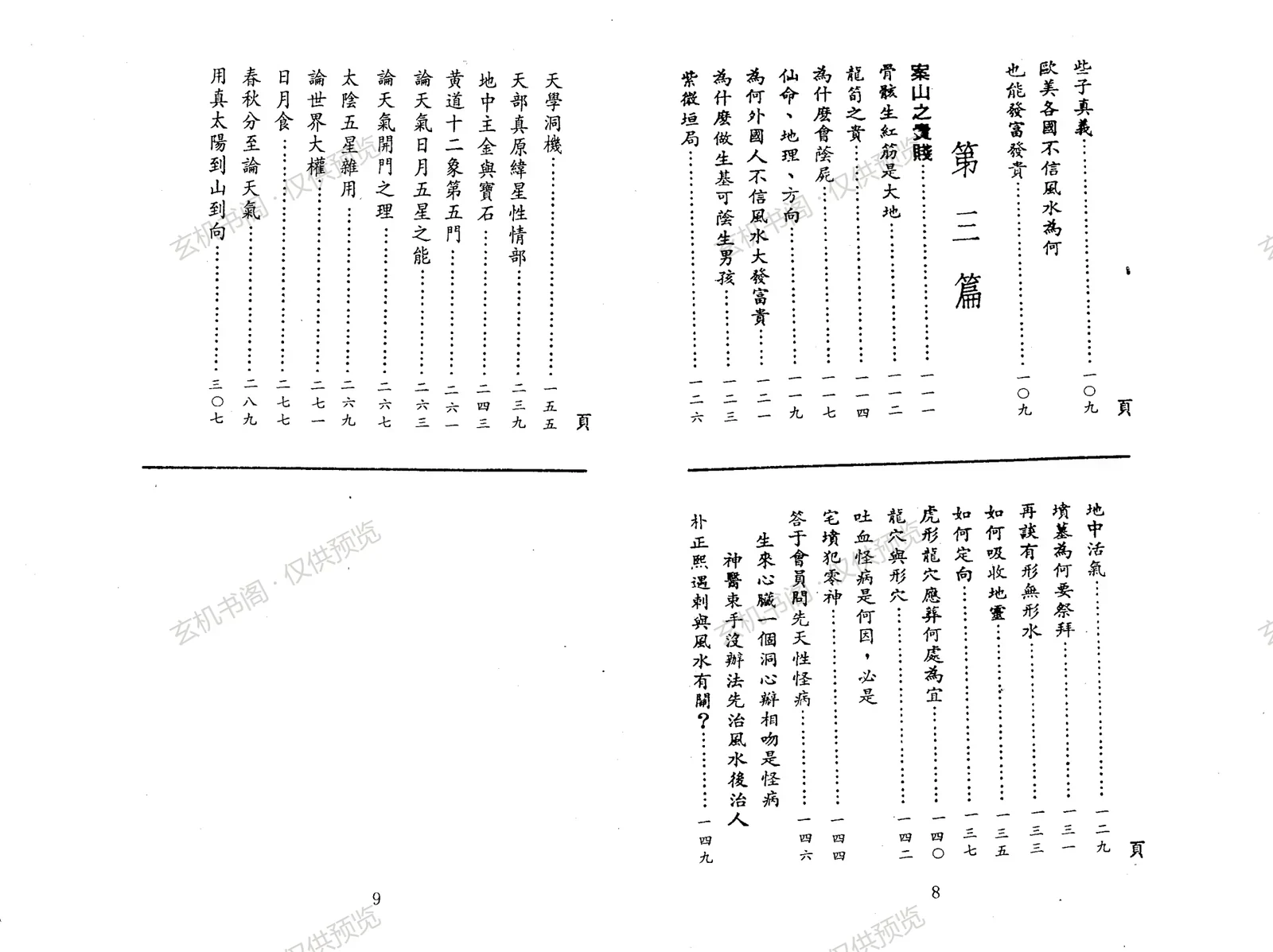
This is Zeng Zinan's Feng Shui Xin Jie (A New Interpretation of Feng Shui), issued in the Kan Yu series by the Chinese Geomancy Society. The table of contents shows a work organized in sections. The first section lists mountain forms and site patterns one by one, beginning with entering the mountains to find the water mouth and climbing to the site to inspect the bright hall, then covering named forms such as Heavenly Horse Peak, Huabiao Gate, Noble Man Seated in Hall, General Guarding the Pass, Star Mound, Writing-Brush Peak, and Great Granary Peak, followed by patterns like Five Stars Gathering, Five Stars in a Row, Official Star and Radiance, and Returning Dragon Looking at Its Ancestor, with notes on bright halls, water cities, and gates. The second section explains key terms and principles: feng shui questions and answers, what is the Way of Heaven, what is the Way of Earth, what is the human way, the true meaning of astronomy and geography, and the true meaning of the穴 (site), along with true solar arrival at the mountain, the moon and five planets, the twelve zodiacal signs, solar terms, and eclipses. The third section is a question-and-answer treatment of mountains and waters, discussing bones and veins, dragon lairs, sand and water, and auspicious and inauspicious bright halls and burial methods. The book is grounded in the form school, arranged in numbered entries for lookup by shape, and is a practical reader for understanding Zeng's system of form-naming and site selection. It is dense in terminology and assumes some familiarity with the compass and landscape patterns.
Contents
Section 1: entering mountains to find the water mouth and inspecting the bright hall
Section 1 later part: Huabiao, gate, noble man, and general patterns
Section 2: meaning of geomancy, Way of Heaven and Earth, true meaning of astronomy and geography
Section 2 later part: moon and five planets, twelve zodiacal signs, solar terms and eclipses
Section 3: questions on mountain bones, dragon lairs, sand and water
Section 3 later part: burial taboos and bright hall auspices
Key Points
Mainly lists named mountain forms for matching shape to site
Emphasizes the sequence of finding the water mouth and inspecting the bright hall
Collects noble patterns such as Huabiao, gate, noble man, and general
Discusses astronomy and solar terms alongside feng shui concepts
Adds feng shui Q&A and mountain-water questions