Reading guide
Content guideOverview
Part of the "Self-Taught Fortune-Telling Series," this book by Xu Shaolong introduces yang-dwelling feng shui from the broader framework of the five arts (mountain, medicine, fate, physiognomy, divination). According to the preface, it is organized into six chapters: an overview of the five arts and how to study yang-dwelling feng shui; the "principle method" using eight-trigram traveling-year, Luoshu trigrams, yin-yang and five-phase interactions, the twenty-four mountains, and the household head's life trigram; the "form method" examining mountains, rivers, roads, and house shapes; judgments of auspiciousness by form; selecting auspicious days for building and moving in, with over a hundred taboos; and an appendix on placing the household altar. Combining compass-school and form-school approaches, it serves as an entry-level reference for traditional yang-dwelling feng shui.
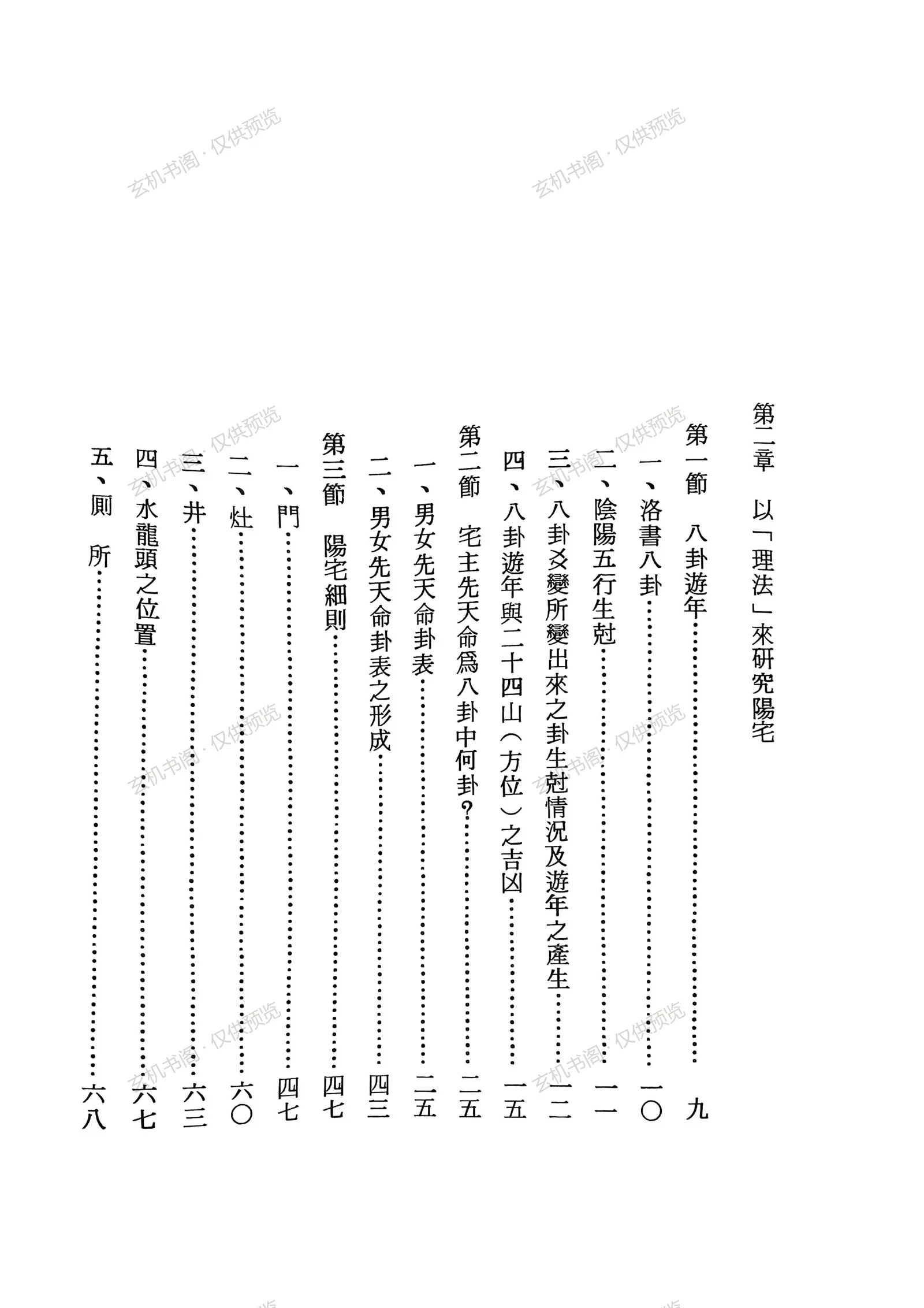
Contents
Ch.1 Overview of the five arts and how to study yang-dwelling feng shui
Ch.2 Principle method: traveling-year trigrams and life trigrams
Ch.3 Form method: mountains, rivers, roads, and dwellings
Ch.4 Judging auspiciousness by form
Ch.5 Choosing auspicious days for building and moving in
Ch.6 Appendix: essentials of placing the household altar
Key Points
Frames yang-dwelling feng shui within the five arts
Principle method covers traveling-year trigrams, twenty-four mountains, and life trigrams
Form method reads mountains, rivers, roads, and house shapes
Includes over a hundred taboos for building, moving in, and bed placement
Appendix gives practical guidance on placing the household altar