Reading guide
Content guideOverview
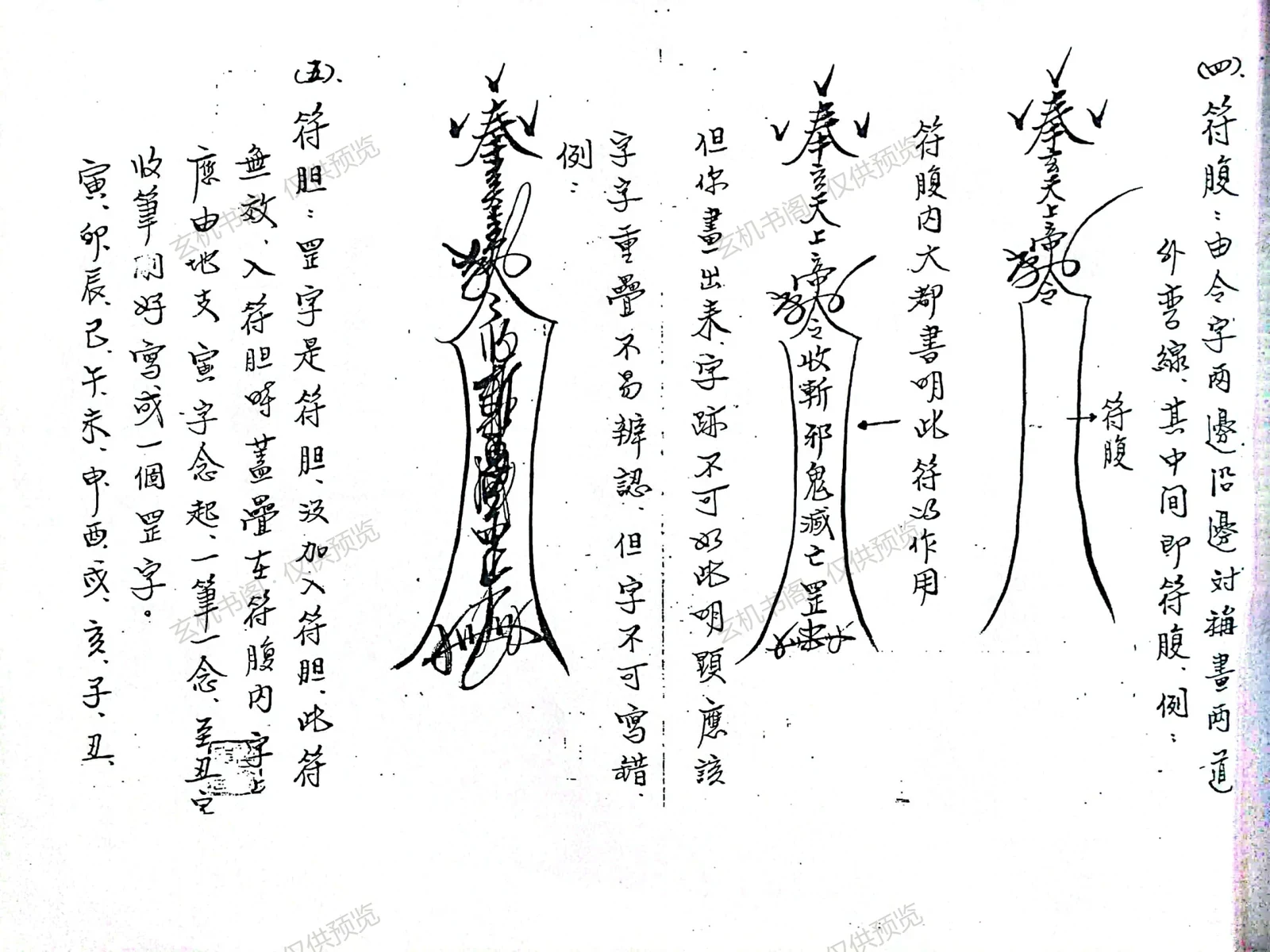
Titled Secret Manual of Talismans and Incantations, this handwritten work is marked as Master Li Jin's treasured copy and records affiliations with Taoist charitable halls in Taipei and Taoyuan, with Lü Jinhu named as the copyist. The text focuses on the practical side of talisman writing and recitation: it begins with the ritual of invoking deities and the sequence of strokes, explaining which divine name is recited with each stroke. It then describes the structure of a talisman—head, gall, belly, and foot—and uses the character “gang” to illustrate how the twelve earthly branches correspond to stroke positions. Later pages give incantations for purifying incense, consecrating the brush, securing a talisman, and commanding talismans, followed by talisman forms derived from the character “lai” for opening the heavenly gate, closing the earthly door, blocking ghost roads, and cutting ghost bridges. The manual is suited to readers interested in the written conventions and oral formulas of Lüshan-style talismanic practice.
Contents
Cover inscription and source of the copy
Ritual of invoking deities and stroke order
Structure: talisman head, gall, belly, and foot
The “gang” character and twelve-branch positions
Incantations for incense, brush, securing, and commanding
Talisman forms derived from the character “lai”
Key Points
Talisman writing follows a fixed stroke order, with a divine name recited for each stroke.
A talisman is divided into head, gall, belly, and foot, each with its own rules.
A diagram of the character “gang” maps the twelve earthly branches to stroke positions.
Includes common incantations for purifying incense, consecrating the brush, securing and commanding talismans.
The character “lai” is varied to form talismans for opening gates, closing doors, blocking roads, and cutting bridges.