Reading guide
Content guideOverview
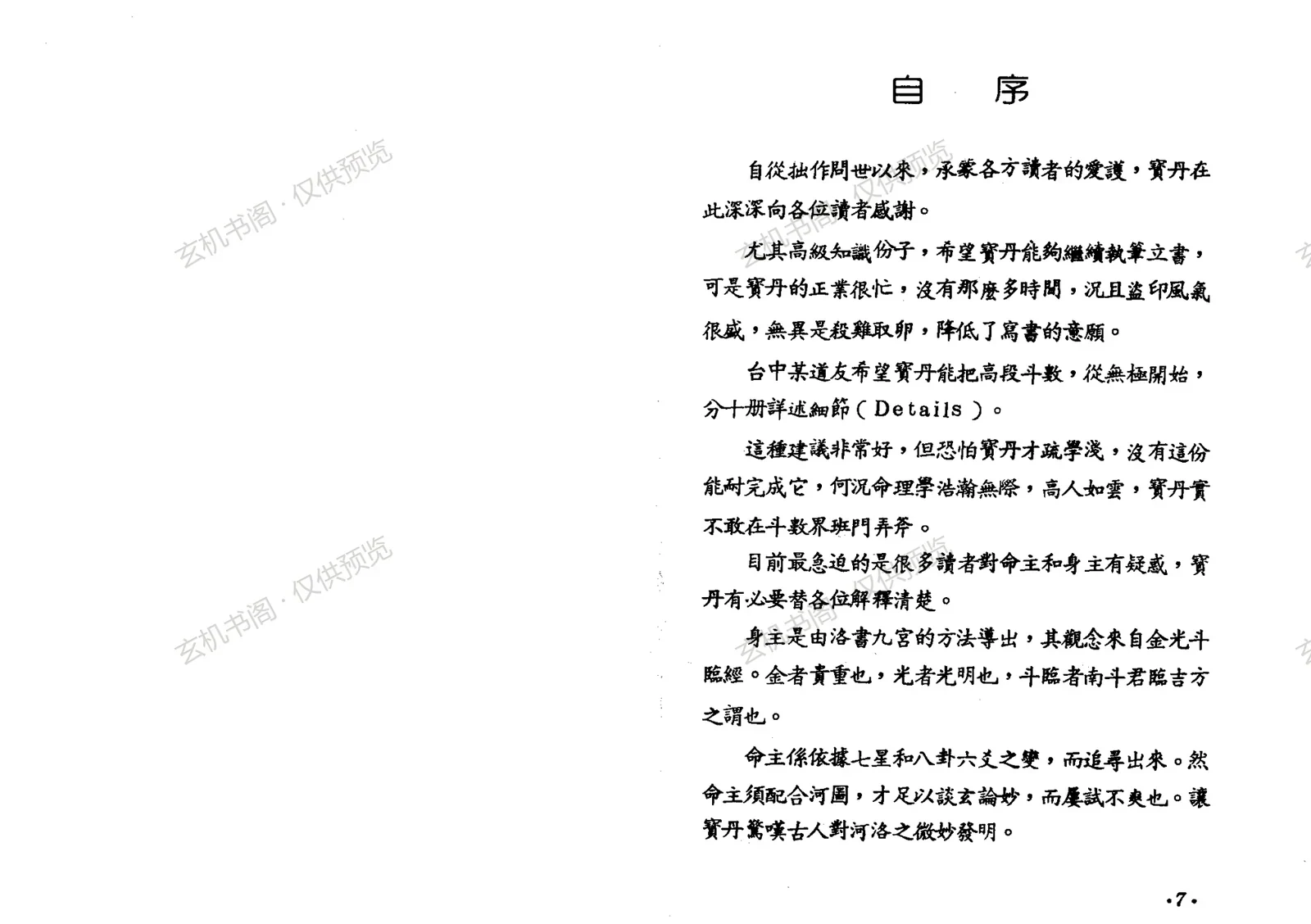
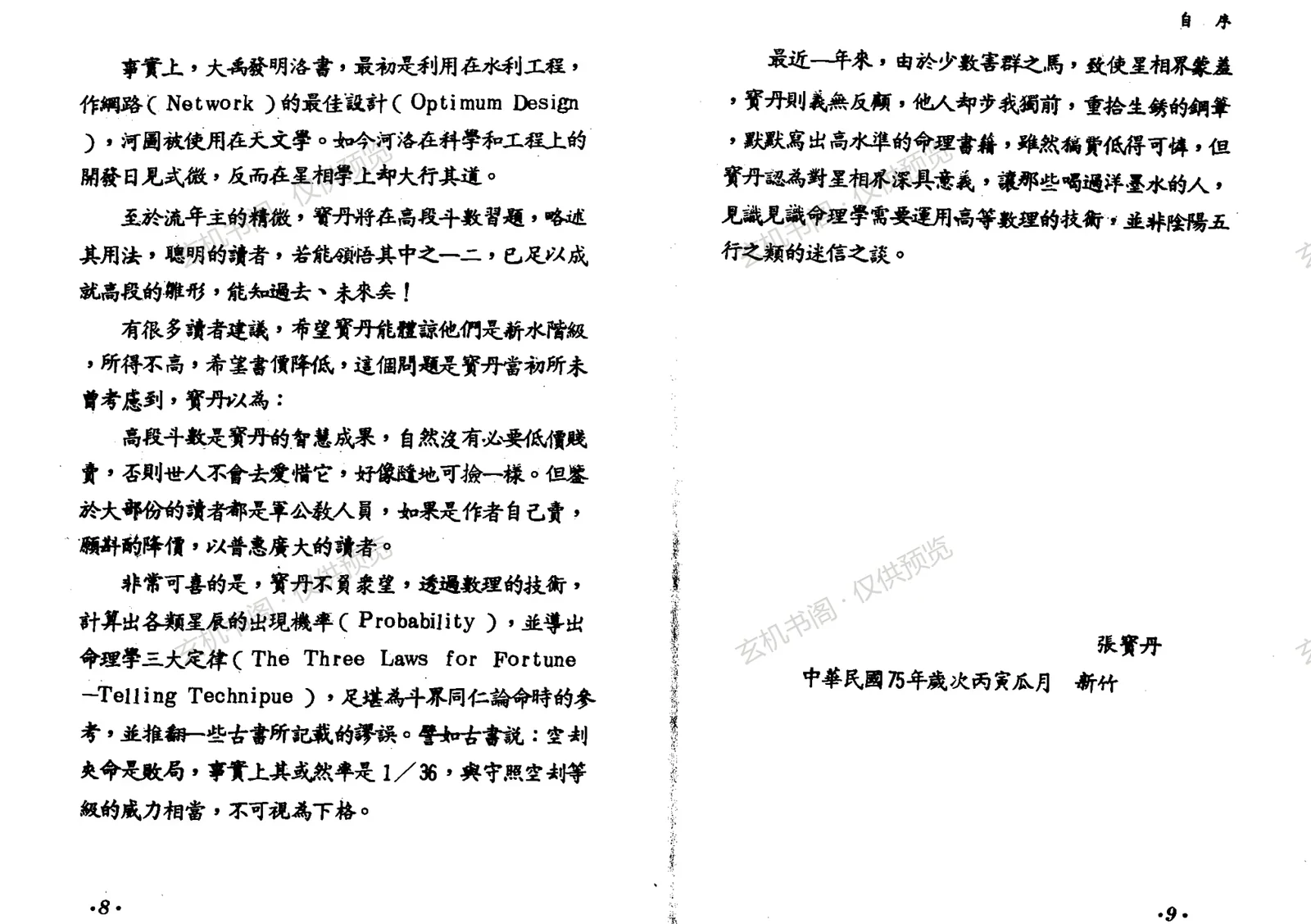
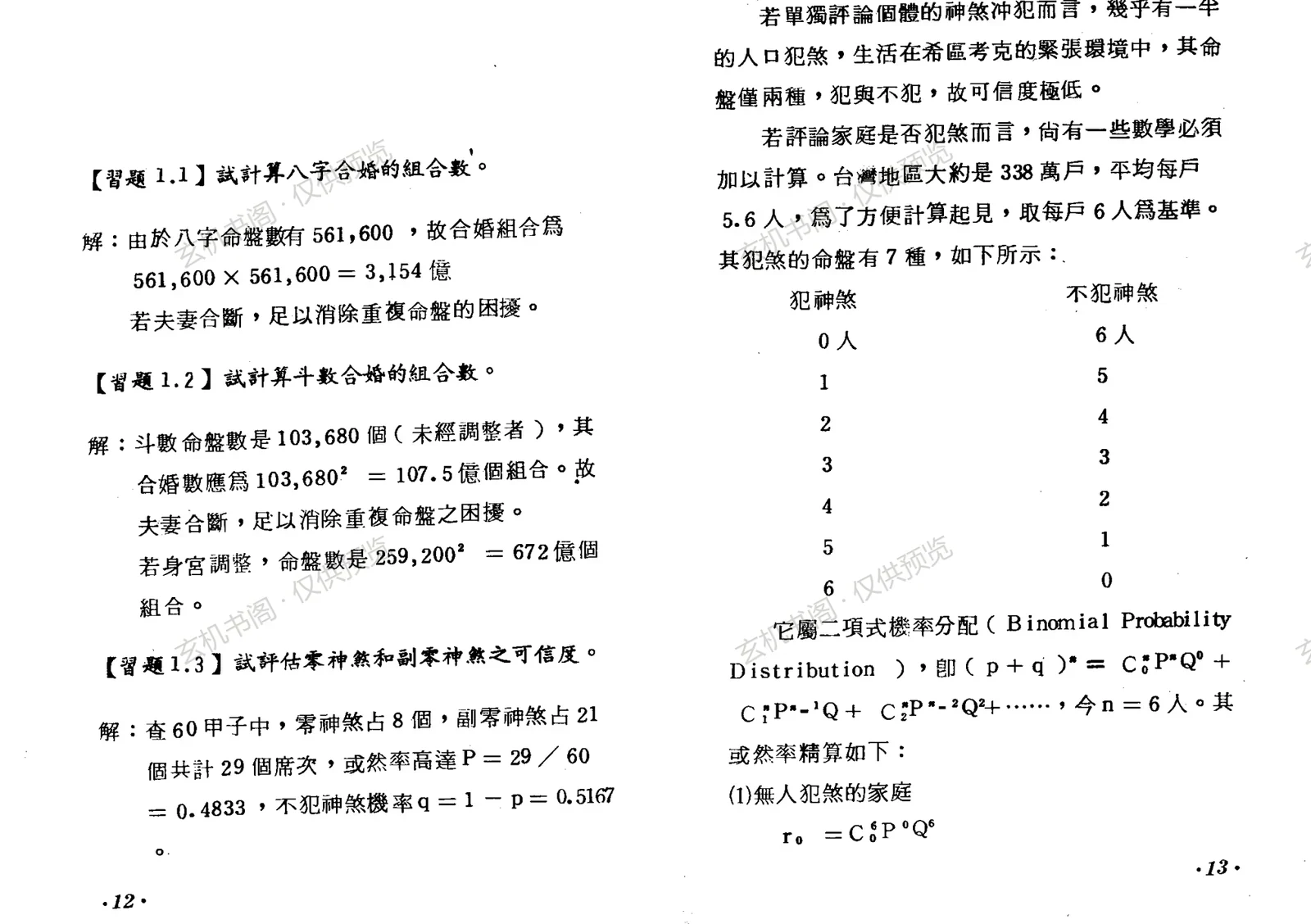
This is the sequel to Zhang Baodan's Advanced Zi Wei Dou Shu, subtitled 'A Major Breakthrough in Dou Shu Destiny Studies.' It opens with a preface and is divided into four parts. Part One, 'Detailed Solutions to Exercises,' uses combinatorial and probabilistic calculations to answer questions about marriage compatibility counts, chart combination counts, and the reliability of shensha, introducing binomial probability to assess the odds of incurring inauspicious stars. Part Two, 'Dou Shu Yangzhai,' discusses applying dou shu to feng shui. Part Three, 'Destiny Mathematics,' explains the author's attempt to derive three laws of destiny studies through mathematical techniques. Part Four, 'Judging Details of Daily Life,' applies dou shu judgments to everyday matters. In the preface the author argues that the Body Lord is derived from the Luoshu nine palaces and the Life Lord from the seven stars and the six lines of the eight trigrams combined with the Hetu, insisting that destiny studies requires advanced mathematical technique rather than superstition. The book also questions classical claims such as 'kong jie jia ming is a defeat pattern' by calculating their actual probability.
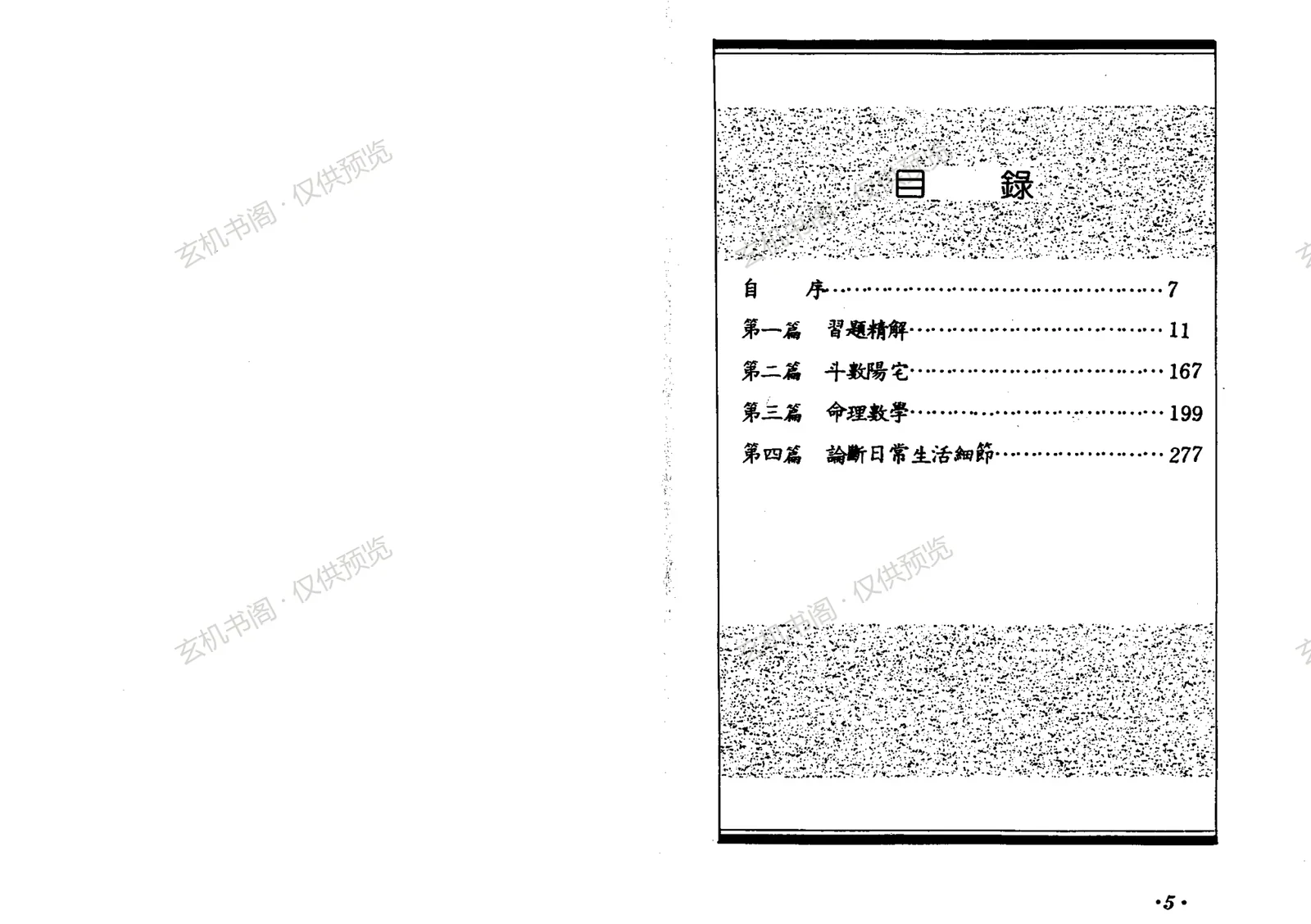
Contents
Preface: origin of the sequel and the theory of Life Lord and Body Lord
Part One: worked exercises, combinatorial and probability calculations
Part Two: dou shu applied to yangzhai feng shui
Part Three: destiny mathematics and derivation of laws
Part Four: judging details of daily life
Key Points
Uses combinatorial and probability calculations for chart and compatibility counts
Proposes three laws of destiny studies and questions classical defeat patterns
Explains Body Lord from Luoshu nine palaces and Life Lord from seven stars and eight trigrams
Applies dou shu to yangzhai and daily-life judgments
Insists destiny studies should use advanced mathematics rather than superstition