Reading guide
Content guideOverview
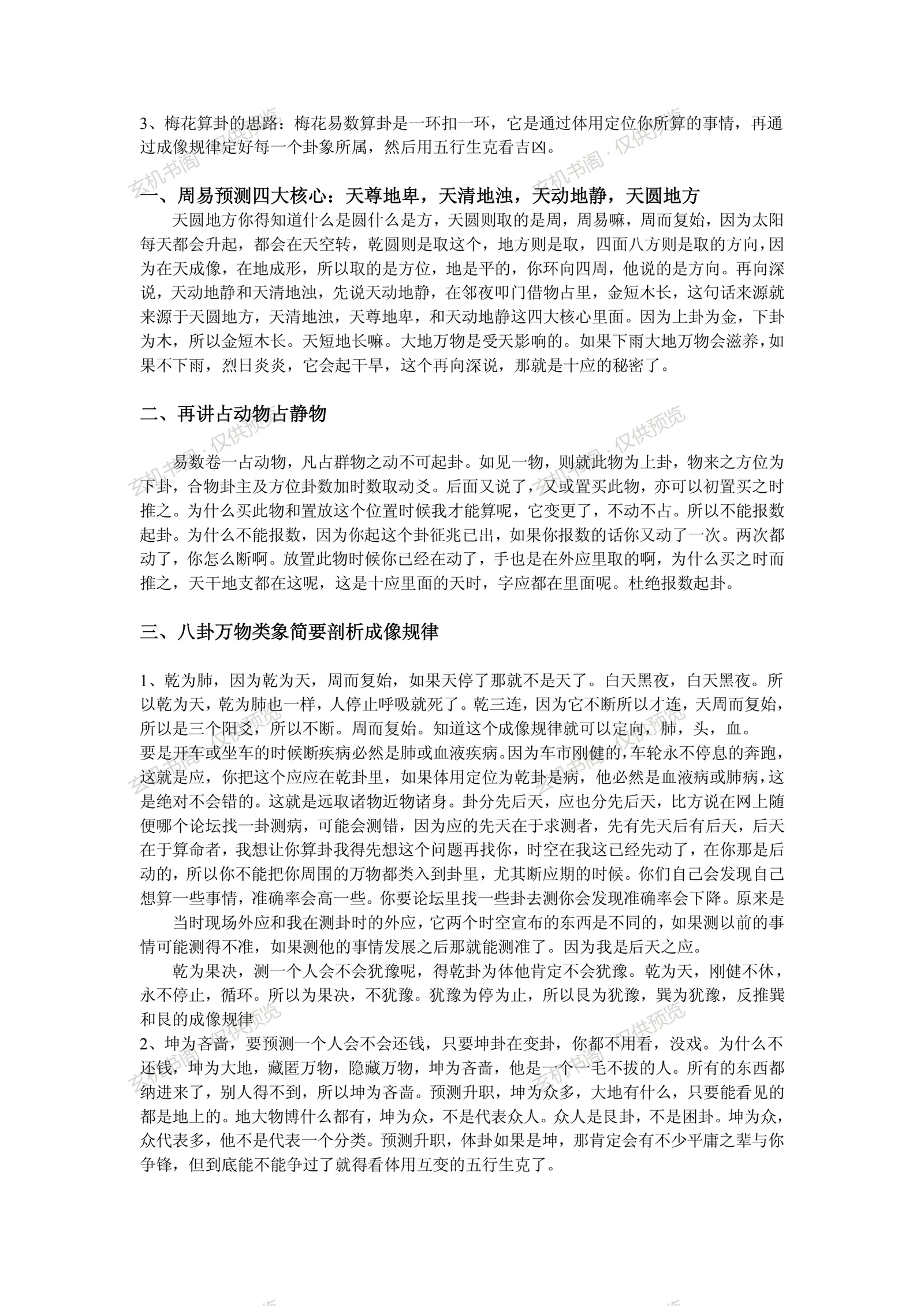
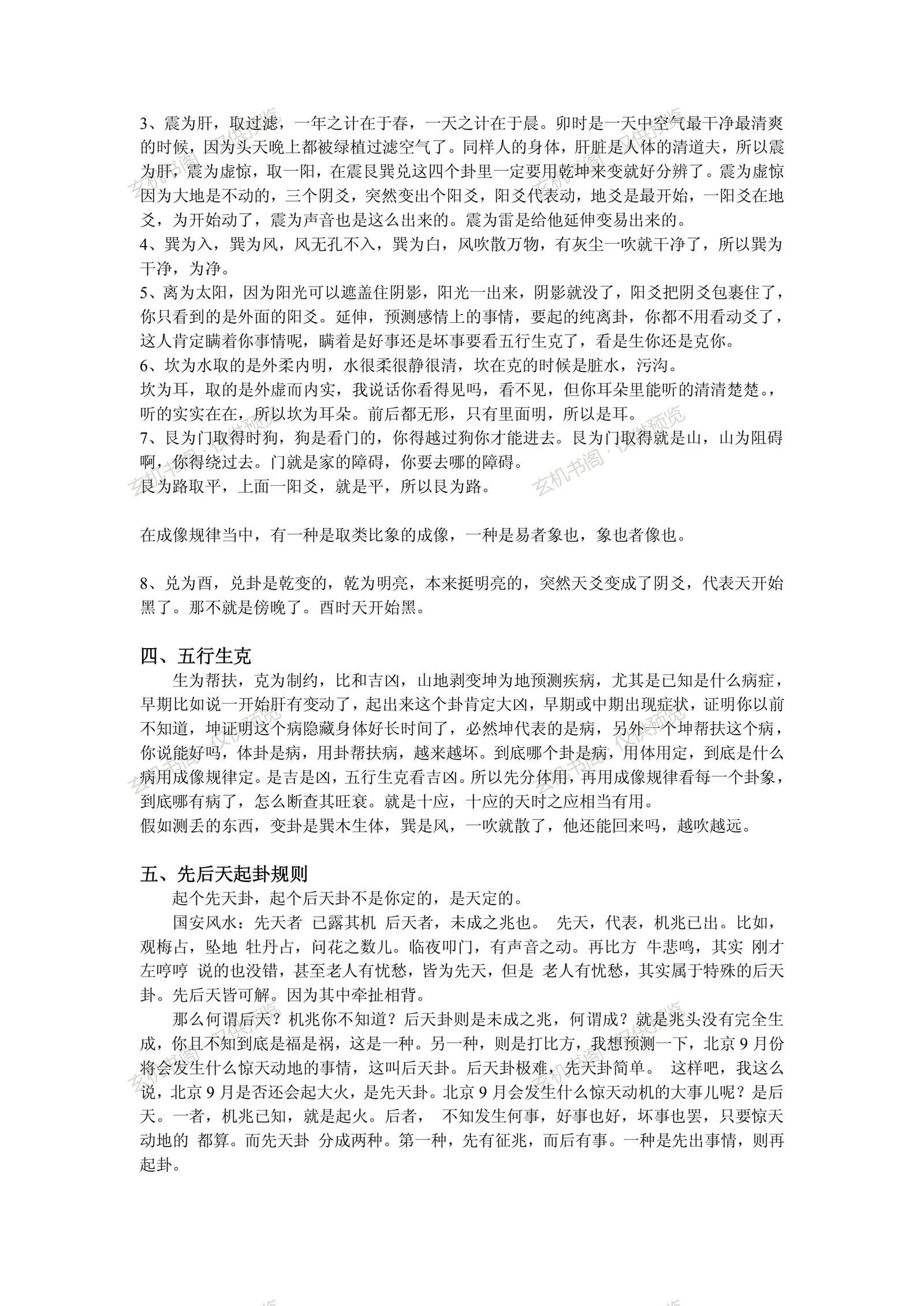
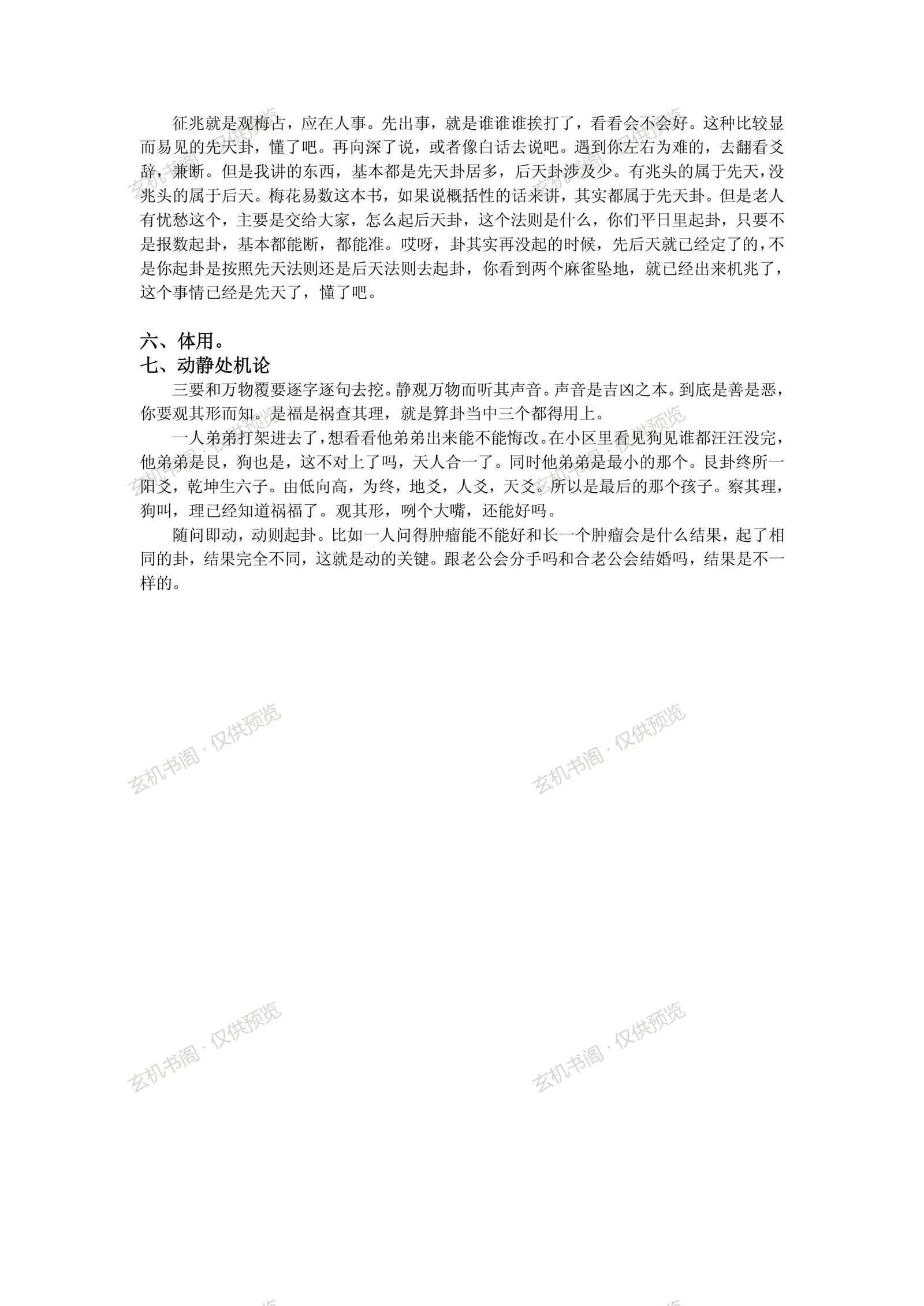
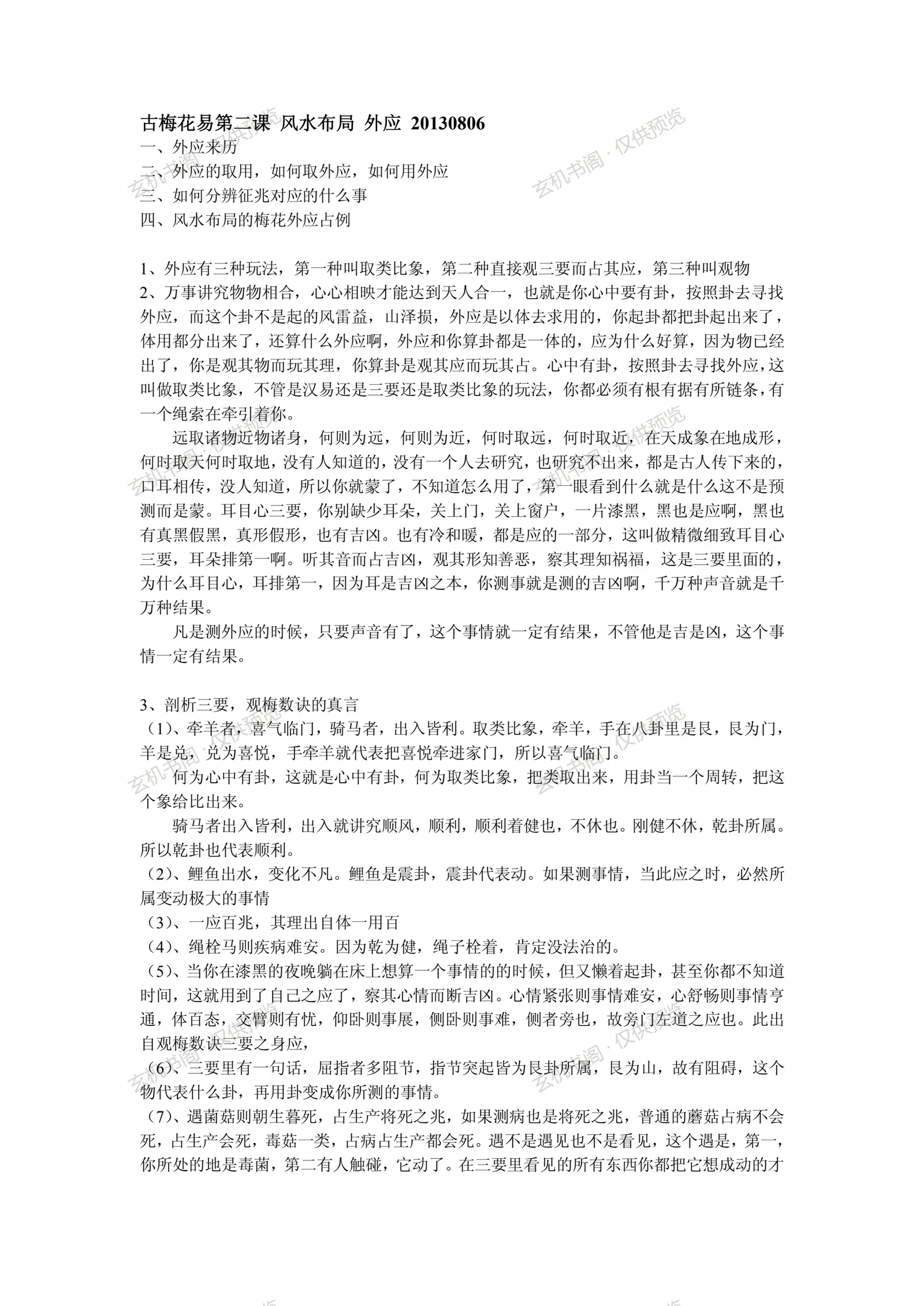
This is a lecture-notes edition of Ancient Plum Blossom Divination. The visible portion contains two lessons: 'Lesson One: Feng Shui Layout and Basic Concepts' and 'Lesson Two: External Responses.' Lesson One lists seven core topics—cosmological foundations, divining animals and static objects, trigram imagery, five-phase generation and overcoming, early and later heaven hexagram formation, ti-yong, and the theory of movement and stillness triggering divination. The text argues that Plum Blossom Divination is not free inspiration but follows a linked chain of image formation, then explains each of the eight trigrams—Qian as heaven, lung, and decisiveness; Kun as stinginess and the multitude; Gen as mountain and obstruction; Dui as joy—and shows how ti-yong and five-phase relations are used in illness and event judgment. Lesson Two focuses on external responses, presenting three approaches: analogy by category, observing the three essentials, and observing objects. It stresses that one must already hold a hexagram in mind and then seek corresponding omens, cites entries from the Guanmei formulas such as leading a sheep, riding a horse, a carp leaping from water, withered wood, and a mirror, and illustrates with real cases including a colleague's breakup, asking about a mother's illness, weather prediction, and a host's father's wealth. The style is colloquial and practical, suited to readers who already know basic trigram and five-phase theory and wish to deepen their grasp of external-response imagery.
Contents
Seven core topics: foundations, objects, imagery, five phases, hexagram formation, ti-yong, triggers
Three meanings of Yi and image formation: Qian, Kun, Zhen, Xun, Li, Kan, Gen, Dui
Early and later heaven hexagram rules, ti-yong and five-phase judgment
Lesson Two external responses: analogy, three essentials, object observation
Guanmei formula entries: sheep, horse, carp, withered wood, mirror
Case studies: breakup, mother's illness, weather, father's wealth
Key Points
Plum Blossom Divination relies on image patterns and ti-yong positioning, not random inspiration
Trigram imagery is central: Qian as lung, Kun as stinginess, Gen as obstruction, Dui as joy
Distinguishing early and later heaven hexagrams determines formation and response
The three essentials—ear, eye, and heart—are fundamental to external responses, with ear first
External responses require a hexagram already in mind, then matching objects to it
Cases show how objects, direction, timing, and five-phase relations combine in judgment