Reading guide
Content guideOverview
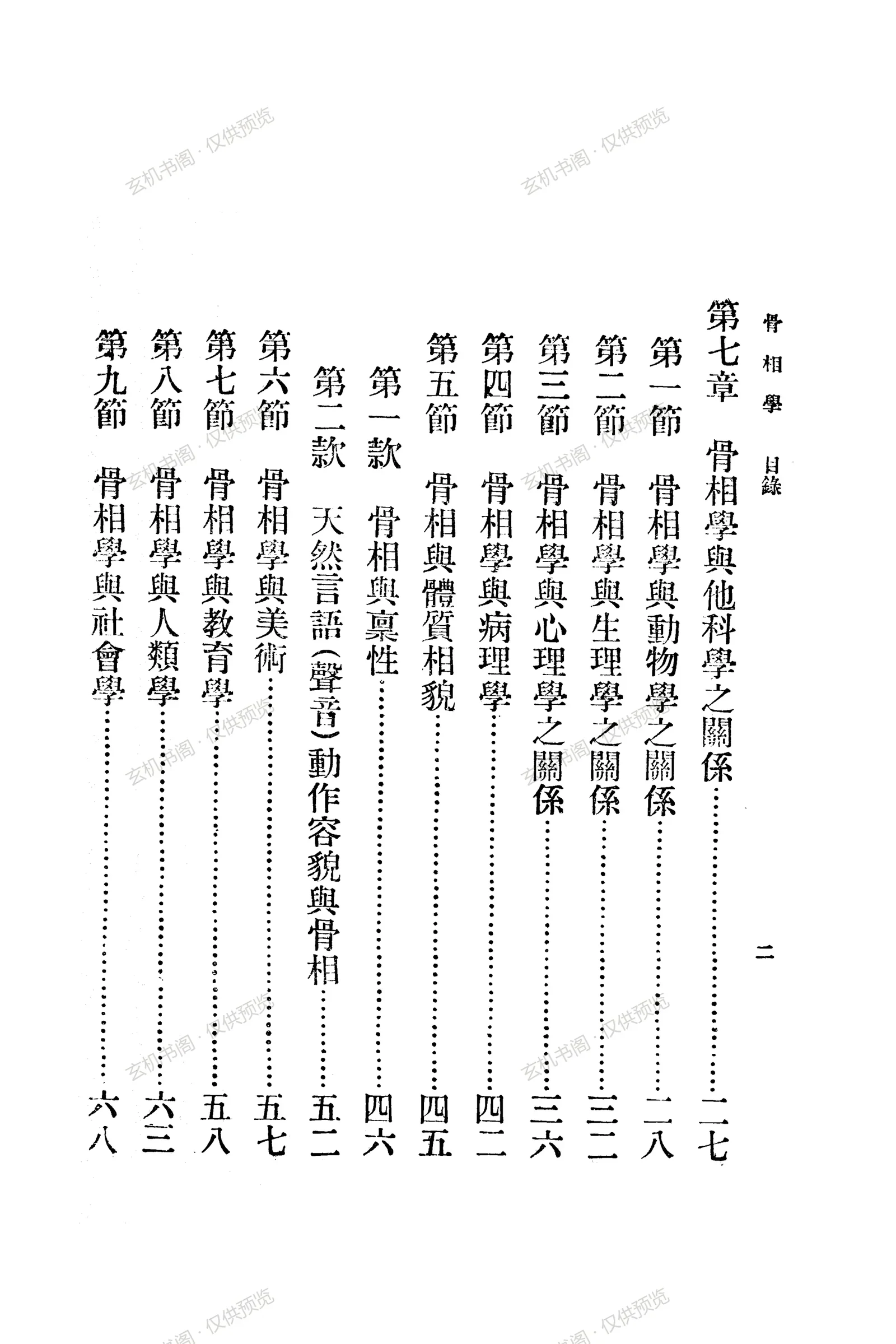
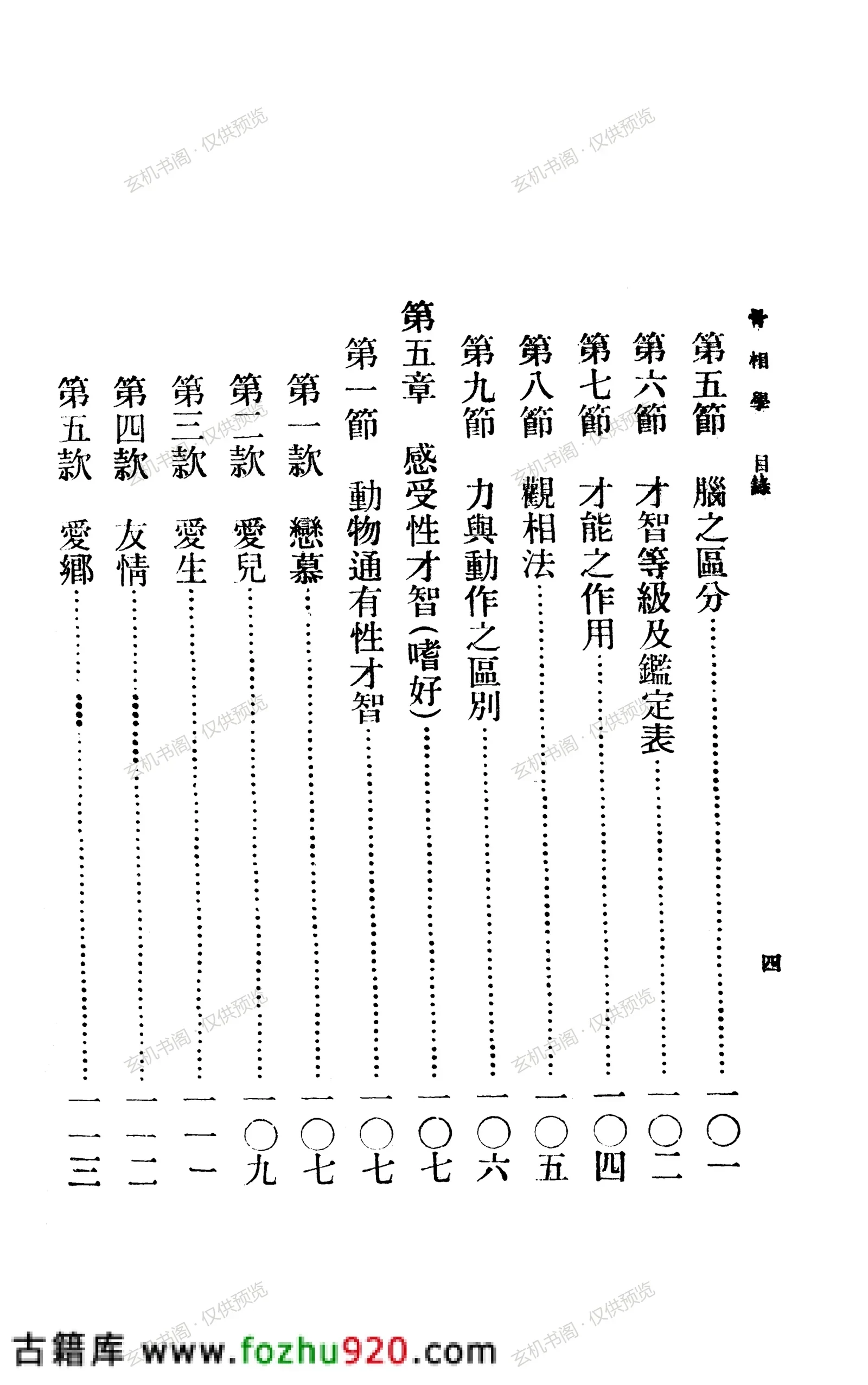
Physiognomy of Bone Structure is a divination work that observes bone and skull morphology to explore the relationship between human intelligence, temperament, and physical appearance. The table of contents shows an introduction and two major parts. Part One, the general discussion, first defines physiognomy of bone structure, then traces its history, its validation across sciences, and its foundations, with a dedicated chapter on the relationship between mental activity and the brain. Chapter Seven compares it with zoology, physiology, psychology, pathology, physical appearance, true nature, art, education, anthropology, sociology, law, and judgment techniques. Part Two, the specific discussion, begins with the organs of the brain and examines the physiological basis of intelligence, measurement methods, and brain functions. It further classifies receptive intelligence, animal shared intelligence, and intelligence shared by humans and lower animals, with detailed sections on intelligence grading tables and observation methods. The overall structure moves from general theory to specific analysis and from theory to application, making it suitable for readers interested in the modern knowledge system of physiognomy and its intersection with traditional face reading.
Contents
Introduction: what bone-structure physiognomy is and its history
Part One general discussion: history, validation, and foundations
Relationship between mental activity and the brain
Relations with physiology, psychology, and pathology
Relations with art, education, anthropology, sociology, and law
Part Two specific discussion: brain organs and intelligence measurement
Differences in intelligence, receptive intelligence, and animal shared intelligence
Intelligence grading tables and observation methods
Key Points
Defines bone-structure physiognomy in the introduction, then divides into general and specific discussions.
Emphasizes comparisons with modern disciplines such as physiology, psychology, and pathology.
Includes a dedicated chapter on the connection between mental activity and the brain.
Part Two details brain organs, intelligence measurement, and various types of intelligence.
Appends practical sections such as intelligence grading tables and observation methods.