Reading guide
Content guideOverview
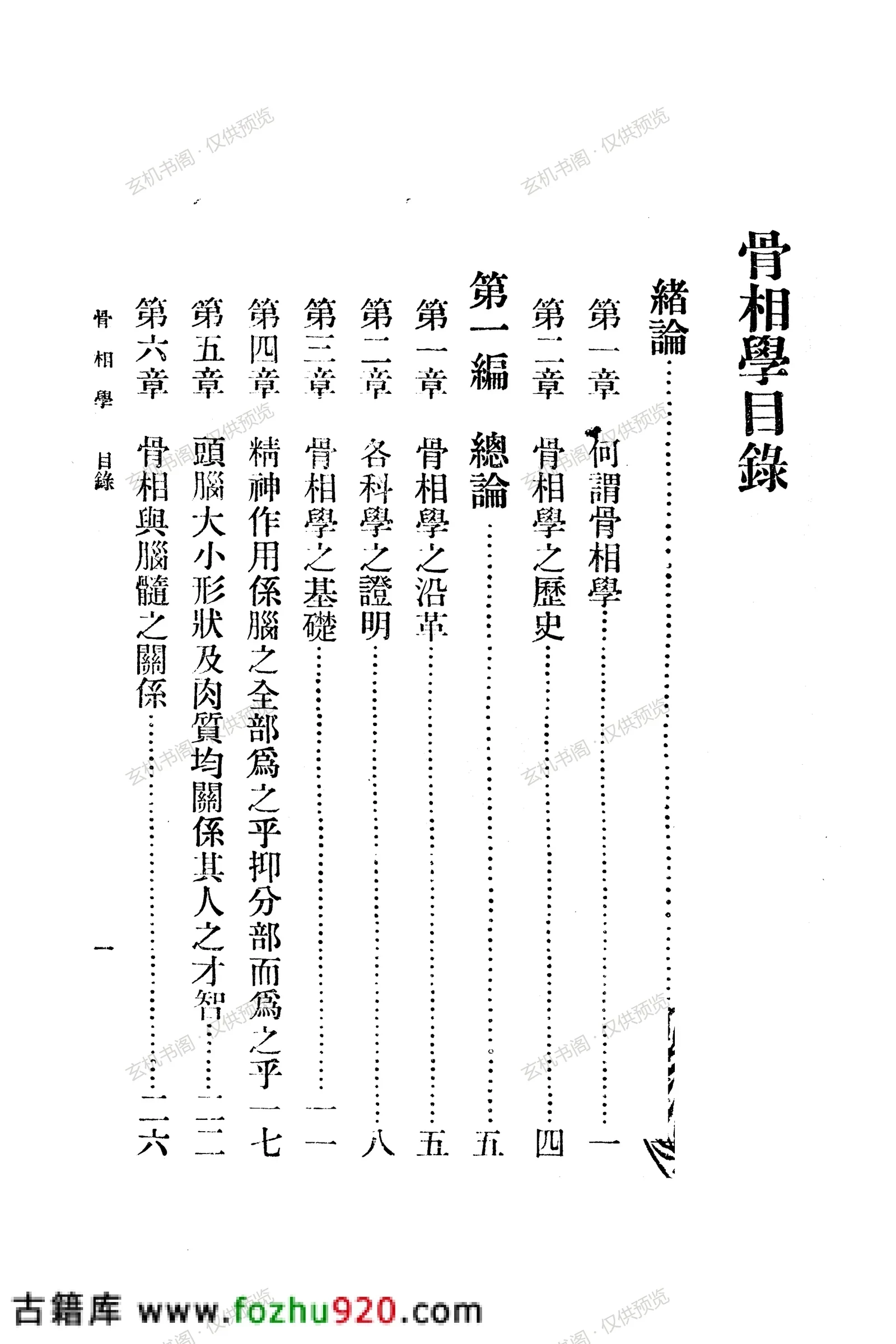
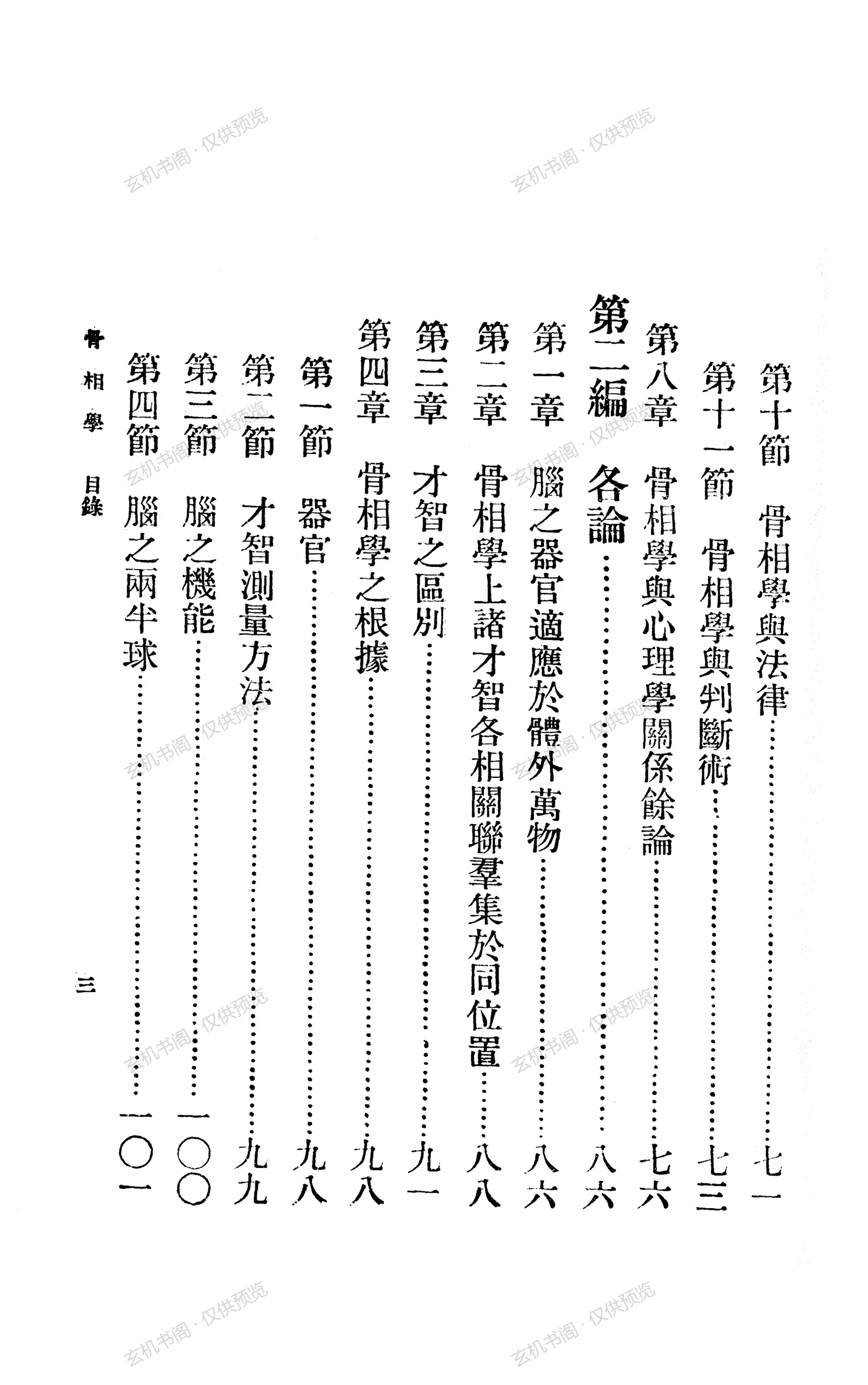
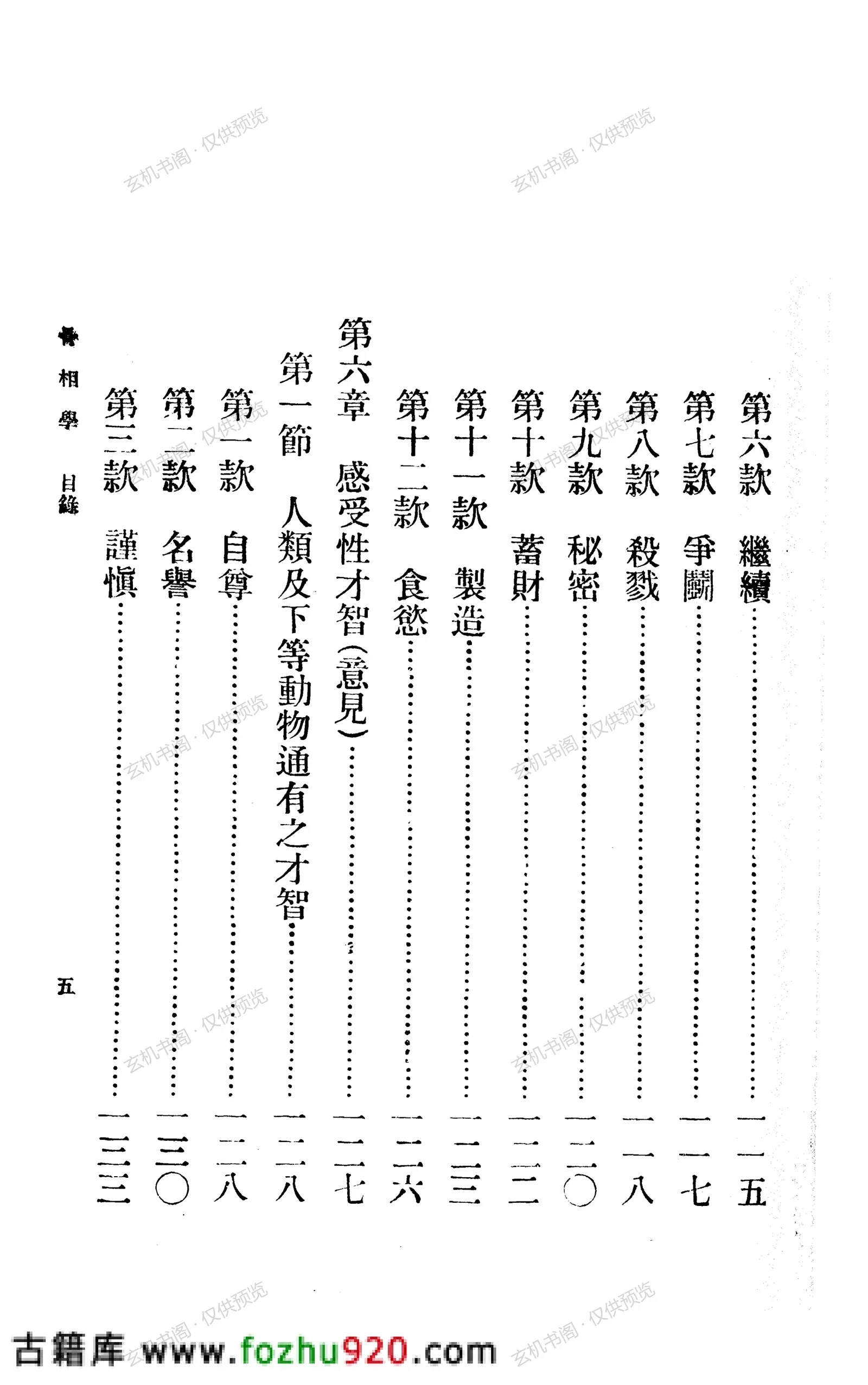
Titled Physiognomy of Bone Structure, this book opens with an introduction and a general survey of the field, covering its definition and history. It then discusses the foundations of bone physiognomy, the role of the brain in mental activity, the relationship between skull size, shape, and intellect, and the connection between bone structure and the brain. A long chapter examines its relations with zoology, physiology, psychology, pathology, physiognomy, aesthetics, education, anthropology, sociology, and law. The second part turns to the organs of the brain, the classification and measurement of intellect, cerebral functions and hemispheres, and various categories of innate and acquired abilities, including animal instincts and human faculties such as self-esteem, reputation, caution, combativeness, secretiveness, acquisitiveness, and constructiveness. The work blends traditional Chinese physiognomy with Western phrenological and physiological ideas, making it a valuable source for understanding the transmission of phrenology in modern East Asia.
Contents
Introduction: definition and history of bone physiognomy
General survey: foundations and relation to the brain
Chapter 7: relations with physiology, psychology, education, and other sciences
Special part: brain organs and classification of intellect
Methods of measuring intellect; cerebral functions and hemispheres
Affective faculties and animal instinctual faculties
Faculties shared by humans and lower animals
Key Points
Infers intellect and temperament from bone structure and skull shape
Treats the brain as the central organ of mental activity
Supports phrenology with physiology and psychology
Lists faculties shared with animals and unique to humans
Applies bone physiognomy to education, law, and sociology