Reading guide
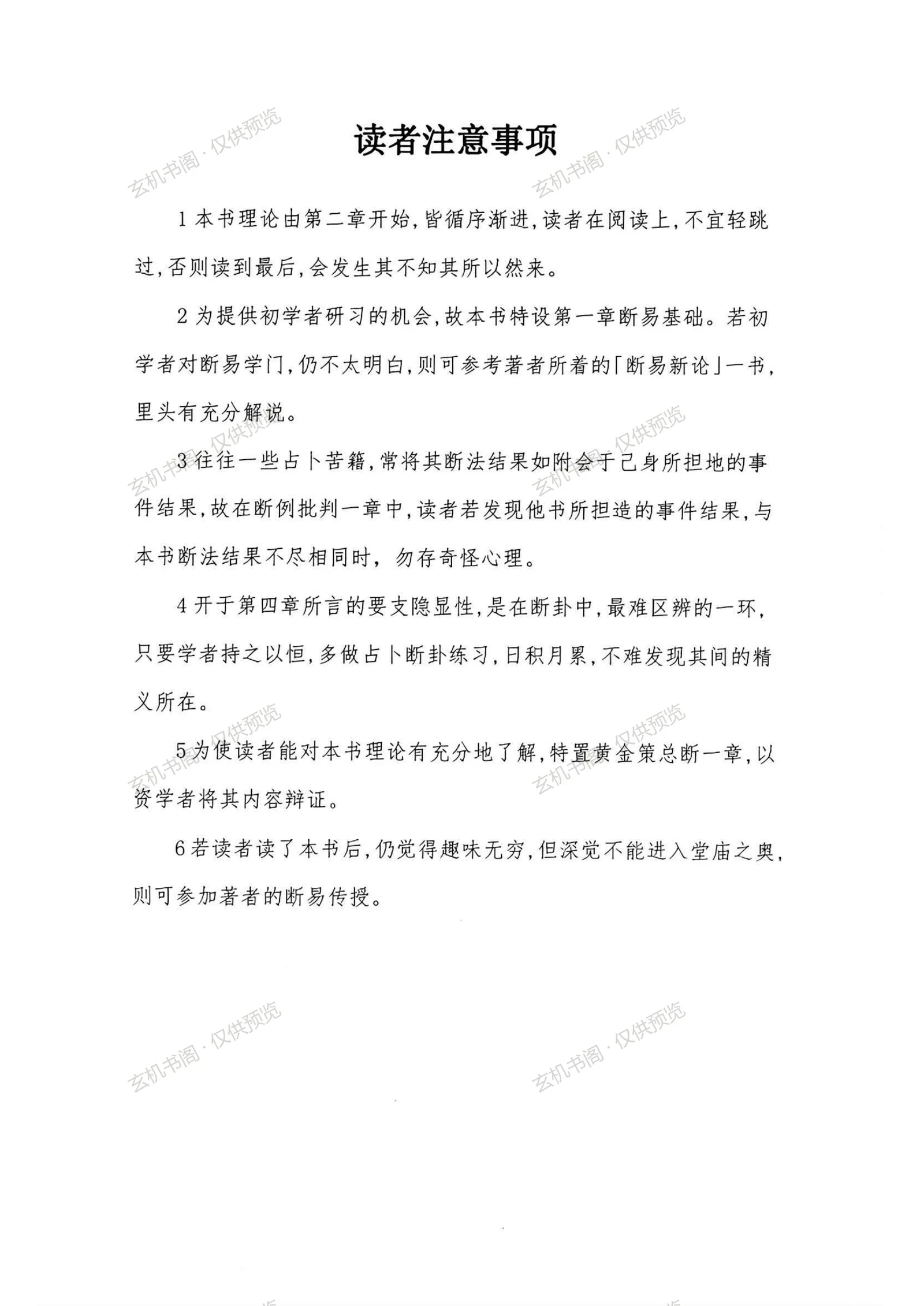
Content guideOverview
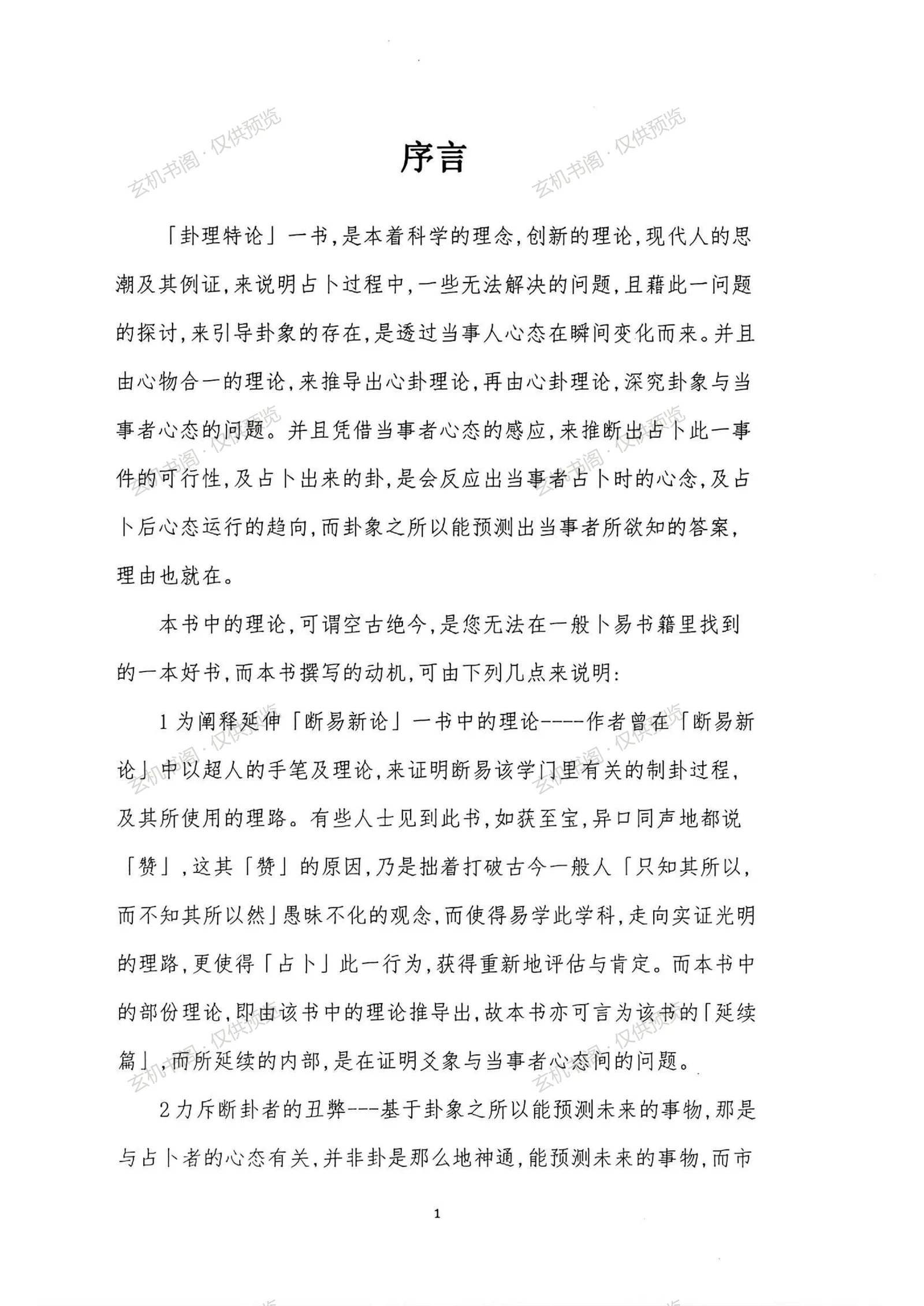
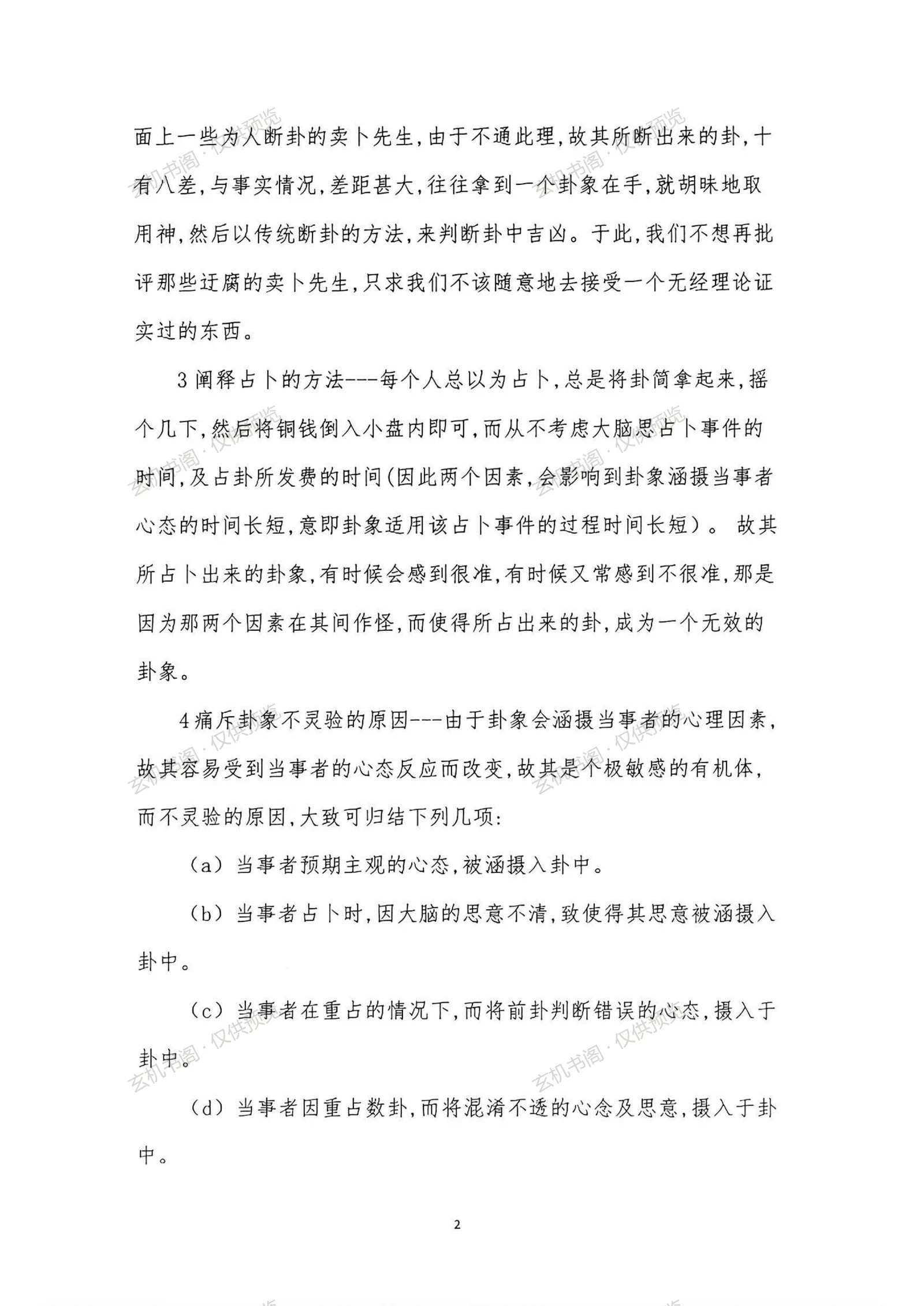
Presented as a simplified horizontal-typeset edition, this book extends the author's earlier work on hexagram interpretation. Rather than following the conventional route of selecting a yong shen and judging fortune, Tian Zhisheng builds a 'mind-hexagram theory' on the idea of mind-matter unity: a hexagram captures the querent's mental state at the moment of divination, which is why it can appear predictive and why it can also fail. Chapter 1 covers foundational material such as the names and notations of the sixty-four hexagrams, eight-palace transformations, the twelve branches, divination tools, the five spirits and casting procedure. Chapter 2 develops the mind-hexagram theory, including mind-matter unity, the influence of space-time structure on lines, and the effective time span of a casting. Chapter 3 examines why readings prove inaccurate, cataloguing interference from expectation, muddled thinking, repeated casting and external distraction. Chapter 4 addresses the hidden and manifest qualities of line branches, and Chapter 5 turns to line-change, world-line and moving-line characteristics. A closing section on the Golden Lock summary invites readers to test the ideas critically.
Contents
Ch.1 Foundations: hexagram names, eight palaces, branches and five spirits
Ch.2 Mind-hexagram theory: mind-matter unity and effective time span
Ch.3 Why readings miss: expectation, confusion and external interference
Ch.4 Hidden and manifest qualities of line branches
Ch.5 Mindset theory: changing, world and moving lines
Appendix: Golden Lock summary judgments
Key Points
Explains hexagrams as projections of the querent's state of mind
Introduces effective time span and coverage distance of a casting
Analyses invalid readings caused by expectation, confusion and repeated casting
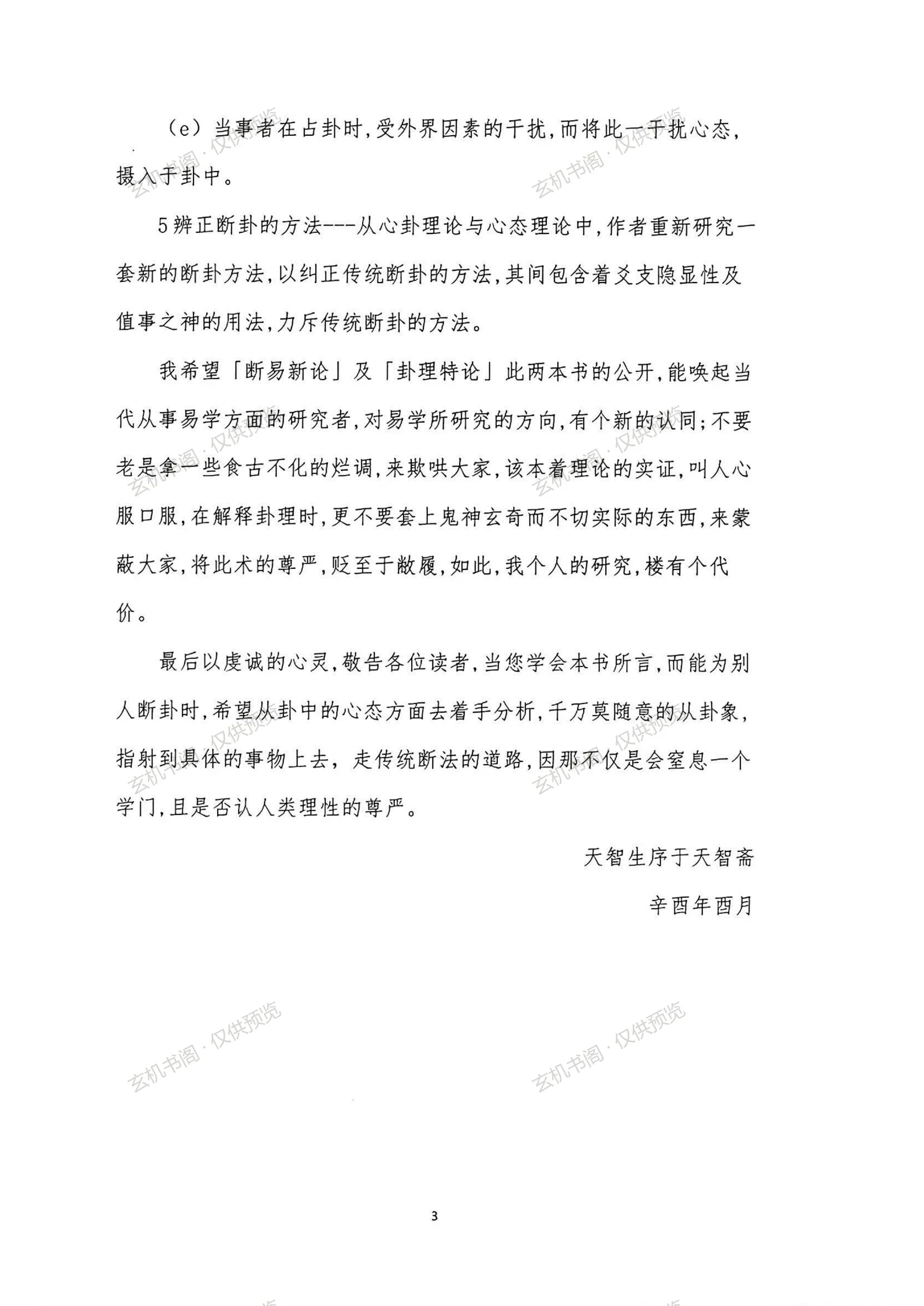
Treats hidden versus manifest line branches as the hardest skill
Criticises conventional yong shen fortune-telling and urges mind-first analysis