Reading guide
Content guideOverview
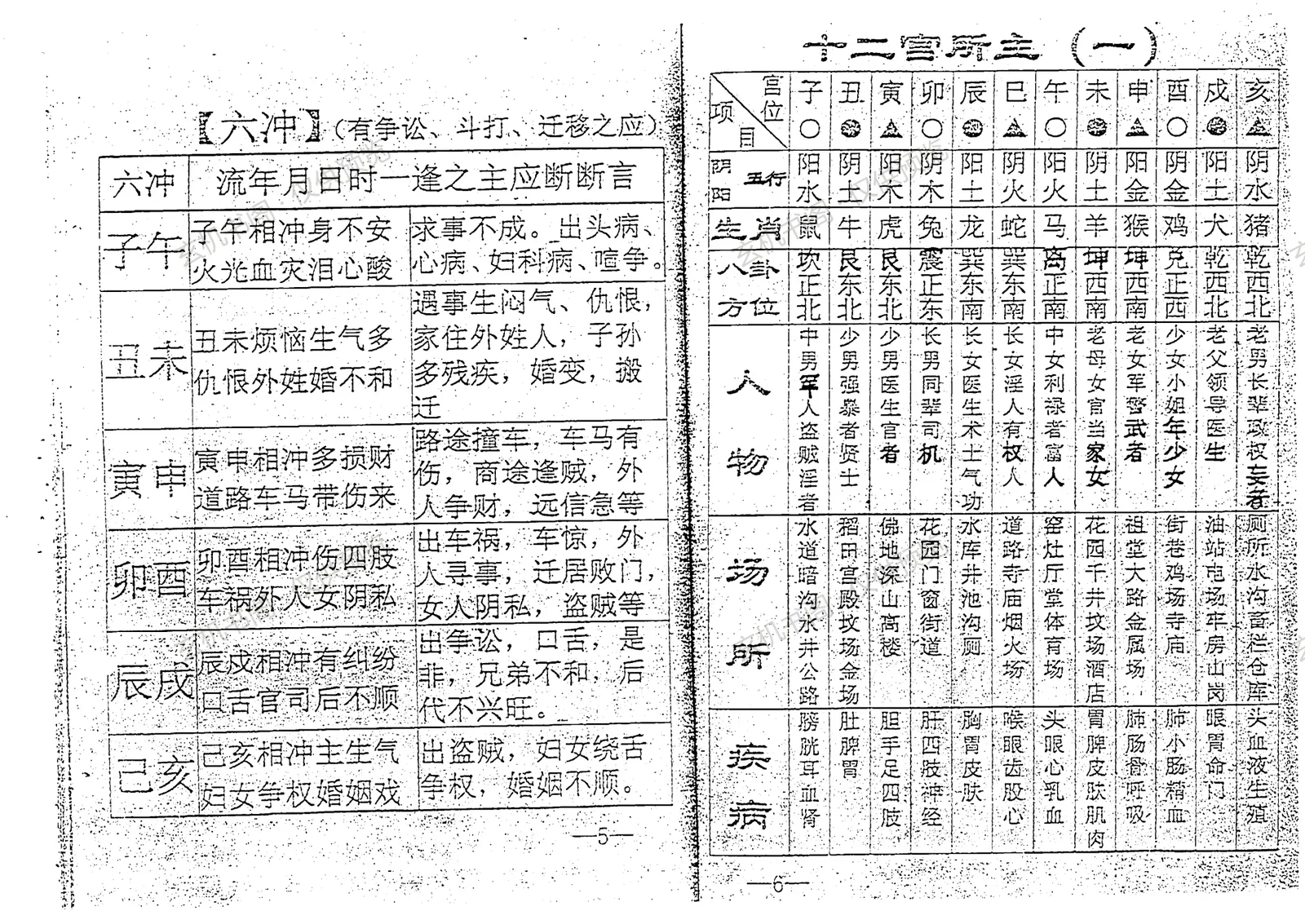
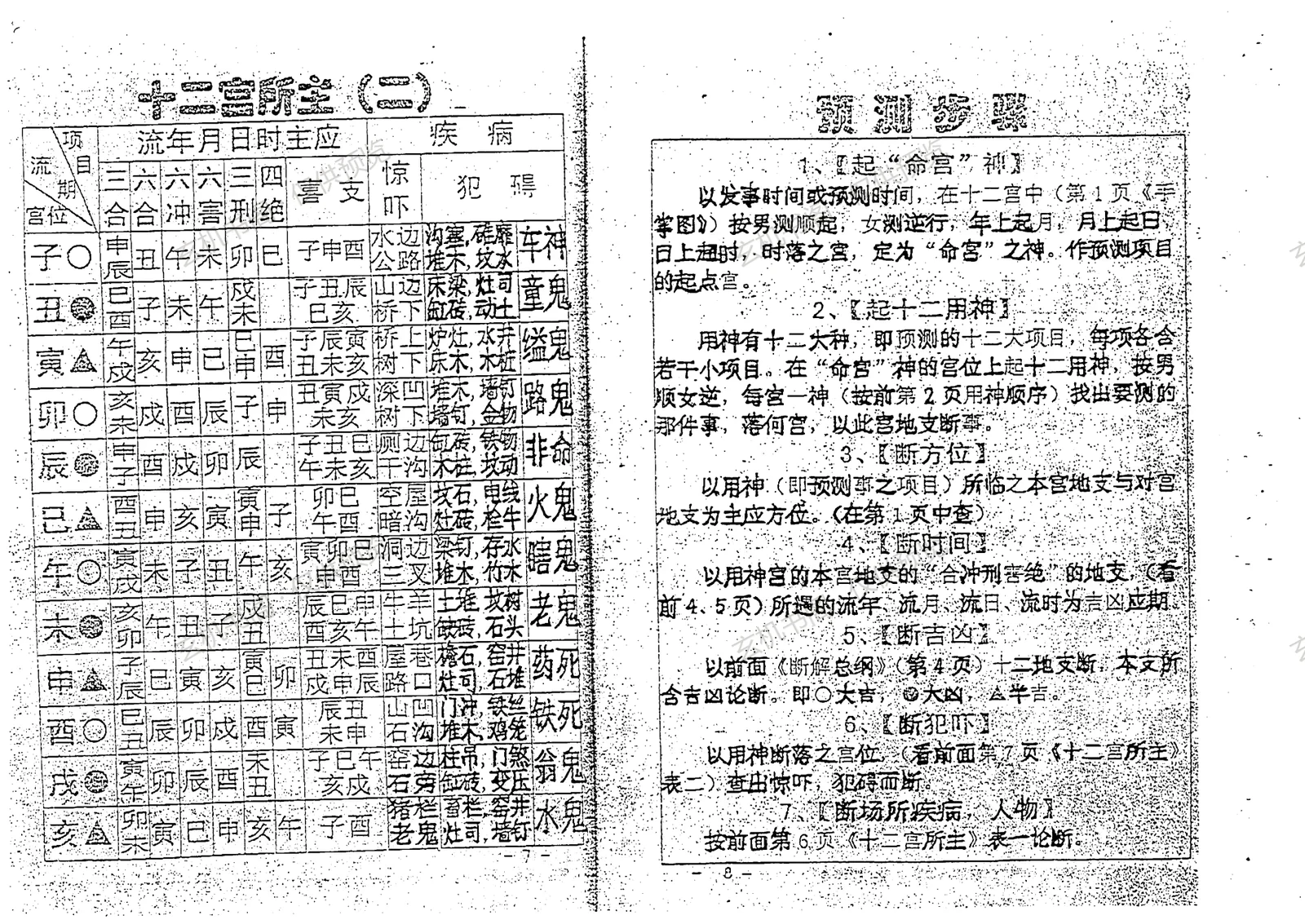
Compiled by Deng Hansong, this book presents a folk palm-calculation technique said to have been transmitted orally by an elderly blind monk at a mountain temple in Jiangxi. The left palm serves as the board, with the twelve earthly branches arranged across twelve palaces, each correlated with the five phases, directions, trigrams, and numbers. The method starts from the year, moves to the month, day, and hour with men counting forward and women backward; the hour palace becomes the 'life palace.' Twelve functional spirits—life palace, siblings, spouse, children, wealth, illness, travel, servants, career, property, fortune, and parents—are then distributed and judged by the branch of the palace where the queried item falls. The book includes opening incantations, palm diagrams, instructions for setting the life palace, lists of the twelve spirits, judgment tables for auspicious and inauspicious signs, clash and punishment formulas, and correlations of the twelve palaces with animals, people, places, and illnesses. It is a concise palm manual combining mnemonic verses with tables.
Contents
Preface: origin of the method and general rules
Opening incantation and the twelve palm palaces
Setting the life palace and ordering the twelve spirits
Table of the twelve spirits and their topics
Judgments of the twelve palaces and general criteria
Clashes, punishments, and six-conflict formulas
Correlations: people, places, illnesses
Summary of setting palaces, directions, and timing
Key Points
Twelve earthly branches placed on the palm as twelve palaces, with life palace set by gender direction
Twelve functional spirits distributed to locate the relevant palace for judgment
Three-level verdicts—great fortune, great misfortune, half fortune—read with clashes and punishments
Each palace correlated with animals, people, places, and illnesses