Reading guide
Content guideOverview
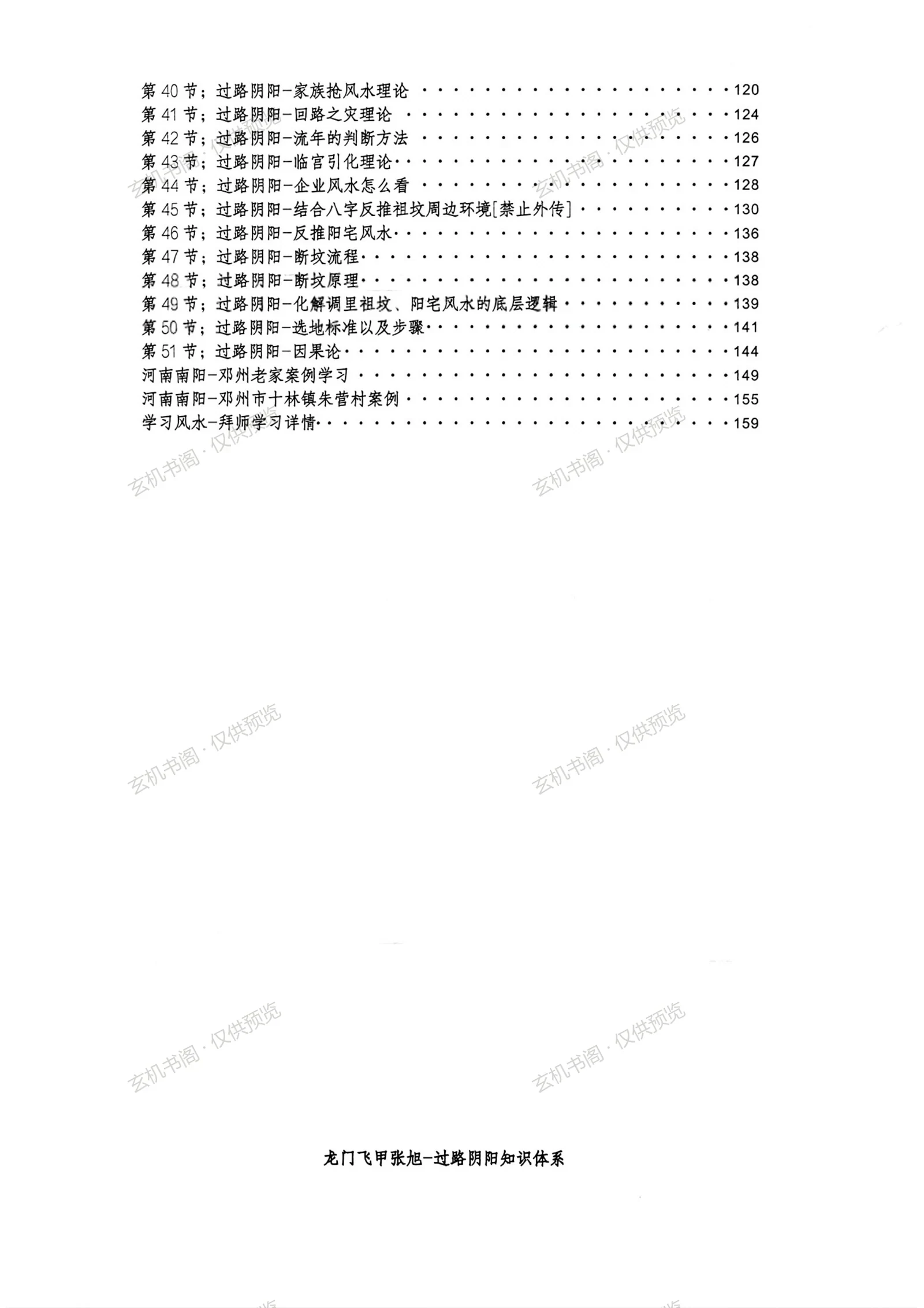
This is a senior-level feng shui coursebook compiled by Zhang Xu (under the name Longmen Feijia), dated 2024 and running about 170 pages across 51 sections plus case appendices. The table of contents centres on the Guolu Yinyang system: origins and why the school is not favoured in mountainous areas, yin-yang fundamentals, layout and flat-plane theory, house division, the definition of sand and water, two sets of bagua imagery (Daoist and scriptural), the four great roads and lines, dragon and facing theory, the Wenchang position, human-ding placement, ring and extension theories, promotion and wealth, official-nobility lines, marriage and illness theories, injury to descendants, chuanguan, day-stem theory, water methods, 24-mountain verdicts, timing methods and twelve-branch destiny. Later sections turn to yang-house and corporate feng shui, family competition for sites, the huilu disaster, annual judgement, reverse-deducing ancestral graves from bazi, grave-assessment procedures and remediation logic, closing with Dengzhou, Nanyang case studies and enrolment details. The style is a lecture transcript: granular, verdict-heavy and practical rather than systematic.
Contents
Introduction to Longmen Feijia and the old-method astrology feng shui lineage
Fundamentals: yin-yang, layout, flat-plane theory, house division
Bagua imagery and scriptural-school eight-palace verdicts
Sand and water definitions, human-ding placement and force
Specialised theories: marriage, illness, injury, chuanguan
Yang-house and corporate feng shui, grave assessment and remediation
Dengzhou, Nanyang case studies and study enrolment
Key Points
Uses Guolu Yinyang as the spine, linking blunt verdicts, six-relations theory and Jinsuo Yuguan
Works through sand-water, bagua imagery, 24-mountain verdicts and timing methods
Dedicated sections on marriage, illness, injury to descendants and promotion/wealth
Later chapters shift to yang houses, corporate feng shui and reverse-deducing graves
Includes Dengzhou field case studies; reads as a lecture transcript