Reading guide
Content guideOverview
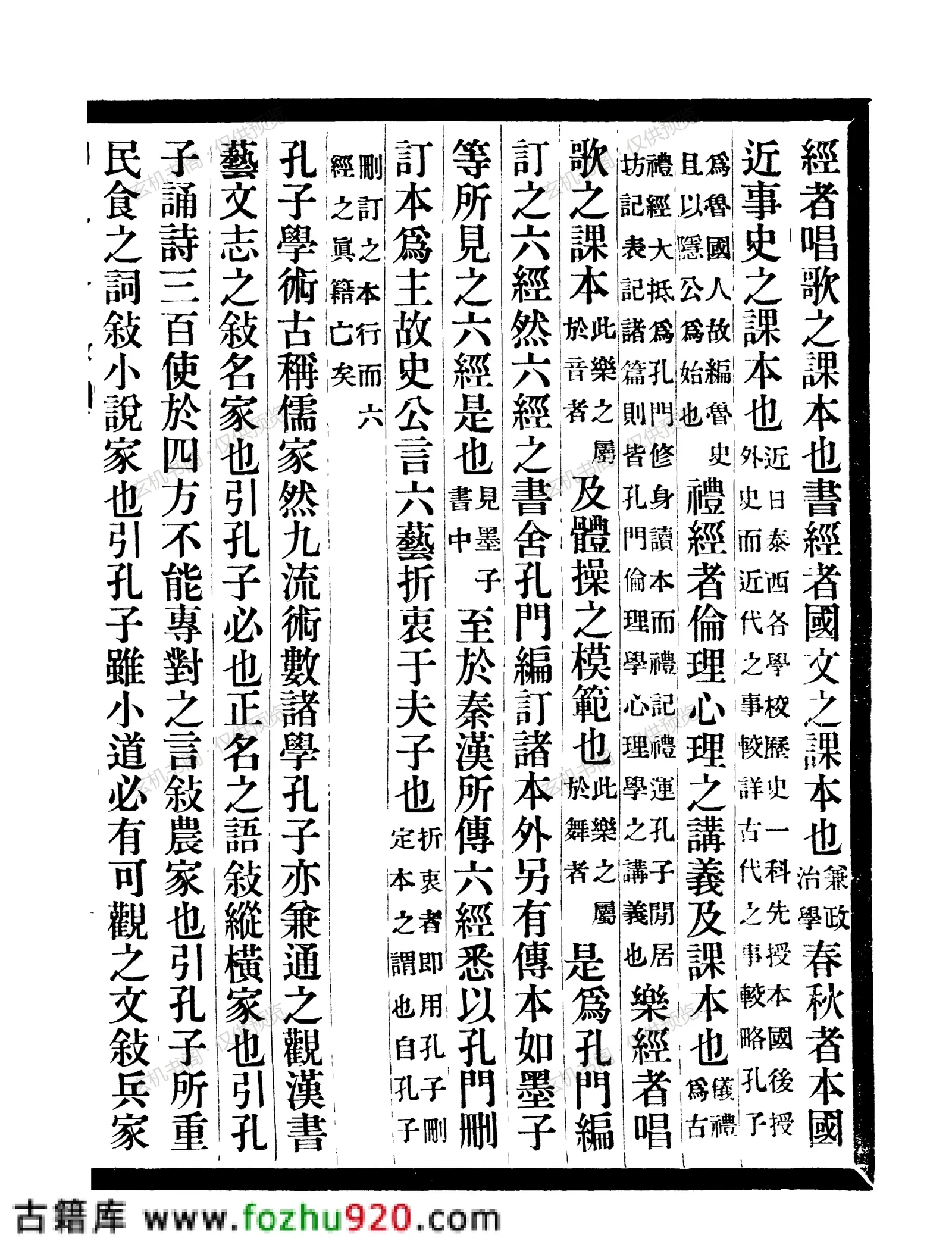
Guoxue Fawei is a general survey of classical Chinese learning by the modern scholar Liu Guanghan. Based on the cover, title page, and preface visible in the images, the work is marked as volume thirteen and printed by the Ningwu Nan family. In the preface the author states that having read Zhang's works in his youth, he sought to continue that line of inquiry, aiming to clarify old texts and distinguish the Nine Schools. The main text centers on the origins of the Six Classics, tracing divination practices back to the Tang-Yu era, then discussing Confucius's editing of the Poetry and Documents, his regulation of rites and music, his commentary on the Changes, and his compilation of the Spring and Autumn Annals. The author argues that the Six Arts were not the old statutes of the Duke of Zhou but were compiled and transmitted by Confucius, citing the Records of the Grand Historian and the Mozi as supporting evidence. The work also examines the relationships among the Nine Schools and the Ten Philosophers, noting that Confucianism absorbed various streams and that each philosophical school had its own foundations. It is a Republican-era study of classical and philosophical learning, useful for readers interested in the history of Chinese classical scholarship, though this digital copy ends at page six and is incomplete.
Contents
Cover title and volume thirteen
Inner title page printed by the Ningwu Nan family
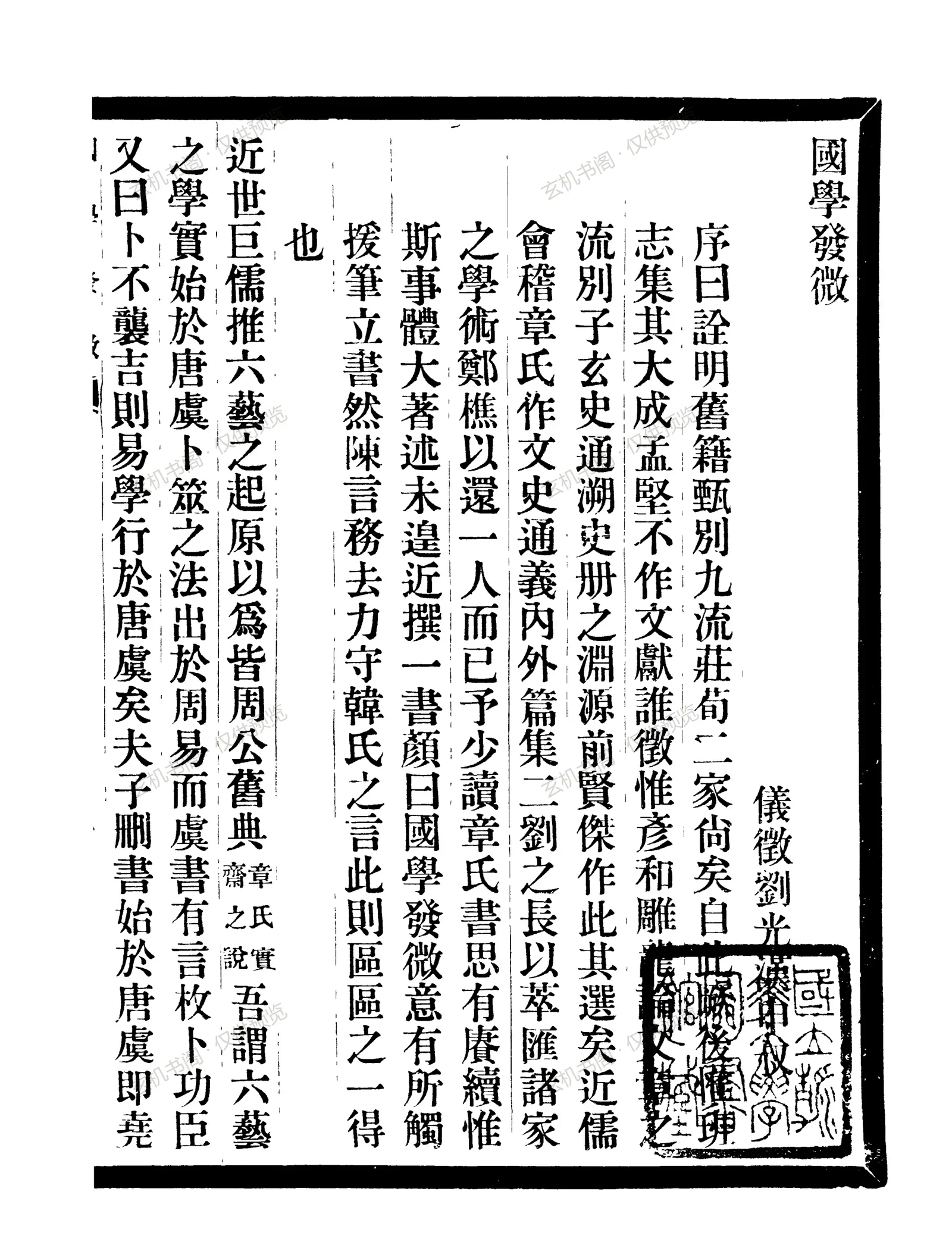
Author's preface on clarifying old texts and the Nine Schools
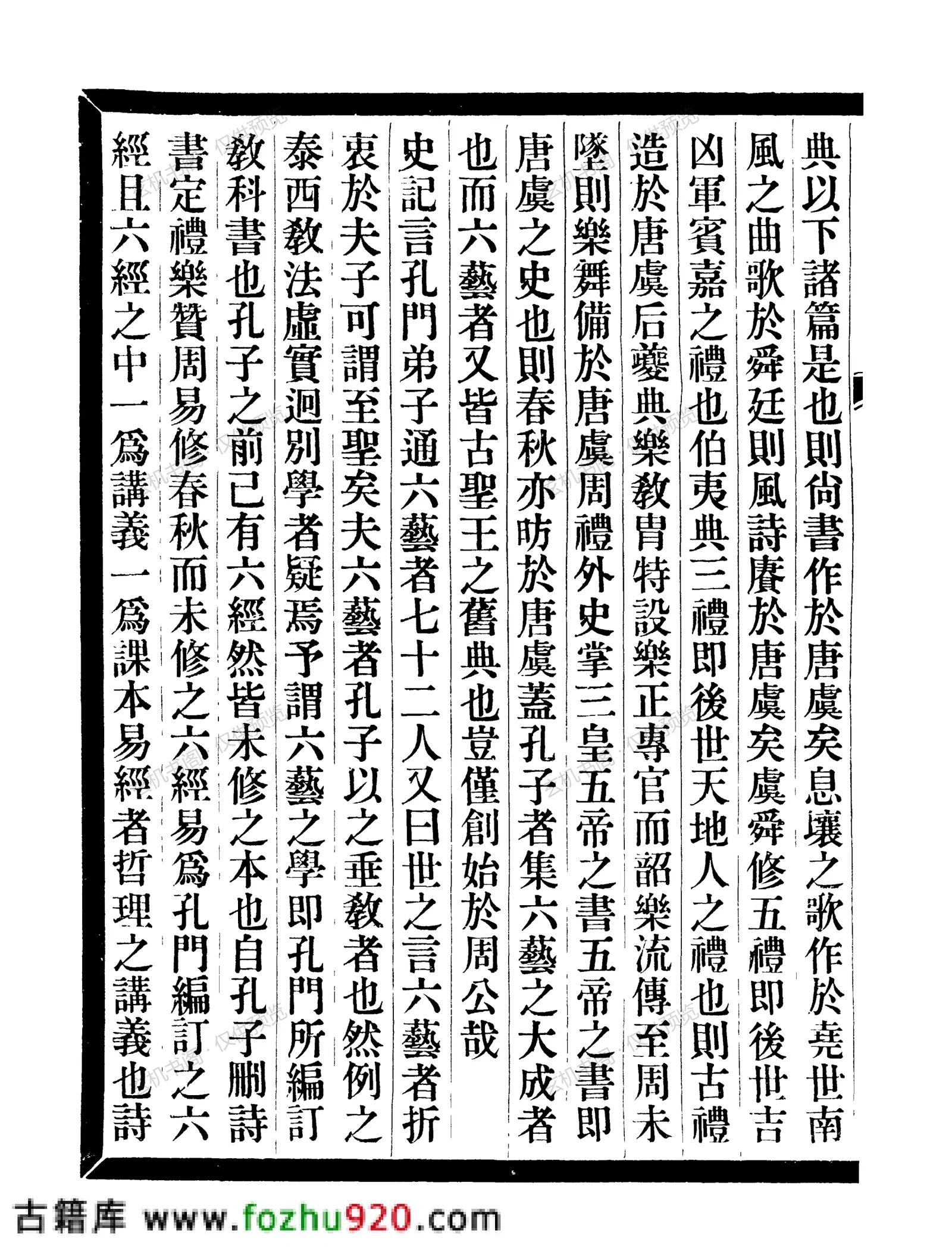
On the origins of the Six Classics and Confucius's editing
On the Six Arts as Confucian teaching materials
On the Nine Schools and the mutual understanding of the philosophers
Key Points
Focuses on the origins of the Six Classics and Confucius's role in editing them
Argues the Six Arts were not the Duke of Zhou's old statutes but Confucius's compilation
Discusses the Nine Schools and Ten Philosophers, stressing Confucianism's broad absorption
Cites the Records of the Grand Historian and Mozi as supporting evidence