Reading guide
Content guideOverview
This book, attributed on the cover to Wang Yangguang as volume four of his series and dated October 2002, presents a systematic method of Hetu-Luoshu fate calculation. The procedure begins with the so-called innate BaZi, converts the stems and branches into numbers according to Hetu-Luoshu principles, and derives the 'innate hexagram.' It then establishes the Yuantang line, uses the innate hexagram and Yuantang line to generate the 'acquired hexagram,' and from these deduces hexagrams for major luck periods, annual, monthly, and even daily cycles. Finally, it analyzes the hexagrams to judge good and bad fortune. The table of contents covers the Hetu, Luoshu, innate hexagram, Yuantang, acquired hexagram, supreme hexagram, major luck hexagram, annual hexagram, monthly hexagram, meanings of the sixty-four hexagrams, and Hetu-Luoshu judgment texts. The book provides Hetu and Luoshu diagrams, stem and branch number tables, and rules for the Eight Trigrams and stem-branch correspondences. It is a practical guide to the procedures and interpretive principles of Hetu-Luoshu numerology.
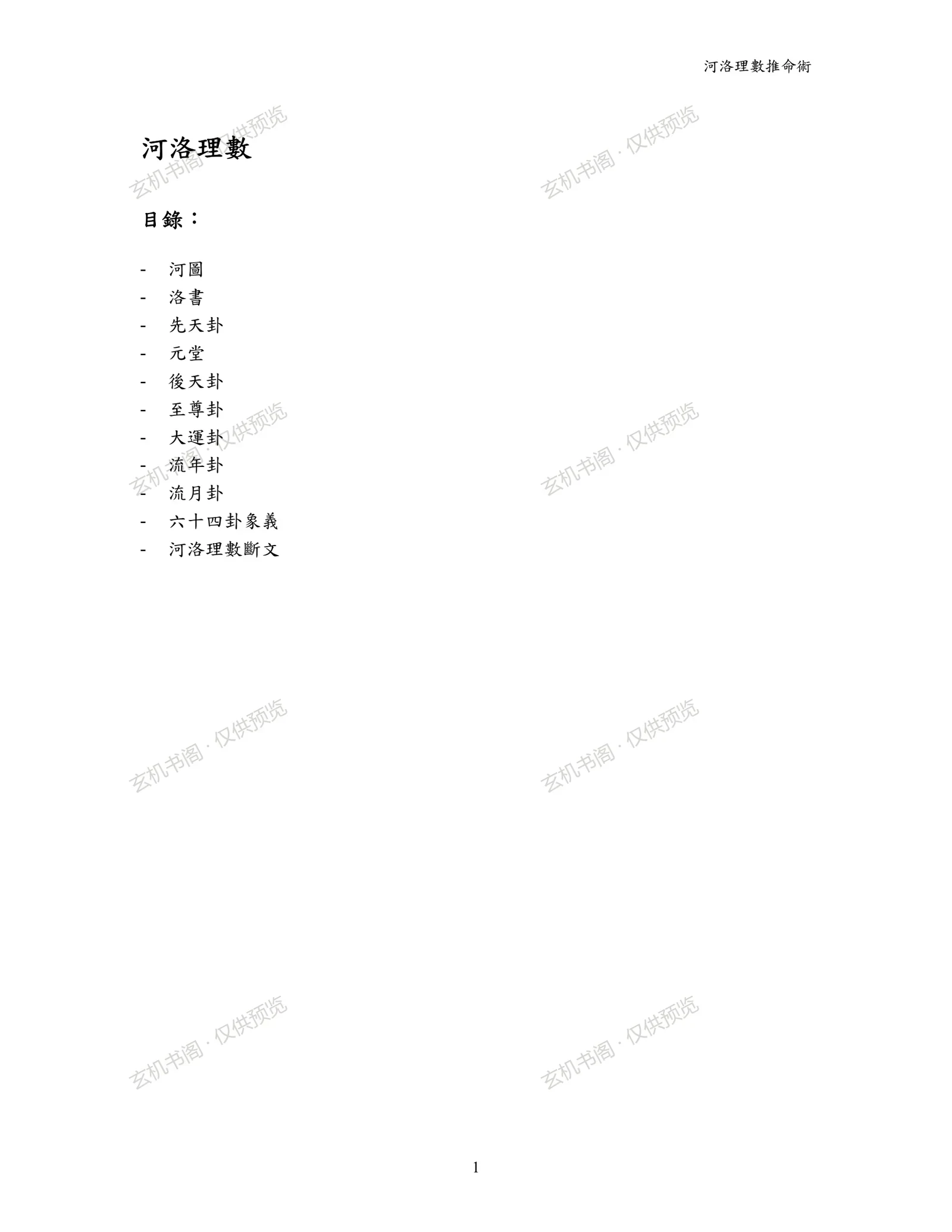
Contents
Contents: eleven topics from Hetu to judgment texts
Overview of the six-step fate calculation method
Hetu diagram and branch number derivation
Luoshu diagram and Later Heaven trigram positions
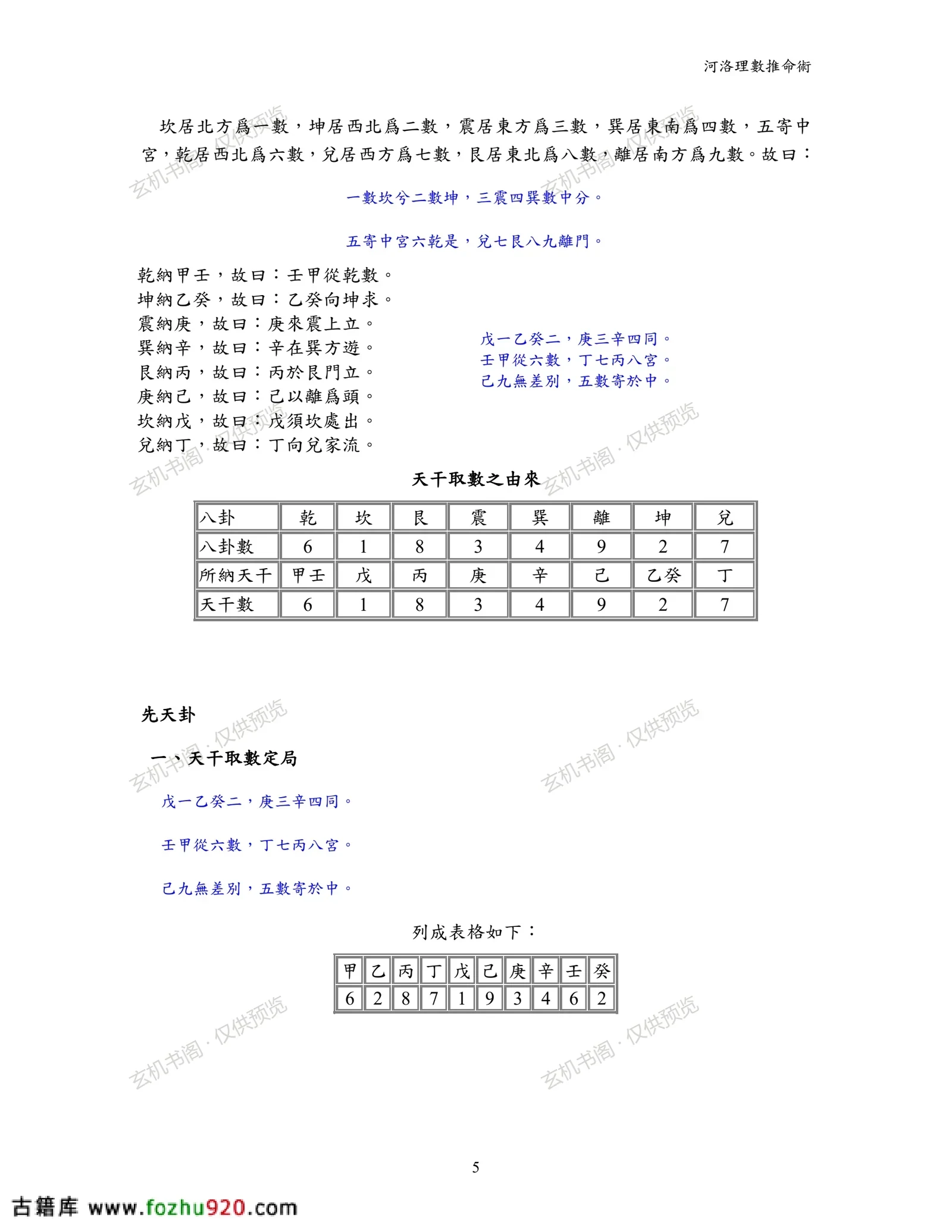
Stem numbers and trigram stem correspondences
Innate hexagram generation and Yuantang line
Key Points
Converting BaZi stems and branches into numbers and hexagrams
Integrating Hetu-Luoshu numbers with Eight Trigrams
Distinguishing innate and acquired hexagrams and Yuantang line
Extending analysis to major luck, annual and monthly hexagrams
Including stem and branch number tables and mnemonic verses