Reading guide
Content guideOverview
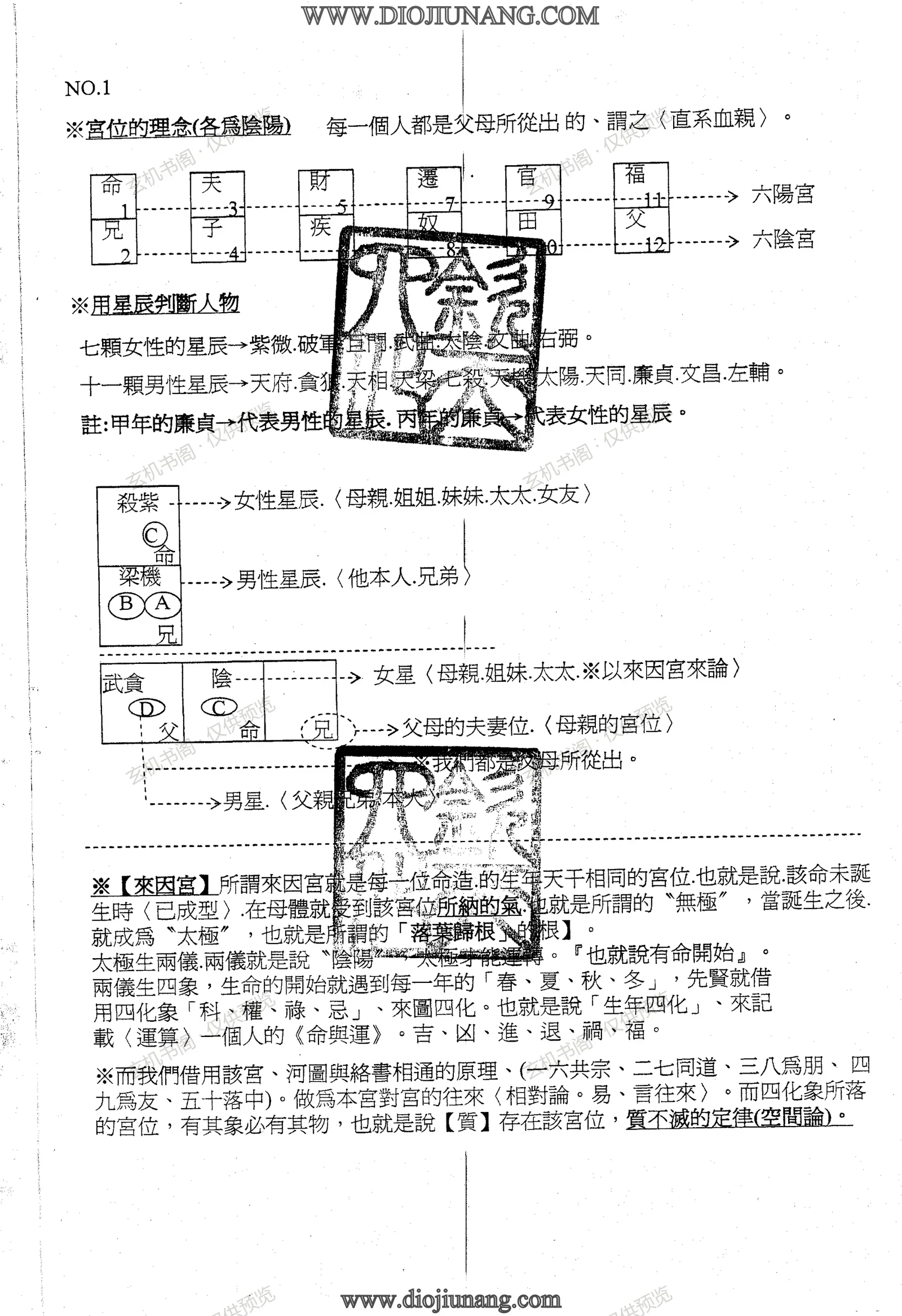
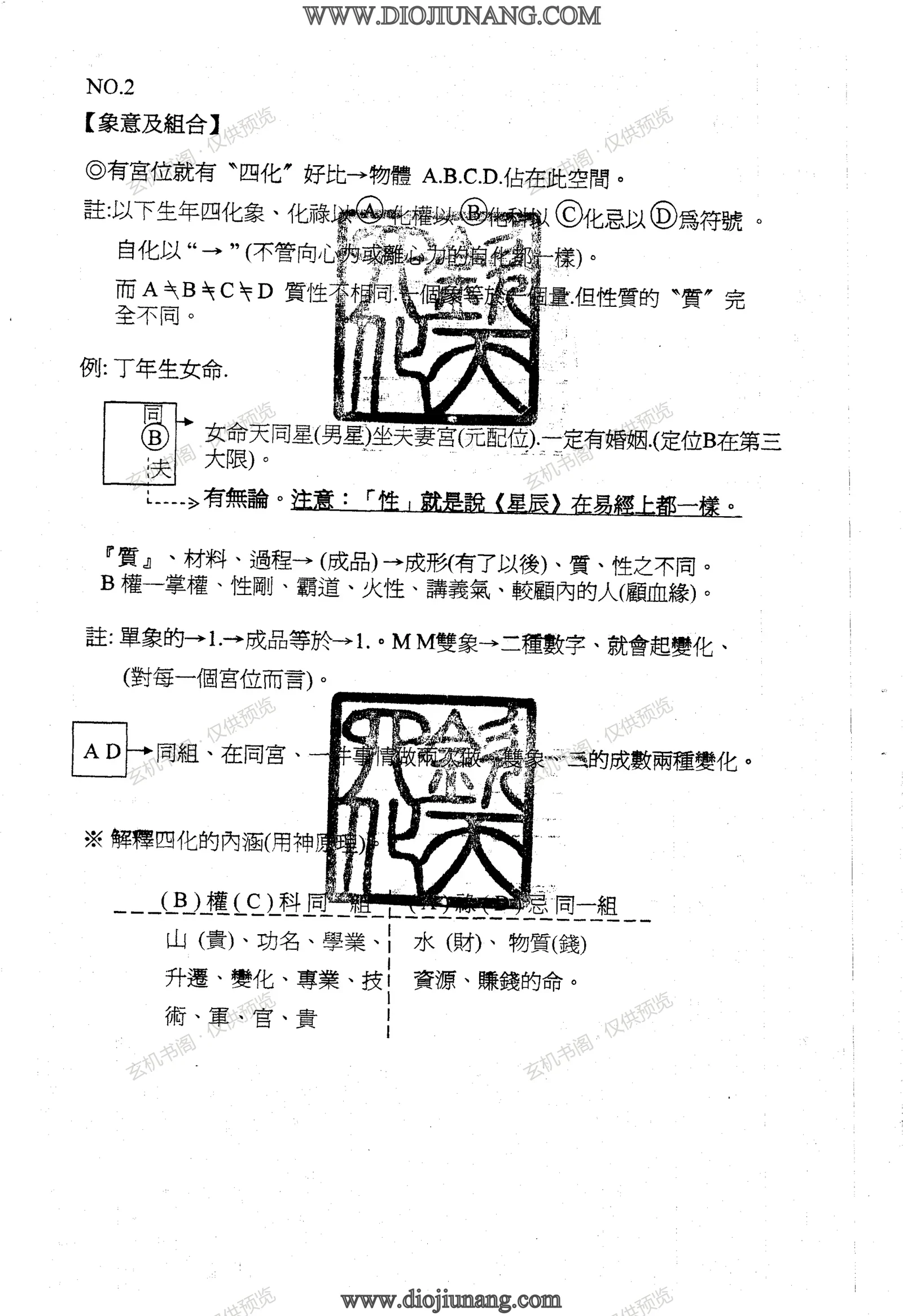
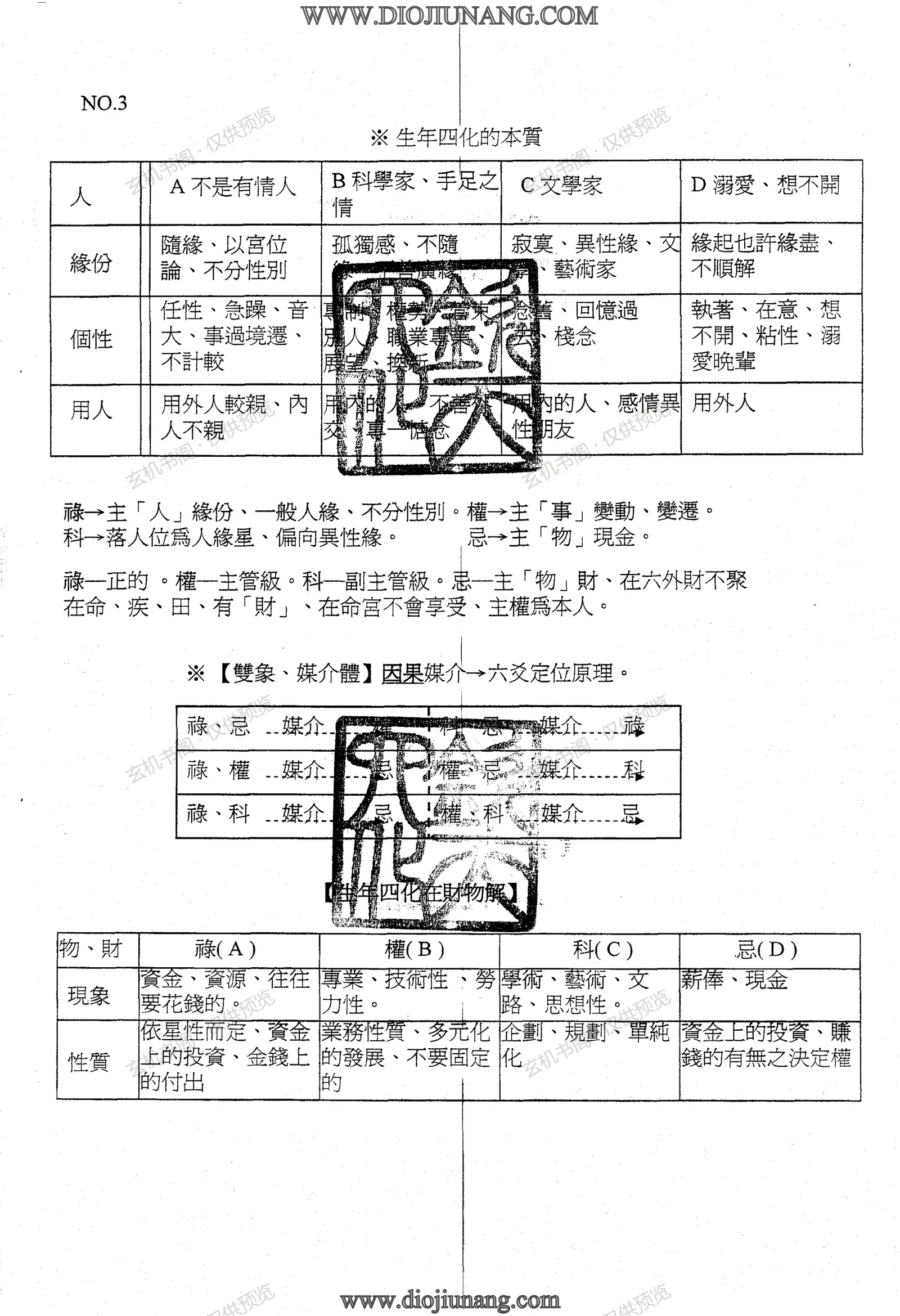
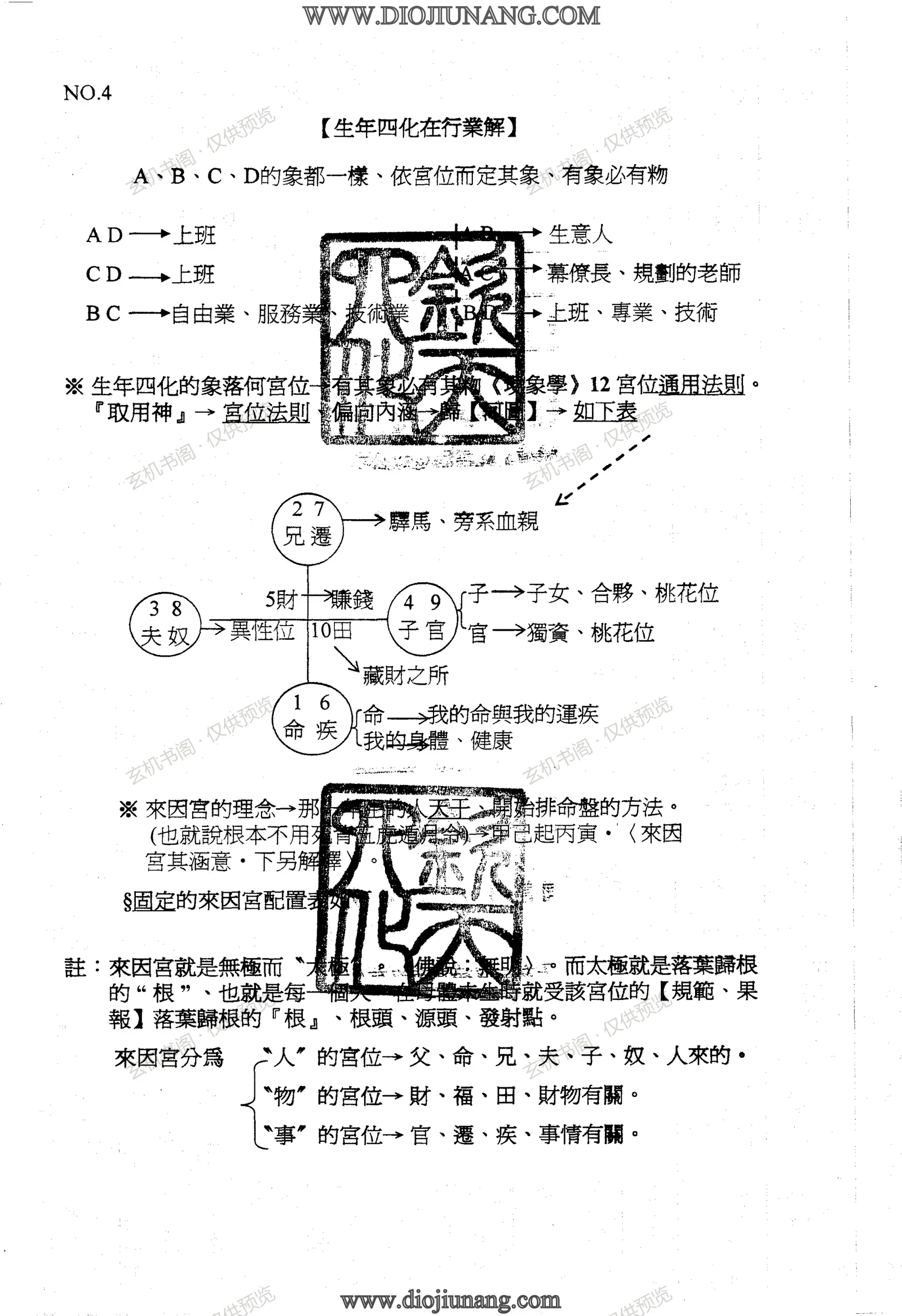
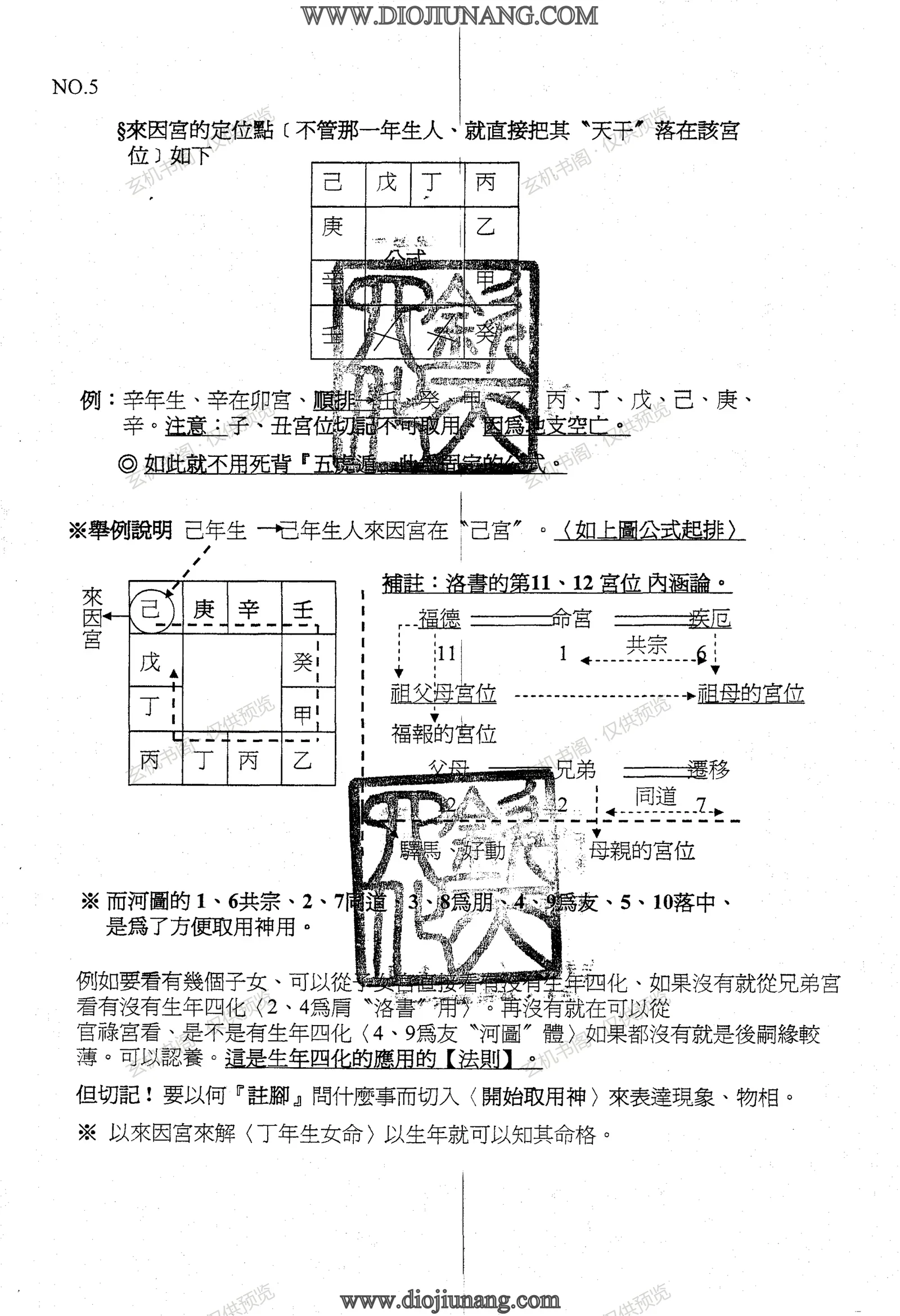
This is the first volume of Zhong Mingxiu's advanced lecture notes on Huashan Qintian Four Transformations, an advanced branch of Zi Wei Dou Shu. The visible pages begin with the concept of the twelve palaces, their yin-yang polarity and blood-relation meanings, then distinguish female and male stars for judging people, noting that Lian Zhen can represent a male in a Jia year and a female in a Bing year. The core teaching is the 'origin palace' (lai yin gong): the palace where the birth-year heavenly stem falls, treated as the root or taiji from which the four transformations arise. The text also draws on Hetu-Luoshu number pairs to explain palace correspondences and the 'substance' of transformed stars. Later sections tabulate the nature of the four transformations—Lu for affinity, Quan for affairs, Ke for relationships, Ji for matters and money—and show how to select the relevant palace for career, relatives and wealth. The style is formula-driven and practical, suited to readers who already know basic Zi Wei Dou Shu.
Contents
Palace theory, yin-yang and kinship
Judging people by male and female stars
Definition of the origin palace and taiji
Nature of the four transformations
Image combinations and dual media
Birth-year transformations in career and palace selection
Hetu-Luoshu and locating the origin palace
Key Points
The origin palace is set by the birth-year stem and treated as the chart's root
Lu, Quan, Ke and Ji govern affinity, affairs, relationships and substance respectively
Male and female stars classify relatives; Lian Zhen shifts by year stem
Hetu-Luoshu number pairs guide palace correspondences and selection
Every transformed star has an image tied to its palace