Reading guide
Content guideOverview
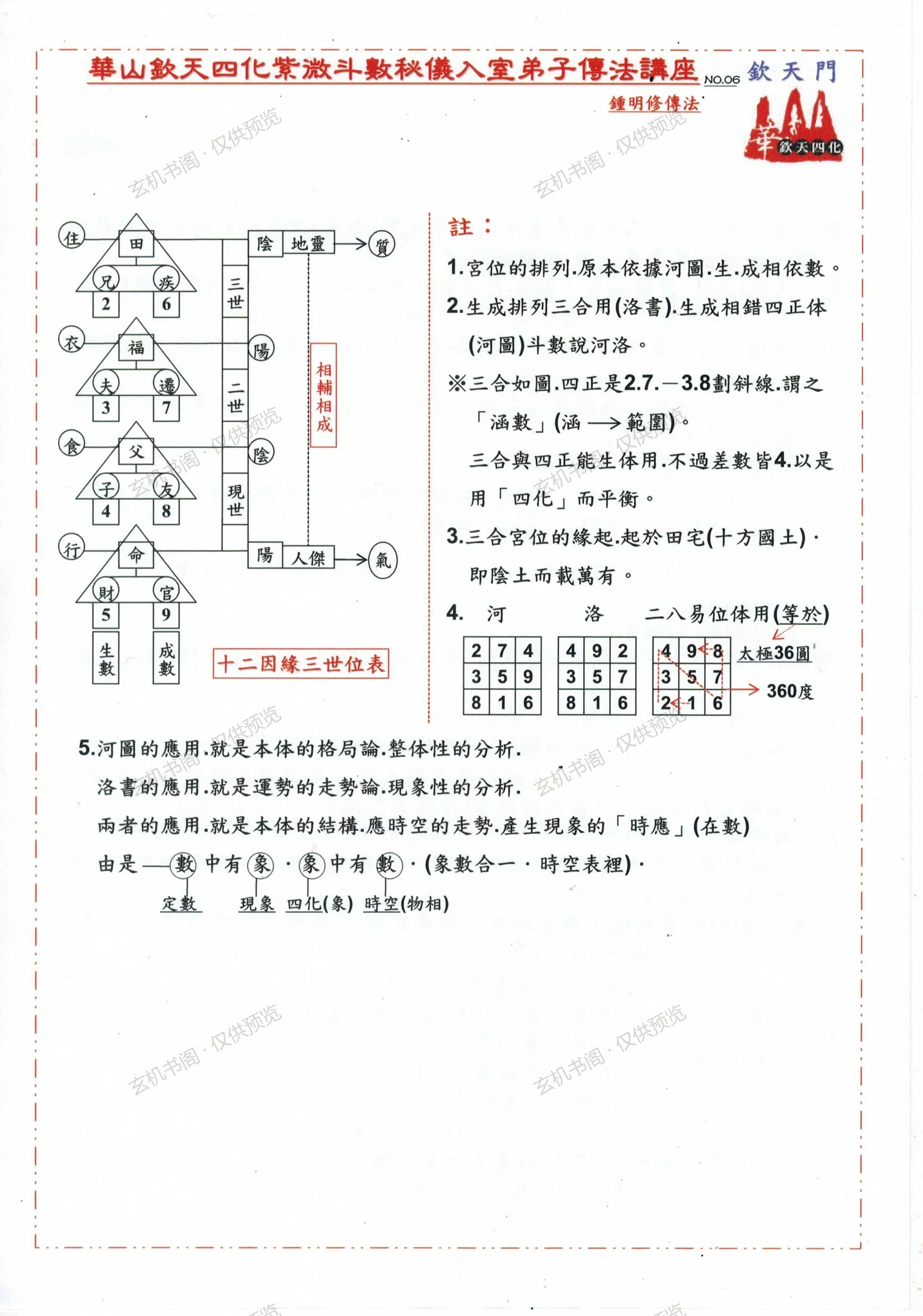
These are Zhong Mingxiu's lecture notes on the Huashan Qintian four-transformation Ziwei Doushu lineage. It begins by framing Ziwei Doushu as a structure of heavenly-stem qi, palace quality and transformation quantity, then centers on the method of twelve palaces and twelve causes. Hetu is used to explain the unchanging inner meaning of each palace, while Luoshu explains their shifting applications, producing two ways of reading a chart: by palace alone, or by image together with palace. Worked chart examples show how birth-year and flying transformations combine across the same palace, opposite palace and trine palaces, and how these are used to judge career, marriage, partnership and wealth. The text closes with tables linking the three-life positions to Hetu-Luoshu numbers.
Contents
The structure of Ziwei Doushu: stem qi, palace quality and transformation
Inner meaning of the twelve palaces and Hetu's unchanging order
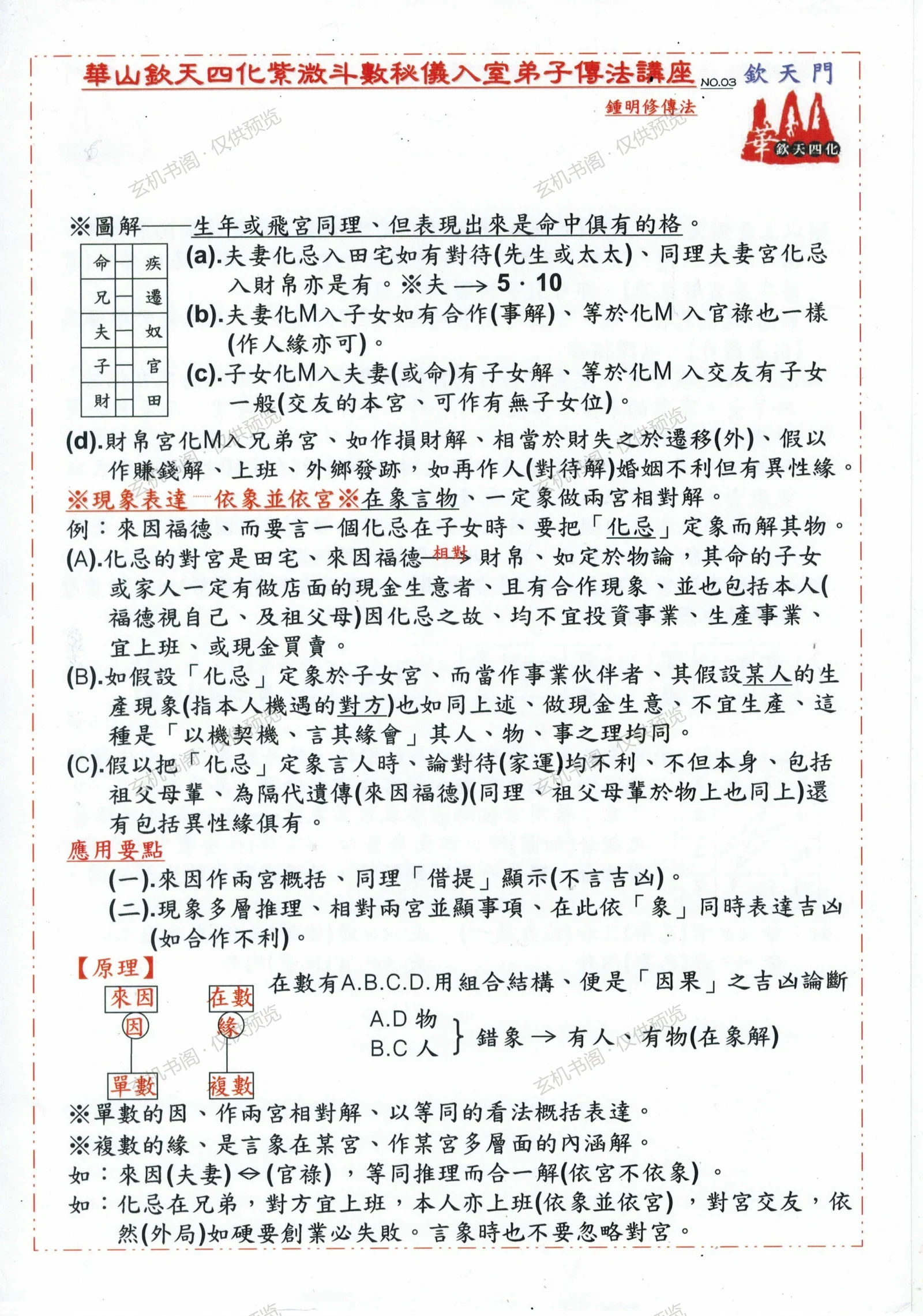
Origin palace, opposite palace and trine-palace image setting
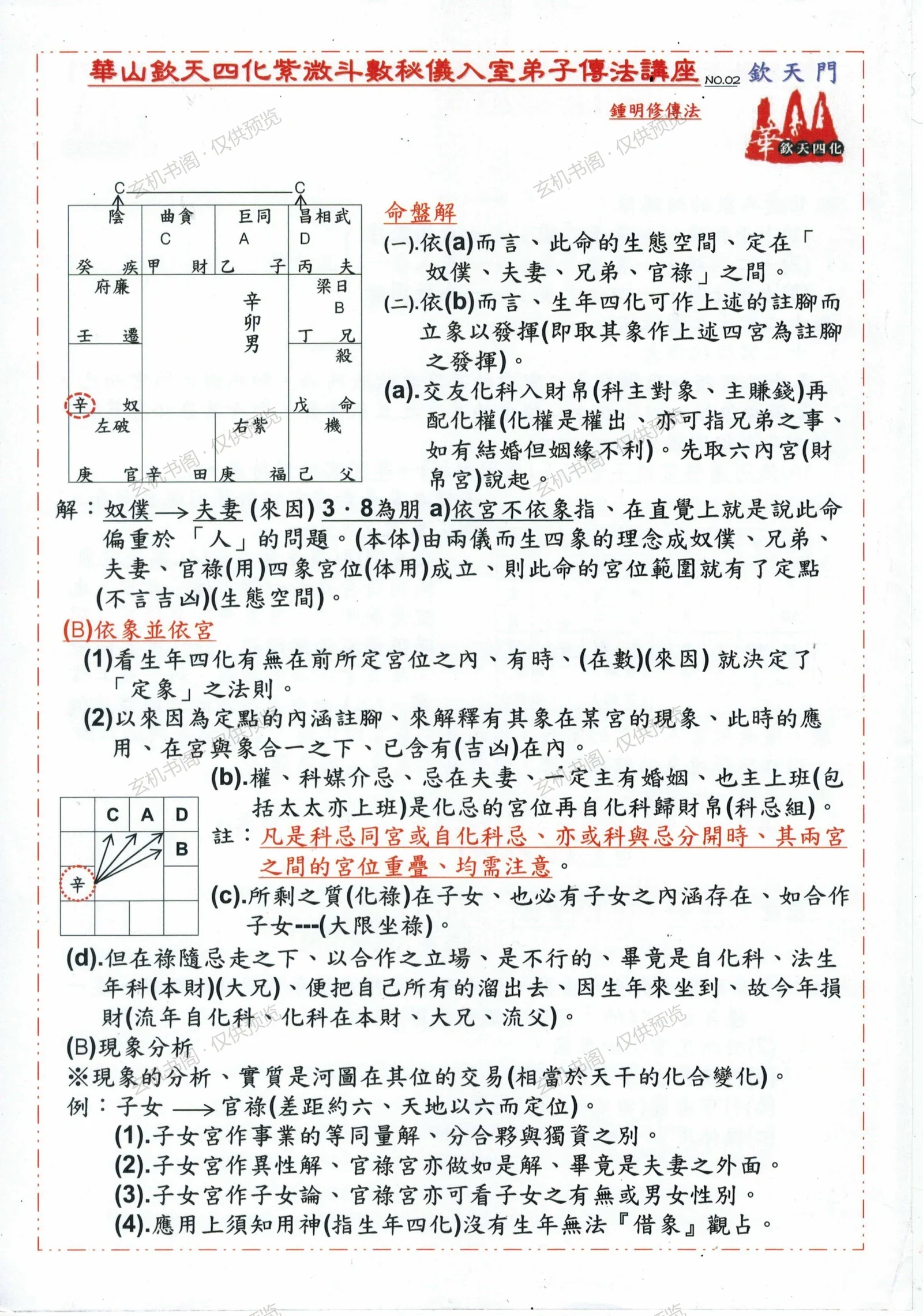
Image and palace combined: birth-year and flying transformations
Phenomenon analysis: partnership, marriage and career
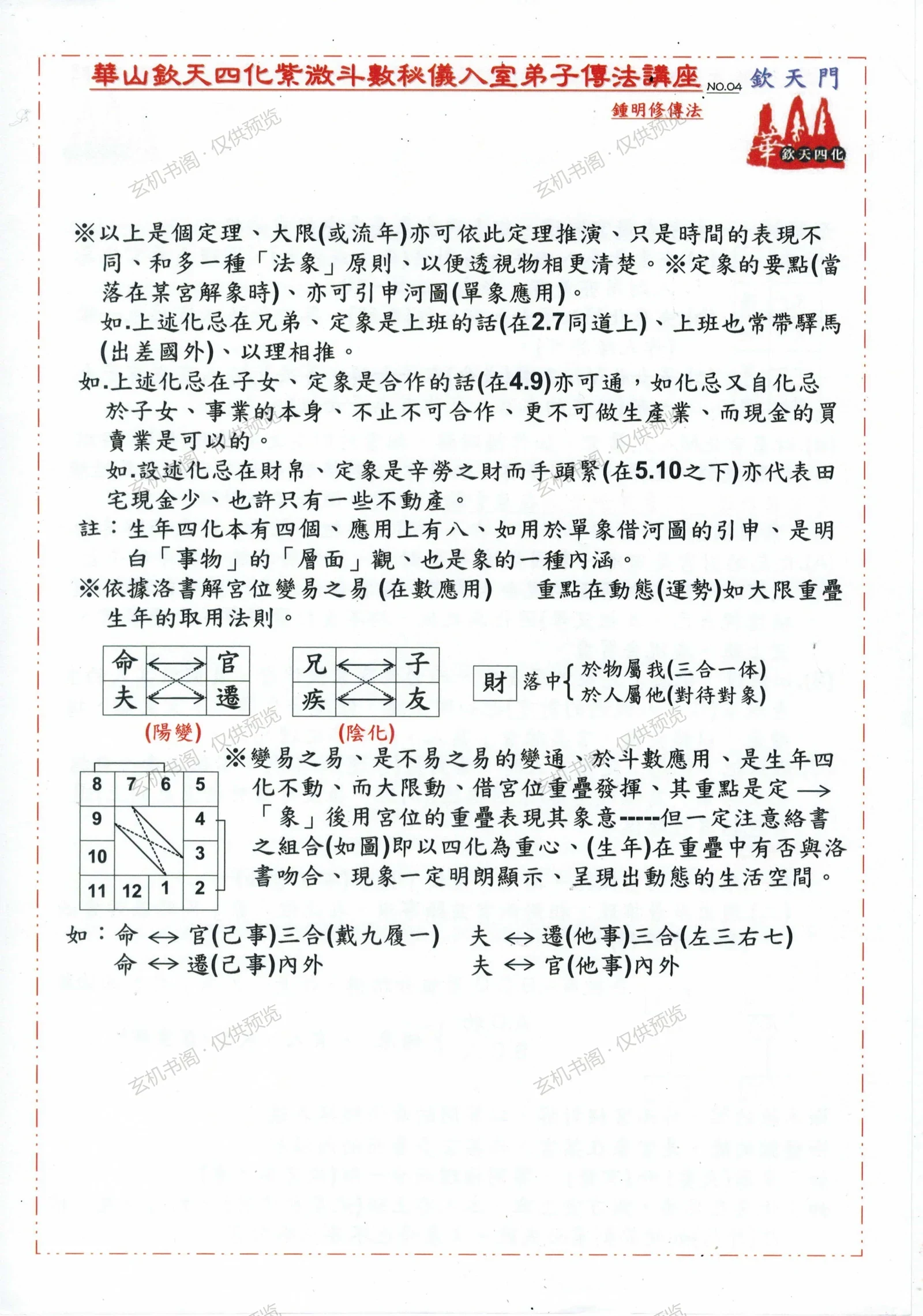
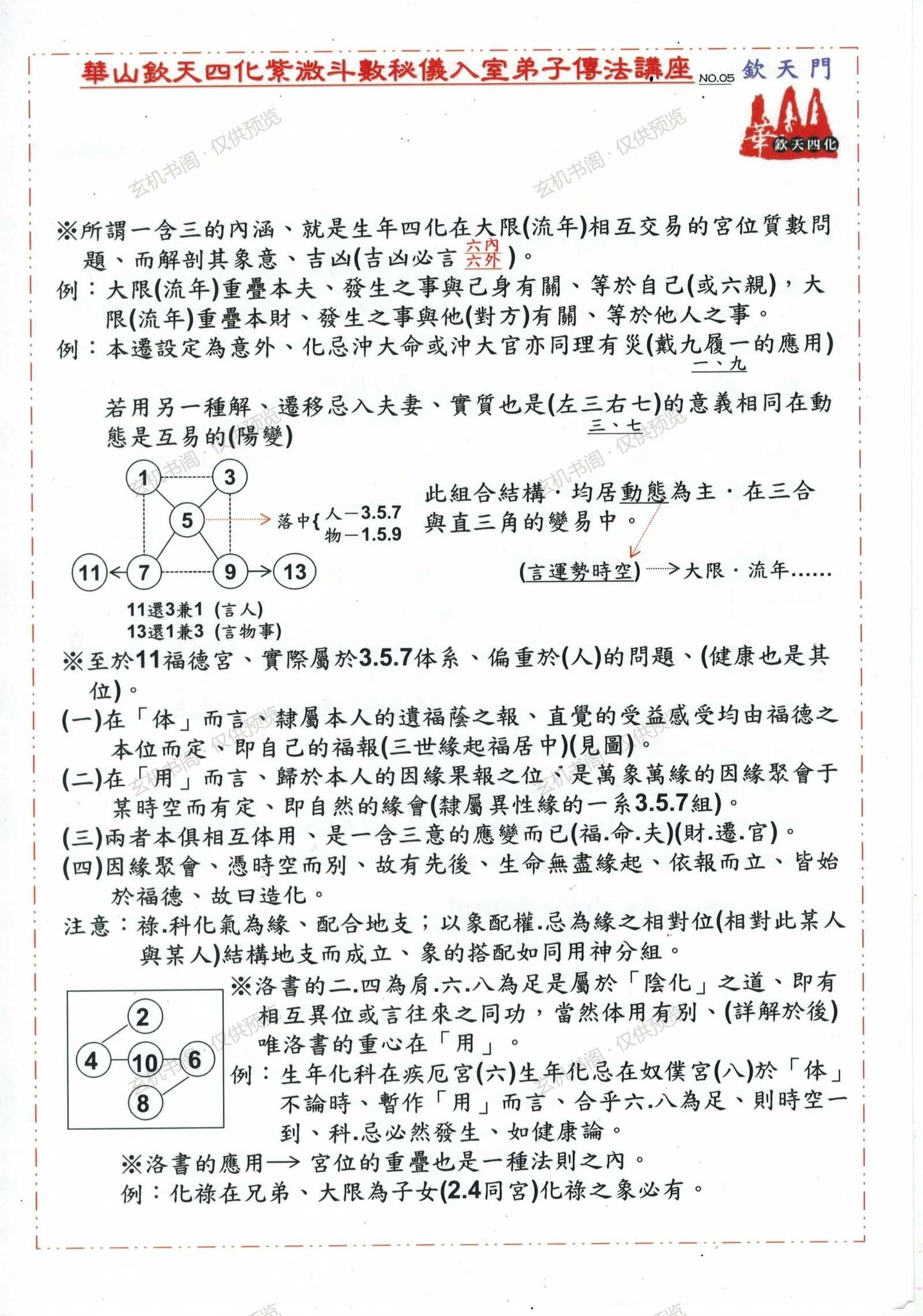
Luoshu change and the use of annual and decade cycles
Three-life position table and Hetu-Luoshu summary
Key Points
Hetu-Luoshu used to organize palaces and distinguish substance from function.
Two reading paths: by palace alone, or by image together with palace.
Birth-year and flying transformations layered across palaces to fix images.
Palace relations used to infer career, marriage, partnership and wealth.
Numbers and images treated as a single unified system.