Reading guide
Content guideOverview
This work is a direct, sentence-by-sentence explanation of the 'Thousand-Gold Rhapsody' (Qianjin Fu), a core general-judgment text in the Golden Mirror (Huangjin Ce) tradition of liuyao divination. The visible body text begins with the principles of movement and stillness, yin and yang, and reversal and transformation, establishing the general framework for hexagram interpretation. It distinguishes moving and static lines, explains old yang, old yin, young yin and young yang, and shows how single, broken, crossed and double lines relate to line change. It then uses natural analogies—extreme heat producing wind, extreme cold producing rain, and things reversing at their extreme—to argue that all transformation follows the rise and fall of yin and yang. The commentary further insists that despite the multiplicity of images, one coherent principle runs through them, and it discusses how excess should be reduced and deficiency supplemented to reach balance. The visible pages come from a library-held copy, but the author and publication date cannot be confirmed from these first six pages.
Contents
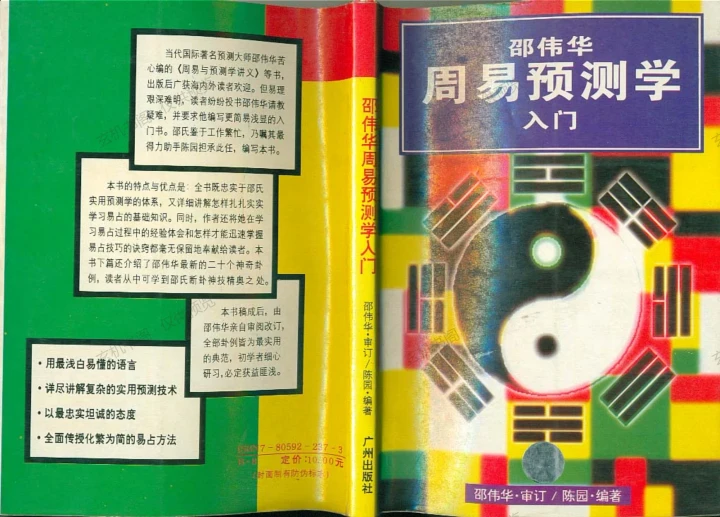
Cover title: Direct Explanation of the Thousand-Gold Rhapsody
Library stamps and accession information
General principles: movement and stillness, yin and yang, reversal and transformation
Old and young yin-yang lines and single/broken/crossed lines
Extremes reverse and yin-yang rise and fall
All images are unified by one principle
Reducing excess and supplementing deficiency
Key Points
Takes movement/stillness, yin/yang, and transformation as the general framework of liuyao judgment
Distinguishes old yang and old yin as moving lines, young yin and young yang as static lines
Explains line movement and hexagram change through single, broken, crossed and double lines
Uses the reversal of extremes to explain yin-yang transformation
Stresses that a single central principle unifies all hexagram images
Discusses balance through reducing excess and supplementing deficiency