Reading guide
Content guideOverview
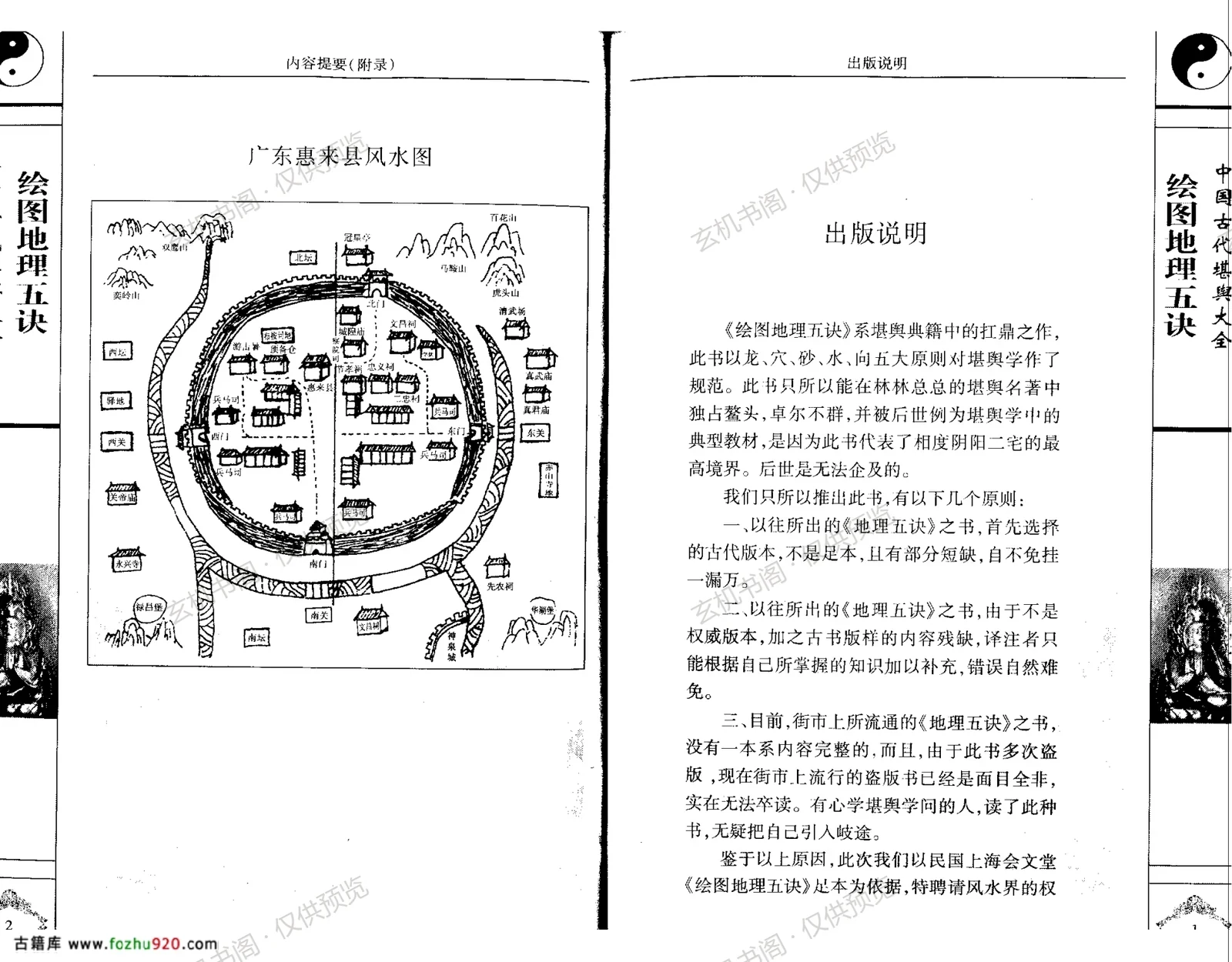
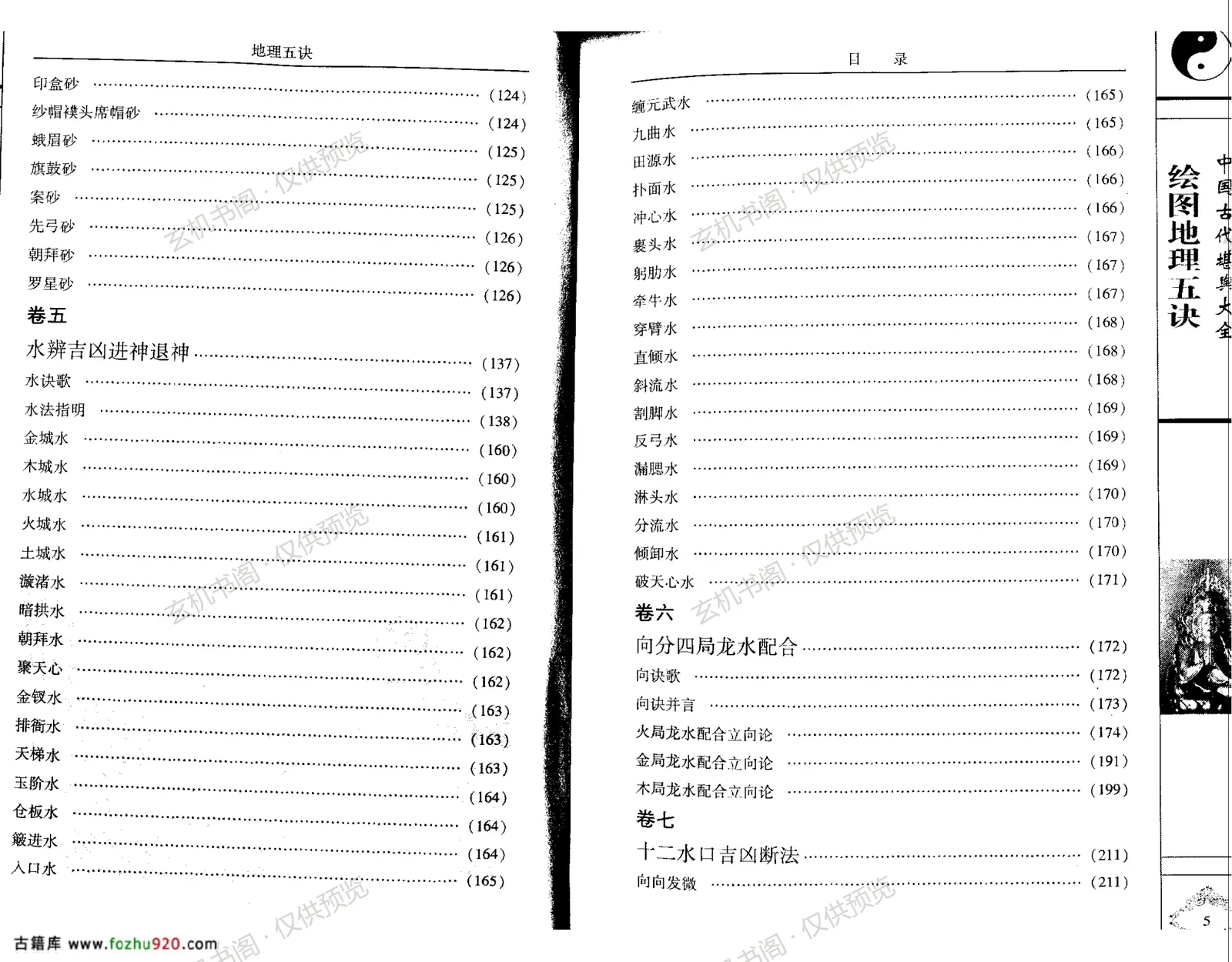
This is a modern, fully translated edition of the Qing dynasty feng shui classic Dili Wujue (Five Secrets of Geography) by Zhao Jiufeng (Zhao Yucai), annotated in vernacular Chinese by Chen Ming and Li Fei and published by Hualing Press in 2006. The book distills complex geomantic theory into five principles: dragon, cave, sand, water, and facing, arguing that while the first four are like building materials, the final orientation (facing) determines the outcome. It is divided into seven juan: juan one covers five-element formulas and luopan study, including the various five-element systems and the Nine Palaces water method; juan two discusses dragons and their prosperity-decline forms; juan three covers cave methods and the five-star cave types; juan four treats sand forms and their auspicious or inauspicious positions; juan five explains water methods and the many water shapes; juan six presents the four-bureau coordination of dragon, water, and facing; and juan seven gives the twelve water-mouth judgments. Illustrated with a Feng shui map of Huilai County, Guangdong, the edition is based on the Republican-era Shanghai Huiwentang complete edition.
Contents
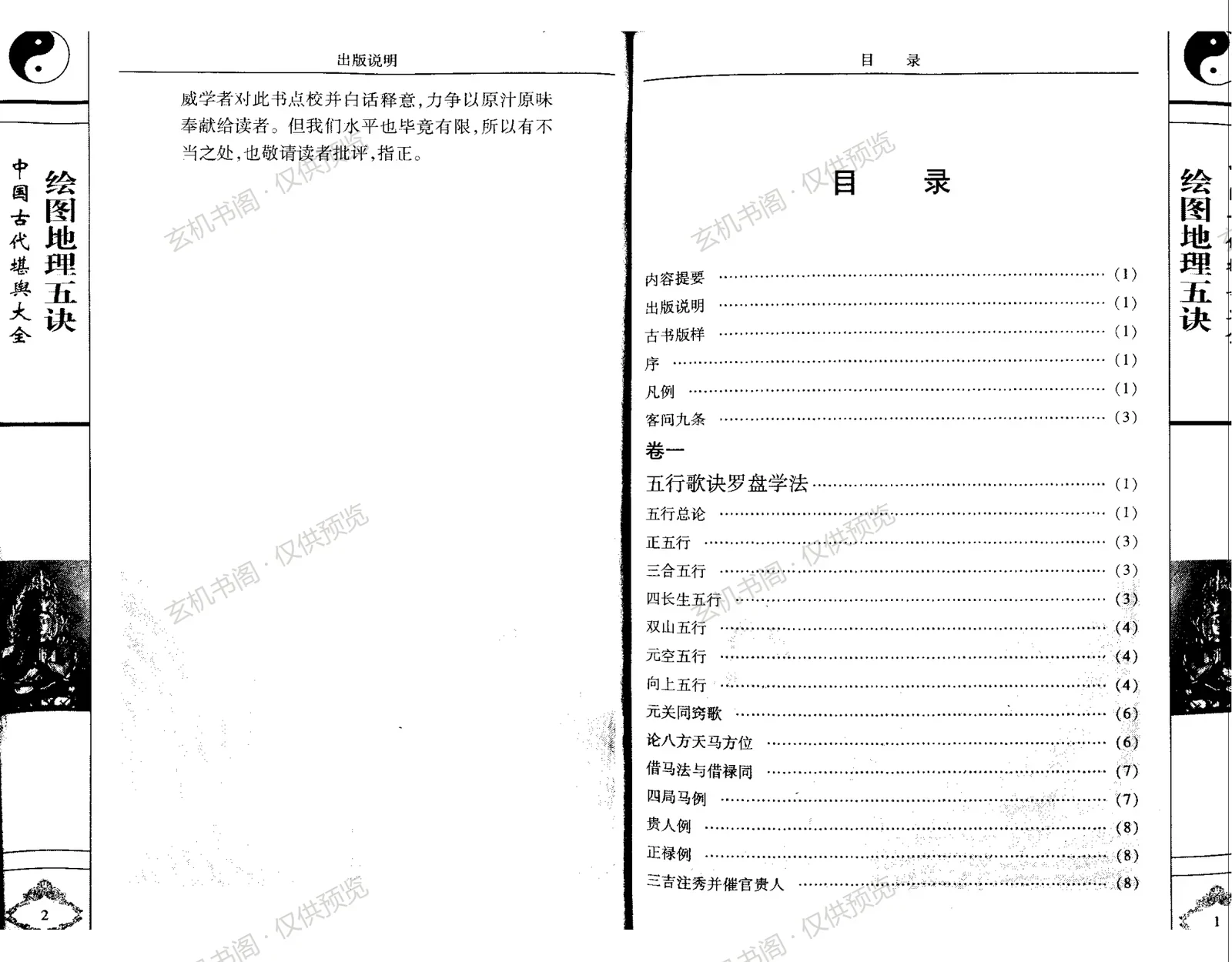
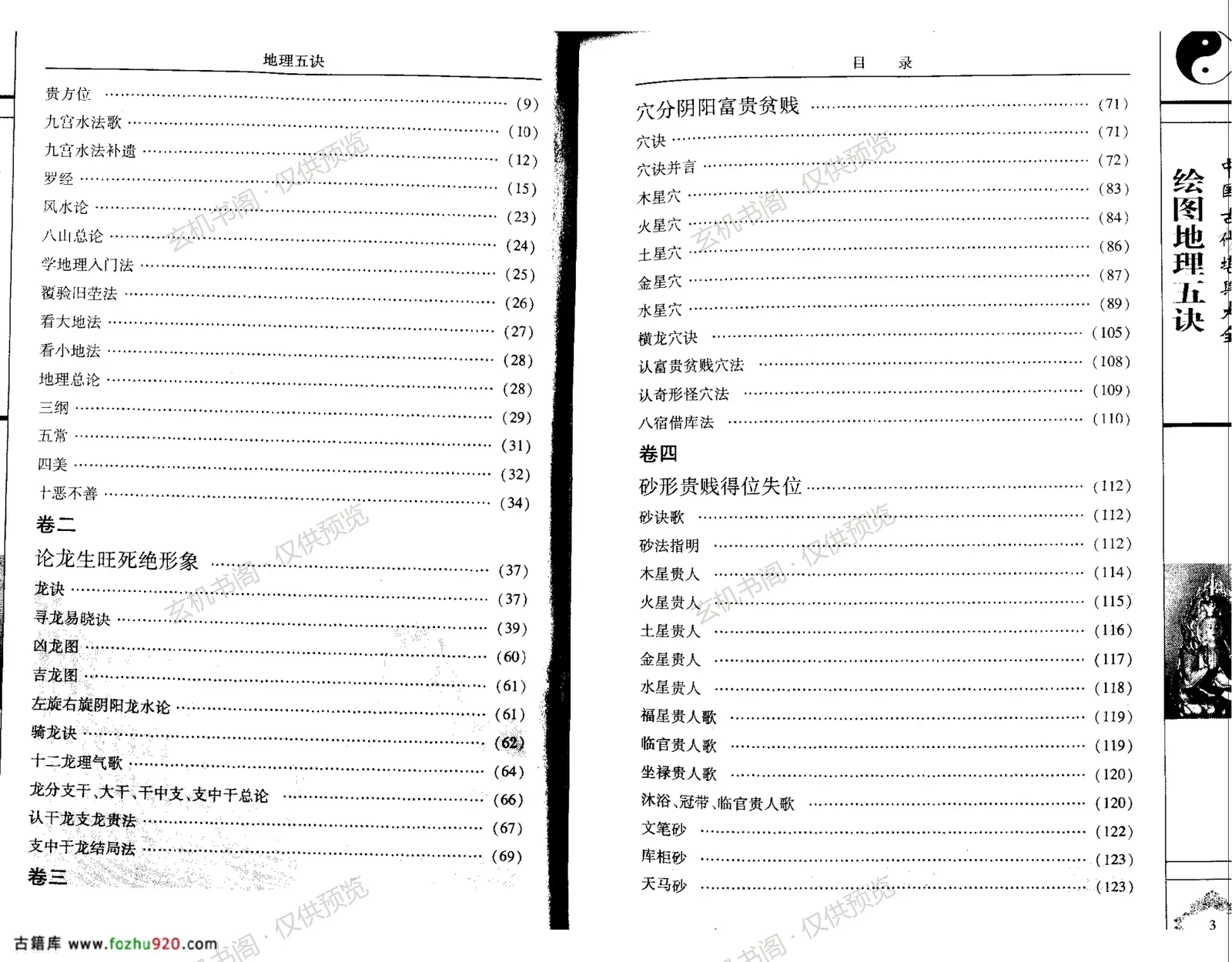
Juan 1: Five-element formulas, luopan study, Nine Palaces water method
Juan 2: Dragon prosperity-decline forms and dragon-seeking formulas
Juan 3: Cave methods, yin-yang wealth-rank, five-star caves
Juan 4: Sand methods, noble and base positions, sand shapes
Juan 5: Water methods, advance-retreat spirits, water shapes
Juan 6: Four-bureau coordination of dragon, water, and facing
Juan 7: Twelve water-mouth auspicious and inauspicious judgments
Key Points
Organizes Sanhe feng shui around dragon, cave, sand, water, and facing
Stresses the decisive role of facing in geomantic patterns
Juan one details multiple five-element systems and luopan methods
Juan three to five systematically treat cave, sand, and water forms
Juan six and seven cover four-bureau facing and water-mouth judgments