Reading guide
Content guideOverview
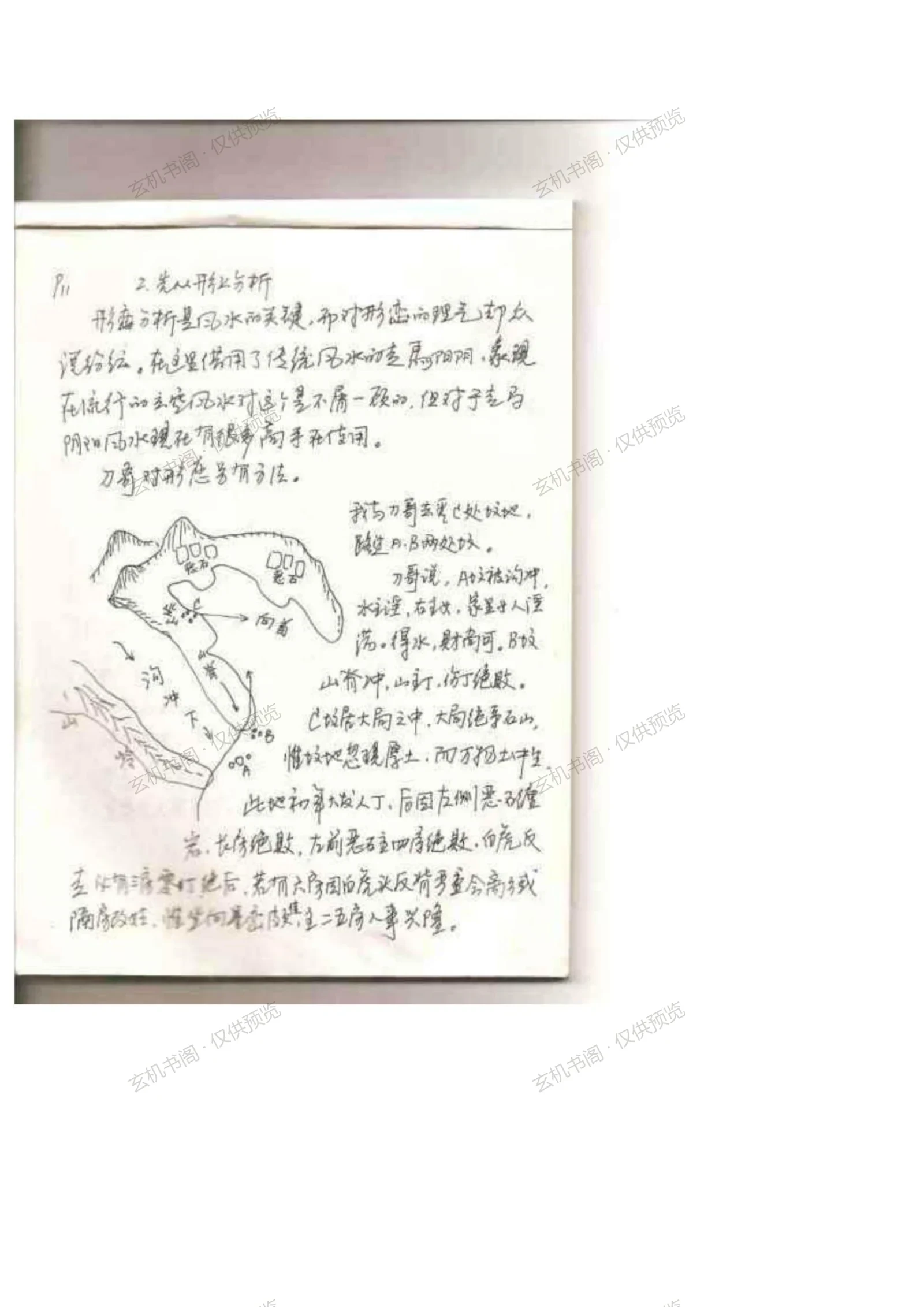
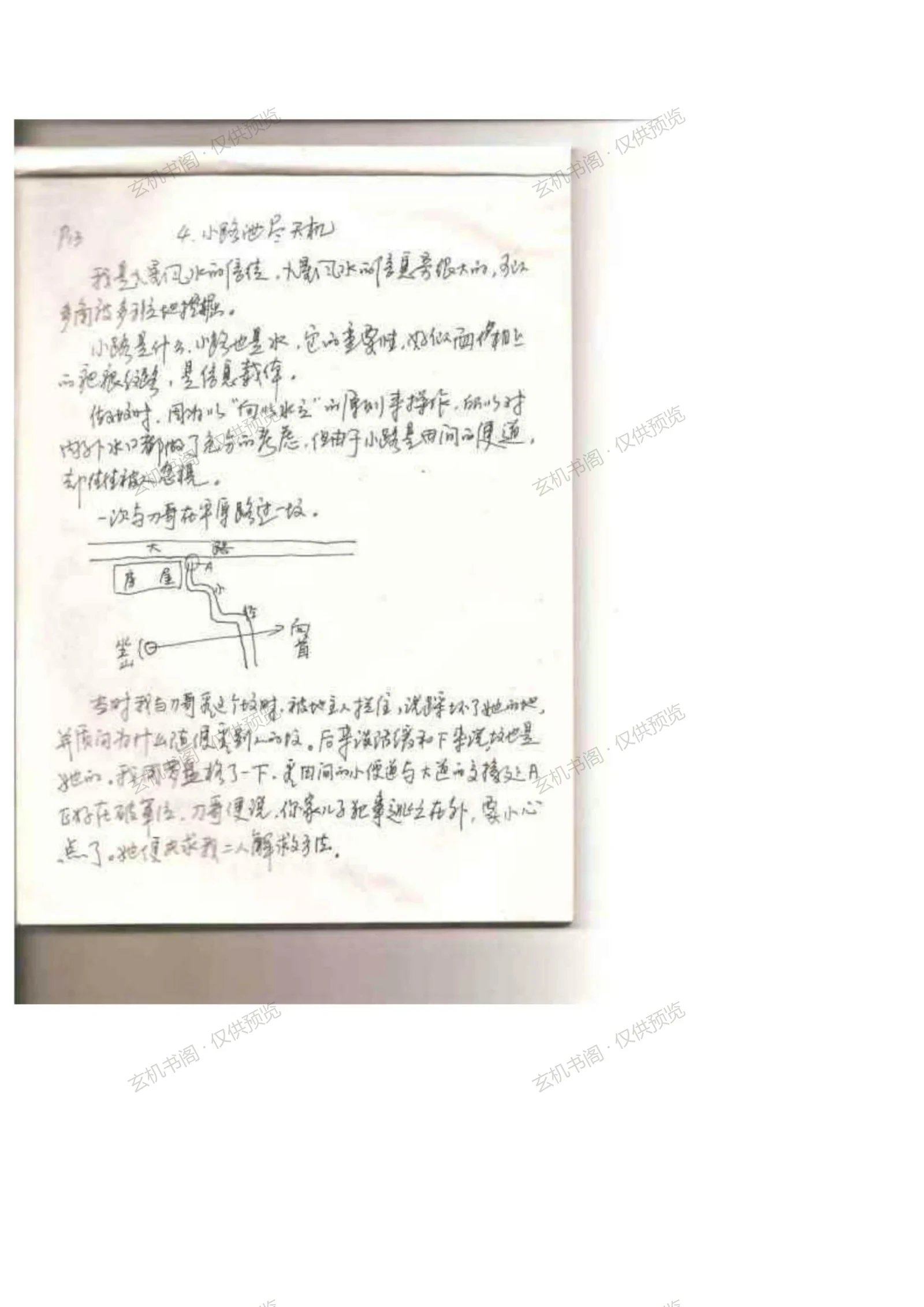
This is a scanned manuscript titled 'Illustrated Collection of Feng Shui Case Studies: A Reader's Guide', written in cursive pen with hand-drawn diagrams of mountains, water and house forms. It first discusses Sanhe feng shui's requirements on dragon, facing and water mouth, then explains the Fuxing (Najia) water method, which starts a hexagram from the facing and derives fortunes through trigram flipping. It moves on to form analysis, comparing two grave sites A and B in terms of water, sand and bright hall, then discusses inner and outer facing choices and special burial arrangements. Finally it stresses that small watercourses and paths carry much information, illustrating with a courtyard where a small ditch and road rushed the house and the eldest son left home and got into trouble. Brief but concrete, the book suits readers with basic knowledge of Sanhe and Najia who want to learn from real cases.
Contents
Sanhe requirements on dragon, facing and water mouth
Fuxing (Najia) water method and trigram flipping
Form analysis: comparing sites A and B
Inner and outer facing choices and special burials
Small watercourses and paths as information carriers
Case: ditch and road rush affecting the eldest son
Key Points
Combines hand-drawn diagrams with field cases, valuing both form and principle.
Notes that folk Sanhe practice often judges by dragon-facing-water mouth relations.
Fuxing water method starts from the facing and uses Najia trigram flipping.
Emphasizes matching inner and outer facing with bright hall and sand-water.
Warns that minor watercourses and paths are easily overlooked but informative.