Reading guide
Content guideOverview
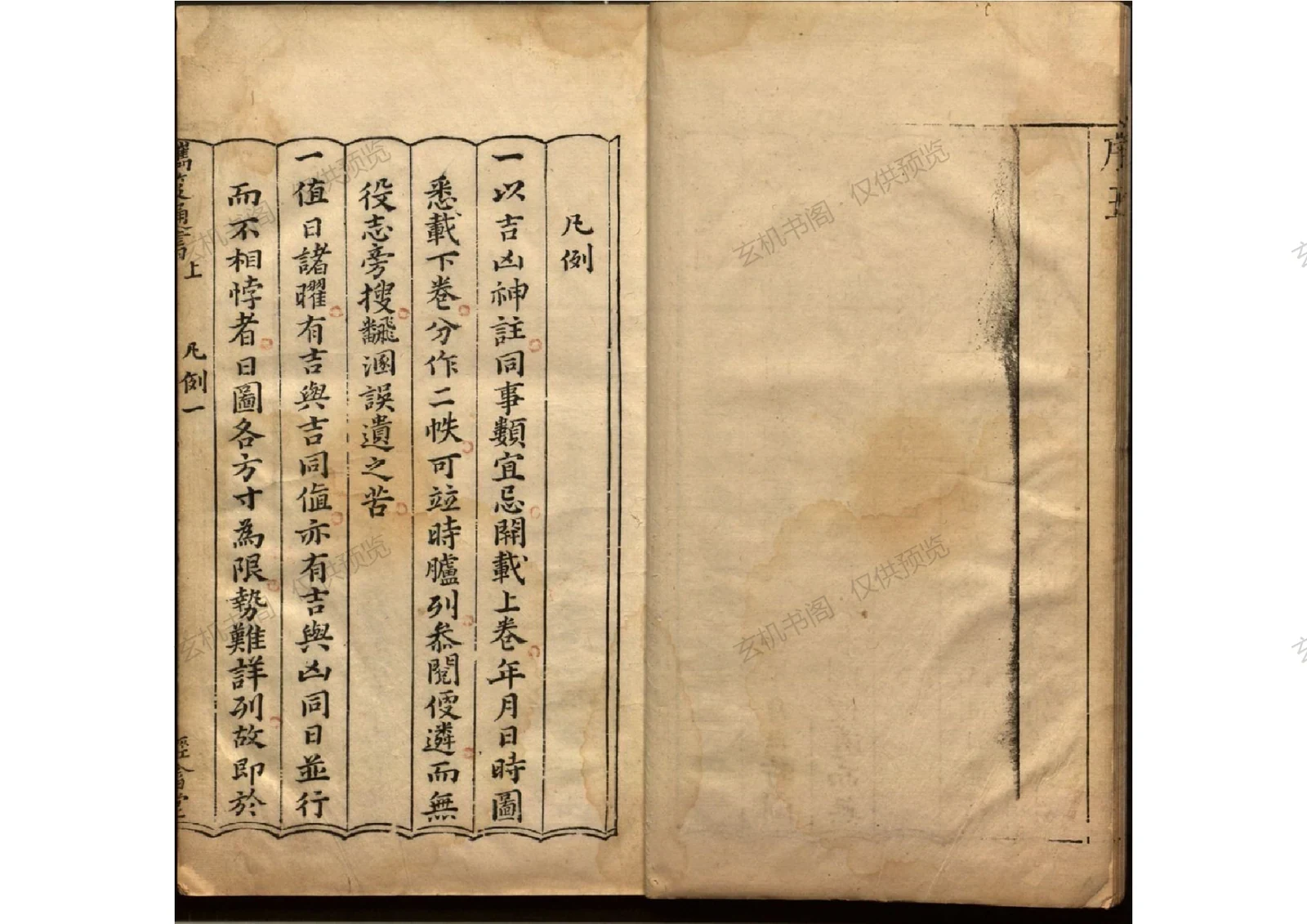
This two-volume work, attributed to Wang Ji, is a traditional Chinese day-selection manual (tongshu). Its preface discusses calendrical astronomy, the four seasons, the sun, moon and five planets, and the relationship between celestial patterns and human affairs. A prefatory note on editorial principles explains that auspicious and inauspicious deities are arranged by activity, with annual, monthly, daily and hourly charts divided into two sections for easy consultation. The visible pages indicate coverage of calendrical history, stellar deities and omens, Qimen Dunjia, yellow-black road days, and hourly auspiciousness. It is a practical reference for the traditional system of selecting auspicious times, best read with a foundation in the sexagenary calendar and the omen-deity system.
Contents
Preface: calendrical astronomy and the human-cosmic order
Editorial notes: arrangement and consultation method
Volume One: annual, monthly, daily and hourly charts
Volume Two: activity taboos and directional avoidance
Appended discussions: Qimen, yellow-black roads and stellar omens
Key Points
Uses calendrical astronomy as the framework for day selection
Editorial notes specify arrangement by time unit and volume
Incorporates Qimen Dunjia, yellow-black roads and omen deities
Emphasizes that good and bad fortune coexist and require contextual judgment
Useful for studying the structure and practice of traditional tongshu