Reading guide
Content guideOverview
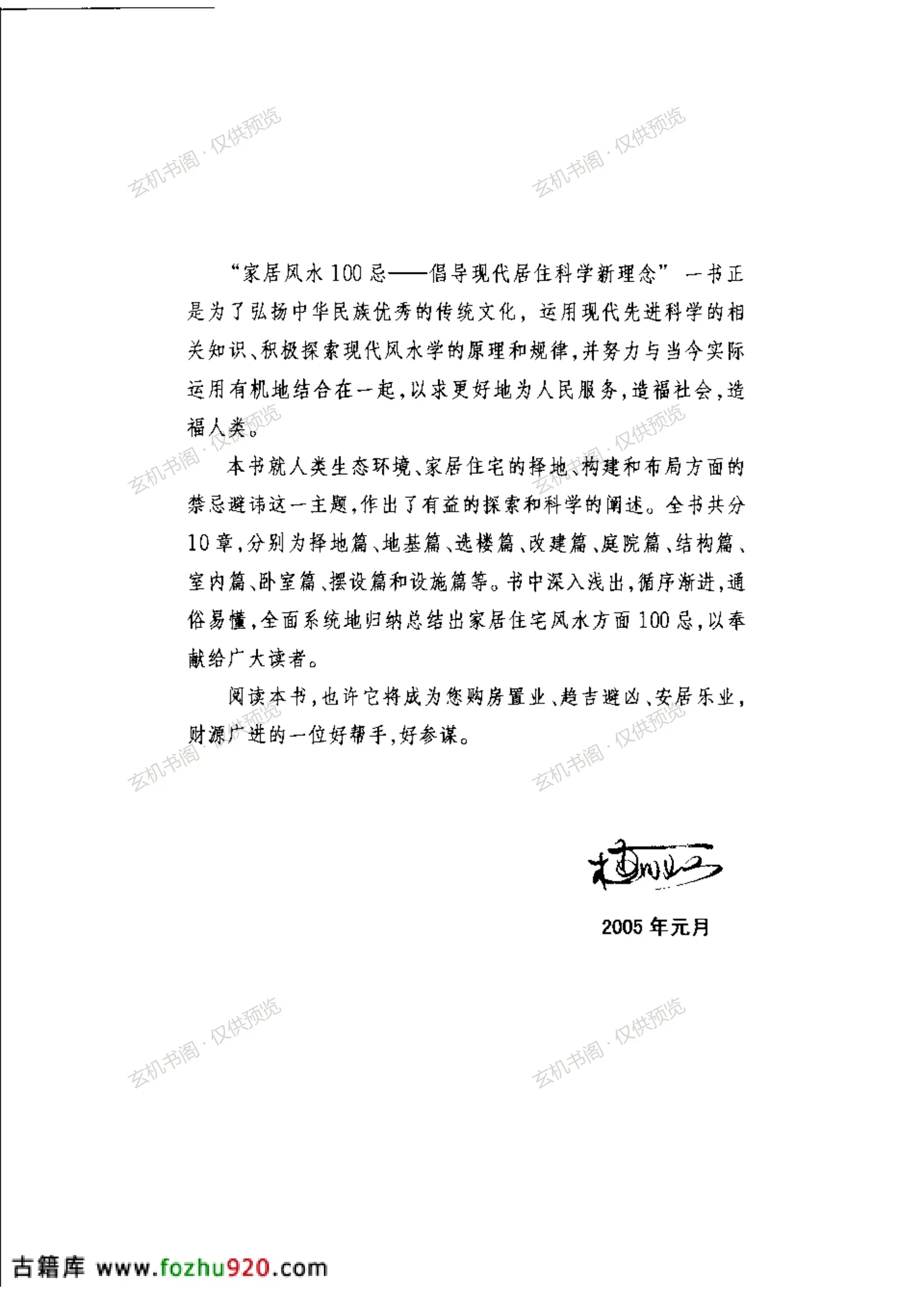
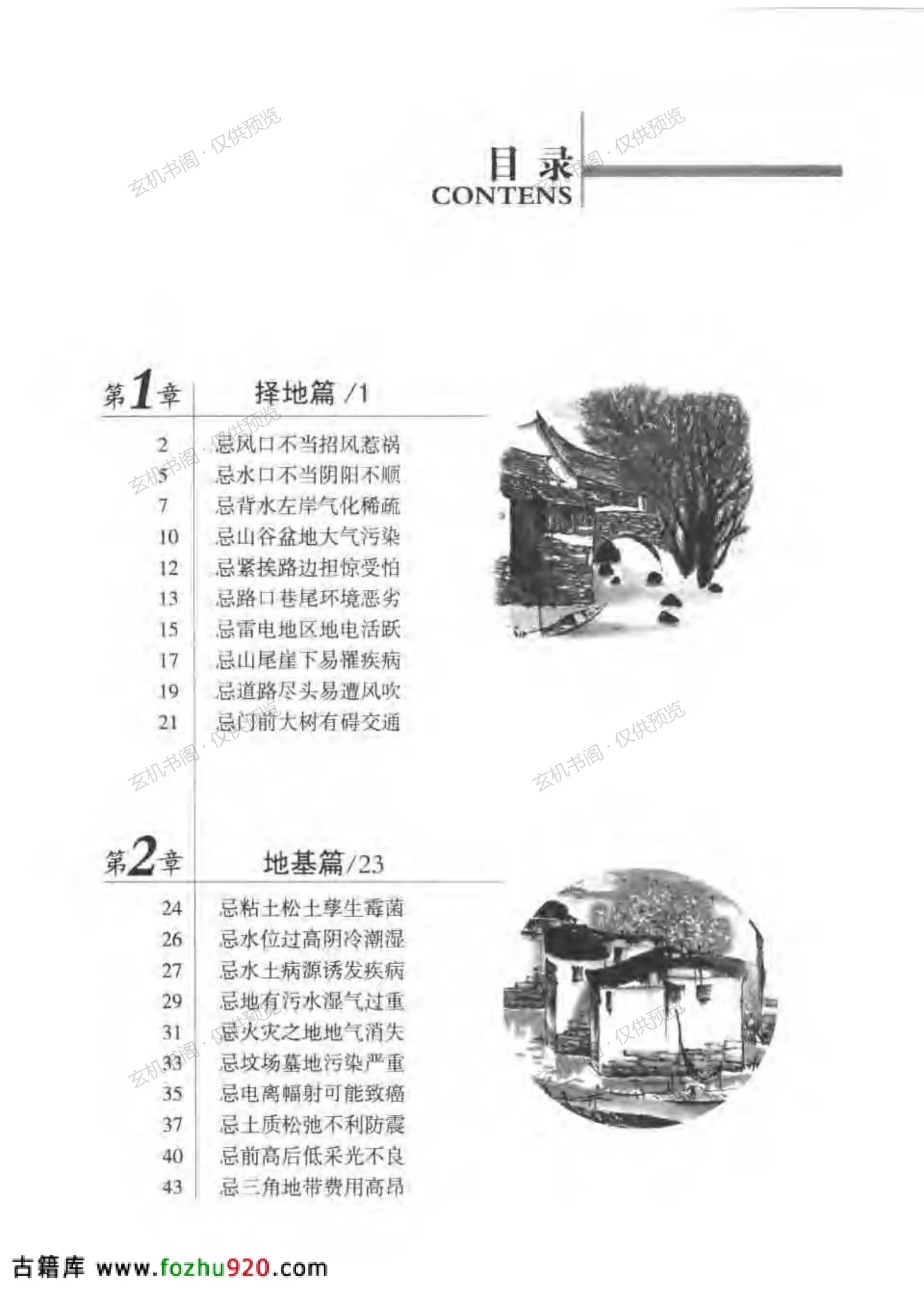
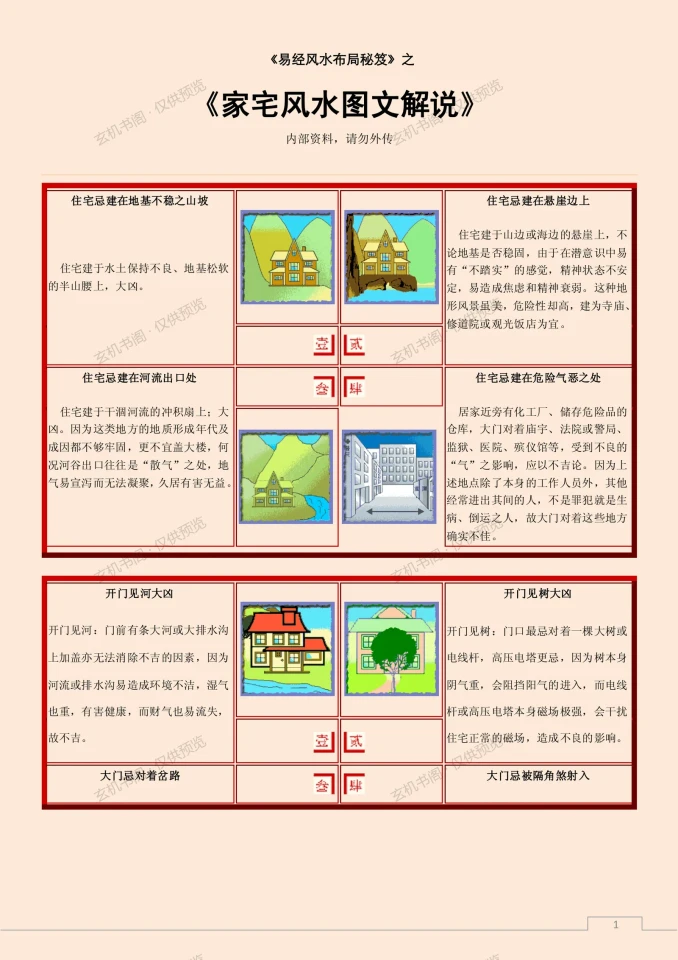
This practical book by Tan Mingshan organizes traditional feng shui knowledge around the idea of taboos for the home, pairing old siting and layout customs with modern views on the living environment. The visible contents show ten chapters: site selection, foundations, choosing a building, renovation, courtyards, structure, interiors, bedrooms, furnishings, and facilities, with short entries totaling about one hundred taboos. Site-selection entries cover wind gaps, water outlets, backing onto water, valleys and basins, roadsides, alley ends, lightning-prone areas, cliff bases, road ends, and large trees before the gate; foundation entries discuss clay and loose soil, high groundwater, waterborne disease sources, damp and sewage, fire-damaged land, graveyard pollution, electromagnetic radiation, soil and earthquake resistance, low rear-high front lighting, and triangular plots. The preface argues that ancient feng shui, though wrapped in superstition, distills experience from philosophy, aesthetics, geography, geology, ecology, meteorology, landscape studies, architecture, and psychology, and can serve as a reference for modern building and home buying. The style is plain and entry-based, suited to general readers who want to look things up by scenario.
Contents
Ch.1 Site Selection: wind and water, roads, surroundings
Ch.2 Foundations: soil, water table, pollution, terrain
Ch.3 Choosing a Building: building selection and orientation
Ch.4 Renovation: taboos in remodeling old homes
Ch.5 Courtyards: layout and planting
Ch.6 Structure: dos and don'ts of building structure
Ch.7 Interiors: interior space and materials
Ch.8 Bedrooms: bedroom placement and arrangement
Ch.9 Furnishings: furniture and display taboos
Ch.10 Facilities: water, electricity, kitchen and bath
Key Points
Each chapter covers one layer of the home environment and lists taboos item by item
Site selection focuses on surroundings; foundations focus on soil, water, and pollution
The book rereads traditional feng shui experience through modern science
Short, plain entries make it easy to look up a specific scenario
Ten chapters and about one hundred taboos form a popular, uniform guide