Reading guide
Content guideOverview
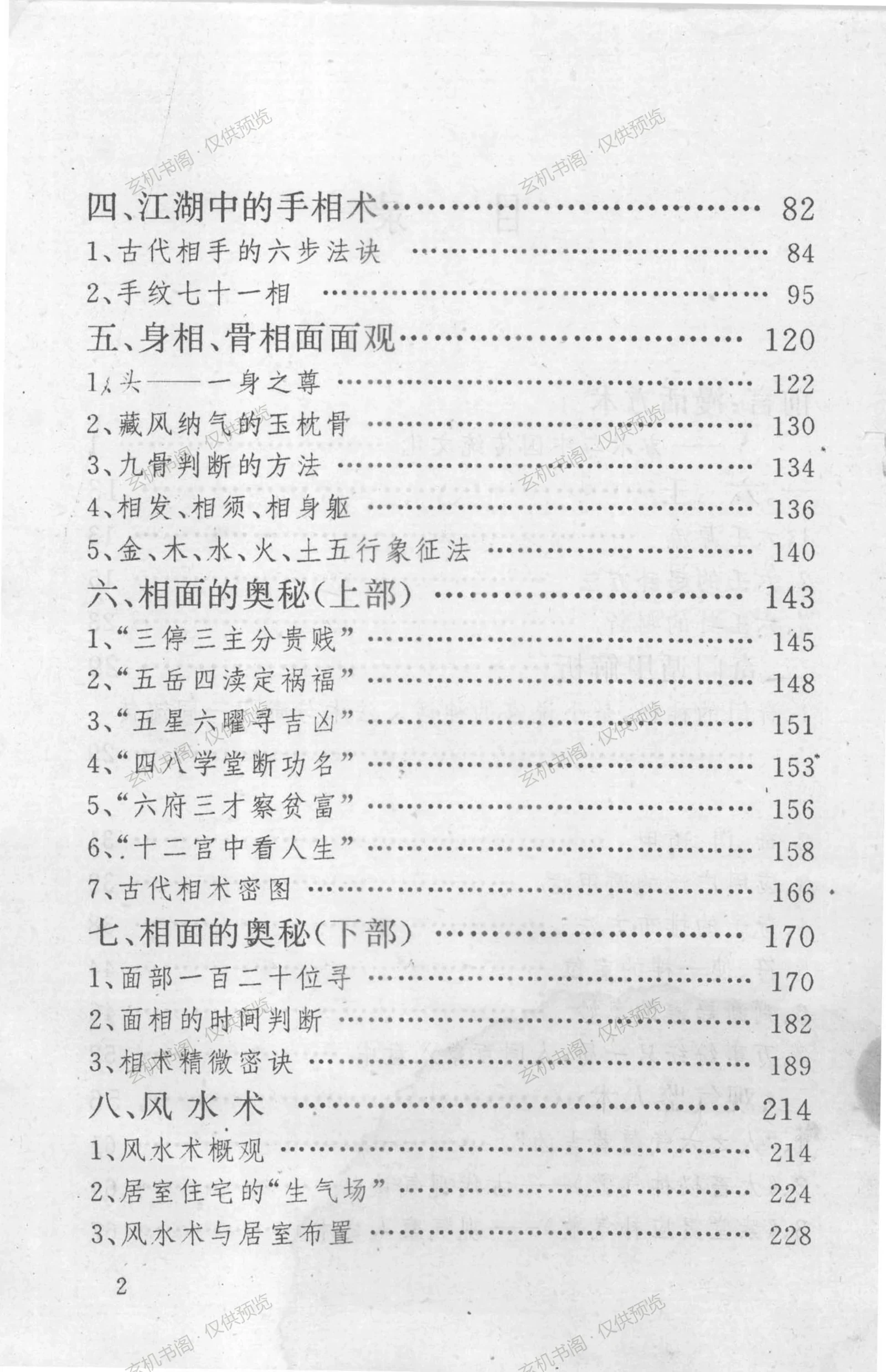
Part of the 'Chinese Jianghu Studies Series,' this book by Luo Xuanji was first published by Xinjiang University Press in September 1993. After an opening discussion of occult arts within Chinese traditional culture, the eight chapters treat Liuren divination (origins, casting methods, interpretation), Qimen Dunjia (arranging the Qimen disks, positioning talismans and spirits, judging avoidance and pursuit), qi observation for reading people (quoting ancient verses such as the Dashe Secret Spirit-Qi Song and Zitang Spirit-Response Qi-Supplement Song), palmistry (six-step methods and seventy-one palm-line types), body and bone physiognomy (head bones, jade-pillow bone, nine-bone assessment, five-phase symbolism), face reading in two parts (three zones, five mountains and four rivers, five stars and six luminaries, twelve palaces, one hundred twenty facial positions), and feng shui (overview and the 'life-energy field' of dwellings). The work emphasizes oral formulas and operative methods, making it useful for readers interested in occult literature and traditional divination arts.
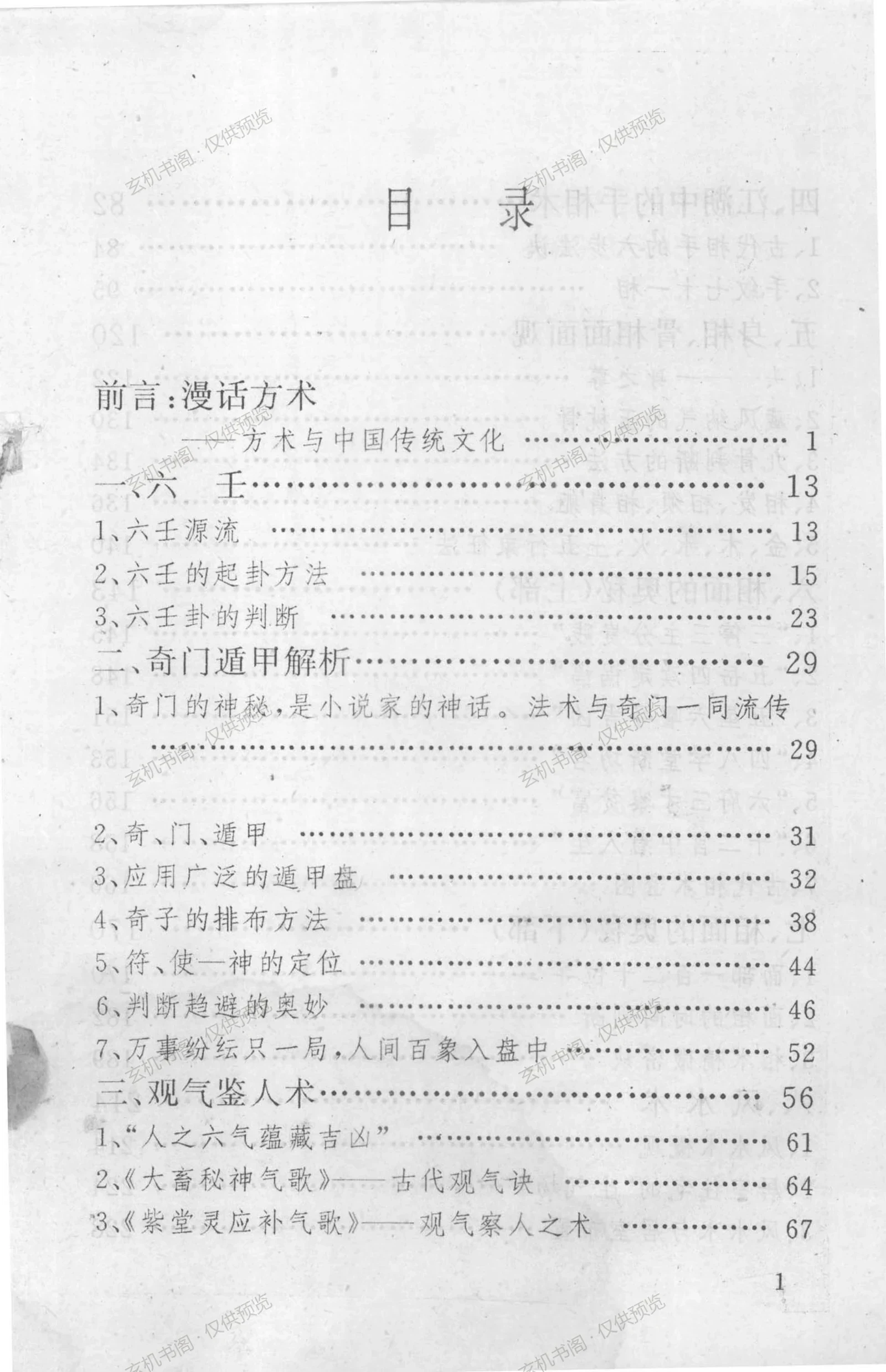
Contents
Preface: occult arts and Chinese traditional culture
Liuren: origins, casting, and interpretation
Qimen Dunjia: arrangement and avoidance
Qi observation and ancient qi-reading verses
Jianghu palmistry and seventy-one palm lines
Body and bone physiognomy with five-phase symbolism
Face reading in two parts: zones, mountains, palaces
Feng shui overview and dwelling arrangement
Key Points
Covers Liuren, Qimen, qi observation, palmistry, face reading, and feng shui
Each art is presented through origins, casting methods, and judgment formulas
Quotes classical verses on qi observation
Face reading is the most detailed, spanning two chapters
Feng shui focuses on the life-energy field of dwellings