Reading guide
Content guideOverview
This is a popular-level guide to day selection (zeri) by Pak Hok Ming, subtitled 'the simplest and most practical day-selection manual.' In his preface the author explains that choosing auspicious days is the most common application of Chinese numerology in daily life, relevant to moving house, weddings, business openings, contracts, emigration and travel. The book begins with calendar basics such as the lunar and solar calendars, the 24 solar terms, leap months and 'blind years,' then discusses wedding-day selection in detail (double-spring years, taboo months, clashes, the Three-Lady Sha, Yang Gong taboo days), before introducing the twelve day officers and various auspicious and inauspicious spirits, daily auspicious hours, and specific applications including wedding rites and the Nine Palaces life hexagrams. Written for beginners, it is intended as a practical reference to consult according to the occasion.
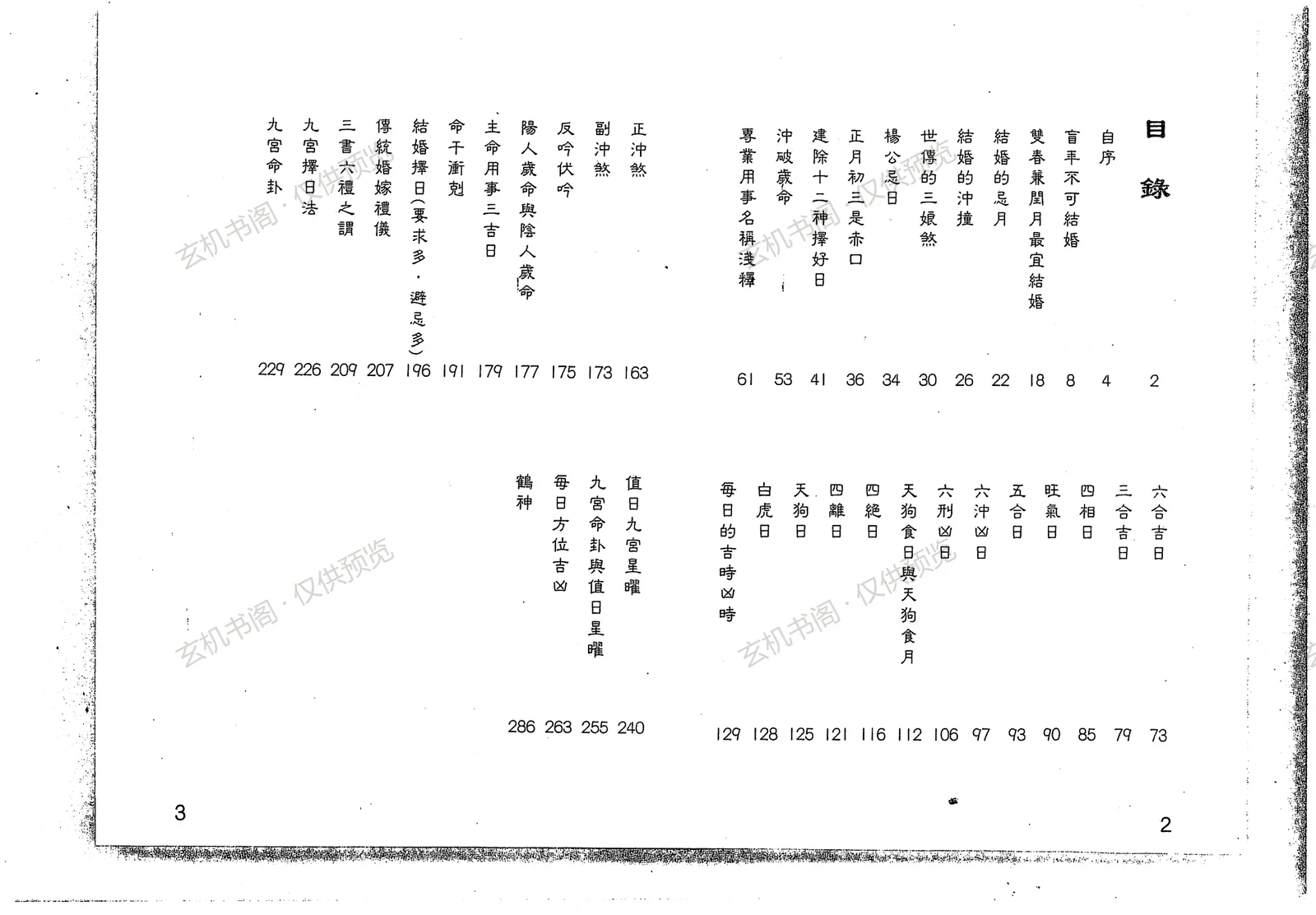
Contents
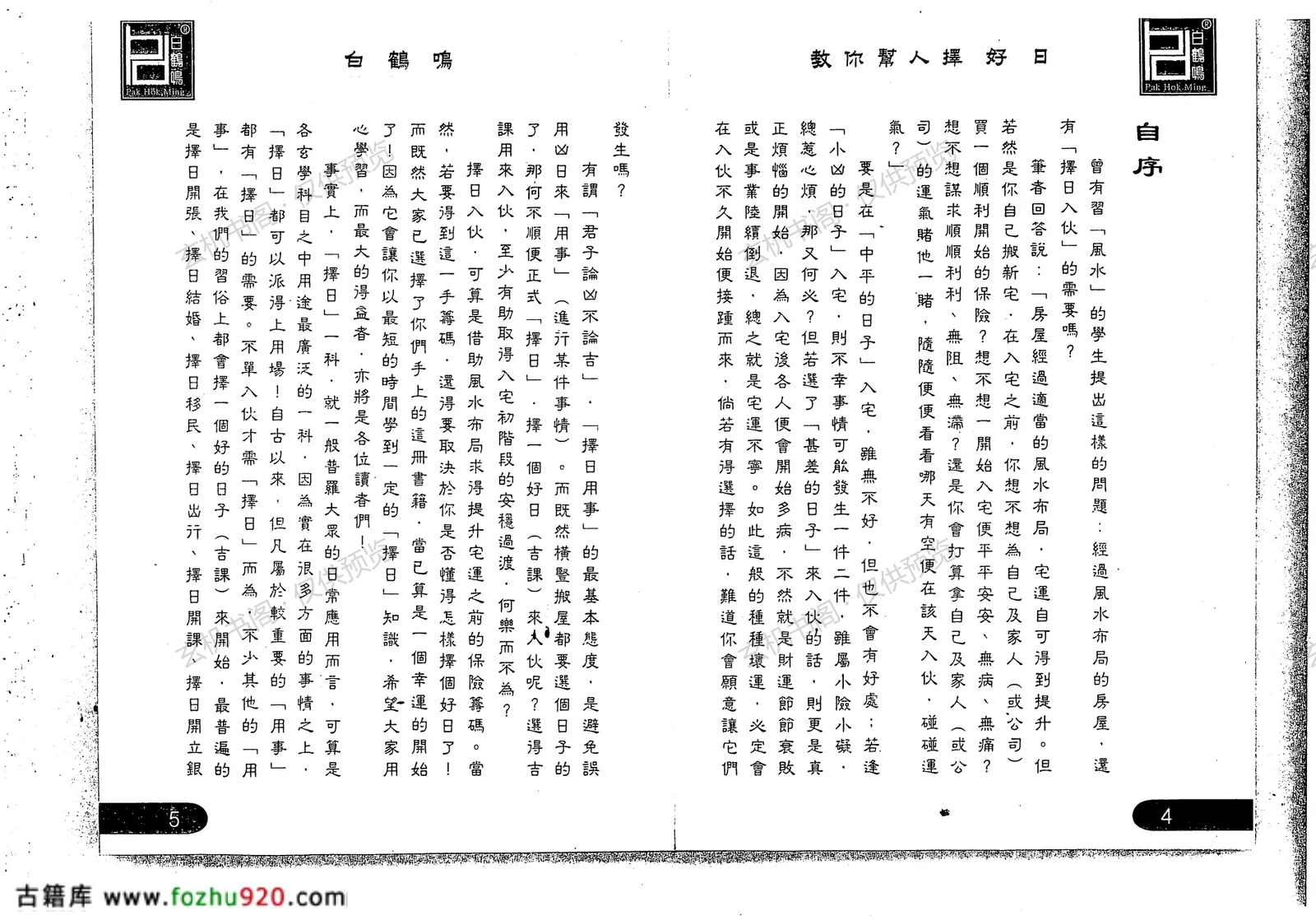
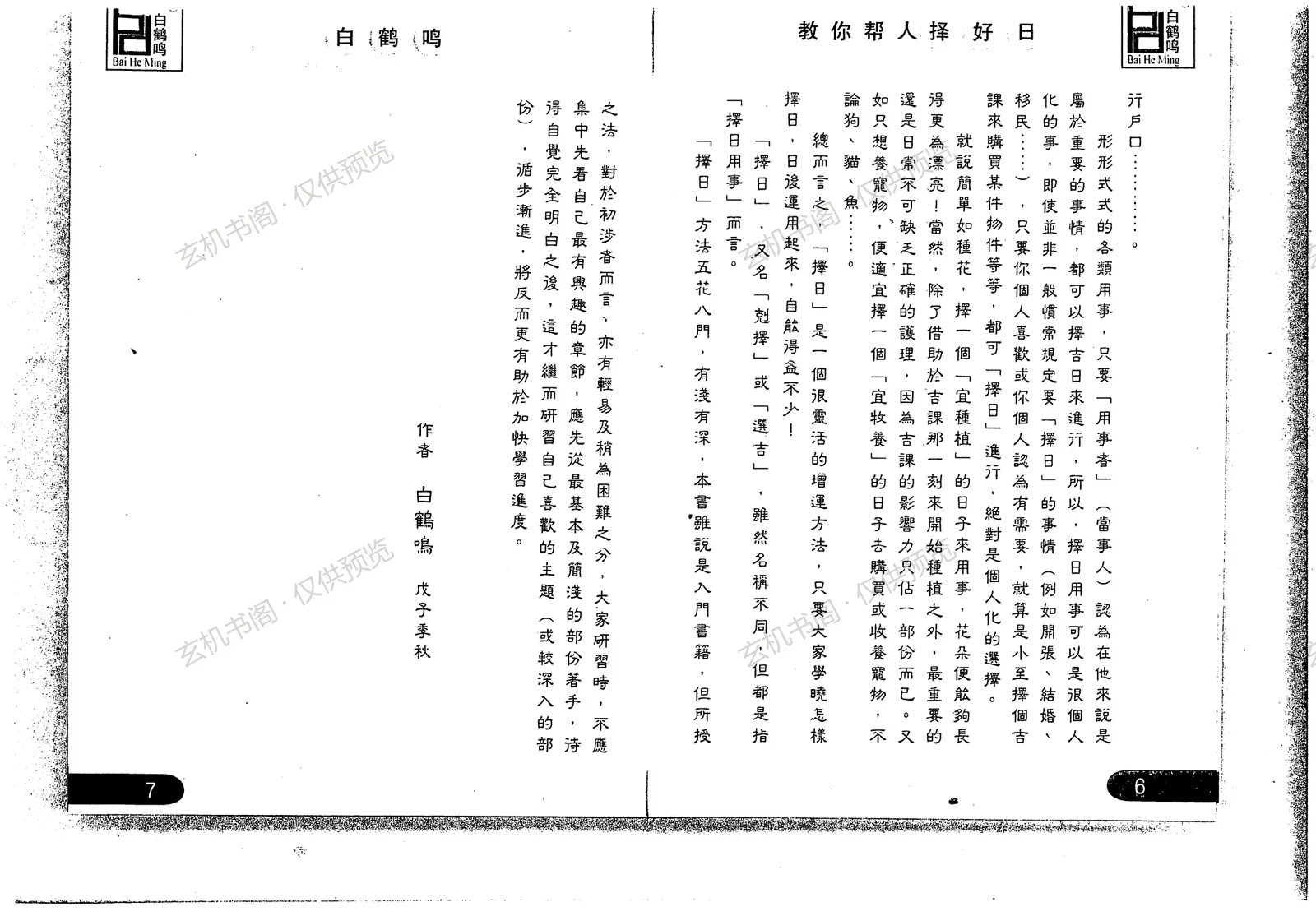
Preface: day selection as the most common applied art
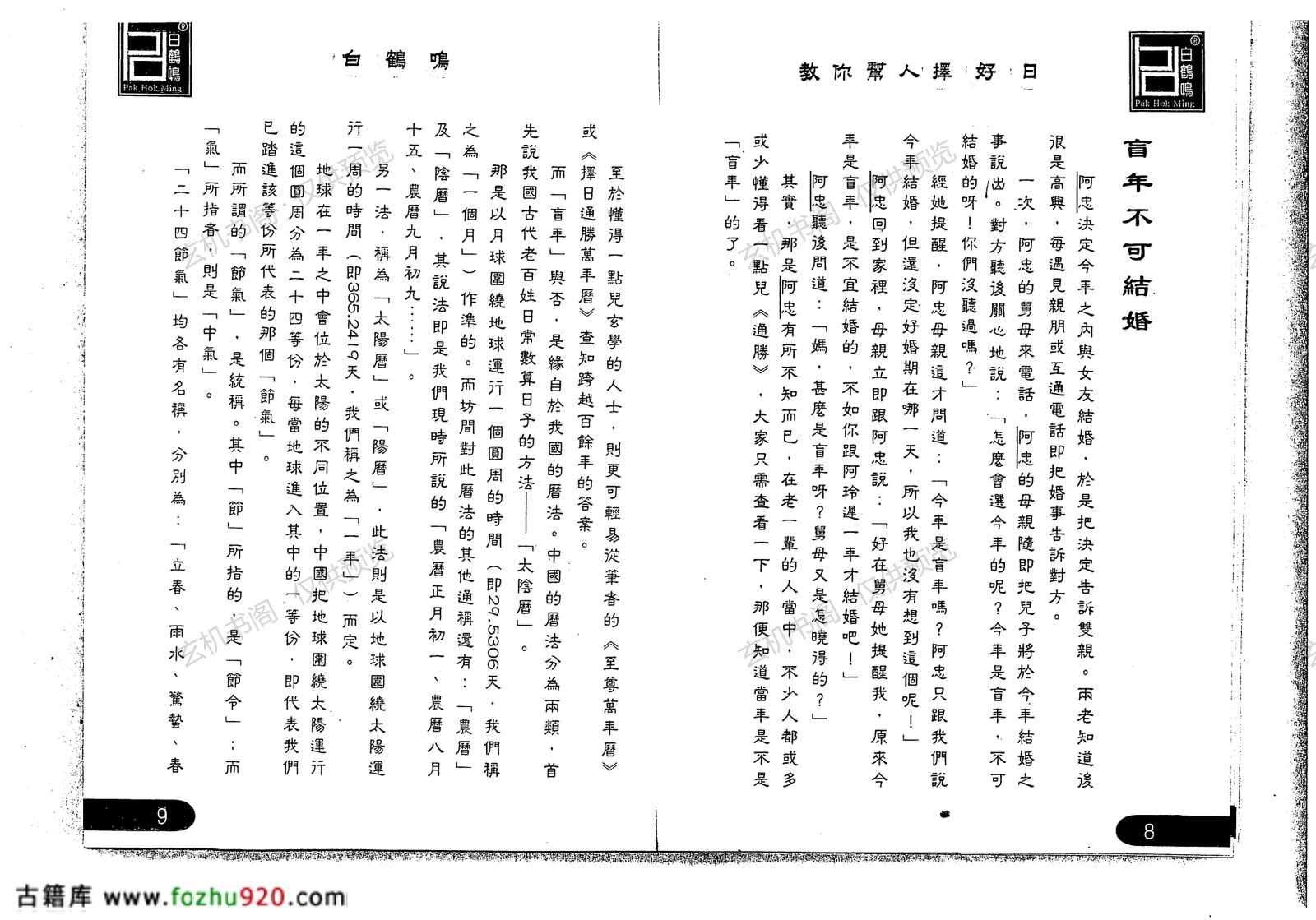
Wedding-day selection: blind years, taboo months, clashes
Spirits and auspicious/inauspicious days
The twelve day officers and daily auspicious hours
Wedding rites and the Six Rites
Nine Palaces life hexagrams and personal taboos
Key Points
Organised around real-life occasions: moving, weddings, openings, contracts
Starts with calendar basics: lunar/solar calendars, solar terms, leap months
Lists many spirits and taboo days (Three-Lady Sha, Yang Gong days, four separations)
Also covers daily auspicious hours and directional taboos
Described by the author as an entry-level reference book