Reading guide
Content guideOverview
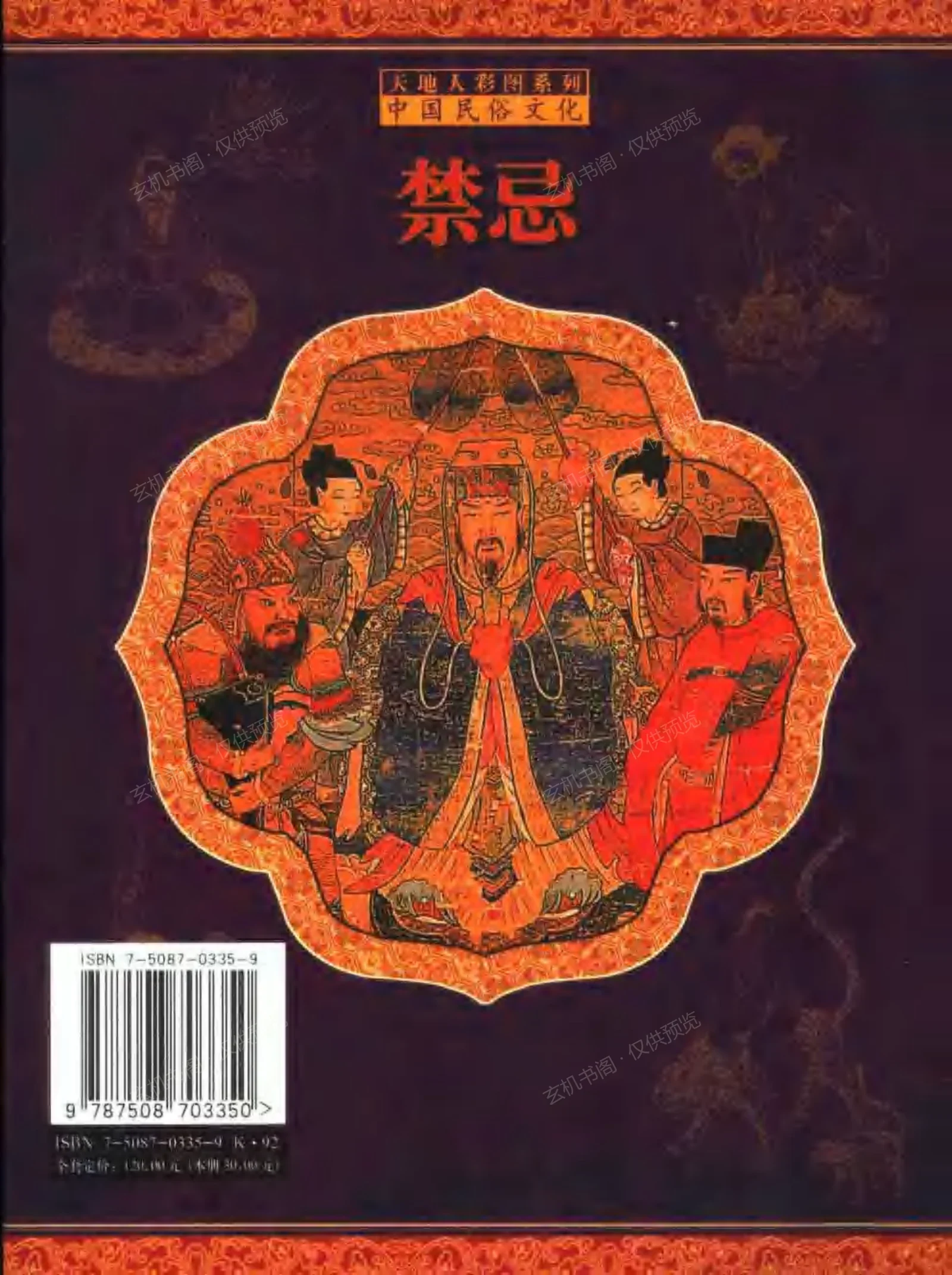
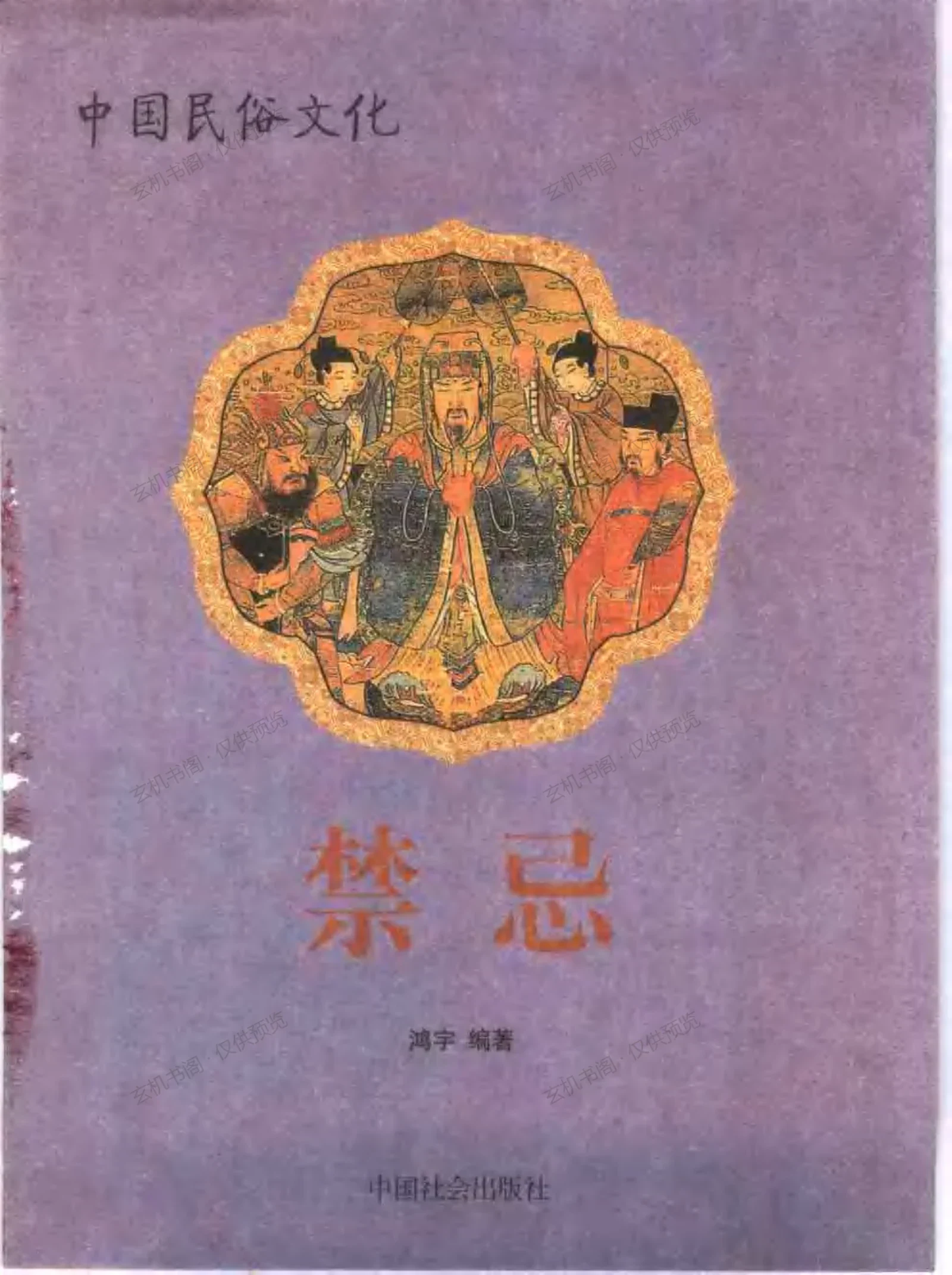
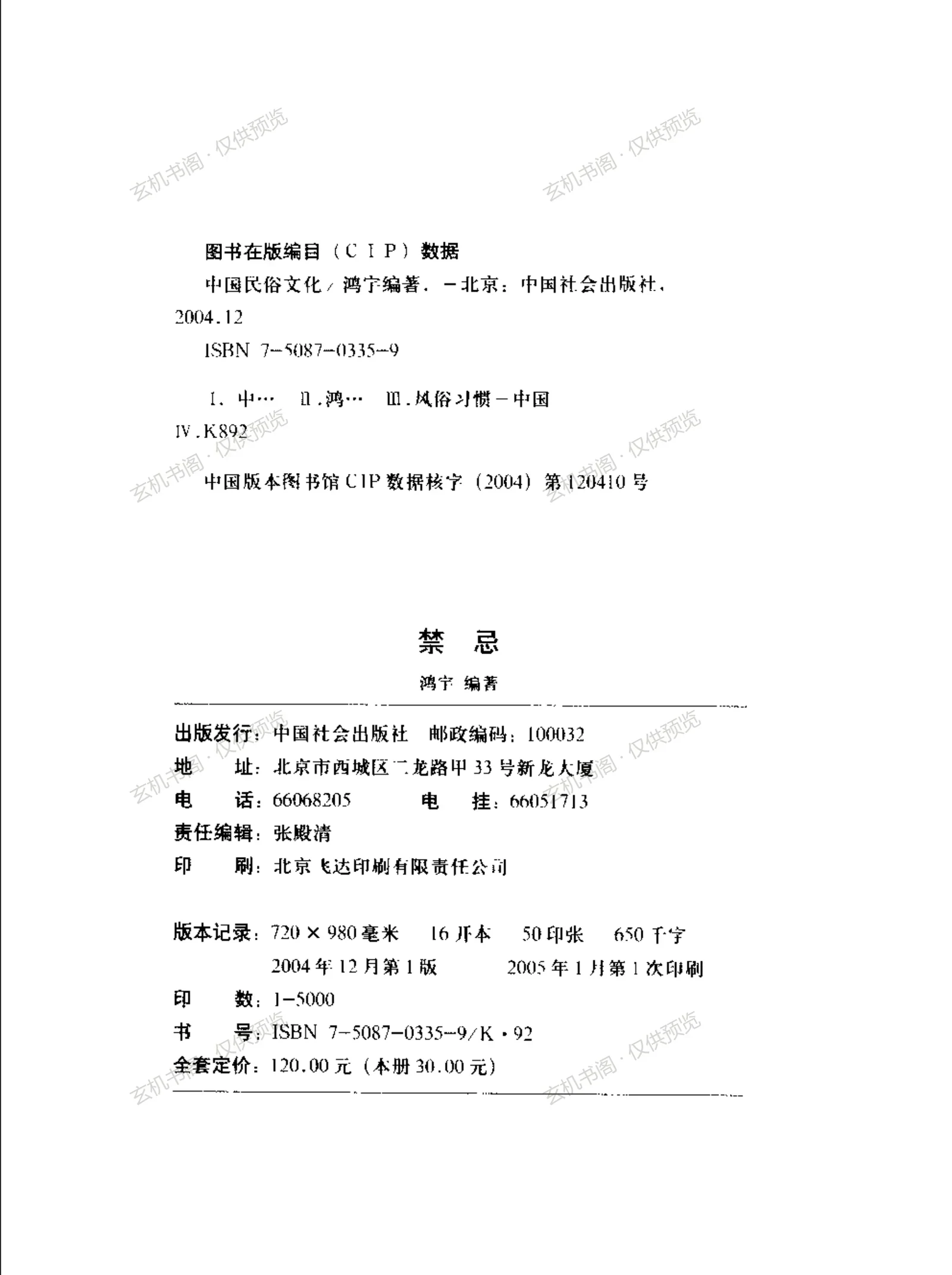
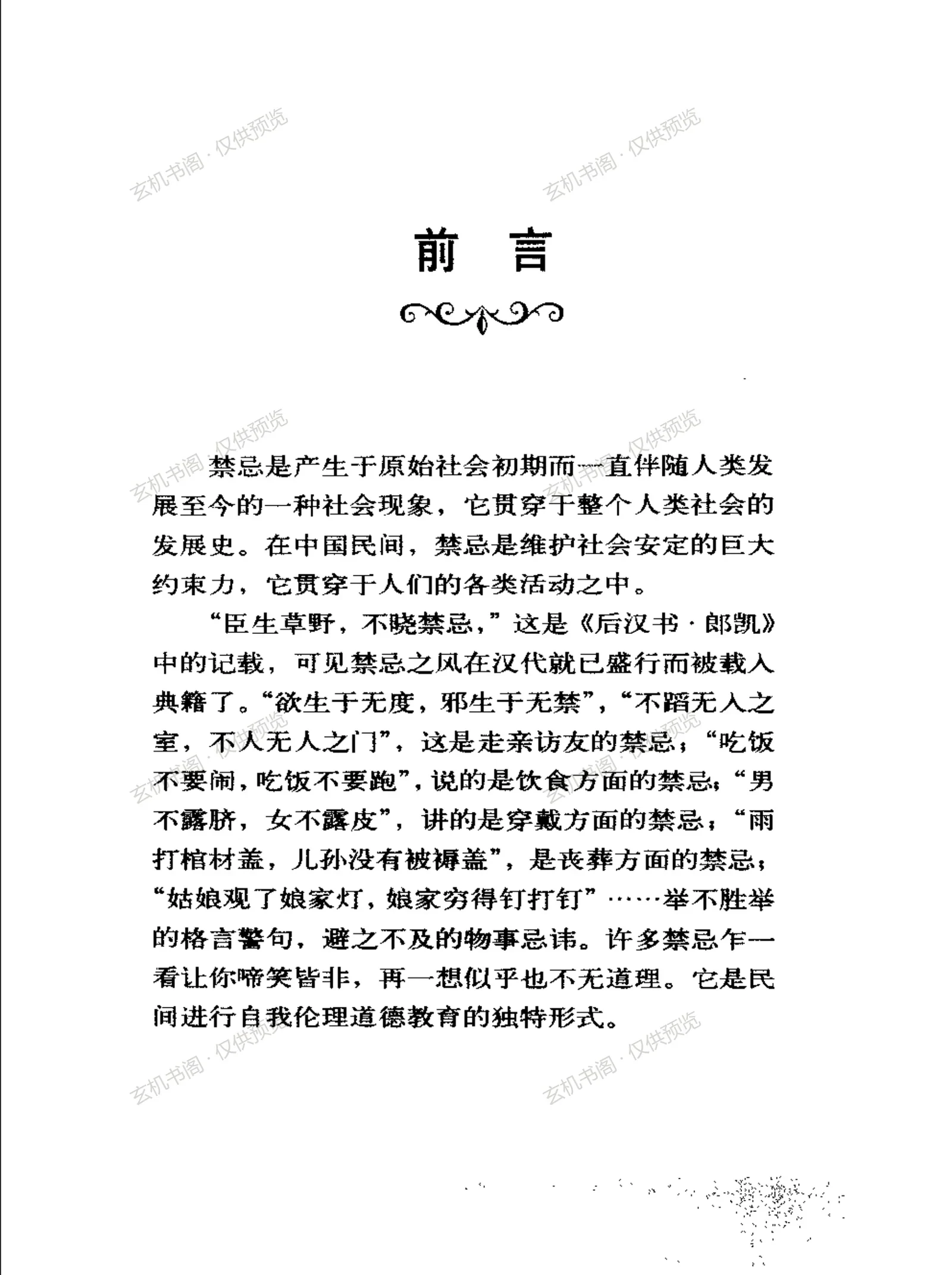
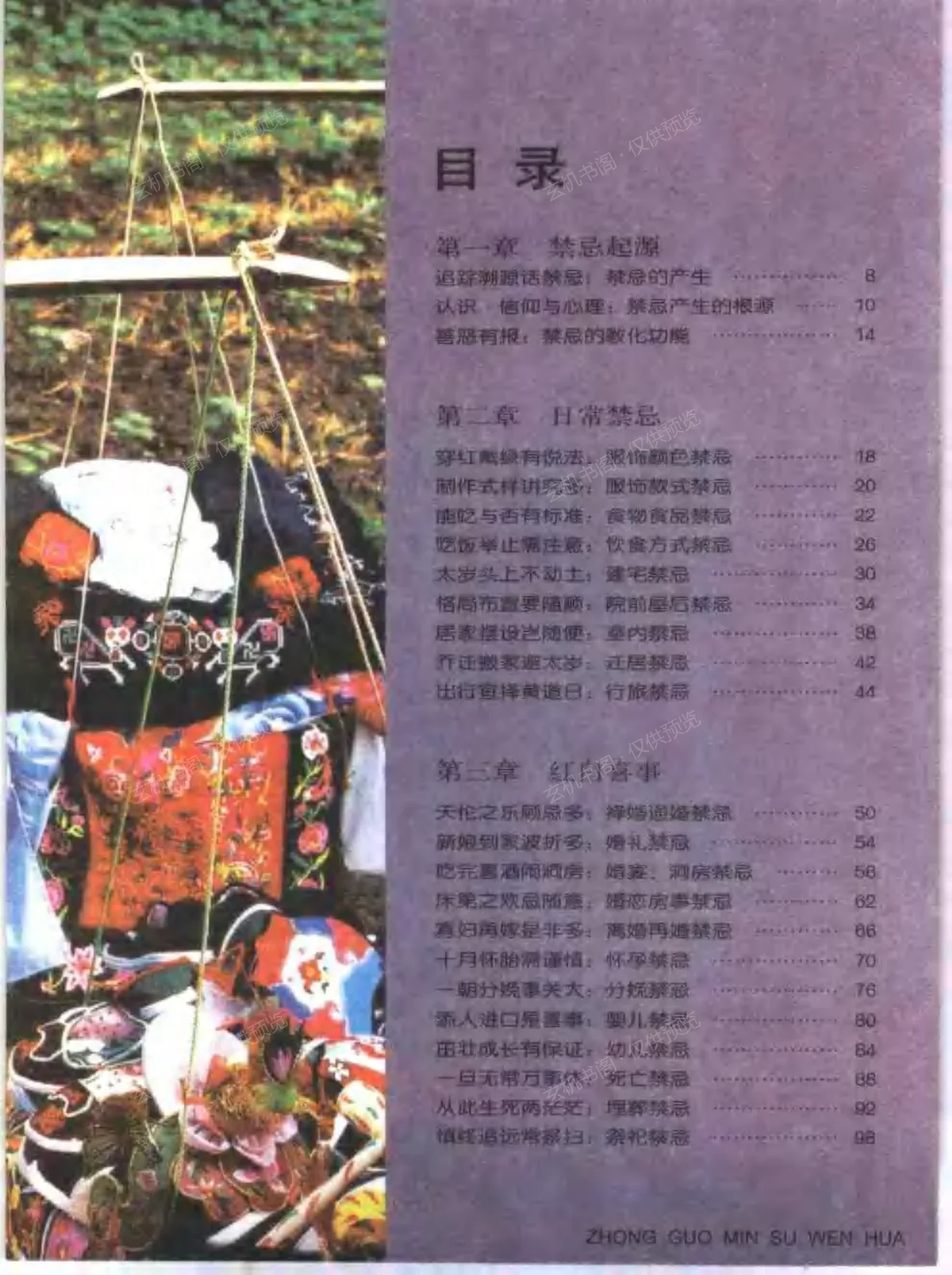
Part of the 'Heaven, Earth, and Humanity Illustrated Series on Chinese Folk Culture,' this book by Hong Yu was published by China Society Press in 2004. The preface traces taboos to early primitive society and describes them as a powerful force for social stability and a distinctive form of folk moral education. The table of contents organizes the material by life situation: Chapter One discusses the origins, psychological roots, and edifying function of taboos; Chapter Two covers everyday taboos concerning clothing colors and styles, food and eating manners, house building (including the notion of not disturbing the ground above Tai Sui), courtyard layout, indoor furnishings, moving house, and travel; Chapter Three addresses red and white events—matchmaking, weddings, wedding feasts and bridal-chamber customs, marital life, divorce and remarriage, pregnancy, childbirth, infancy and early childhood, death, burial, and sacrifice. Color illustrations accompany the text to document folk objects and scenes, making the book a useful reference for understanding traditional Chinese life order and auspicious concepts.
Contents
Ch.1 Origins of taboos: emergence, psychological roots, moral function
Ch.2 Everyday taboos: clothing colors and styles, food and eating
House building, courtyard layout, indoor furnishings, moving, travel
Ch.3 Red and white events: matchmaking, weddings, wedding feasts
Divorce and remarriage, pregnancy, childbirth, infancy taboos
Death, burial, and sacrificial taboos
Key Points
Frames taboos as a distinctive form of folk moral education
Organized by everyday life situations for easy reference
Includes house-building and Tai Sui beliefs tied to feng shui customs
Covers the full cycle of marriage, childbirth, and funeral taboos
Color illustrations document folk objects and scenes