Reading guide
Content guideOverview
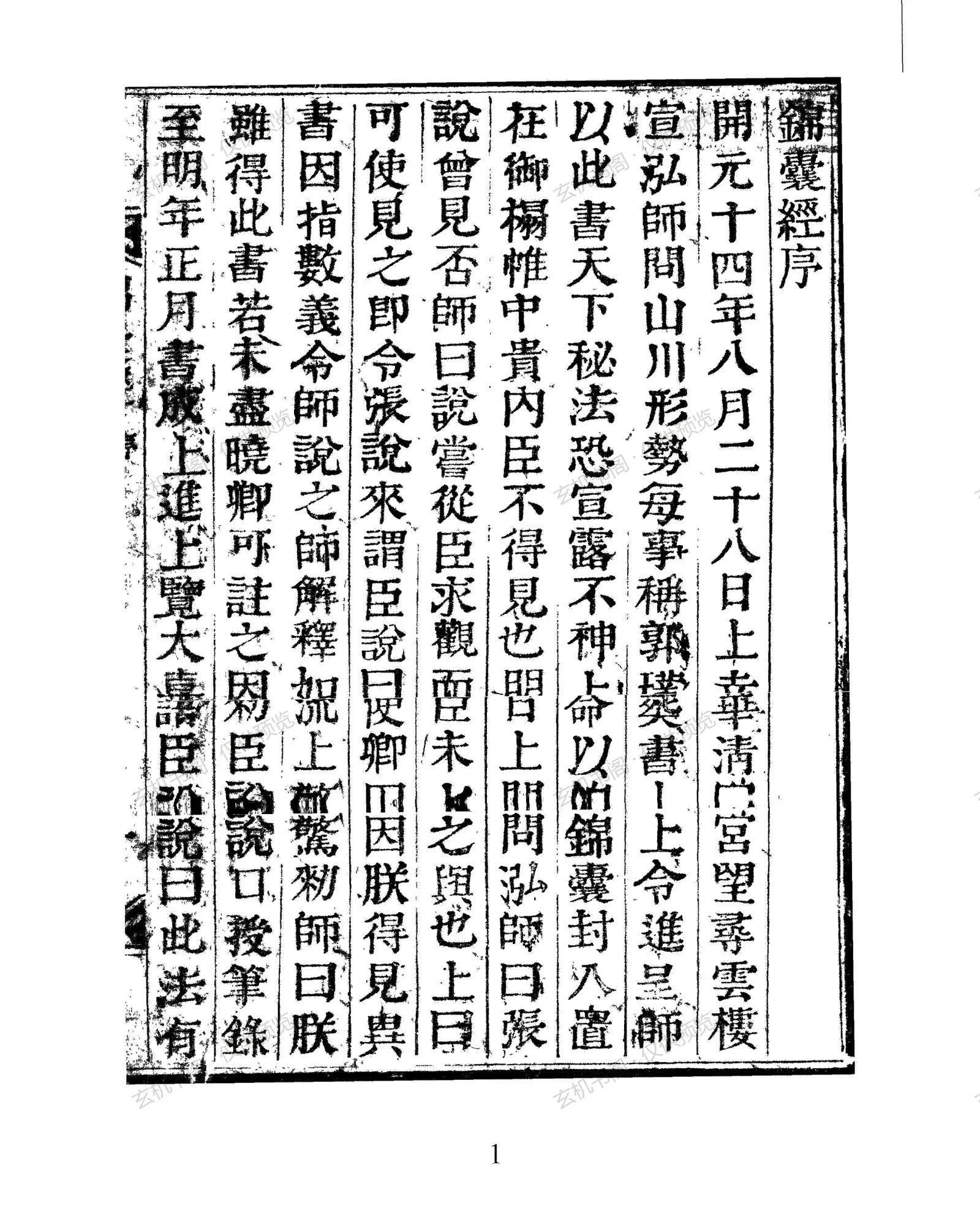
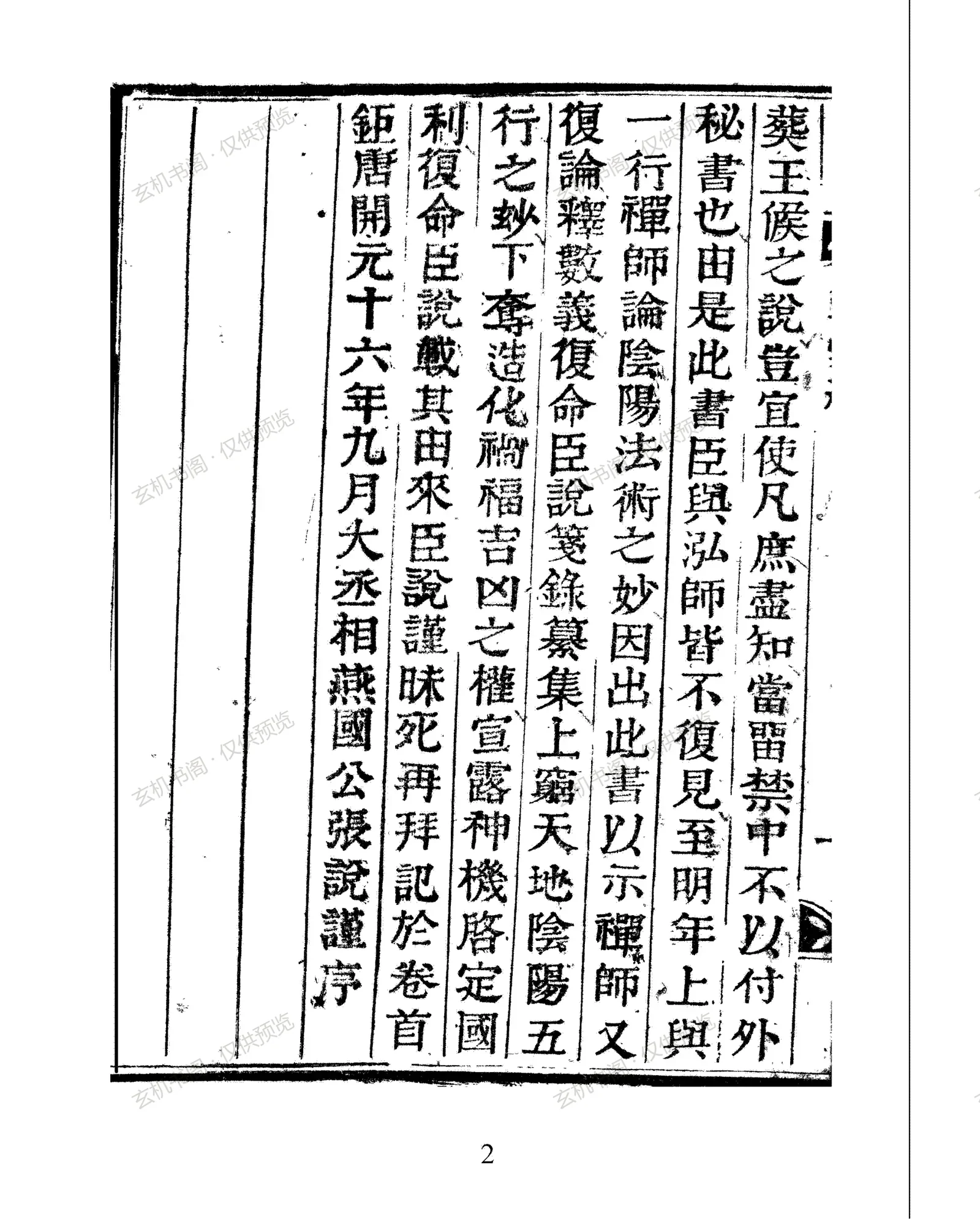
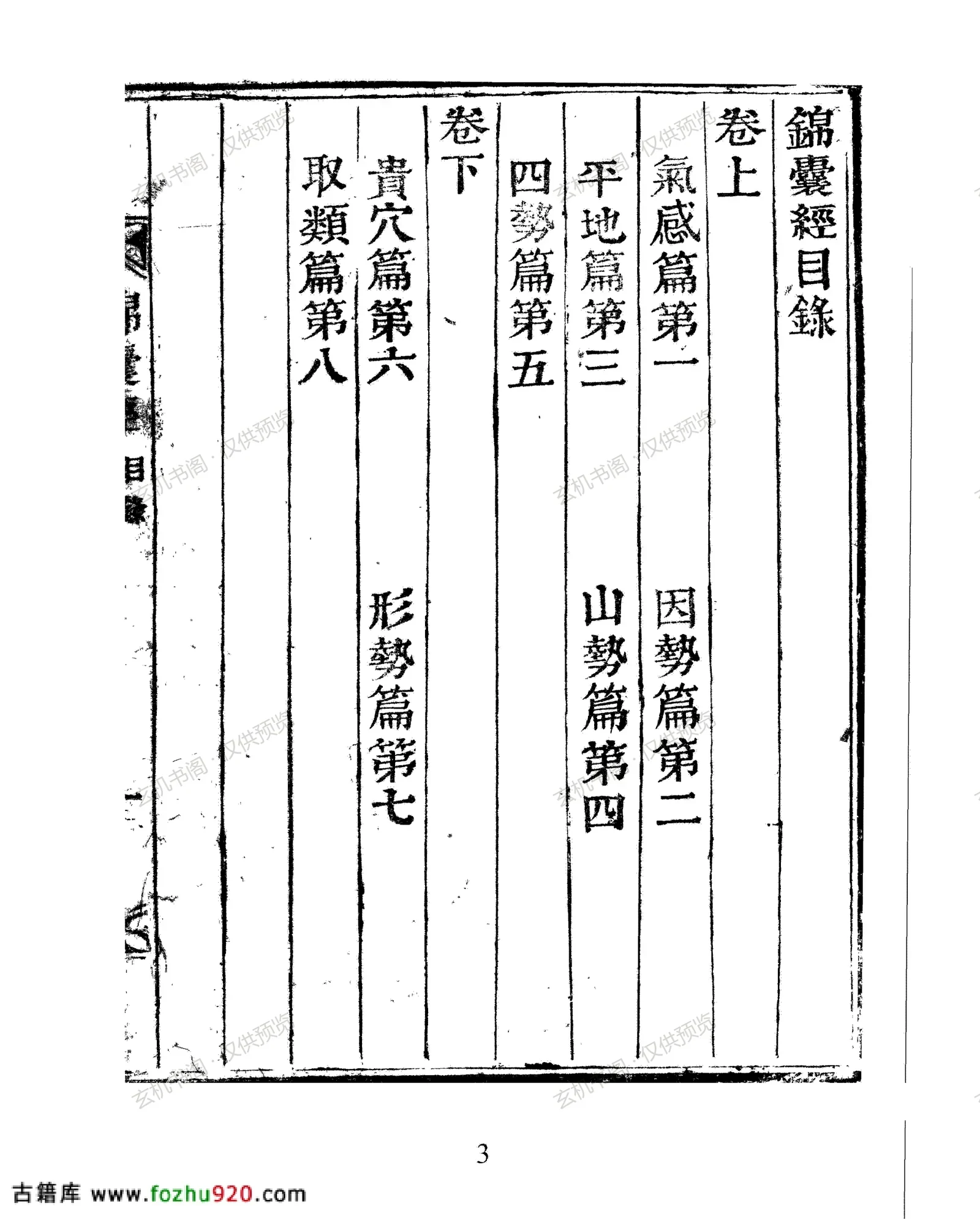
The Jinnang Jing is a classic of the Form School of fengshui, here presented as a scanned old edition of 94 single pages. It opens with a preface in which Hongshi and Zhang Yue discuss the book's transmission, claiming it came from the Wangyun Tower of Huaqing Palace and concerns mountain-and-river terrain and yin-yang methods. The table of contents divides the work into two volumes and eight chapters: Qi Gan, Yin Shi, Ping Di, Shan Shi in the upper volume; Si Shi, Gui Xue, Xing Shi and Qu Lei in the lower. The text focuses on observing terrain, judging dragon veins and configurations, examining the four situational aspects and identifying auspicious sites by analogy. It is a useful source for the study of Tang-dynasty Form School theory and fengshui terminology, though some pages of the scan are faint and should be checked against clearer editions.
Contents
Preface: origin and presentation of the book
Vol. 1, Ch. 1: Qi Gan (Qi Response)
Vol. 1, Ch. 2: Yin Shi (Following Terrain)
Vol. 1, Ch. 3: Ping Di (Level Ground)
Vol. 1, Ch. 4: Shan Shi (Mountain Terrain)
Vol. 2, Ch. 5: Si Shi (Four Configurations)
Vol. 2, Ch. 6: Gui Xue (Auspicious Sites)
Vol. 2, Ch. 7-8: Xing Shi and Qu Lei
Key Points
Attributed to the Tang Hongshi-Zhang Yue transmission line
Centers on terrain and dragon-vein qi rather than compass methods
Eight chapters in two volumes with a clear table of contents
Chapters on Gui Xue, Si Shi and Xing Shi cover site selection
Useful as a scanned textual witness to Tang fengshui literature