Reading guide
Content guideOverview
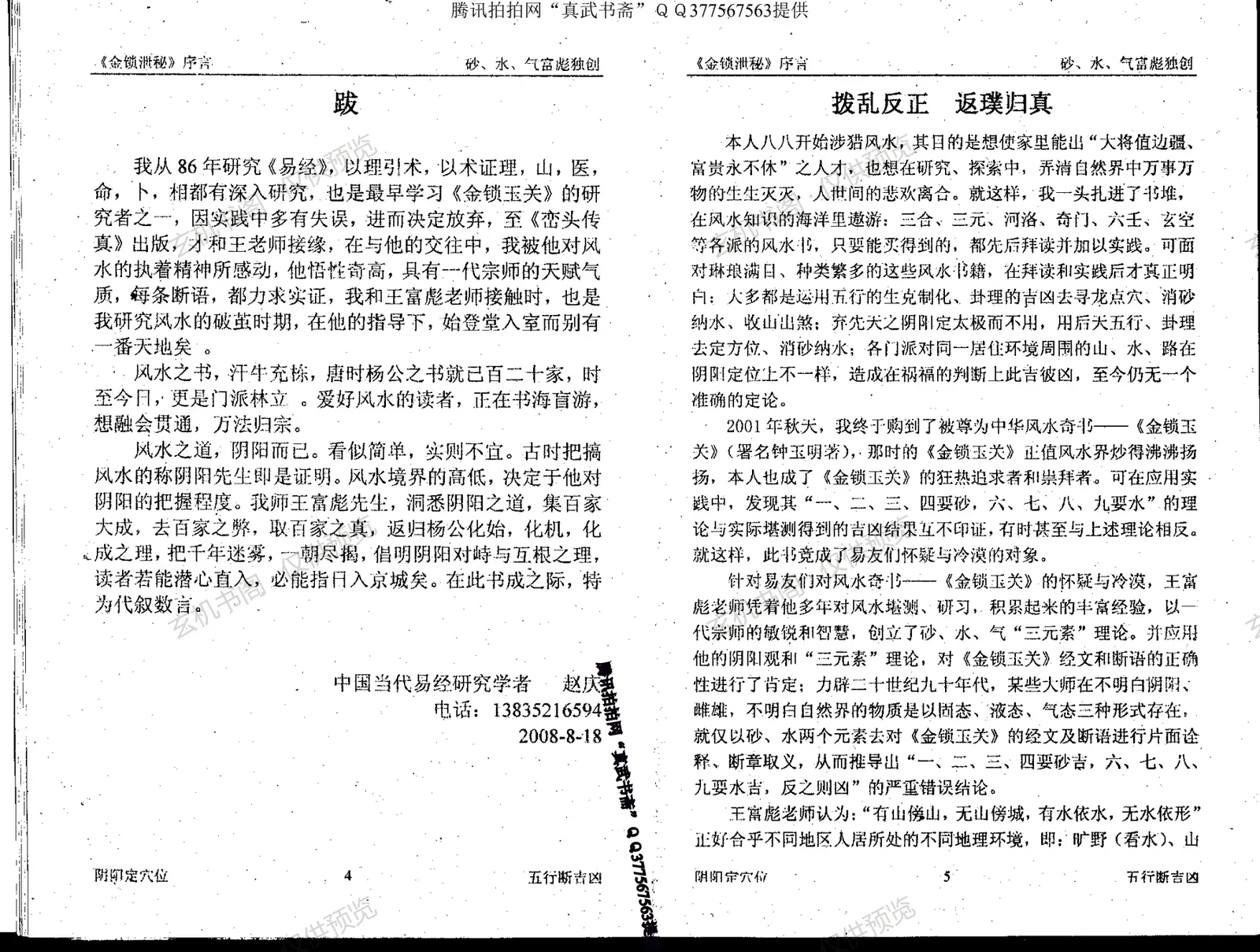
Jinsuo Xiemi is an internal training manual by Wang Fubiao centered on the traditional feng shui classic Jinsuo Yuguan, also known as Guolu Yinyang. The book first lays out foundational knowledge—yin-yang, the Hetu and Luoshu, the five phases, heavenly stems and earthly branches, the four images, the eight trigrams, and the luopan—then provides section-by-section commentary on the Jinsuo Yuguan text and its aphorisms, comparing it with works such as the Tianyu Jing and Qingnang Aoyu. Later chapters discuss sand, water, and qi methods, the twenty-four celestial stars, and the nine stars, using numerous yang-dwelling and yin-dwelling cases to demonstrate orientation, sand-water configuration, and auspicious or inauspicious assessment. Wang proposes a three-element theory of sand, water, and qi, arguing that fixed formulas such as 'sand in positions one through four, water in six through nine' must be applied in light of actual geography, cyclical periods, and qi movement. The appendices address critiques and developments of Jinsuo Yuguan, a brief survey of feng shui schools, and an afterword. It suits readers with some feng shui background who wish to deepen their understanding of Jinsuo Yuguan.
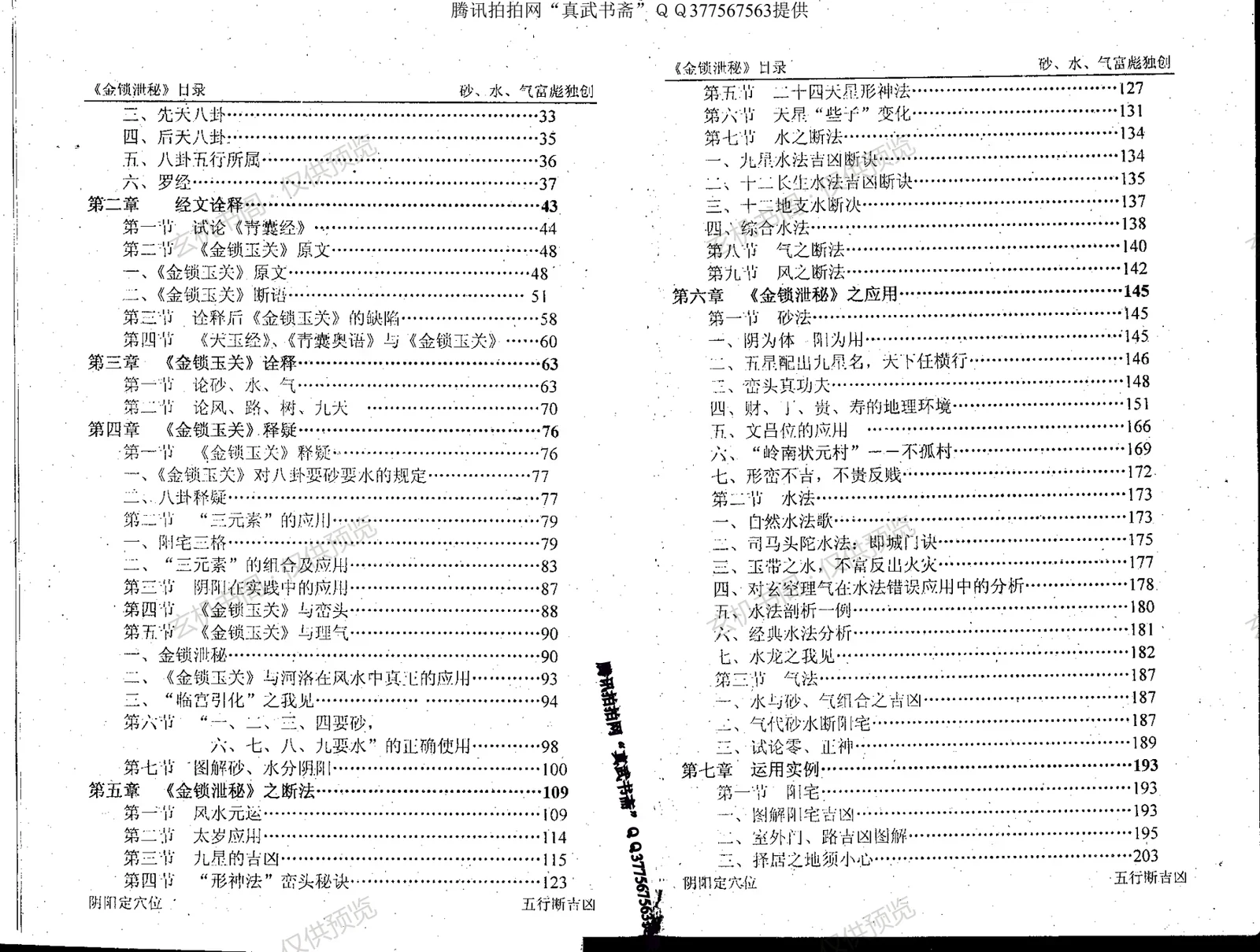
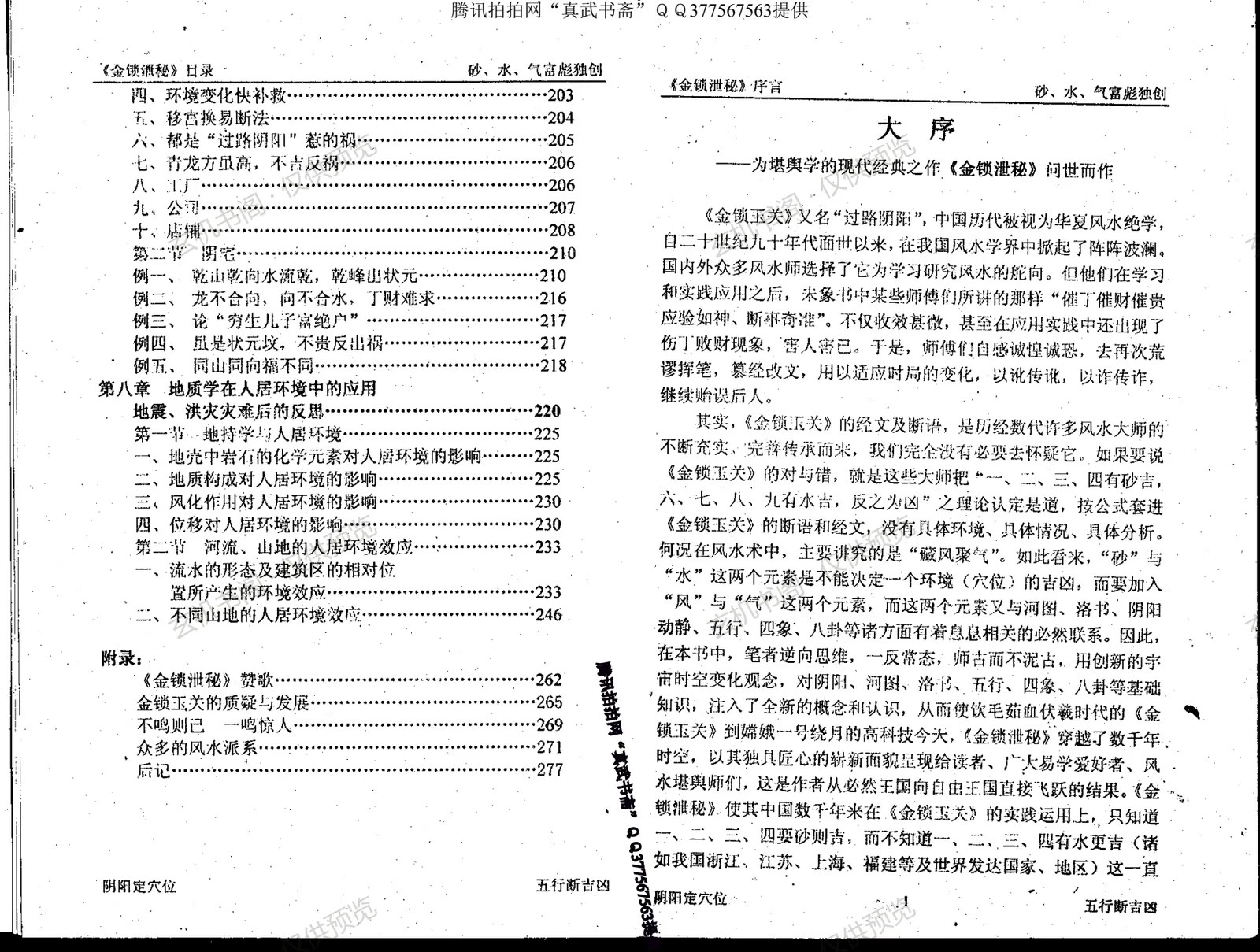
Contents
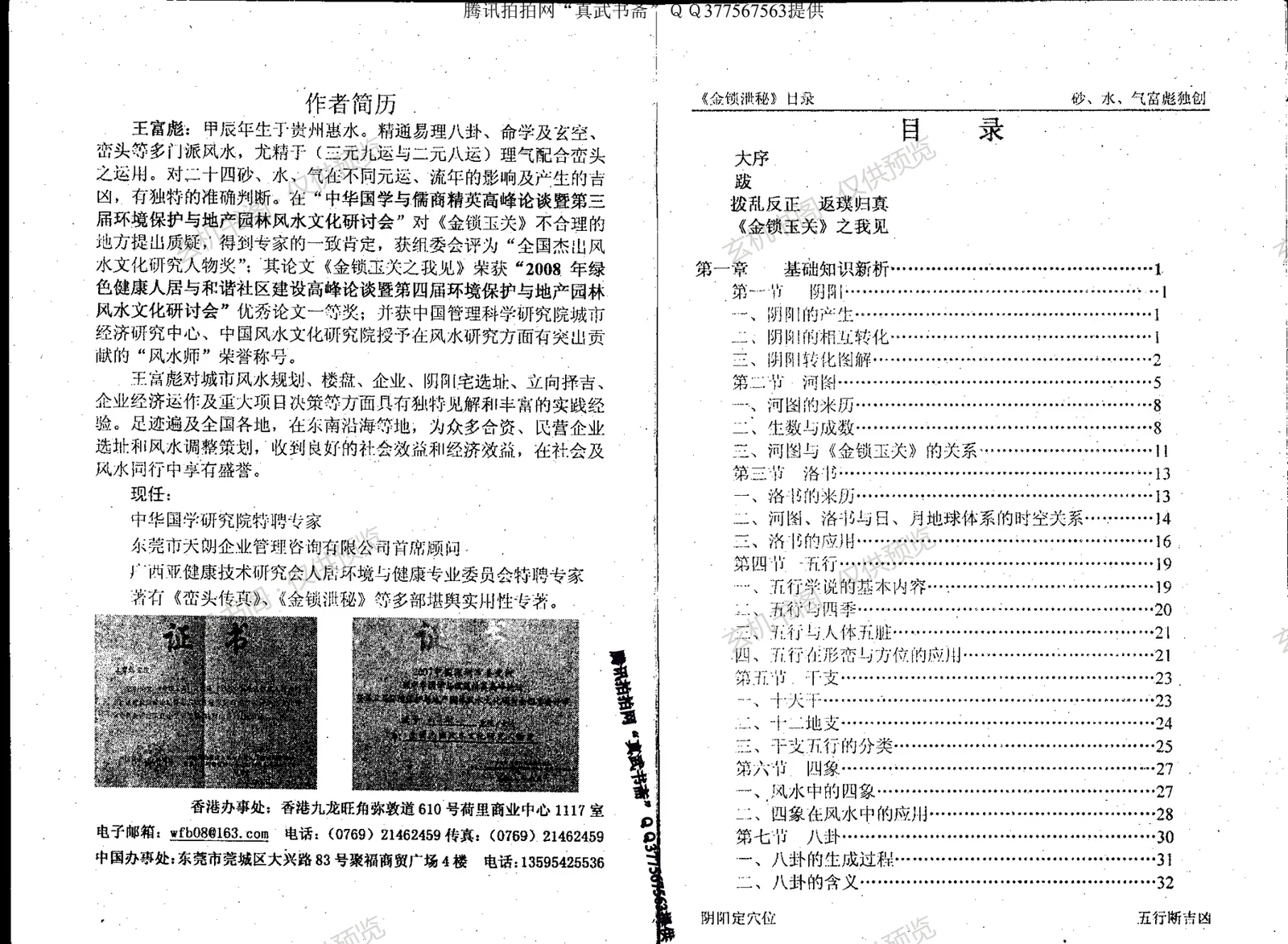
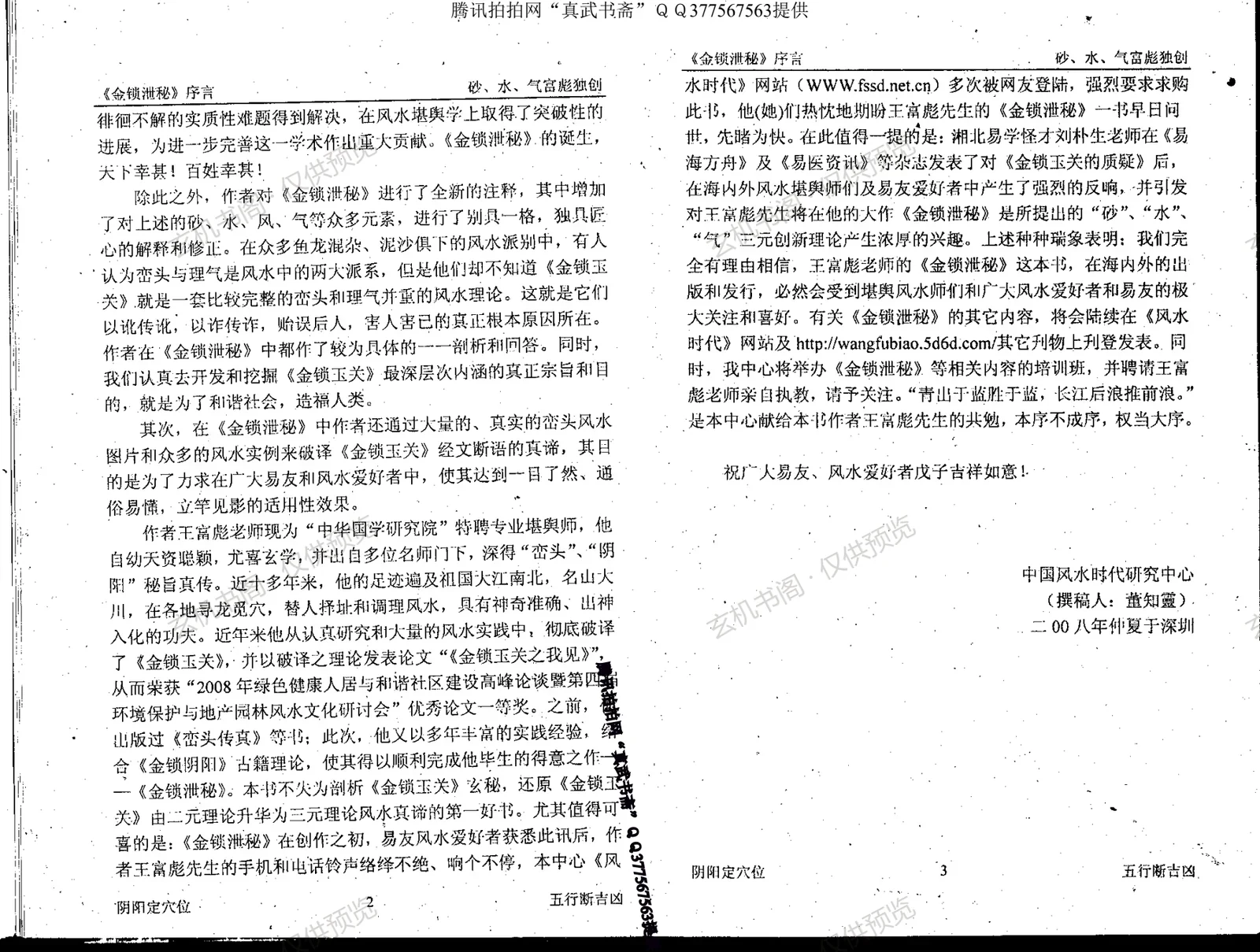
Author biography and prefaces: background of Wang Fubiao and the book
Ch. 1 Fundamentals: yin-yang, Hetu-Luoshu, five phases, stems-branches, four images, trigrams, luopan
Ch. 2 Textual commentary: Qingnang Jing, Jinsuo Yuguan original text and aphorisms
Ch. 3 Discussion of sand, water, qi, wind, roads, trees, and jiufu
Ch. 4 Clarifications: sand-water rules, three elements, yin-yang practice, luantou and liqi
Ch. 5-6 Methods and applications: cyclical periods, Tai Sui, nine stars, celestial stars, sand-water-qi methods
Ch. 7-8 Yang and yin dwelling cases; geological and environmental applications
Appendix: praises, critique and development, feng shui schools, afterword
Key Points
Reinterprets Jinsuo Yuguan through a three-element theory of sand, water, and qi, opposing mechanical use of formulas
Systematically covers foundational feng shui concepts: yin-yang, Hetu-Luoshu, five phases, stems-branches, trigrams, and luopan
Comments section by section on Jinsuo Yuguan, noting its flaws and controversies
Separately discusses sand, water, and qi methods plus twenty-four celestial stars and nine stars
Uses numerous yang and yin dwelling cases to demonstrate orientation, sand-water configuration, and assessment