Reading guide
Content guideOverview
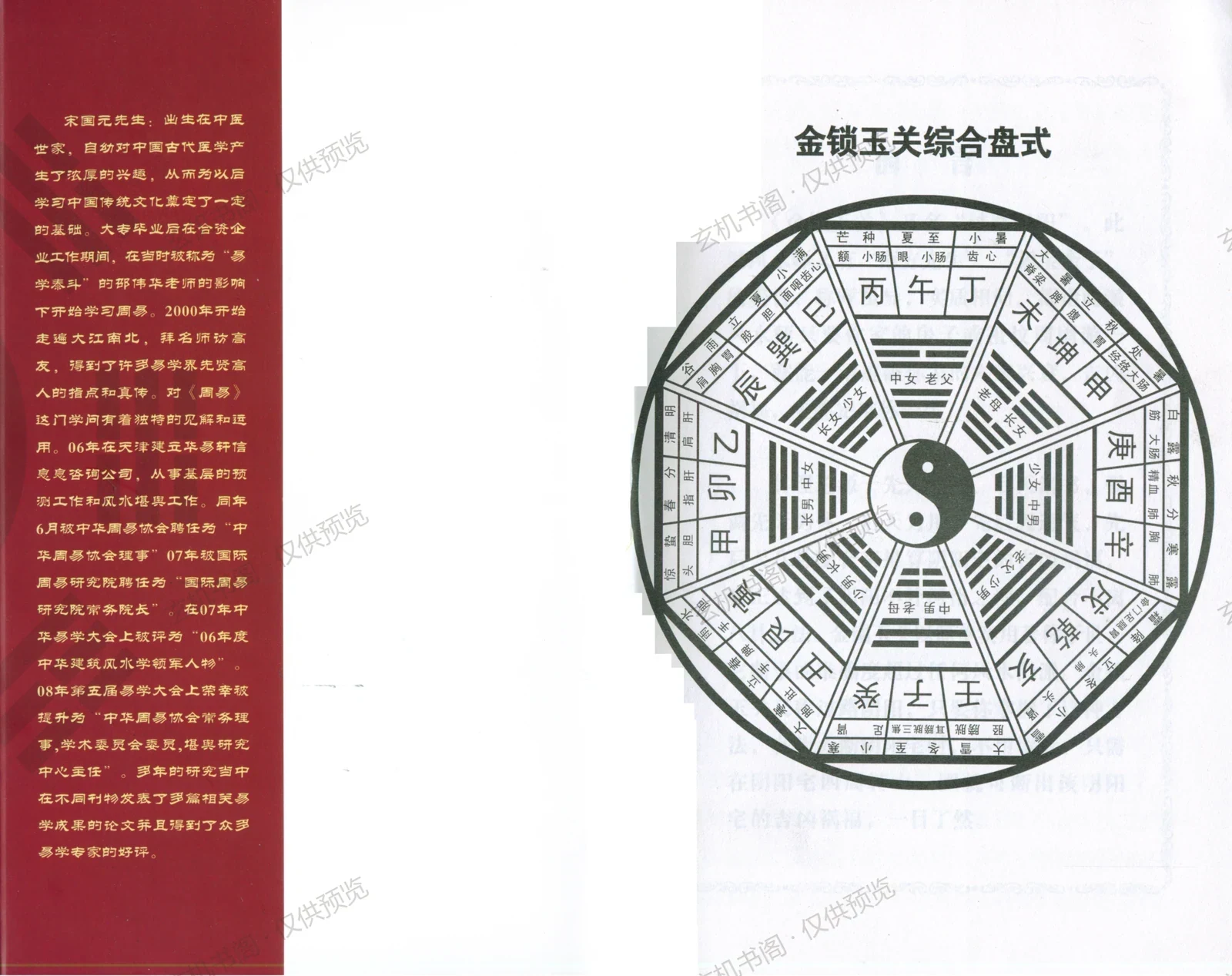
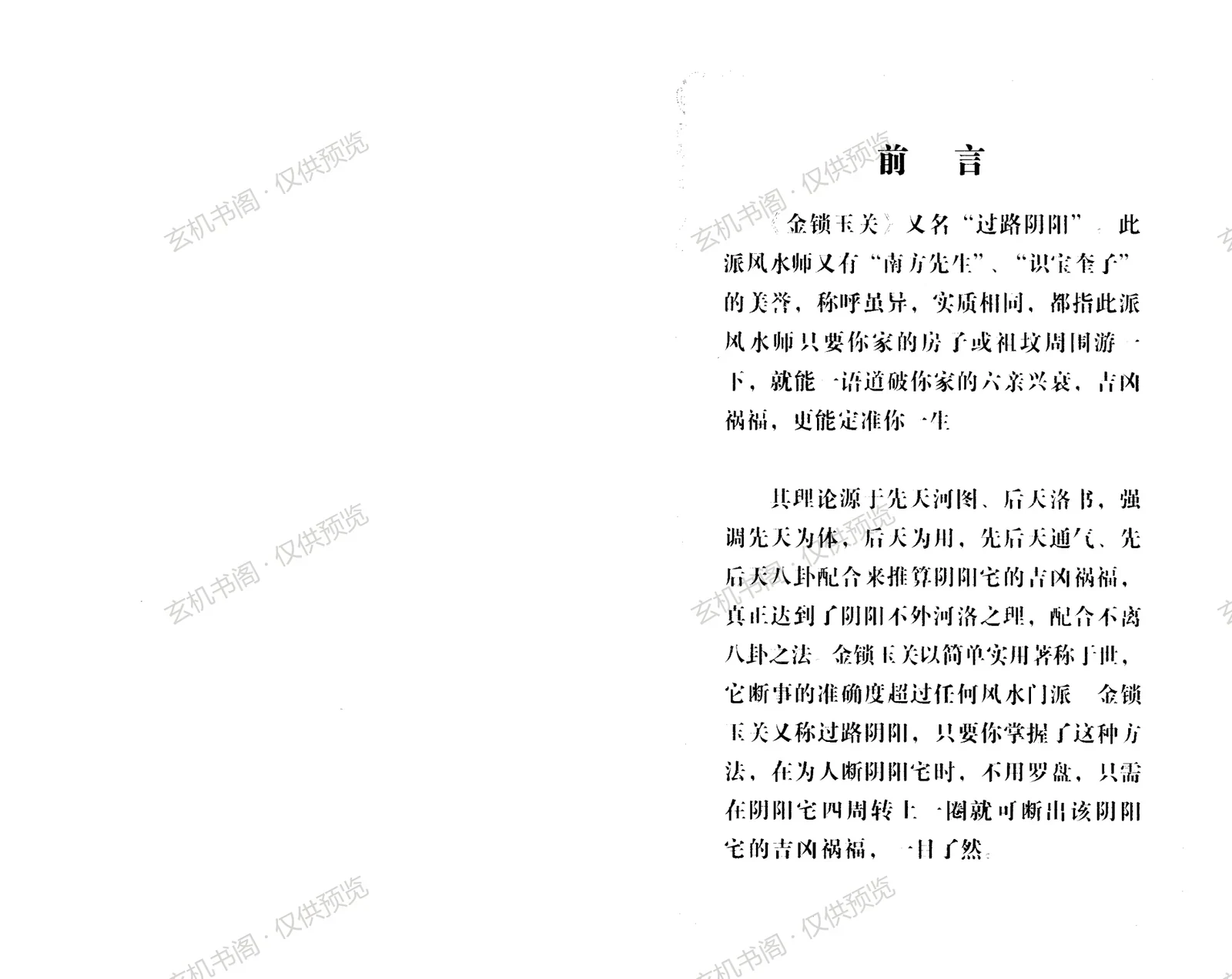
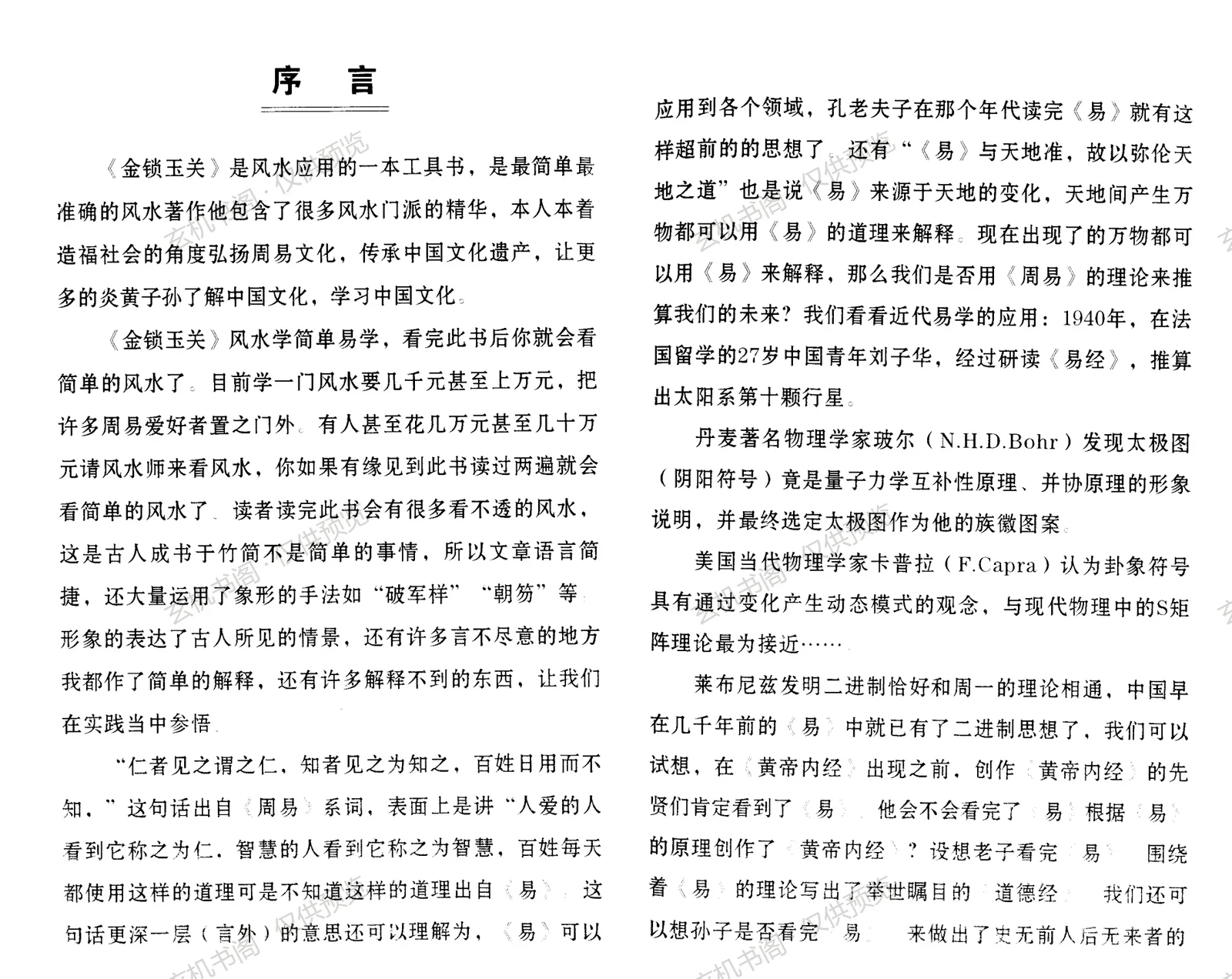
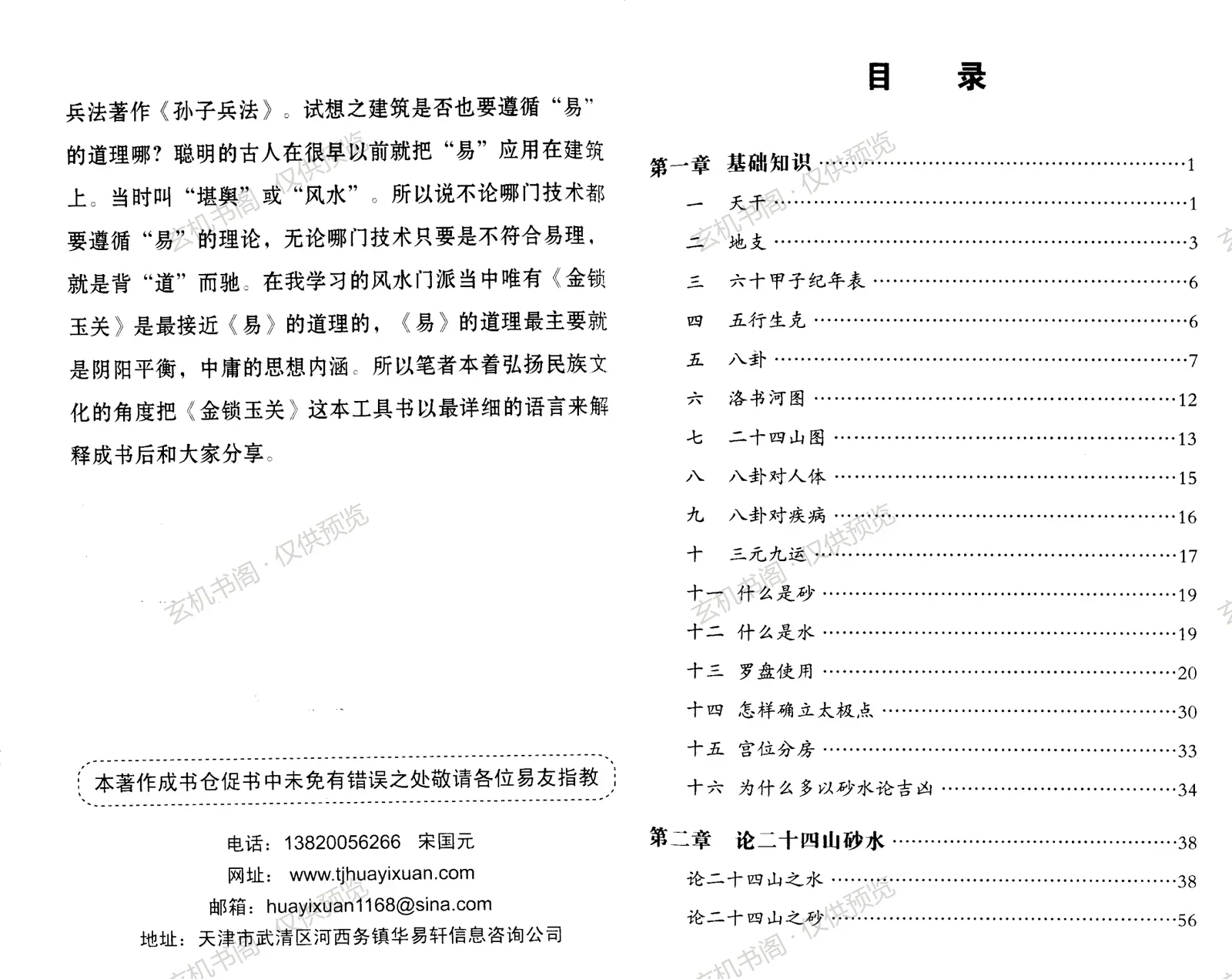
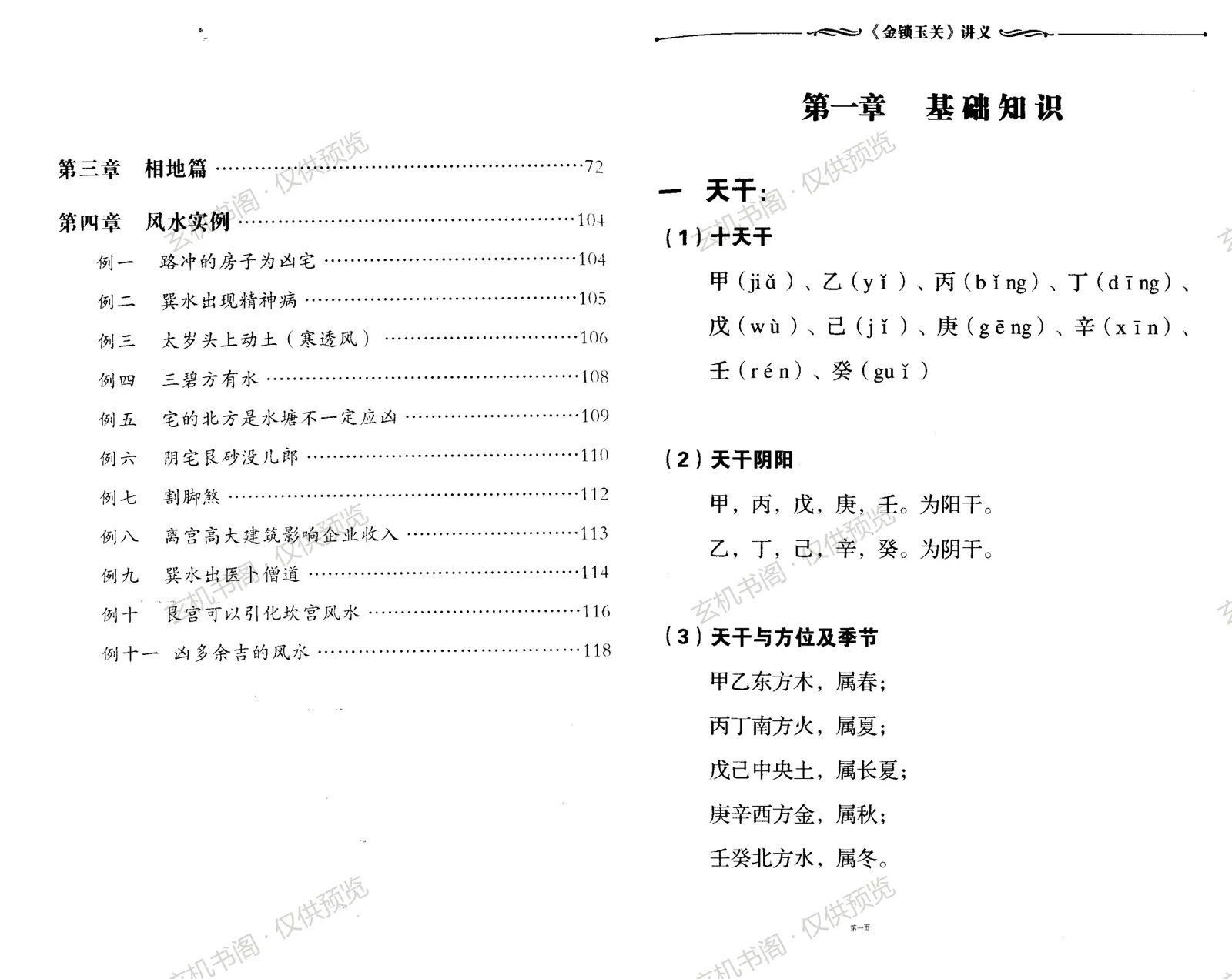
This is a lecture-style edition of Jinsuo Yuguan, edited by Song Guoyuan. The preface notes that the school is also known as Guilu Yinyang and traces its theory to the Xiantian Hetu and Houtian Luoshu, using the former as essence and the latter as application. It claims that one can judge the fortunes of a dwelling or grave by walking around it once, without a compass. Chapter One covers fundamentals: the ten heavenly stems, twelve earthly branches, the sixty-cycle table, five-element interactions, the bagua, Hetu and Luoshu, the 24-mountain diagram, bagua correspondences to the human body and illnesses, the three-yuan nine-yun cycles, the concepts of sha and shui, compass use, determining the taiji point, and palace-based family divisions. Chapter Two discusses sand and water across the 24 mountains. Chapter Three concerns site observation, and Chapter Four presents more than ten field cases, including road clashes, water at the xun palace, earth moving at the tai-sui position, and cutting-foot sha. A comprehensive plate diagram integrates solar terms, organs, bagua, 24 mountains, and family relations, making the book useful for feng shui enthusiasts and researchers.
Contents
Ch.1 Fundamentals: stems, branches, five elements, bagua, Hetu-Luoshu
24-mountain diagram, bagua-body correspondence, three-yuan nine-yun
Concepts of sha and shui, compass use, taiji point, palace divisions
Ch.2 Sand and water of the 24 mountains
Ch.3 Site observation
Ch.4 Feng shui cases: road clash, xun water, cutting-foot sha
Key Points
Also called Guilu Yinyang; rooted in Xiantian Hetu and Houtian Luoshu.
Claims dwellings can be judged by walking around them without a compass.
Core method pairs sand and water across the 24 mountains.
Comprehensive plate links solar terms, organs, bagua, mountains, and family.
Chapter Four uses many field cases to illustrate the theory.