Reading guide
Content guideOverview
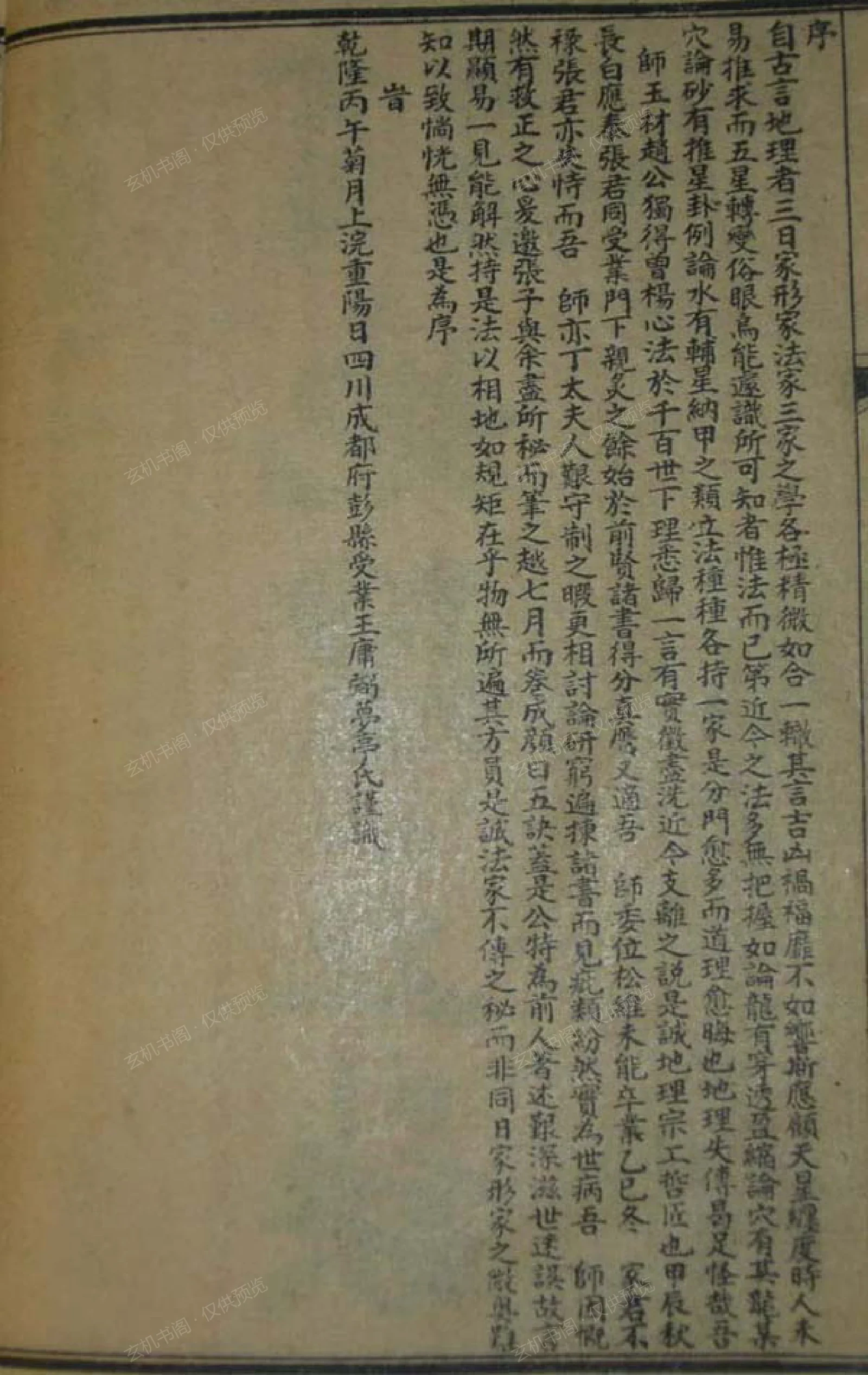
This is a scanned edition of the Dili Wujue (Five Key Methods of Geography) by the Qing dynasty feng shui master Zhao Jiufeng, published by Shanghai Tianbao Book Company in a fully illustrated and carefully collated edition. The cover names Zhao Jiufeng of Jingyang as author. A preface by Wang Yong, dated to the Bingwu year of the Qianlong reign (c. 1786), explains that Zhao received the heart method of the Yang school and distilled the vast literature of burial geography into five key methods: dragon, cavity, sand, water, and facing. The book opens with editorial notes listing its sources, including Guo Pu's Zangshu and Yang Junsong's classics, followed by nine questions and answers on the nature of geography, the distinction between form and method schools, and the relationship between auspicious sites and moral conduct. The table of contents covers five-element formulas, compass study, dragon seeking, cavity spotting, sand observation, water examination, and facing establishment. The main text's general discussion of the five elements details Sanhe, Four Births, Twin Mountains, Yuankong, and Facing five-element systems, along with the Yuanguan Tongqiao song and the eight directions' heavenly horses, making it a key document for studying Sanhe-school feng shui.
Contents
Cover title and publication information
Preface by Wang Yong on the Yang school method
Editorial notes and cited sources
Nine questions on form and method
Table of contents: five elements, compass, dragon, cavity, sand, water, facing
General discussion of the five elements
Yuanguan Tongqiao song and eight directions' heavenly horses
Key Points
Organizes the whole book around five methods: dragon, cavity, sand, water, facing
Belongs to the Sanhe school, combining form and compass theory
Preface dated to the Qianlong Bingwu year explains its origin
Editorial notes cite Guo Pu, Yang Junsong, and other authorities
The five-element chapter covers Sanhe, Four Births, Twin Mountains, and Yuankong systems
Illustrated and collated for practical compass reference