Reading guide
Content guideOverview
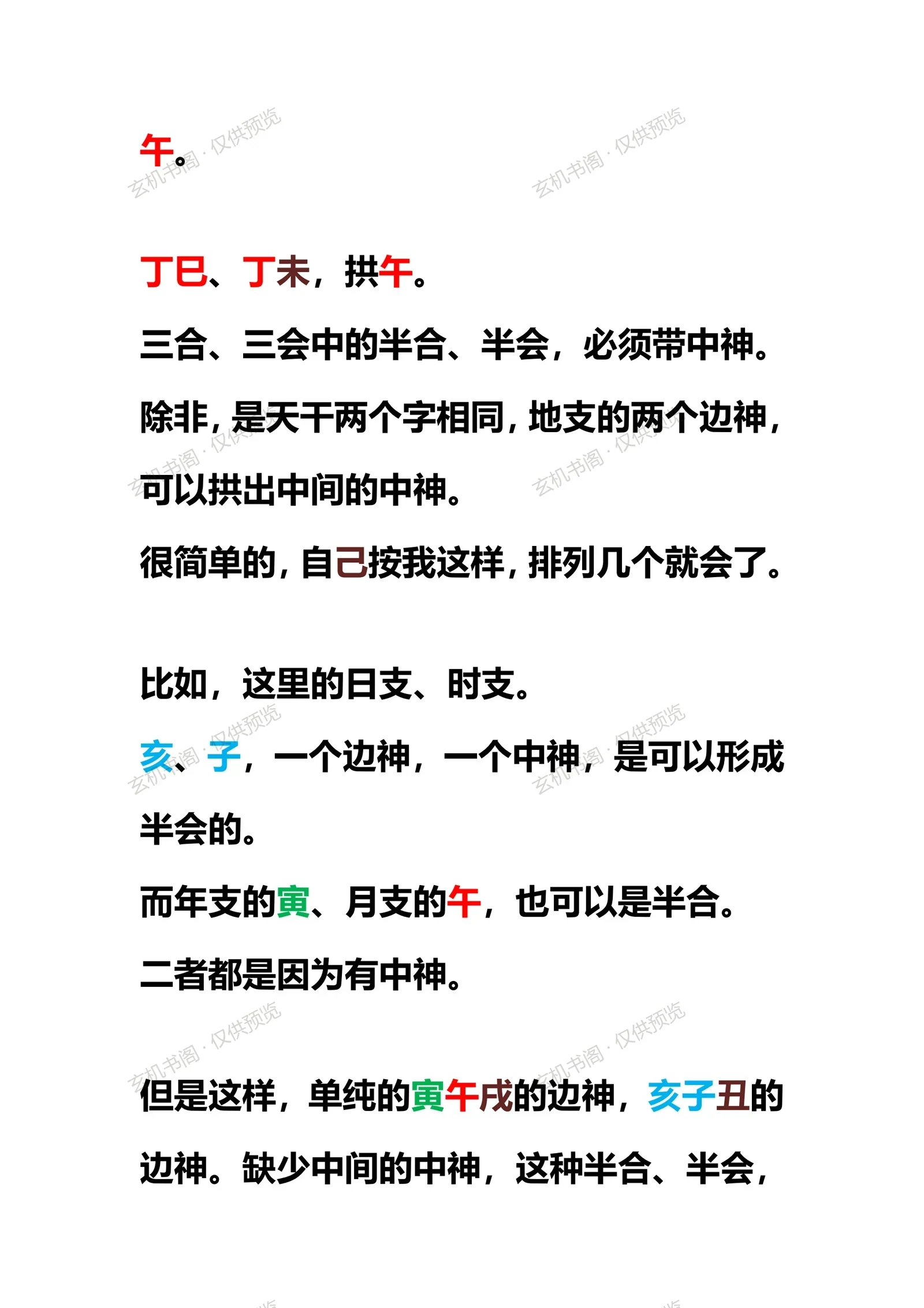
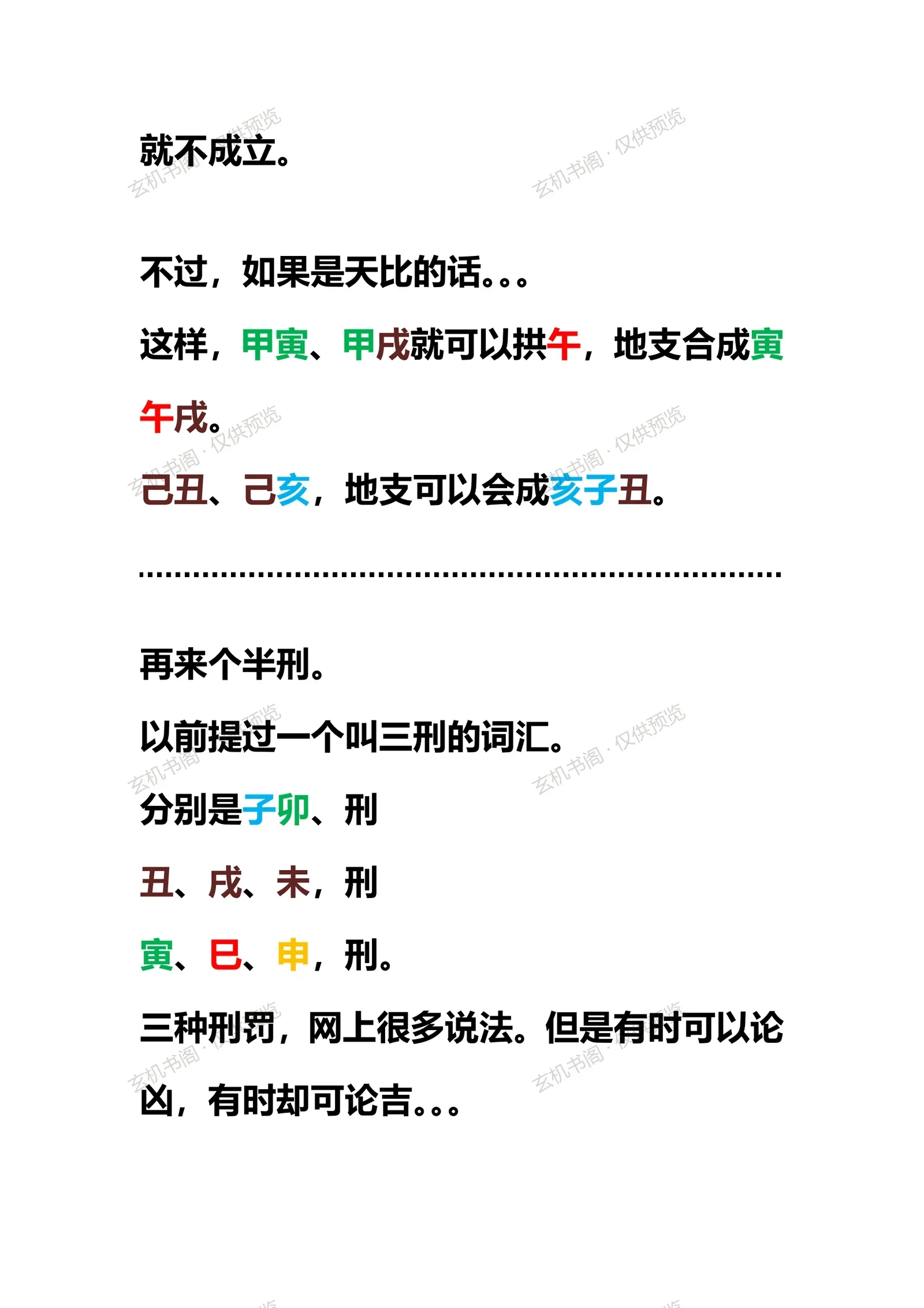
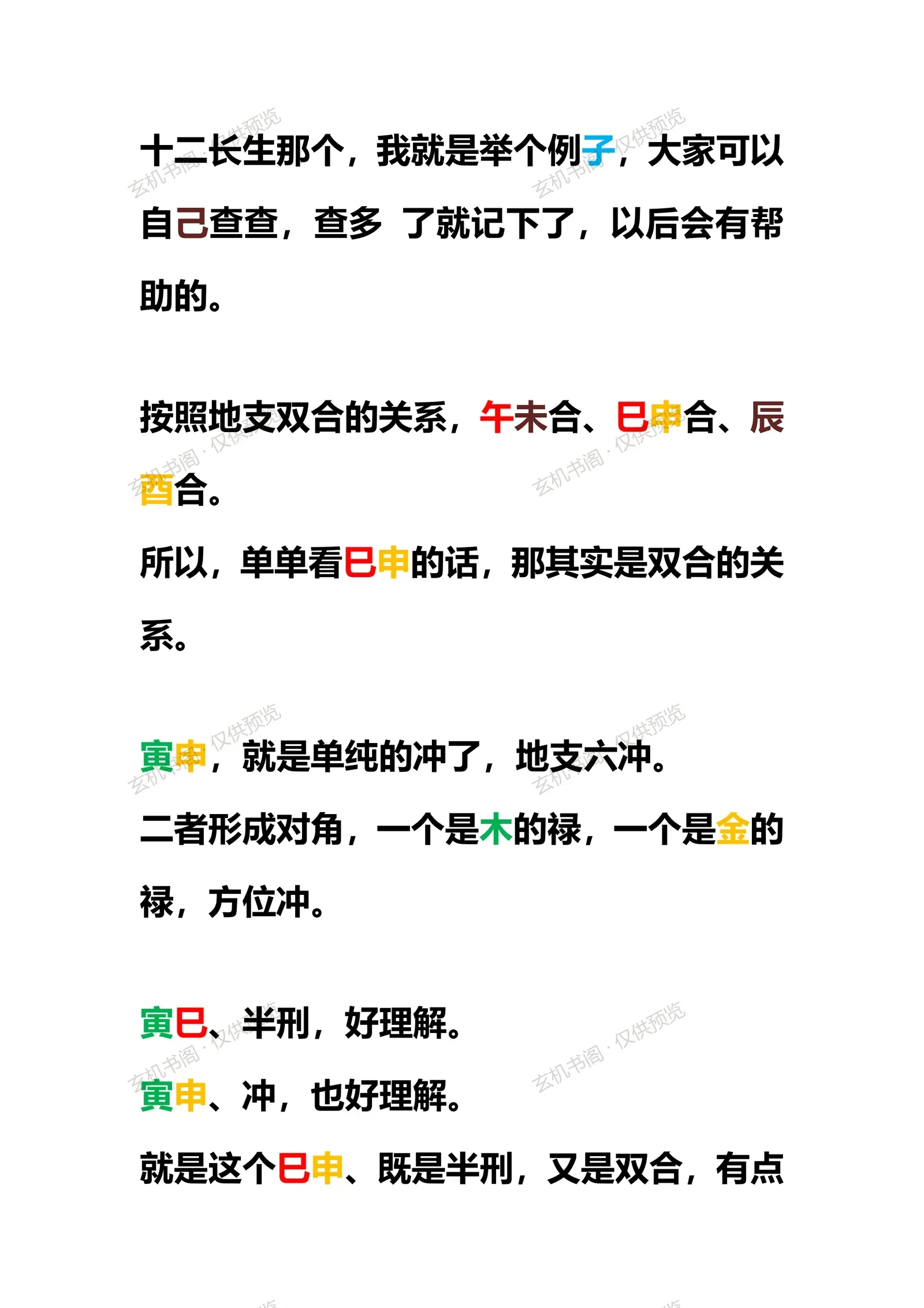
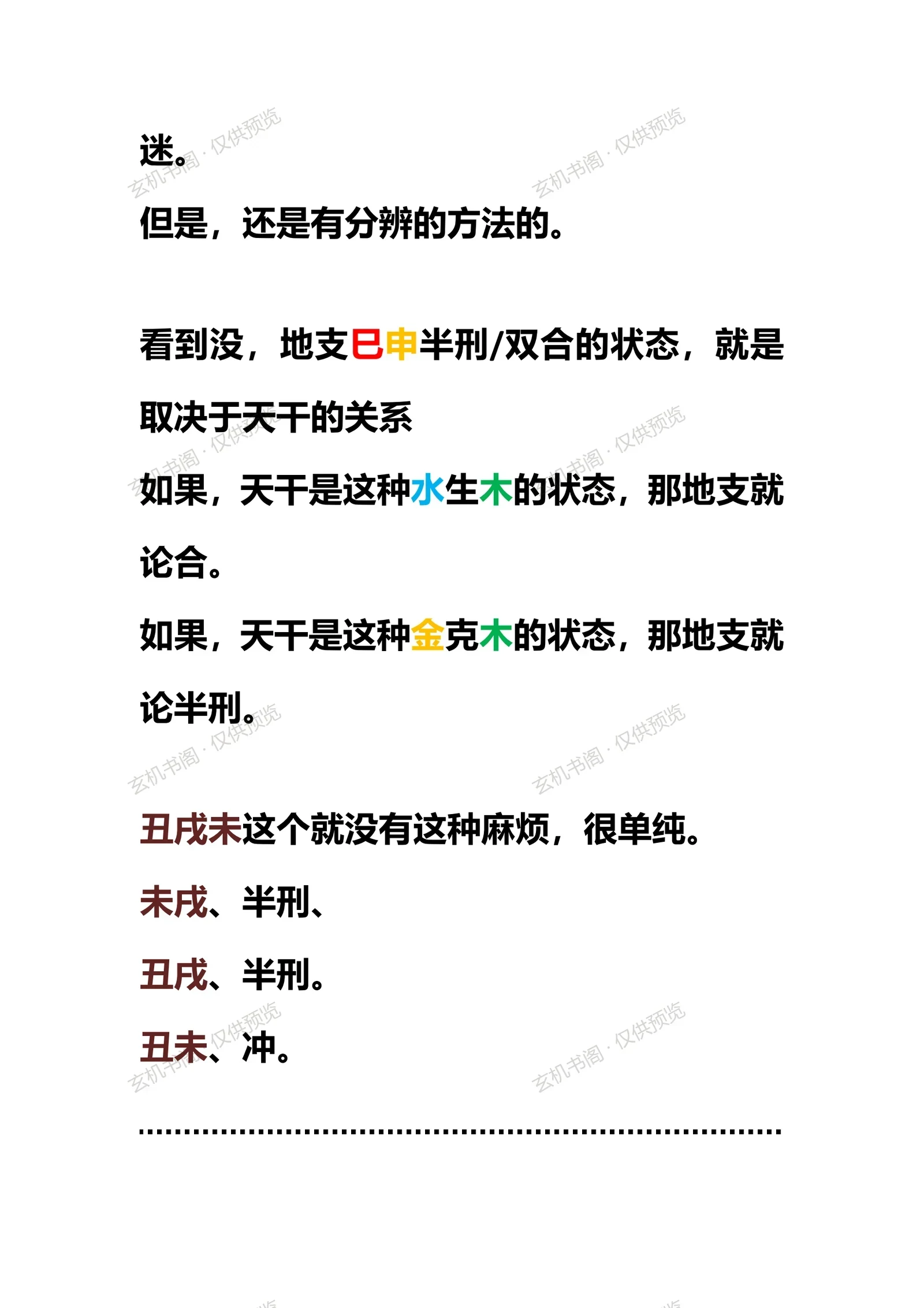
This is a foundational Chinese astrology lecture on earthly branch relationships, specifically half-combinations, half-meetings, and half-punishments. Continuing from three-combinations and three-meetings, it argues that half-combinations and half-meetings require a central branch; without one, a hidden central branch may be drawn out through matching heavenly stems or bracketing. Examples include Yin-Wu-Xu, Si-Wu-Wei, Hai-Zi-Chou, and stem pairs such as Jia-Yin with Jia-Xu. The text then turns to the three punishments—Zi-Mao, Chou-Xu-Wei, and Yin-Si-Shen—warning against treating them as automatically inauspicious. It pays special attention to Si-Shen, which is both a double combination and a half-punishment, resolved by examining whether the heavenly stems show water generating wood (combination) or metal controlling wood (punishment). The style is conversational and example-driven, suited to readers already familiar with basic branch combinations.
Contents
Half-combinations and half-meetings require a central branch
Drawing out a hidden central branch via matching stems
Three punishments: Zi-Mao, Chou-Xu-Wei, Yin-Si-Shen
Punishments are not automatically inauspicious
Disambiguating Si-Shen: double combination vs half-punishment
Heavenly stems determine whether branches combine or punish
Key Points
No central branch, no valid half-combination or half-meeting
Identical heavenly stems can draw out a hidden central branch
Punishments may be auspicious or inauspicious depending on context
Si-Shen is both a double combination and a half-punishment; stems decide
Chou-Xu-Wei punishment is relatively straightforward