Reading guide
Content guideOverview
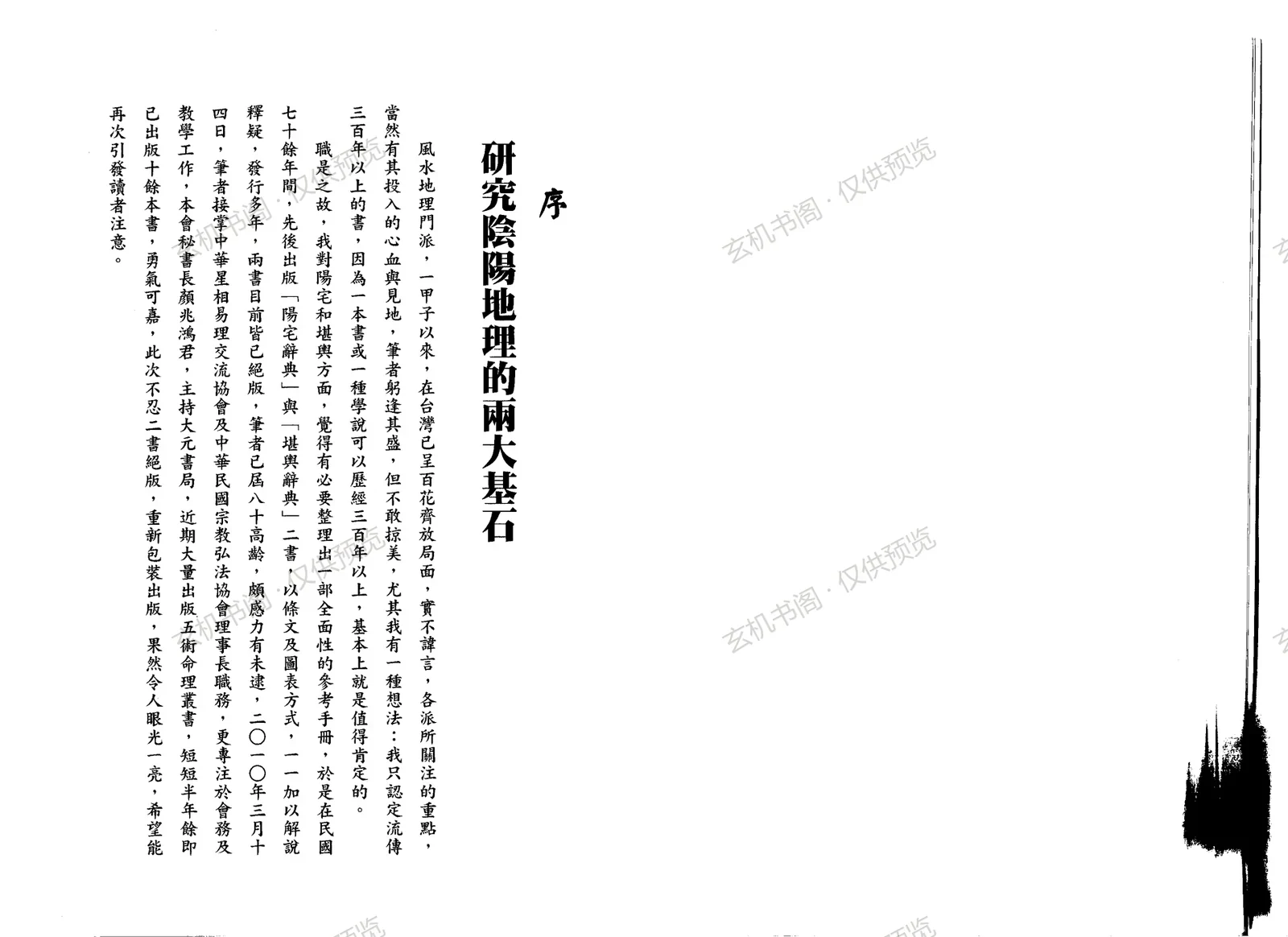
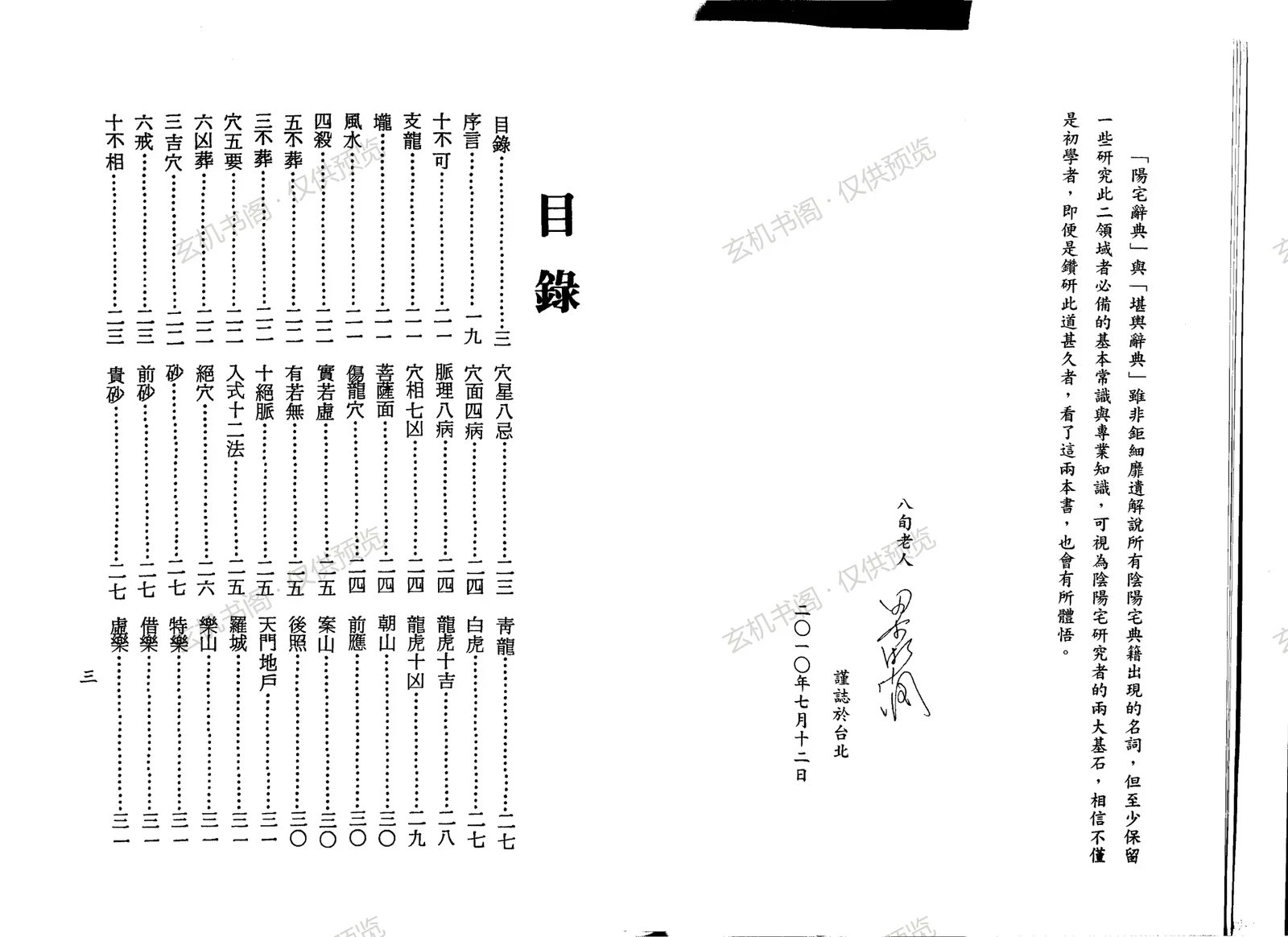
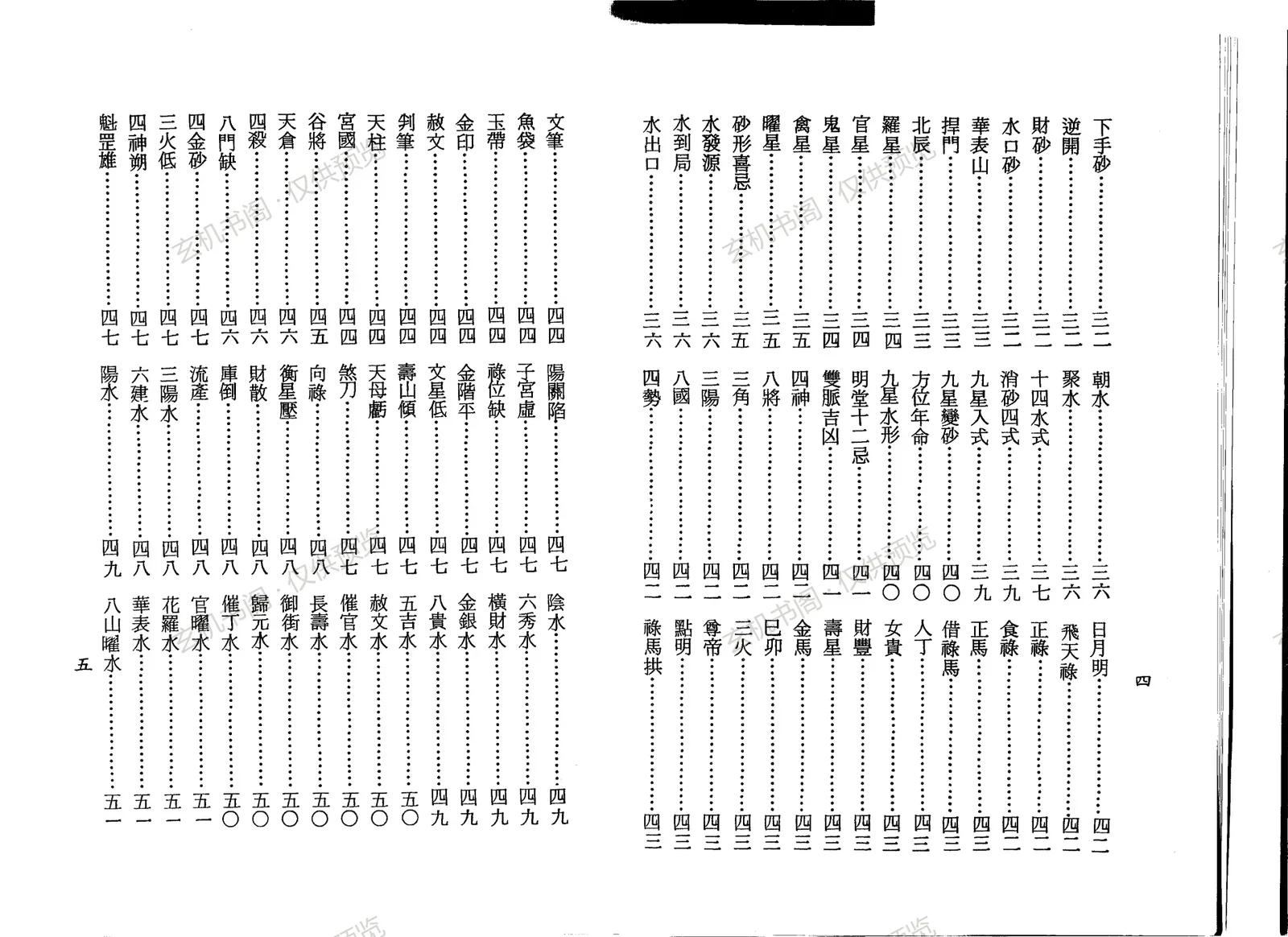
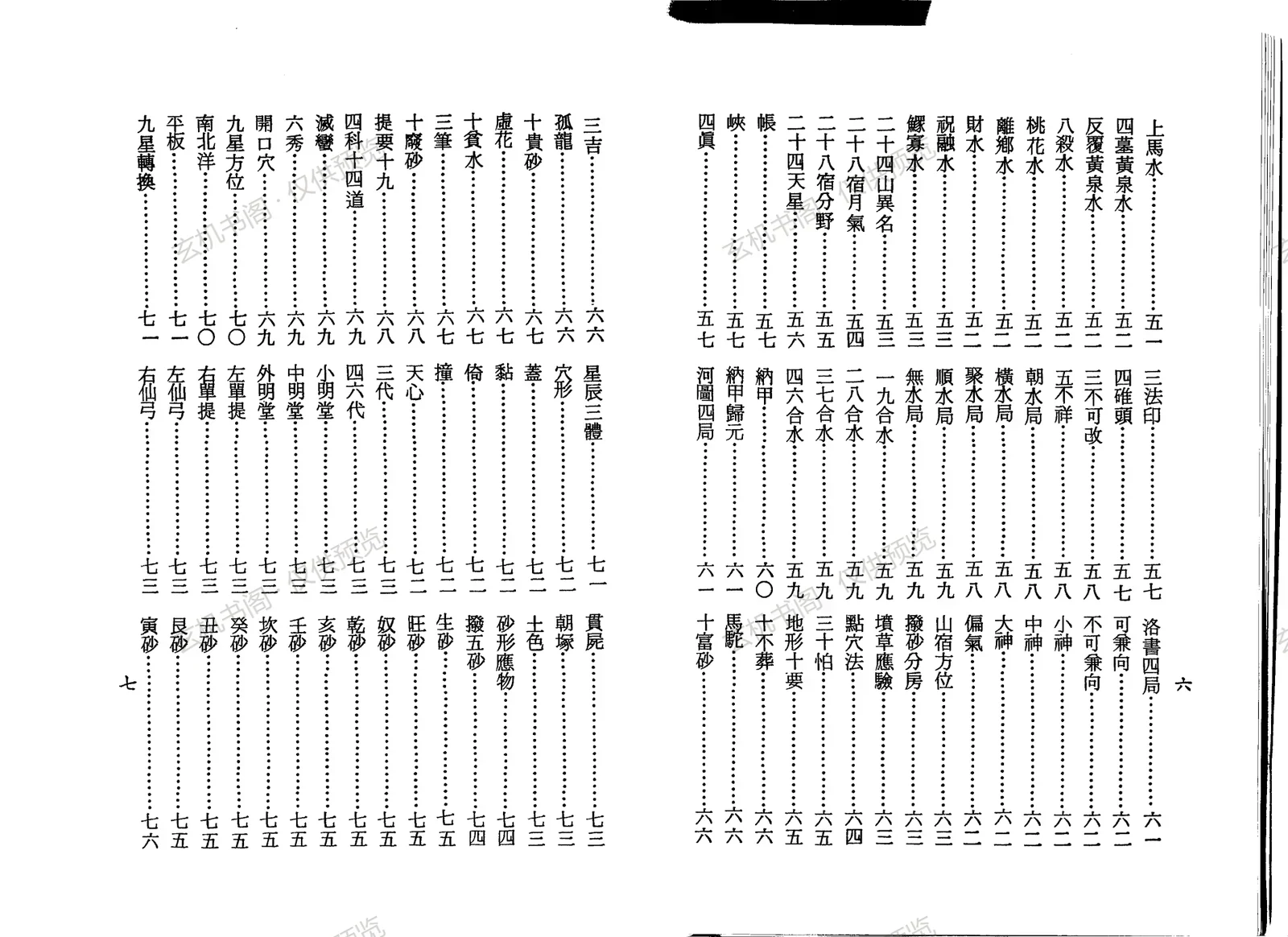
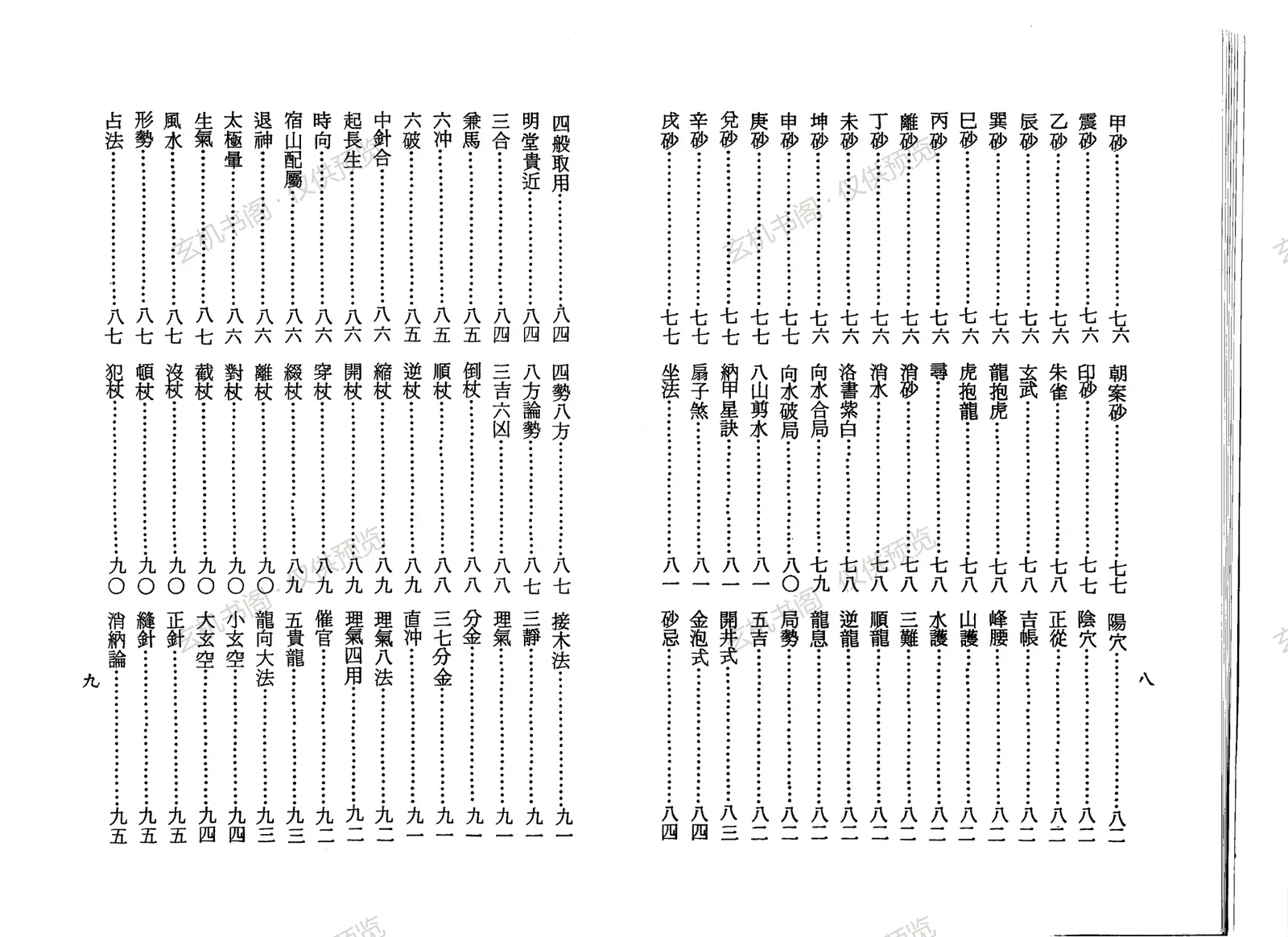
This is Liang Xiangrun's Kanyu Dictionary, a reference work that explains traditional feng shui terminology in dictionary-entry format. The preface, titled 'The Two Cornerstones of Yin-Yang Geography,' positions the book alongside the Yangzhai Dictionary as a basic reference for studies of dwellings and graves, stressing its itemized and diagrammatic organization. The contents cover a wide range of concepts: general terms such as 'branch dragons' and 'water reaching the site'; form patterns including the Five Stars, Nine Stars, Four Forces, and Three Auspices and Six Inauspices; practical concepts such as acupoint methods, burial methods, sand methods, water methods, facing and supporting mountains, bright halls, enclosing walls, and water mouths; and Liqi terms from Xuankong, Sanhe, Najia, and pure yin-yang systems. It also includes taboo lists like the Ten No-Burials, Five No-Burials, Six Inauspicious Burials, and Ten Non-Matchings, with chants and diagrams. The book serves as a terminological reference for feng shui literature and a companion for reading classical geomancy texts.
Contents
Preface: The Two Cornerstones of Yin-Yang Geography
General entries: branch dragons, water reaching the site, four forces, three auspices and six inauspices
Form patterns: Five Stars, Nine Stars, acupoint methods, burial methods
Sand and water methods: facing mountains, bright hall, water mouth, enclosing walls
Liqi terms: Xuankong, Sanhe, Najia, pure yin-yang
Taboo entries: Ten No-Burials, Five No-Burials, Six Inauspicious Burials, Ten Non-Matchings
Key Points
Explains feng shui terms in dictionary-entry format for easy lookup
Covers both form (xingshi) and liqi systems
Includes operational concepts such as burial, acupoint, sand, and water methods
Contains taboo lists and diagrams such as the Ten No-Burials
The preface frames it as a basic reference for yin-yang dwelling studies