Reading guide
Content guideOverview
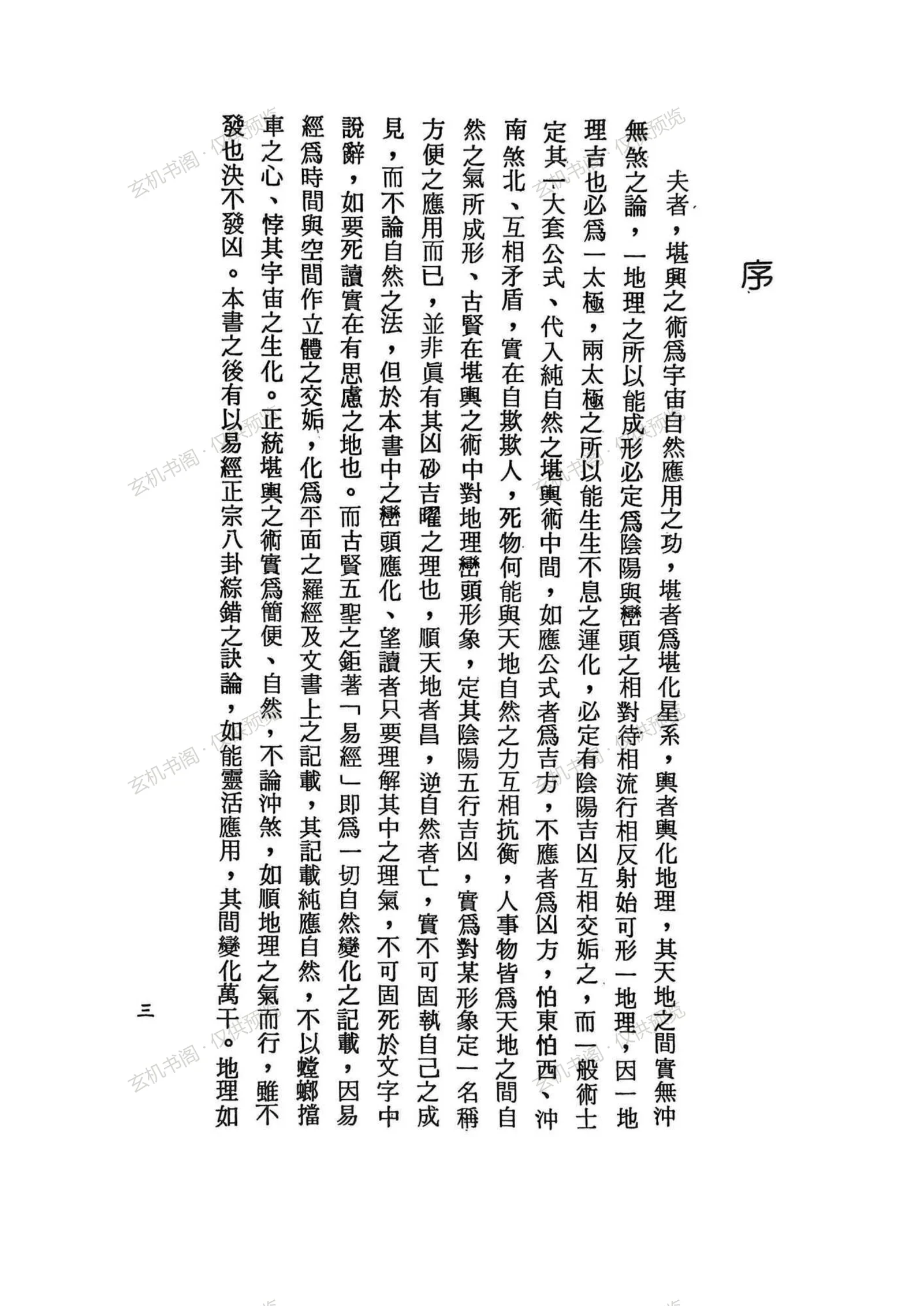
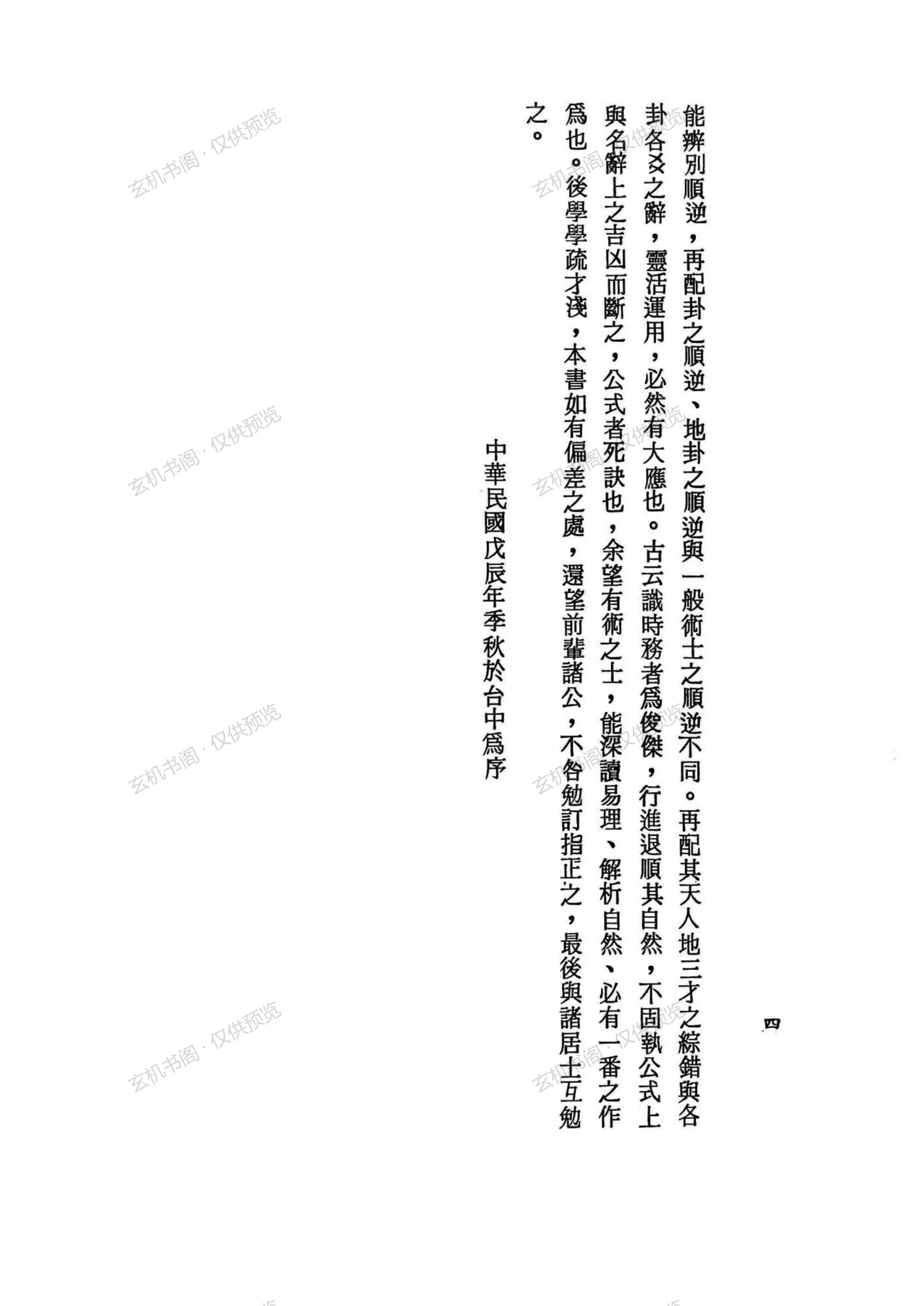
Kan Yu Pi Jing, subtitled 'Simple and Natural Orthodox Fengshui Scholarship,' is attributed on its cover and title page to Xu Longshu. The visible preface argues that fengshui is the working of natural cosmic forces in the landscape: yin-yang, taiji, north-south orientation, and clash-combination relations should all be read together with actual terrain rather than reduced to fixed formulas. The author criticizes practitioners who substitute rigid schemes for natural siting and insists that 'those who follow heaven and earth prosper, those who defy nature perish.' He presents the book as based on orthodox Yijing bagua theory, aiming at simplicity and naturalness rather than elaborate taboos. Only the cover, blanks, title page, and two preface pages are visible in this preview; the table of contents and chapter details cannot be confirmed, so the outline is inferred from the preface's stated themes. The book may interest readers of traditional siting, Yijing numerology, and the relationship between xingshi (terrain) and liqi (pattern-based) fengshui.
Contents
Cover and title page: Kan Yu Pi Jing, simple natural orthodox fengshui
Preface: fengshui as the natural working of the cosmos
Critique of fixed formulas and literal readings
Yijing bagua as the theoretical backbone
Terrain forms read together with yin-yang and five phases
Advocacy of natural principle and flexible application
Key Points
Explains fengshui through natural responsiveness, not fixed formulas
Stresses terrain forms together with yin-yang, five phases, and directional relations
Uses orthodox Yijing bagua theory as its main framework
Prefers simplicity and naturalness over elaborate taboos
Encourages flexible application after understanding the underlying principles