Reading guide
Content guideOverview
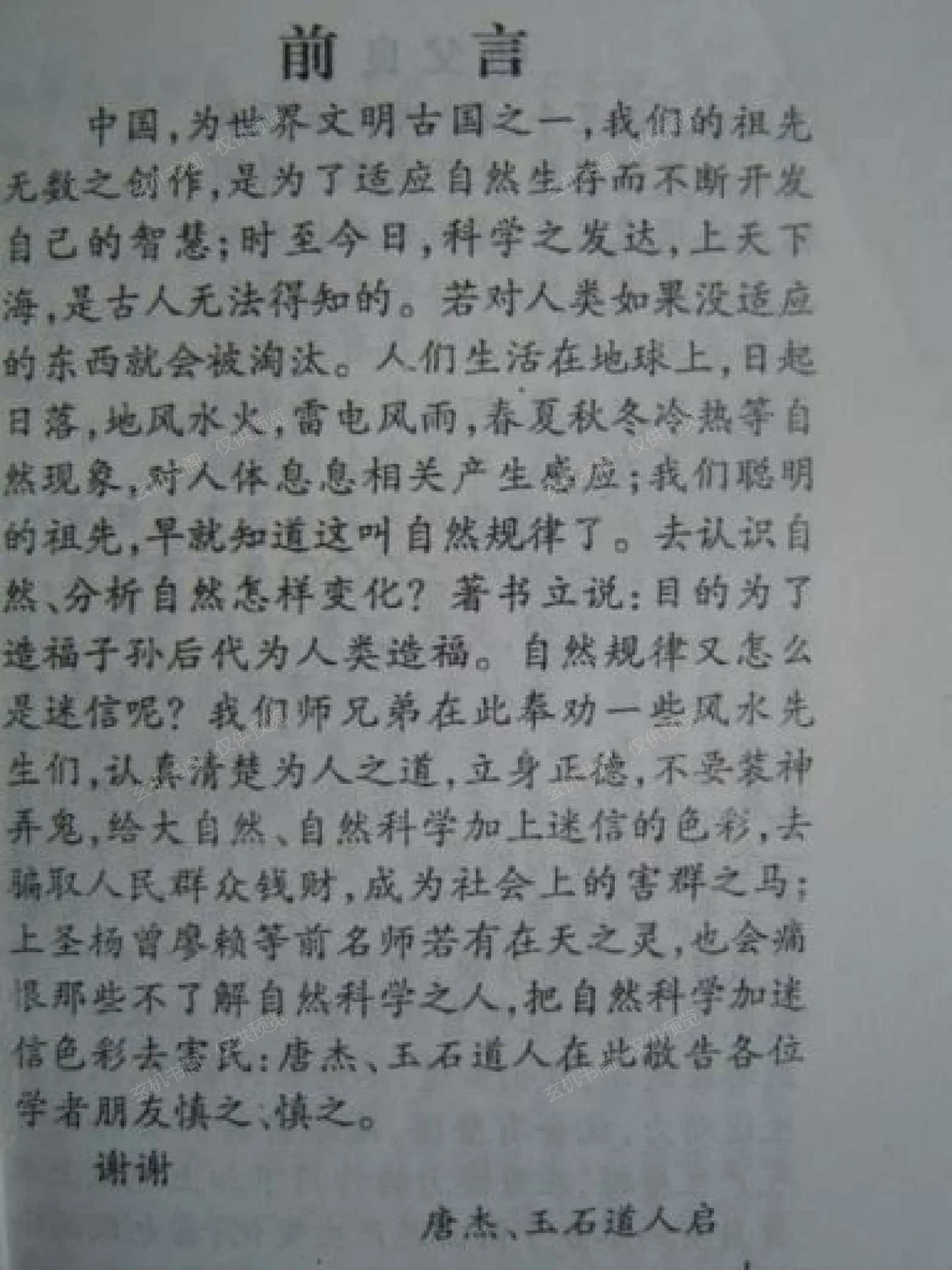
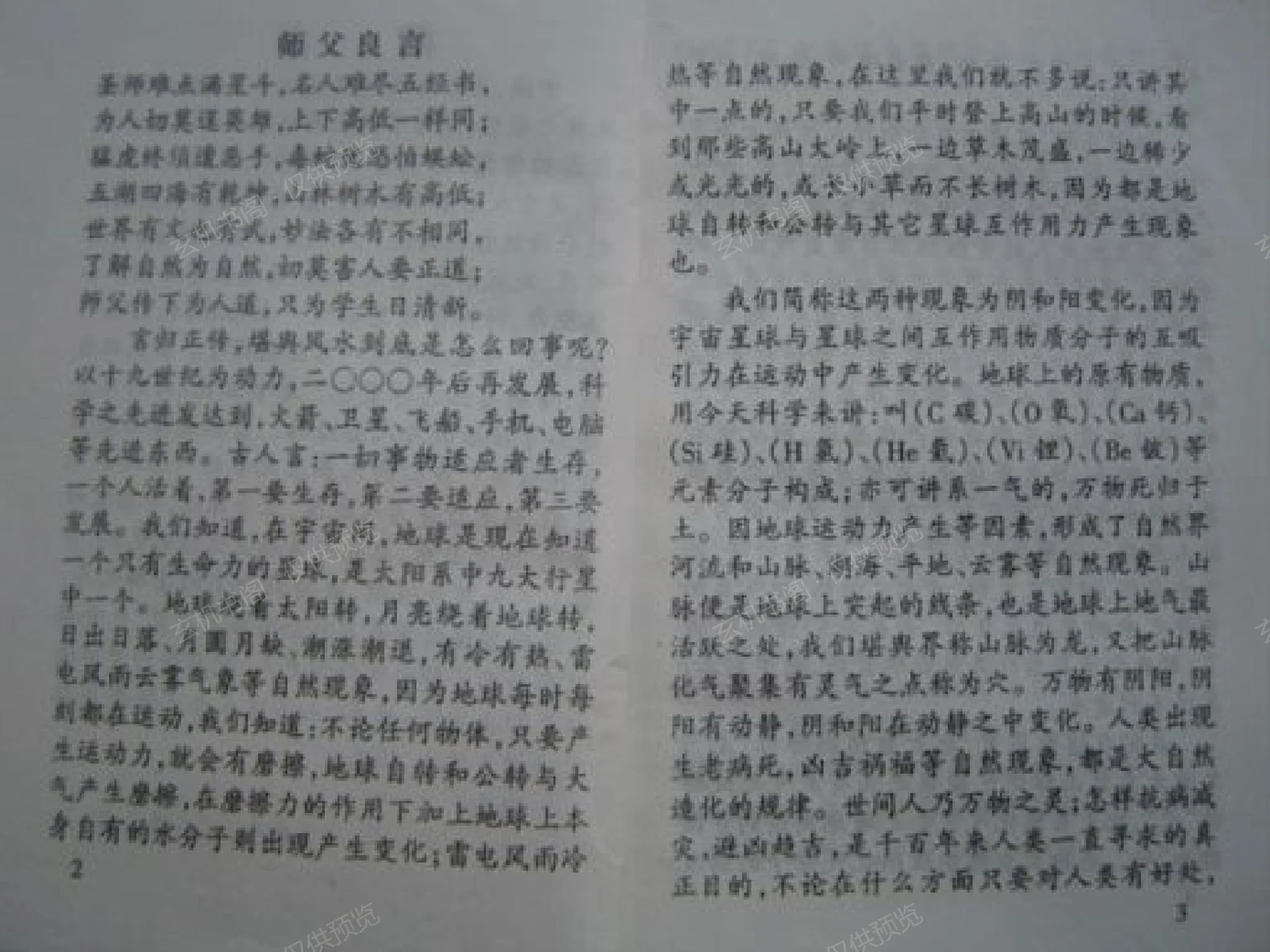
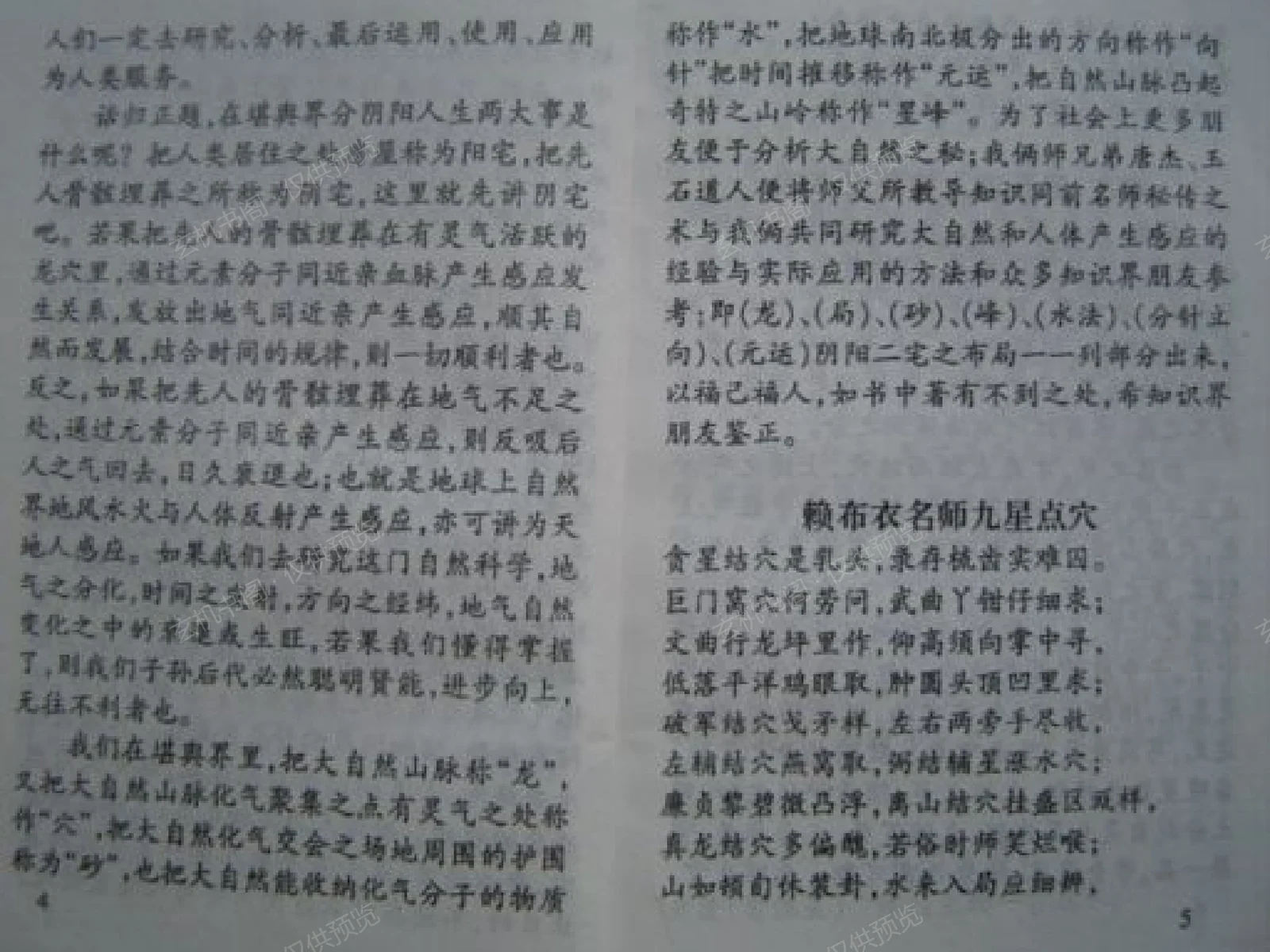
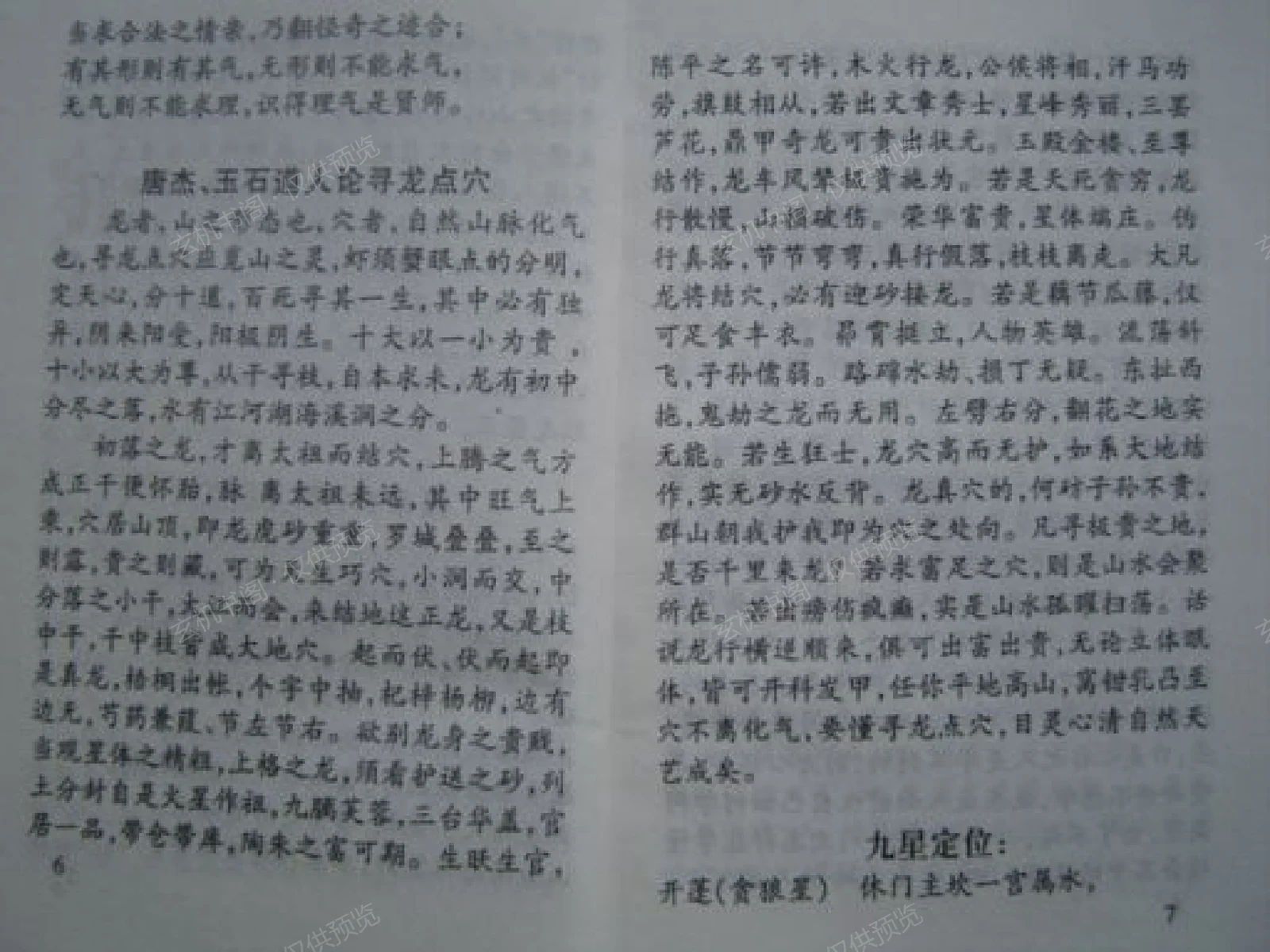
Titled Treasures of Kanyu and attributed to Tang Jie and Yushi Daoren, this book opens with a preface and a master's admonition explaining why the authors wrote it: they frame feng shui as knowledge of natural patterns and warn against using superstition to swindle clients. The main text defines the core vocabulary—mountains as 'dragons,' the concentrated qi point as the 'lair,' surrounding guards as 'sand,' and the substance that gathers qi as 'water'—then treats yin dwellings and bone burial, yang dwellings, the discrimination of dragons, lairs, sand and water, and the Nine Stars with their nine-palace correspondences. It includes the verse of Master Lai Buyi on Nine Star point selection, a section by the two authors on finding dragons and lairs, and a ten-point checklist for site location. The style is plain and occasionally borrows modern scientific terms to explain traditional ideas, making it a readable manual for readers interested in traditional siting methods.
Contents
Preface and master's admonition
Basic definitions: yin-yang dwellings, dragon, lair, sand, water
Bone burial and earth-qi resonance
Lai Buyi's verse on Nine Star point selection
Tang and Yushi on finding dragons and lairs
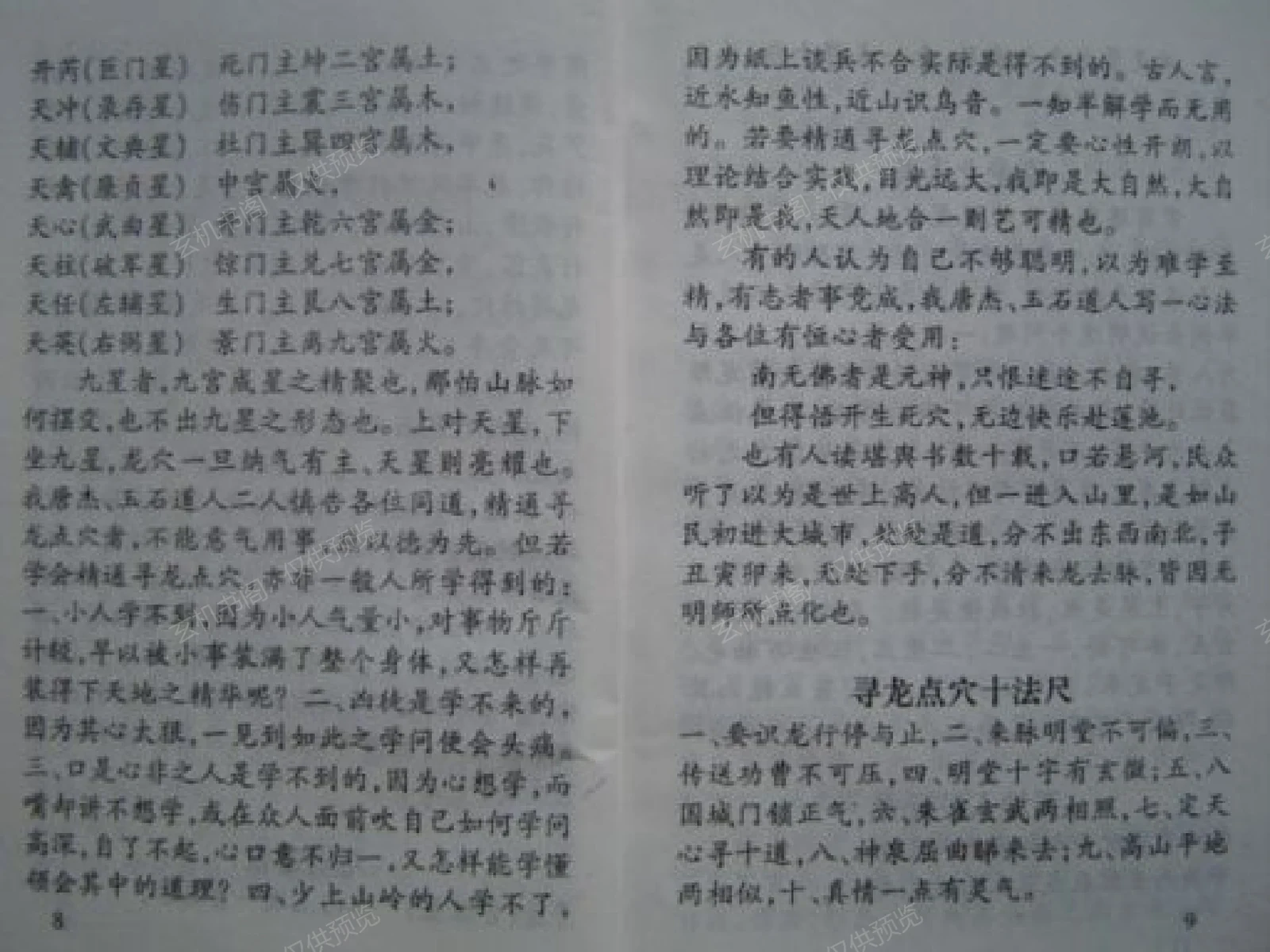
Nine Star positioning and nine-palace attributes
Ten-point checklist for locating sites
Key Points
Organizes kanyu terms around dragon, lair, sand and water before discussing practice.
Stresses yin-dwelling bone burial and earth-qi resonance while also covering yang dwellings.
Maps the Nine Stars onto the nine palaces with associated gates and five phases.
Includes Lai Buyi's verse for memorizing star-shaped lair forms.
Ends with a ten-point checklist covering dragon identification, bright hall and city enclosure.