Reading guide
Content guideOverview
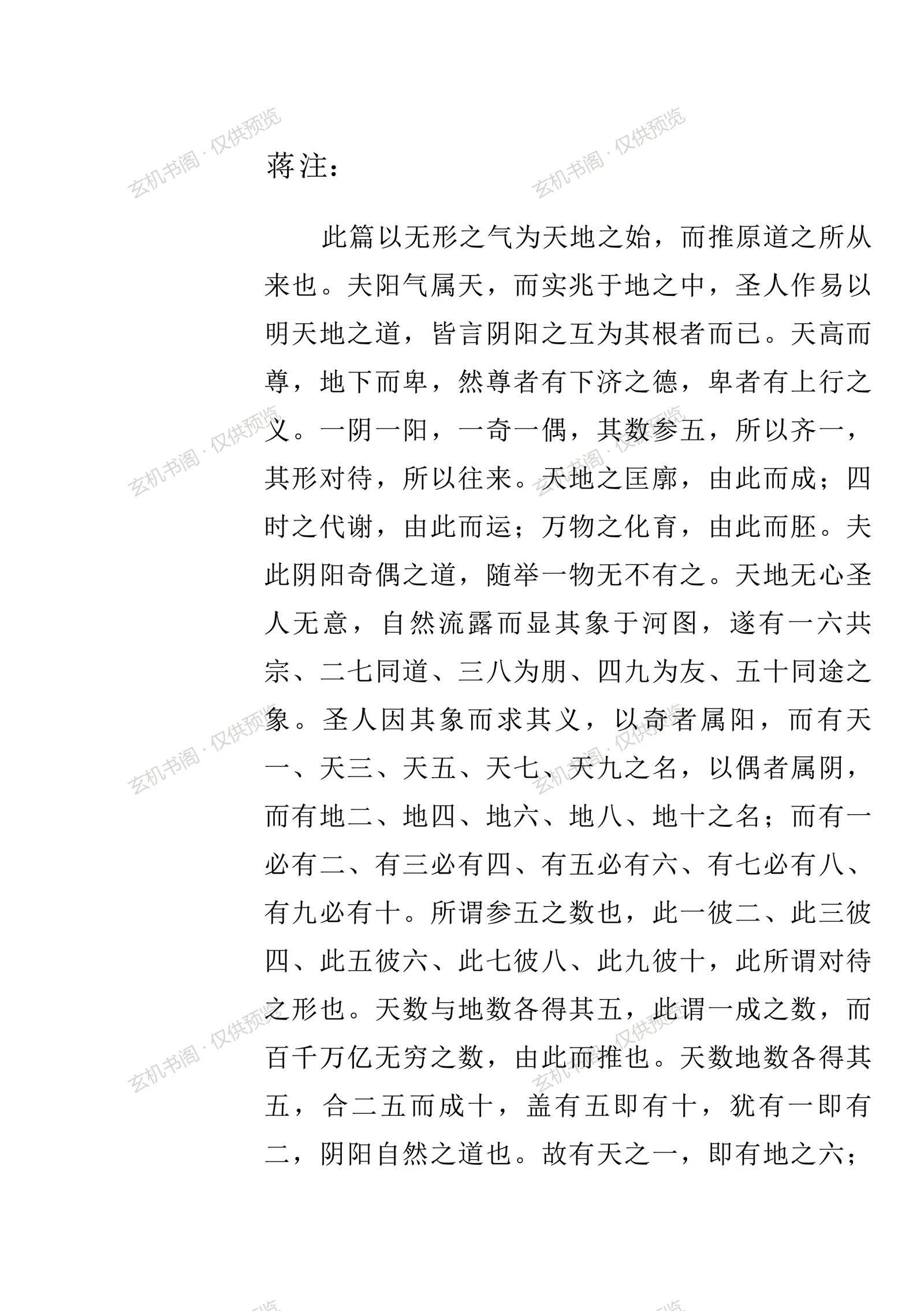
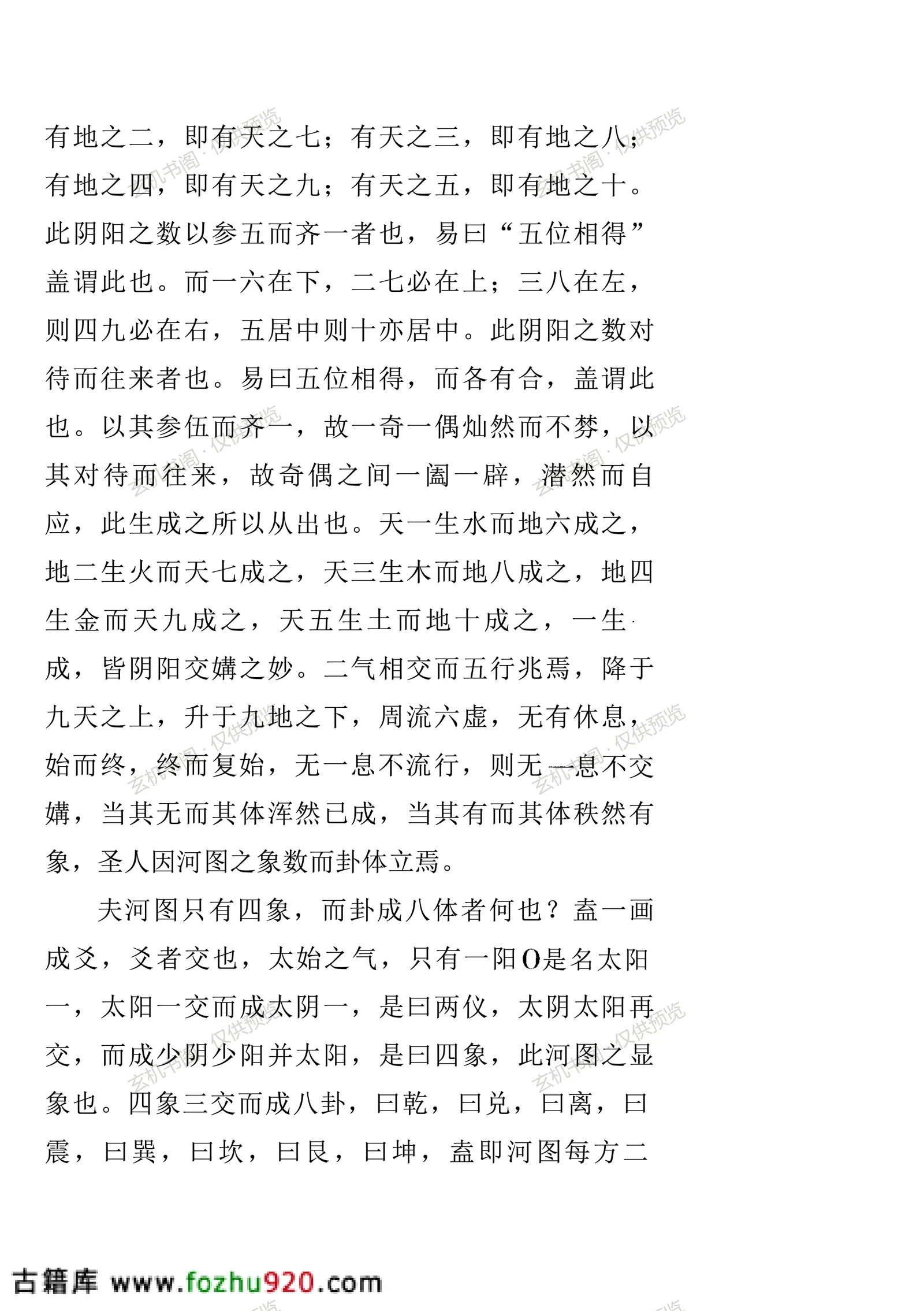
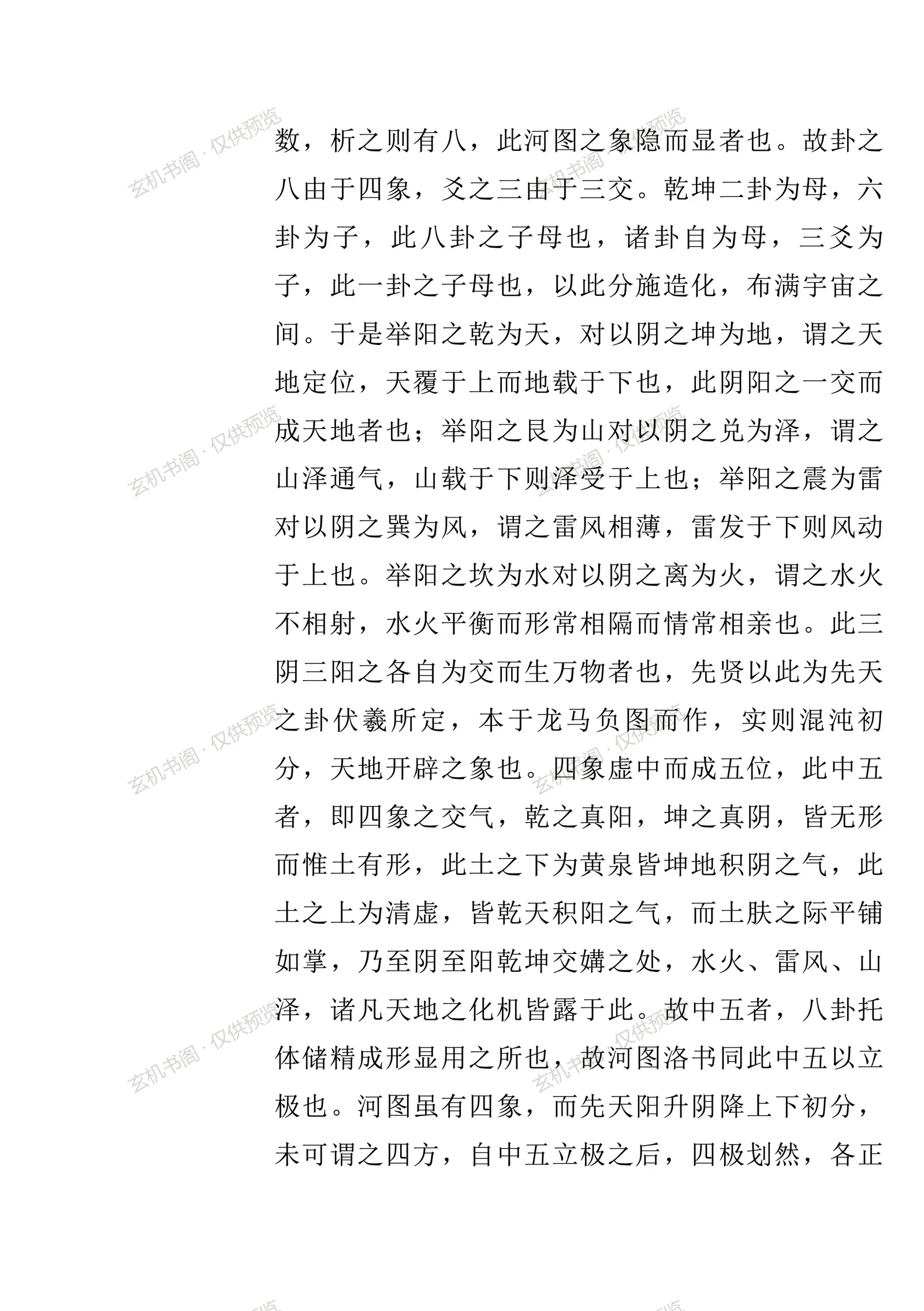
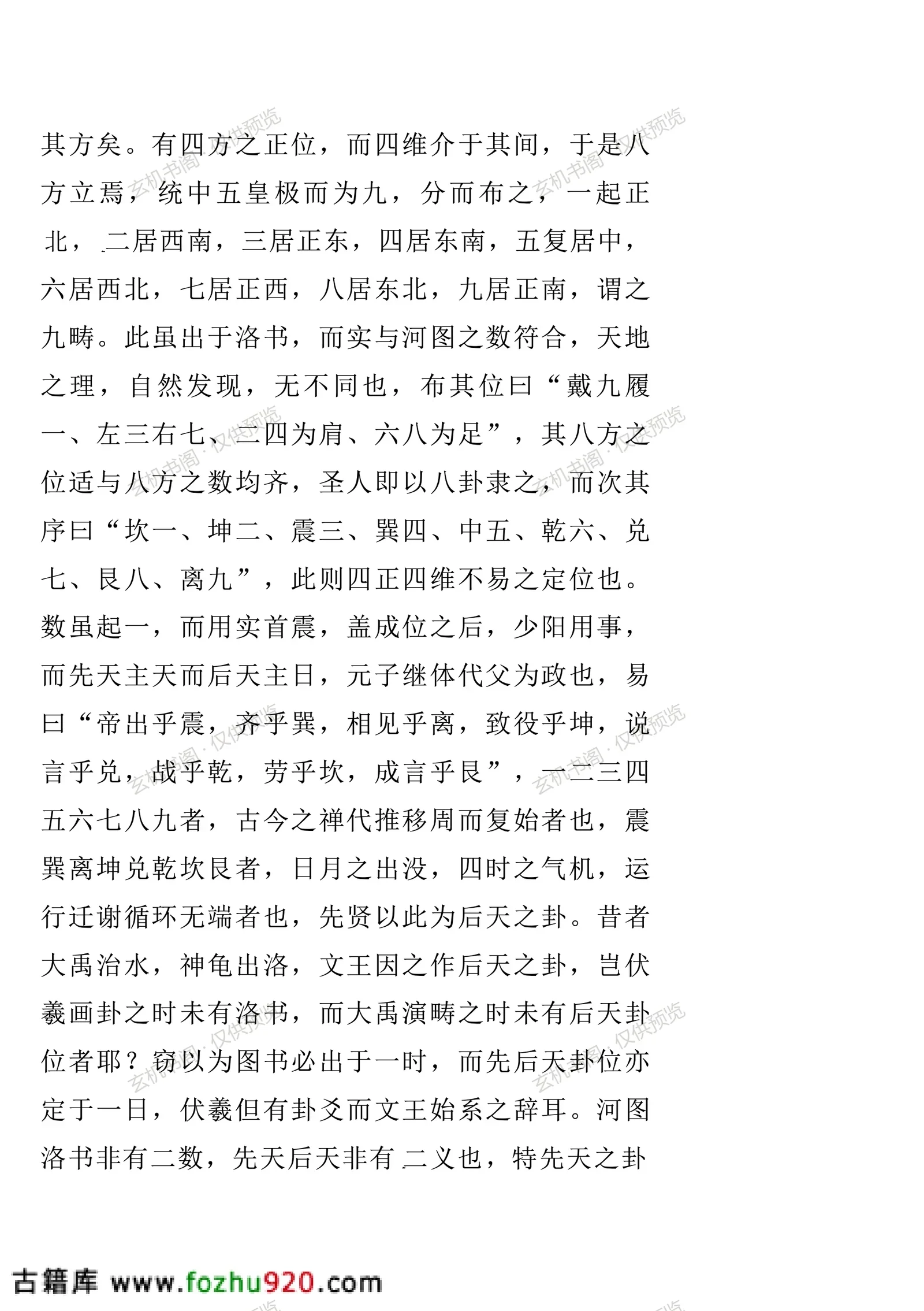
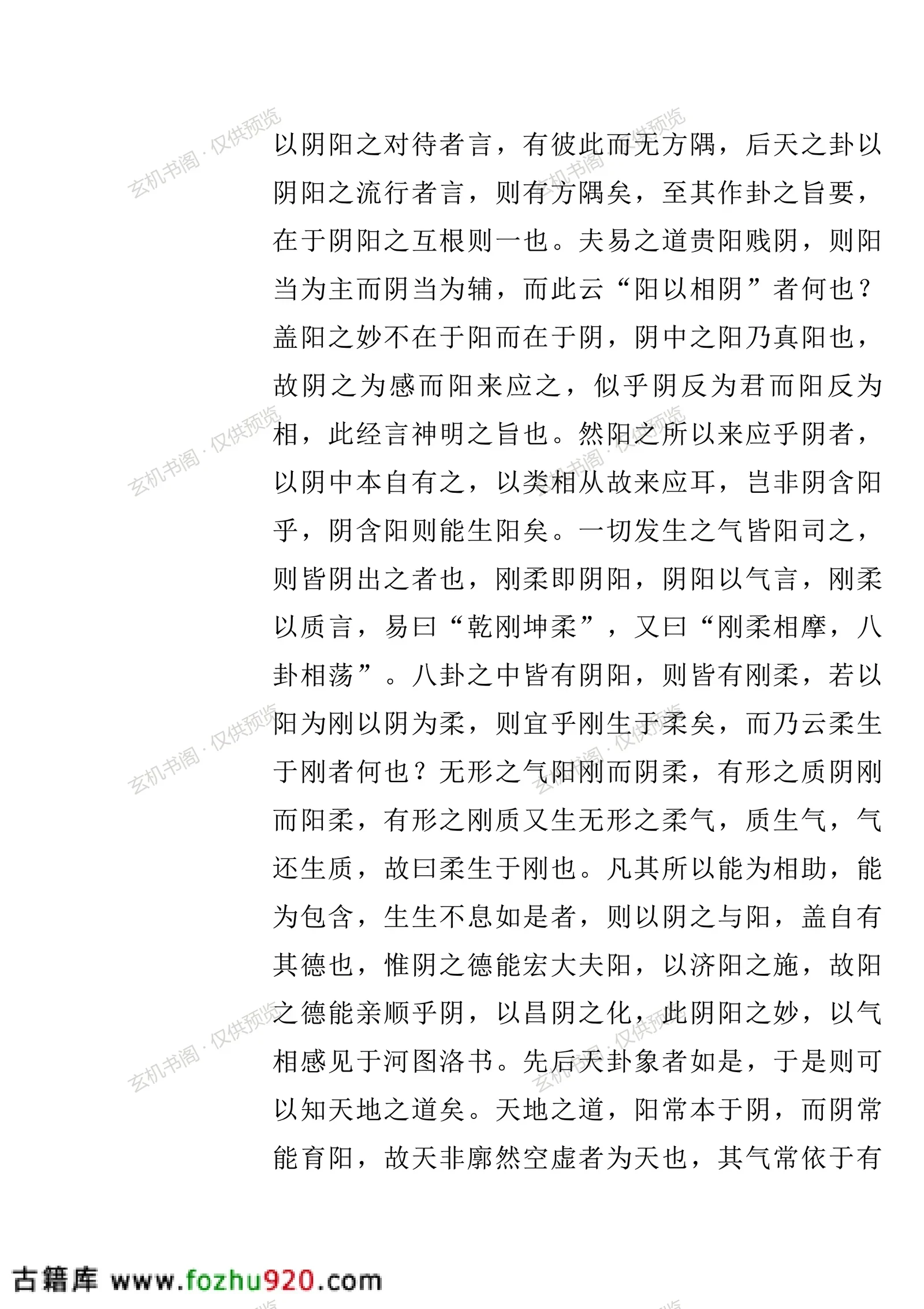
The opening of this work presents the Shang juan of the Qingnang Jing with interlinear commentary by Jiang Pingjie, Tan Yangwu and Chen Zhengru. Beginning from the line 'Heaven is honored and Earth is low; yang is odd and yin is even,' it unfolds a numerical cosmology built on the He Tu pairs one-six, two-seven, three-eight, four-nine and five-ten. The commentary connects these numbers with the mutual dependence of yin and yang and the cycle of the five phases, explaining formulas such as 'Heaven generates water and Earth completes it with six.' It also traces the derivation of the four images and eight trigrams from the He Tu, then distinguishes the Earlier Heaven arrangement, which describes the polarity of yin and yang, from the Later Heaven arrangement, which describes their circulation. The Luoshu nine palaces and their directional numbers are used to locate the four cardinal and four intermediate directions. For readers of feng shui and Yijing numerology, these pages form the theoretical entrance to the whole book.
Contents
Opening of the Shang juan: the Qingnang Jing text and its commentary format
Jiang's general commentary: yin-yang and odd-even as the origin of Heaven and Earth
He Tu generative numbers: one-six, two-seven, three-eight, four-nine, five-ten
The generation of the five phases
From the Great Ultimate to the four images and eight trigrams
Earlier and Later Heaven trigrams and the Luoshu nine palaces
Key Points
Uses the Qingnang Jing as its textual backbone to explain the numerical basis of feng shui theory.
Aligns the He Tu generative numbers with the five phases and the eight trigrams.
Distinguishes the Earlier Heaven polarity of yin and yang from the Later Heaven circulation.
Uses the Luoshu nine palaces to order the cardinal and intermediate directions.
Jiang's commentary stresses that yang and yin are mutually dependent and mutually containing.