Reading guide
Content guideOverview
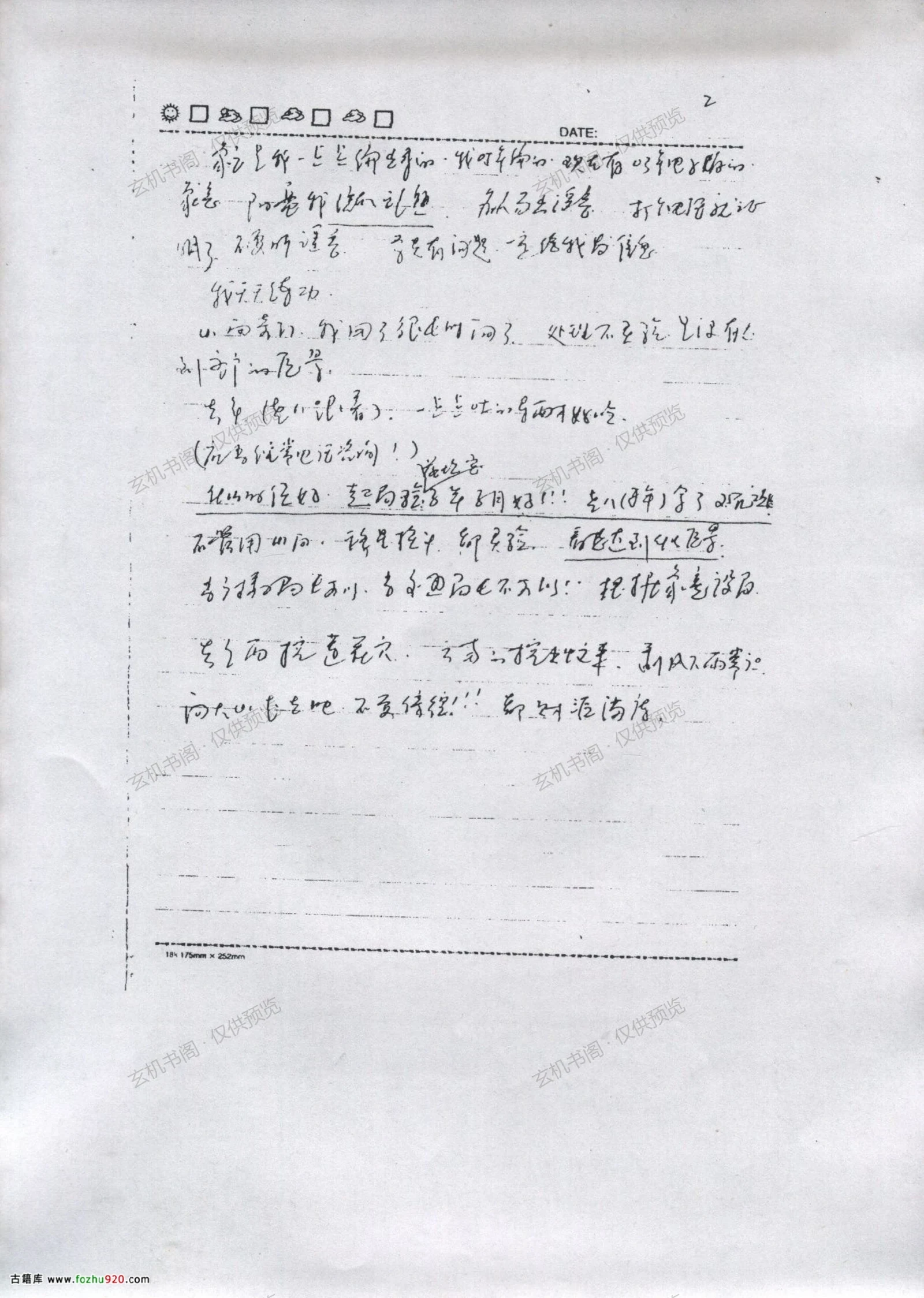
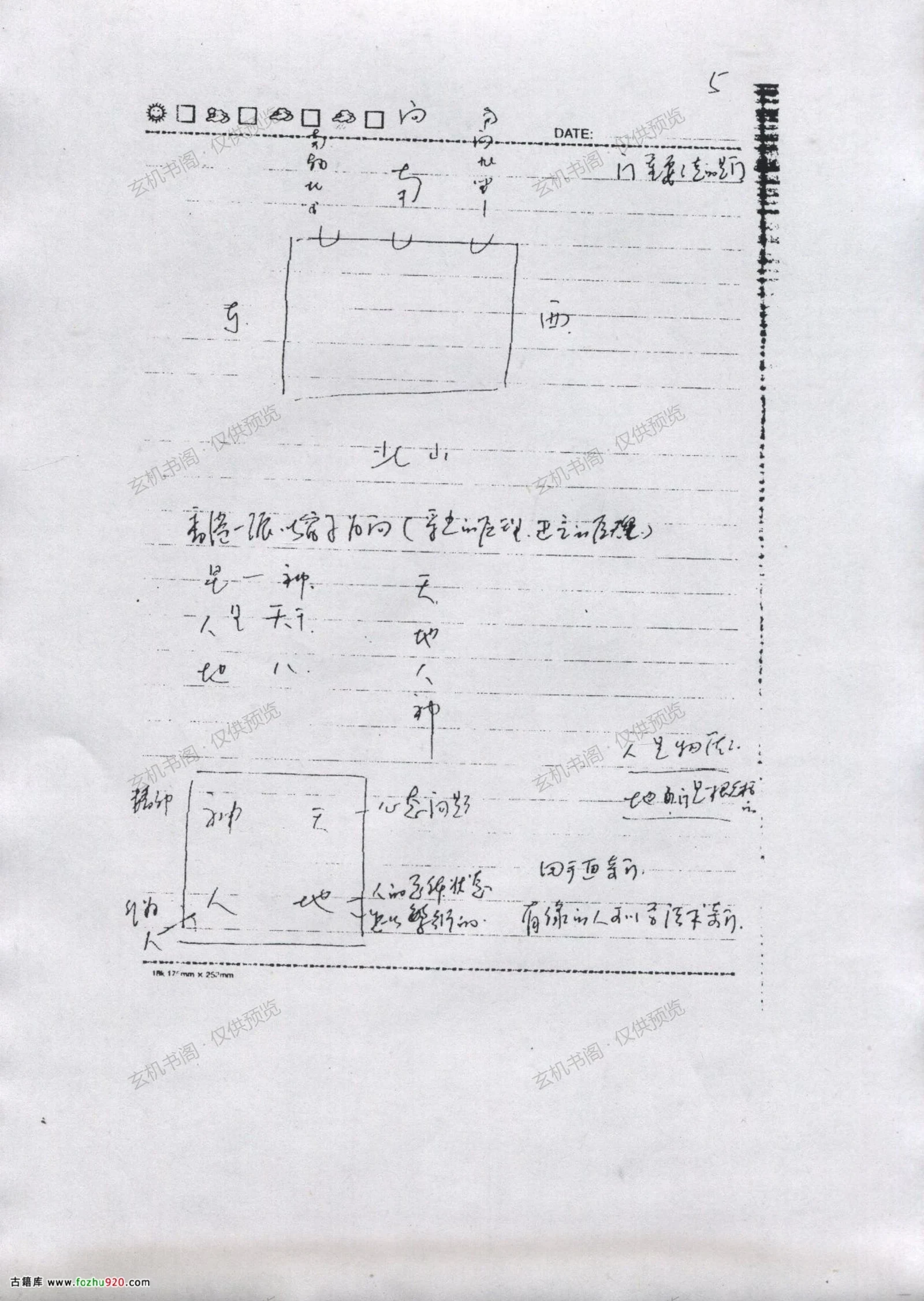
These are handwritten notes on Kejia Qimen. The opening explains that one double-hour can be divided into twelve charts, with the first ten minutes assigned to Zi and the last ten to Hai. A full worked example is given for 9:25 a.m. on the 25th day of the 9th lunar month, 2011, showing the stems and branches, the chief star and gate, and the nine-palace layout. Later pages turn to interpretation: which year, month, day, or hour to read, how family relations map onto specific stems, and how to judge house facing and void positions in feng shui. The rough handwriting and loose structure mark it as a personal working notebook, best suited to readers who already know Qimen fundamentals.
Contents
Twelve charts within one double-hour
Full casting example and nine-palace layout
Rules for reading year, month, day, hour
Mapping family relations to stems
House facing and orientation judgments
Void positions and palace fortune
Key Points
One double-hour splits into twelve charts by minute segments
Year, month, day, and hour are read separately
The nine-palace grid marks chief star, gate, and deity
Family stems: Gui for feet, Bing for brother, Ren for sister
House readings stress the first layer of facing