Reading guide
Content guideOverview
Co-authored by Huang Guan-huan, an engineering PhD from National Tsing Hua University, and Jiang Xing-fen, this third edition presents BaZi destiny analysis through a scientific and logical framework. Volume One clarifies common misconceptions and learning goals; Volume Two illustrates practical applications through twelve case studies involving health, marriage, career, and election predictions; Volume Three lays out fundamentals—five-phase interactions, heavenly stems and earthly branches, solar terms and the starting point of major luck cycles, the Ten Gods, and chart patterns—before discussing yin-yang, combinations, and clashes; Volume Four uses the Ten Gods to assess personality and examines how the five phases in the four pillars interact. The book favors structured reasoning over mystical assertions, making it suitable for readers seeking a systematic foundation in BaZi.
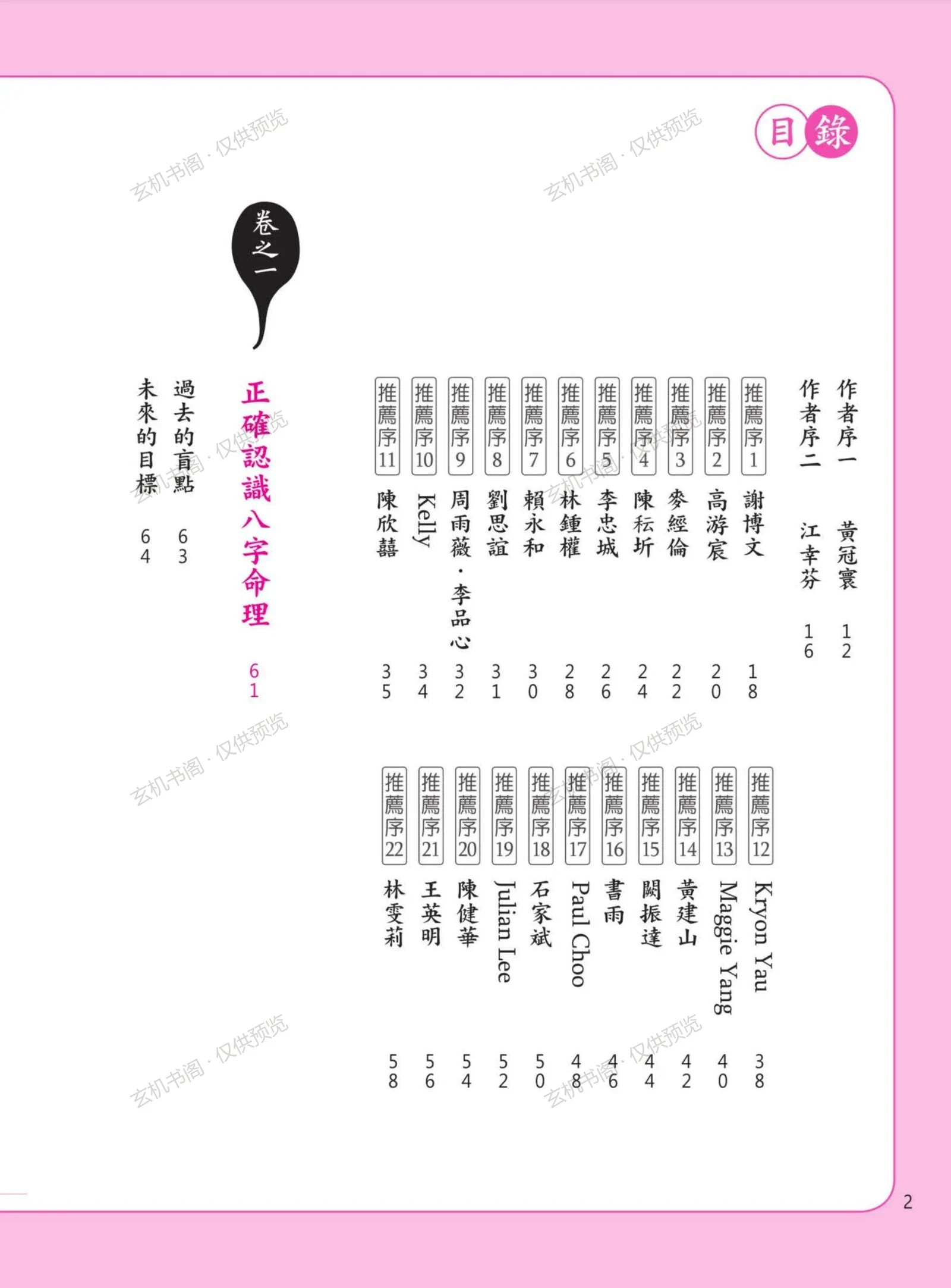
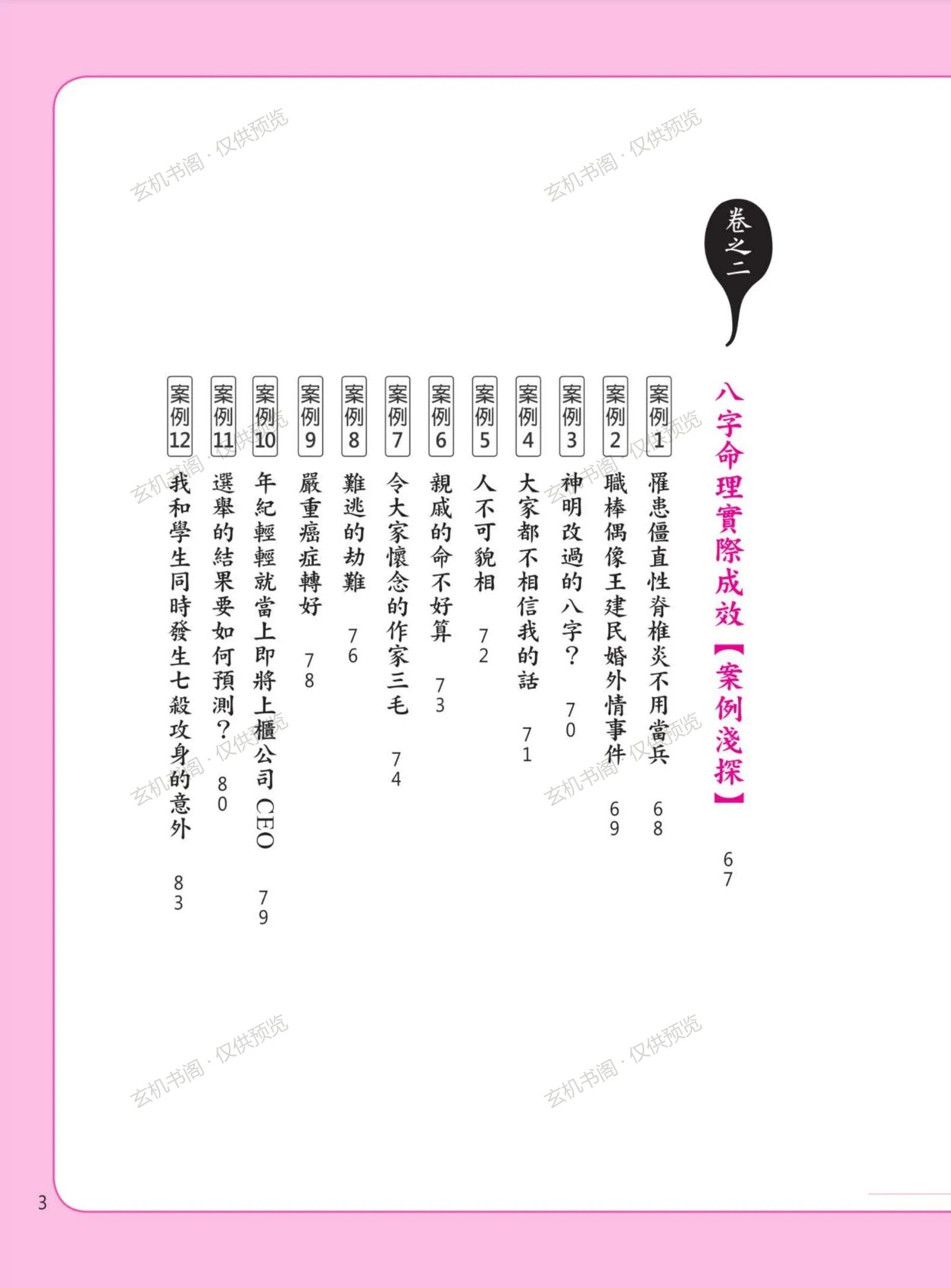
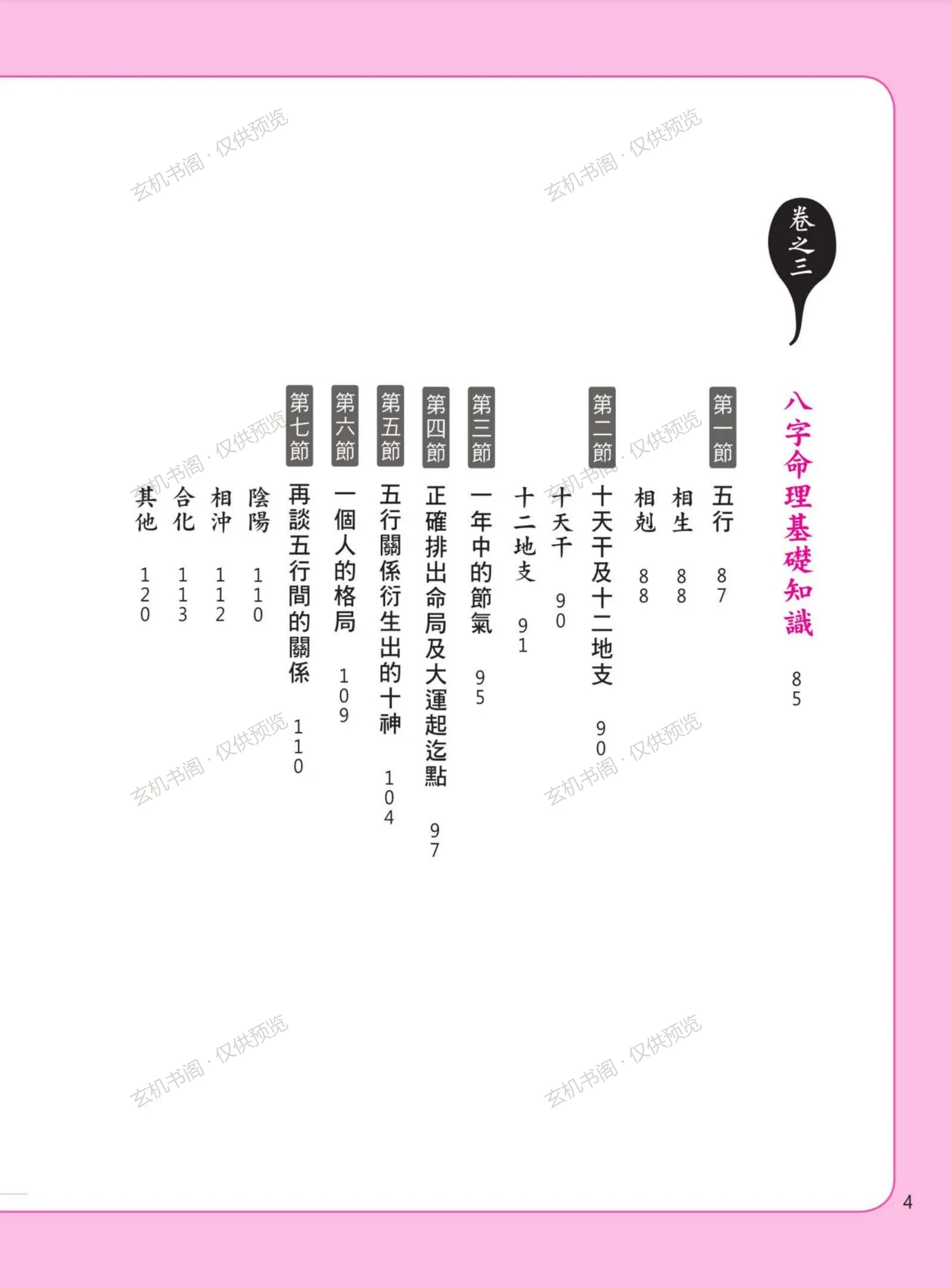
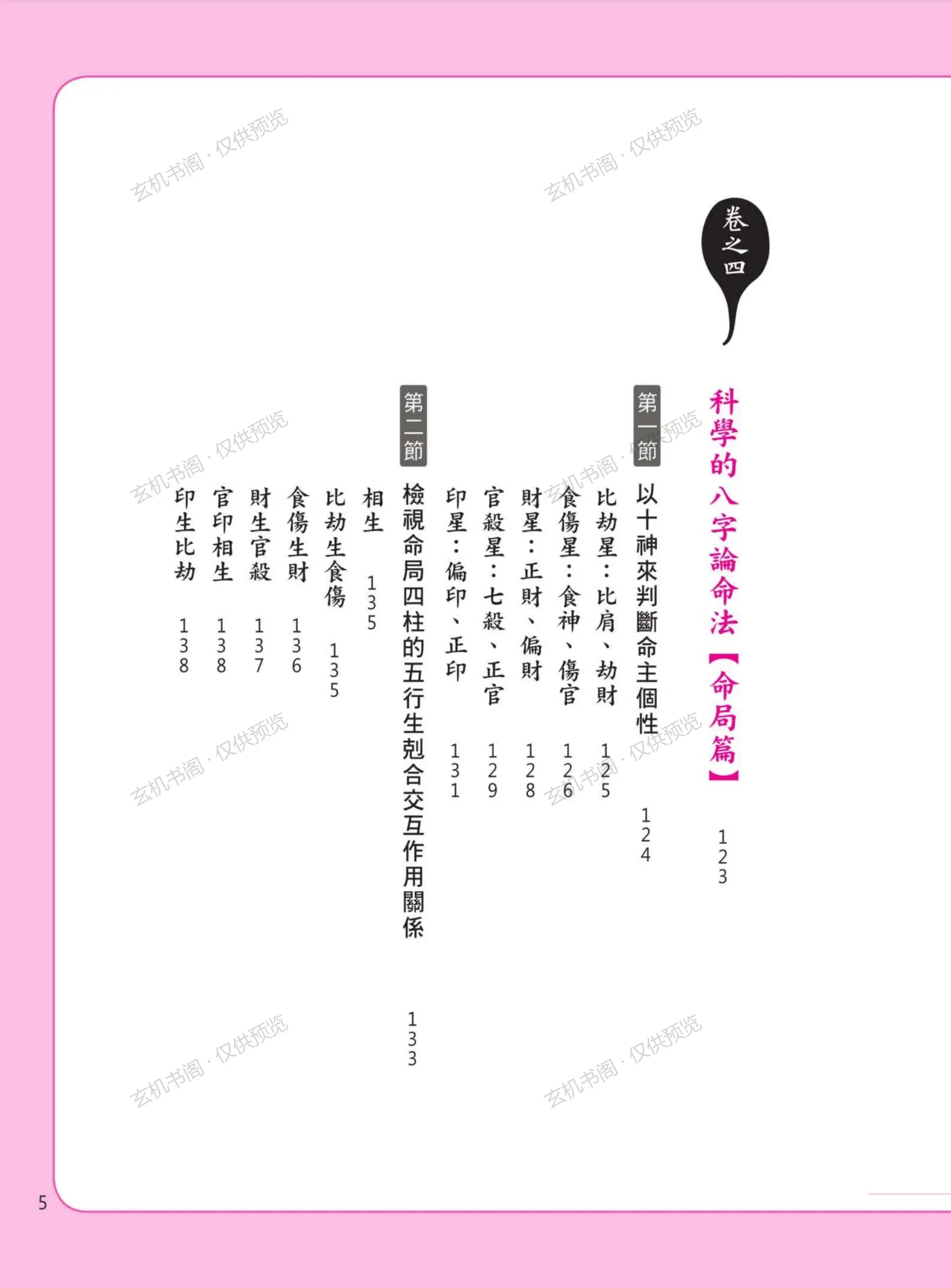
Contents
Volume 1: Correct understanding of BaZi—past blind spots and future goals
Volume 2: Practical effectiveness—twelve case studies
Volume 3: Fundamentals—five phases, stems and branches, solar terms, Ten Gods, patterns
Volume 4: Scientific BaZi method—Ten Gods for personality and four-pillar interactions
Key Points
Reframes BaZi learning with a scientific, verifiable reasoning approach.
Volume Three builds chart construction and judgment from five phases, stems and branches, solar terms, and luck cycles.
The Ten Gods chapter distinguishes rob-wealth, output, wealth, officer, and resource stars and links them to personality.
Volume Two demonstrates real-life applications in health, marriage, and career.
Volume Four analyzes interactive effects of five-phase generation, control, combination, and clash in the four pillars.