Reading guide
Content guideOverview
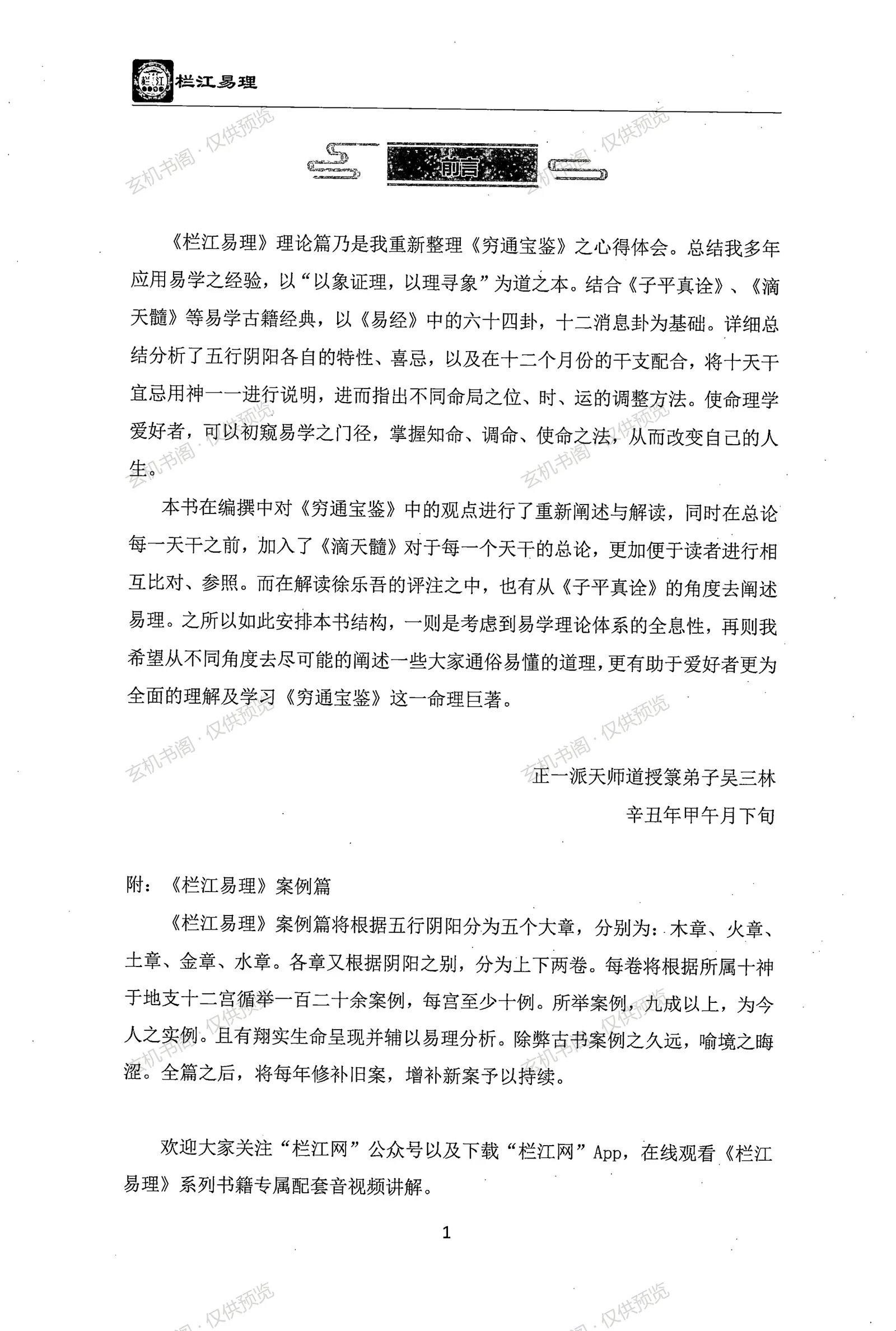
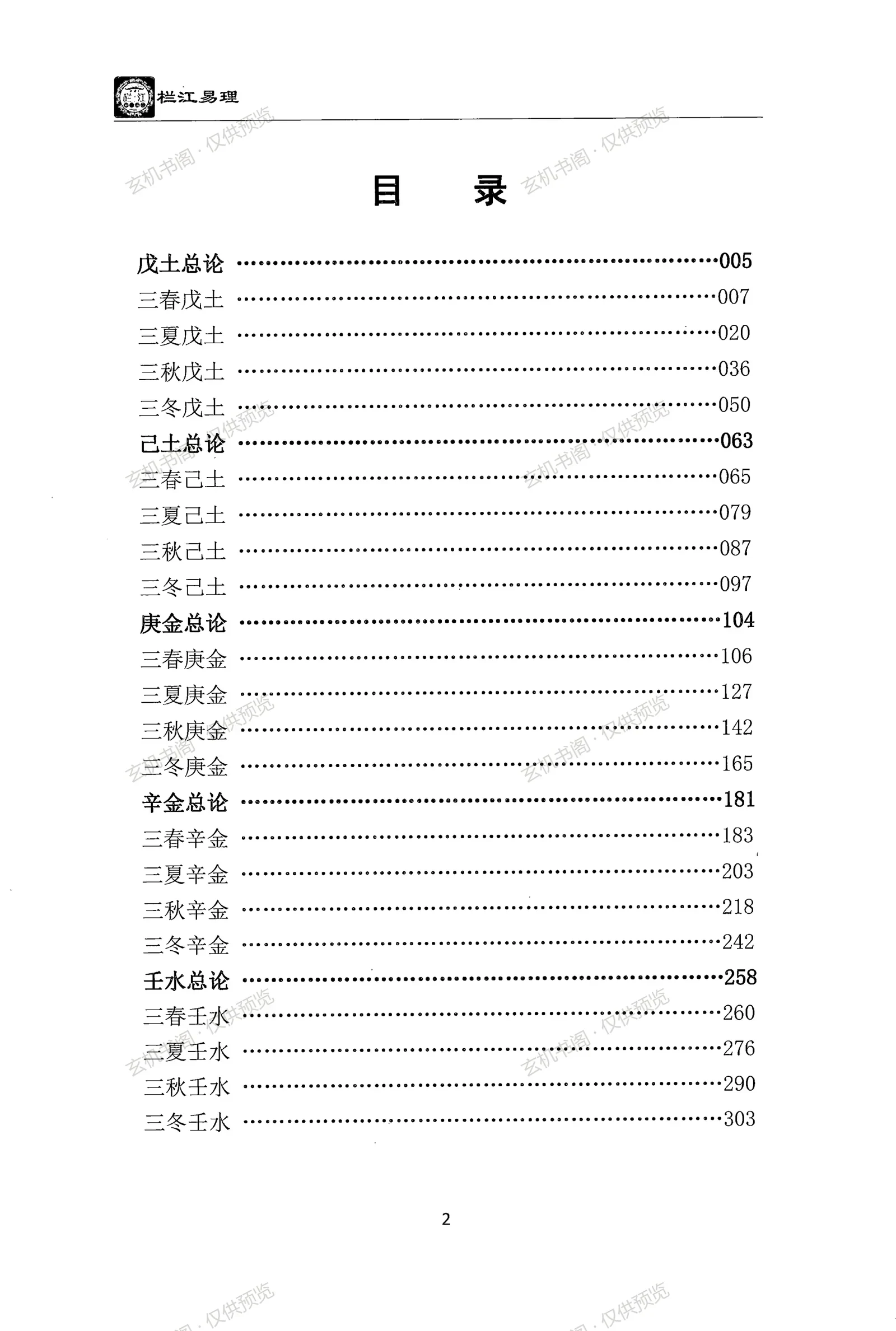
This is the second part of the theoretical volume of Lanjiang Yili, described on its title page as internal material. In the preface the author explains that the book grew out of reorganizing Qiong Tong Bao Jian, guided by the principle of using images to verify principles and principles to seek images, and drawing on classical texts such as Zi Ping Zhen Quan and Di Tian Sui as well as the sixty-four hexagrams and the twelve message hexagrams of the Yijing. It analyzes the properties and preferences of yin-yang and the five phases, the stem-branch combinations of the twelve months, and the favorable and unfavorable useful gods of the ten heavenly stems, then points to methods of adjusting position, timing and fortune for different charts. The table of contents of this part begins with Wu Earth and proceeds through Ji Earth, Geng Metal, Xin Metal, Ren Water and Gui Water, each divided into spring, summer, autumn and winter sections, ending with a message from Daoist Sanlin. It continues from the previous volume and suits readers with some BaZi background who wish to study the Qiong Tong Bao Jian system in depth.
Contents
General discussion of Wu Earth, with spring, summer, autumn and winter sections
General discussion of Ji Earth and its four seasons
General discussion of Geng Metal and its four seasons
General discussion of Xin Metal and its four seasons
General discussion of Ren Water and its four seasons
General discussion of Gui Water and its four seasons
Message from Daoist Sanlin
Key Points
Reorganizes Qiong Tong Bao Jian and adds Di Tian Sui stem summaries for comparison
Organized by the ten heavenly stems, each split into the four seasons
Stresses yin-yang and five-phase properties, preferences and monthly stem-branch combinations
Also reads Xu Lewu's commentary through the lens of Zi Ping Zhen Quan