Reading guide
Content guideOverview
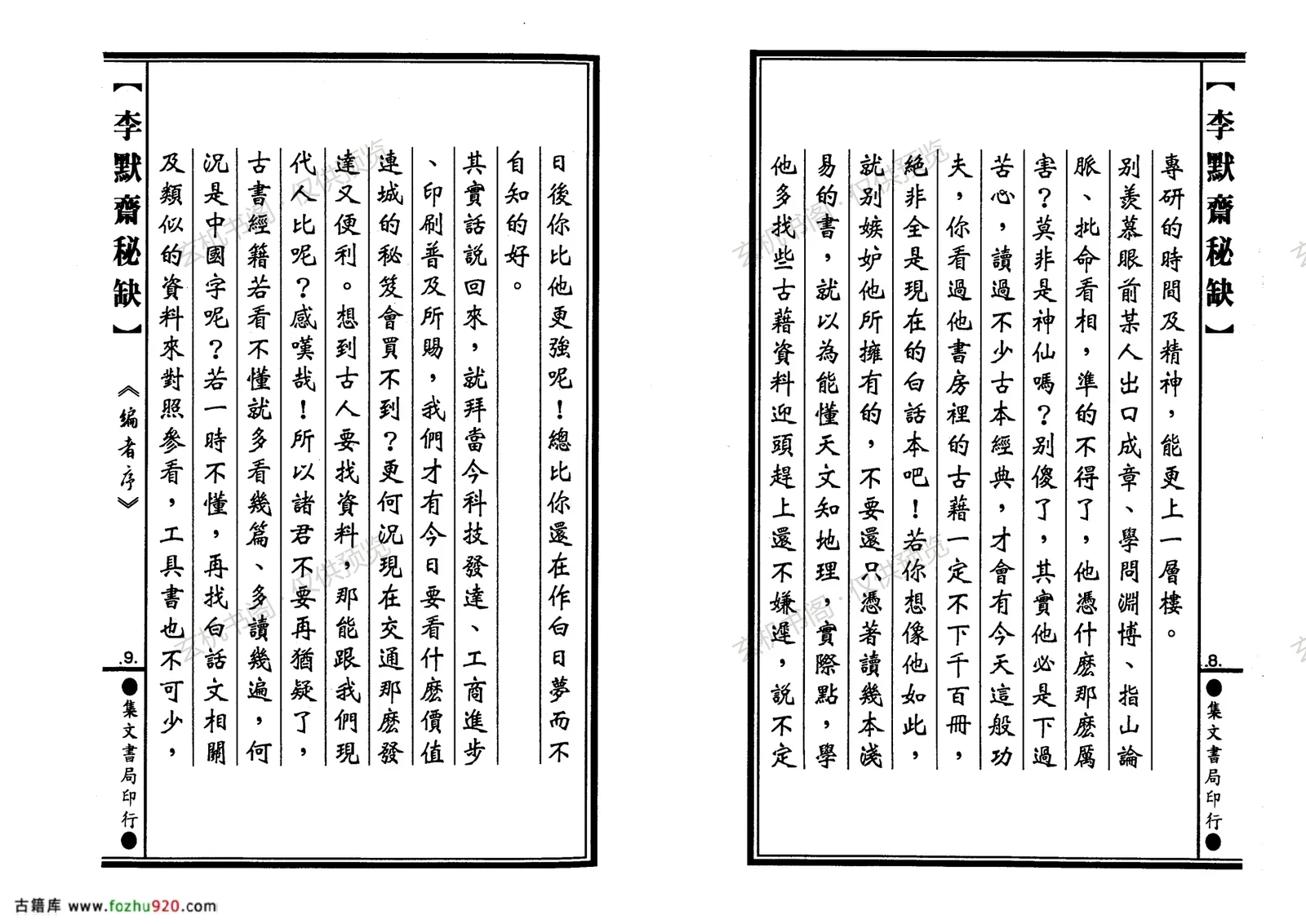
This is the second collection of Li Mozhai's secret writings on geography and feng shui, titled Dili Pijing Ji. The cover notes Li Mozhai as author, Li Chongyang as recompiler, and Jiwenshuju as publisher. It opens with Li Mozhai's own preface, in which he describes decades of studying geomantic texts, reviewing the teachings of Yang, Zeng, Liao, and Lai schools, and finding few works that make the essential principles clear and easy to grasp. He therefore sets out to explain the key ideas of dragon, cave, sand, water, and qi veins in detail for later students. The editor's preface follows in vernacular Chinese, discussing how the five arts are profound and how beginners should start with plain-language books before moving to older classical sources, while cautioning against relying on imagination and dismissing the experience of the ancients. The book belongs to the form-school tradition of feng shui and is suited to readers with basic knowledge who wish to study classical geomantic methods in depth.
Contents
Cover attribution: Li Mozhai, recompiled by Li Chongyang, published by Jiwenshuju
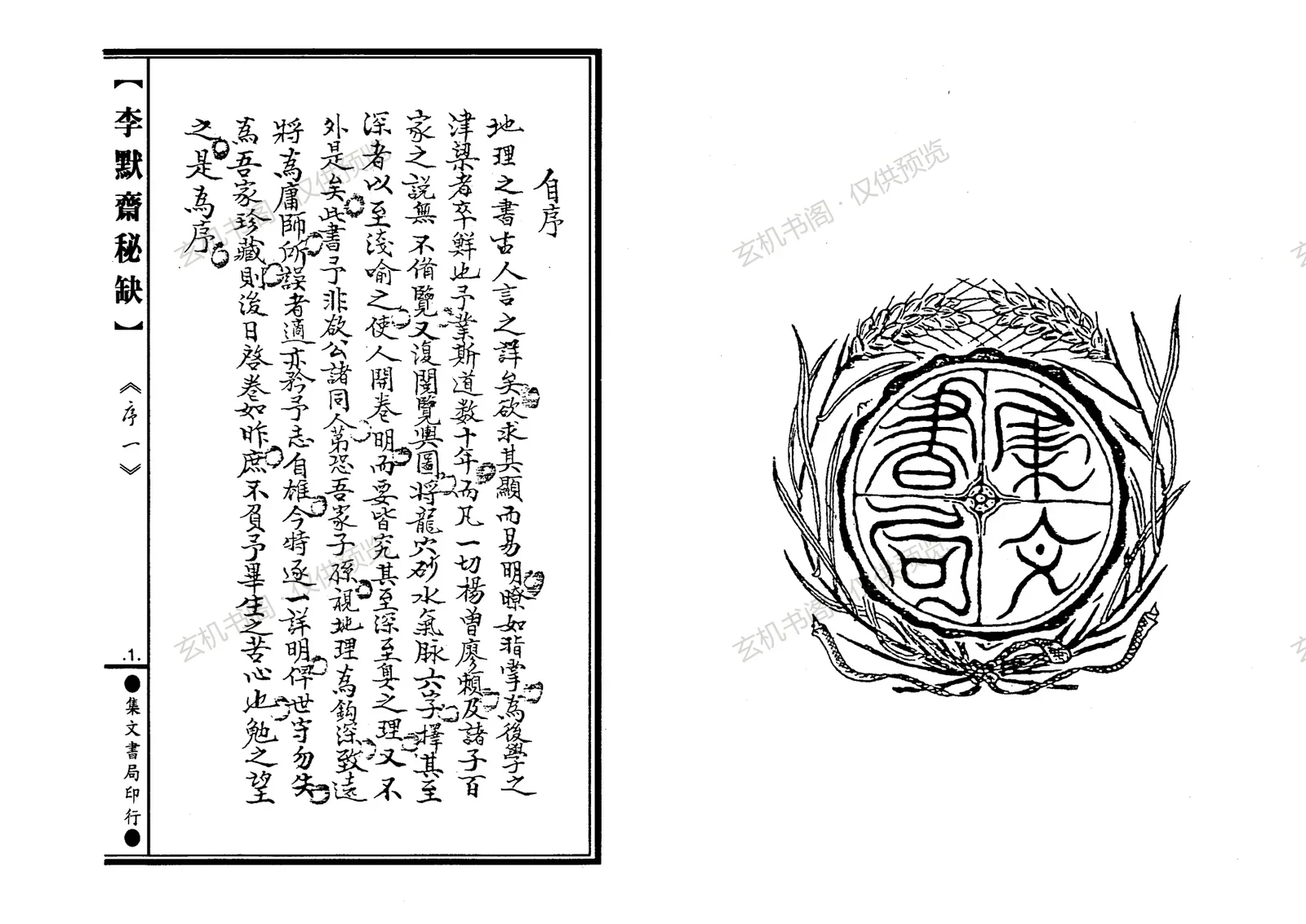
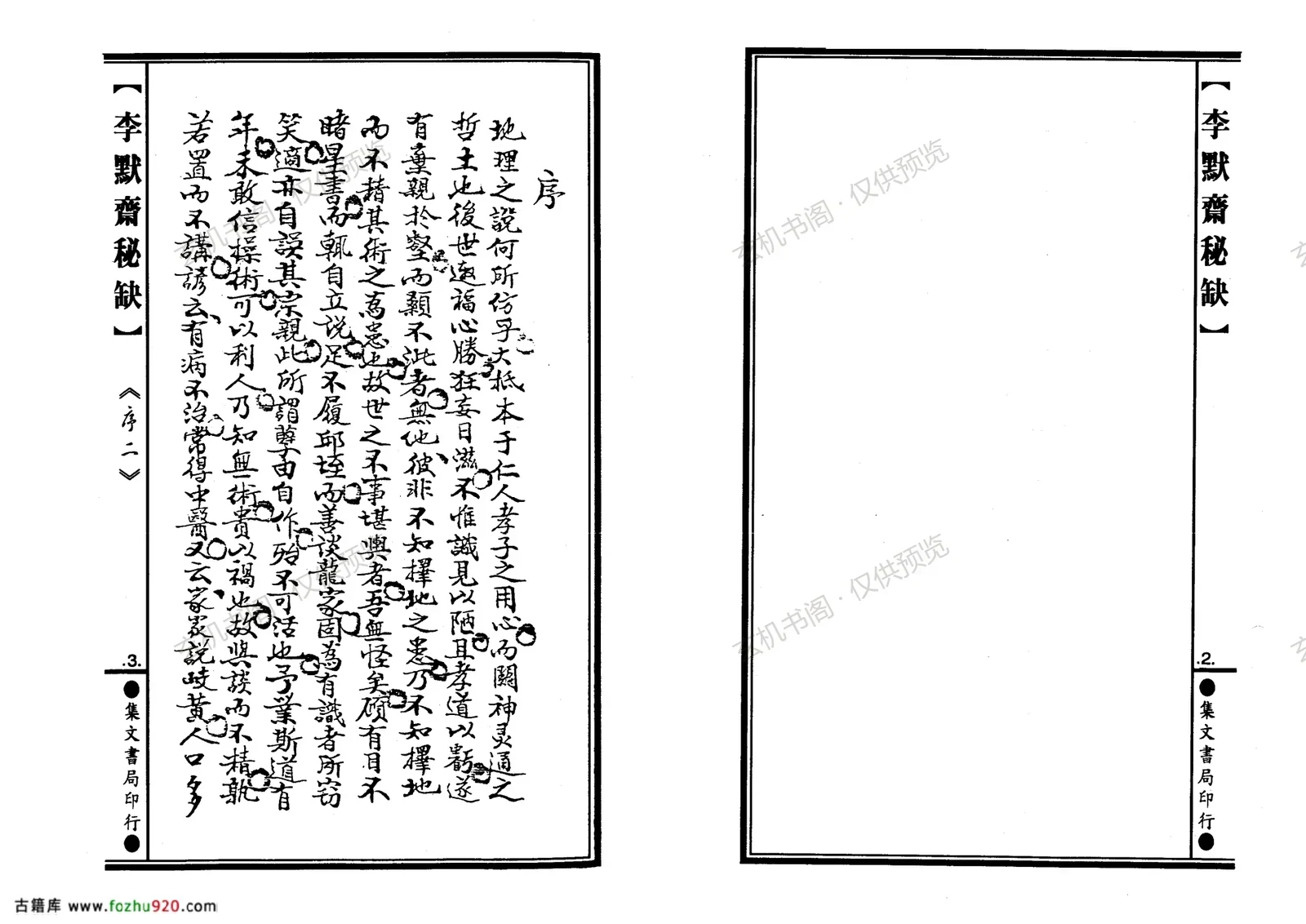
Li Mozhai's preface on geomantic principles of dragon, cave, sand, water, and qi
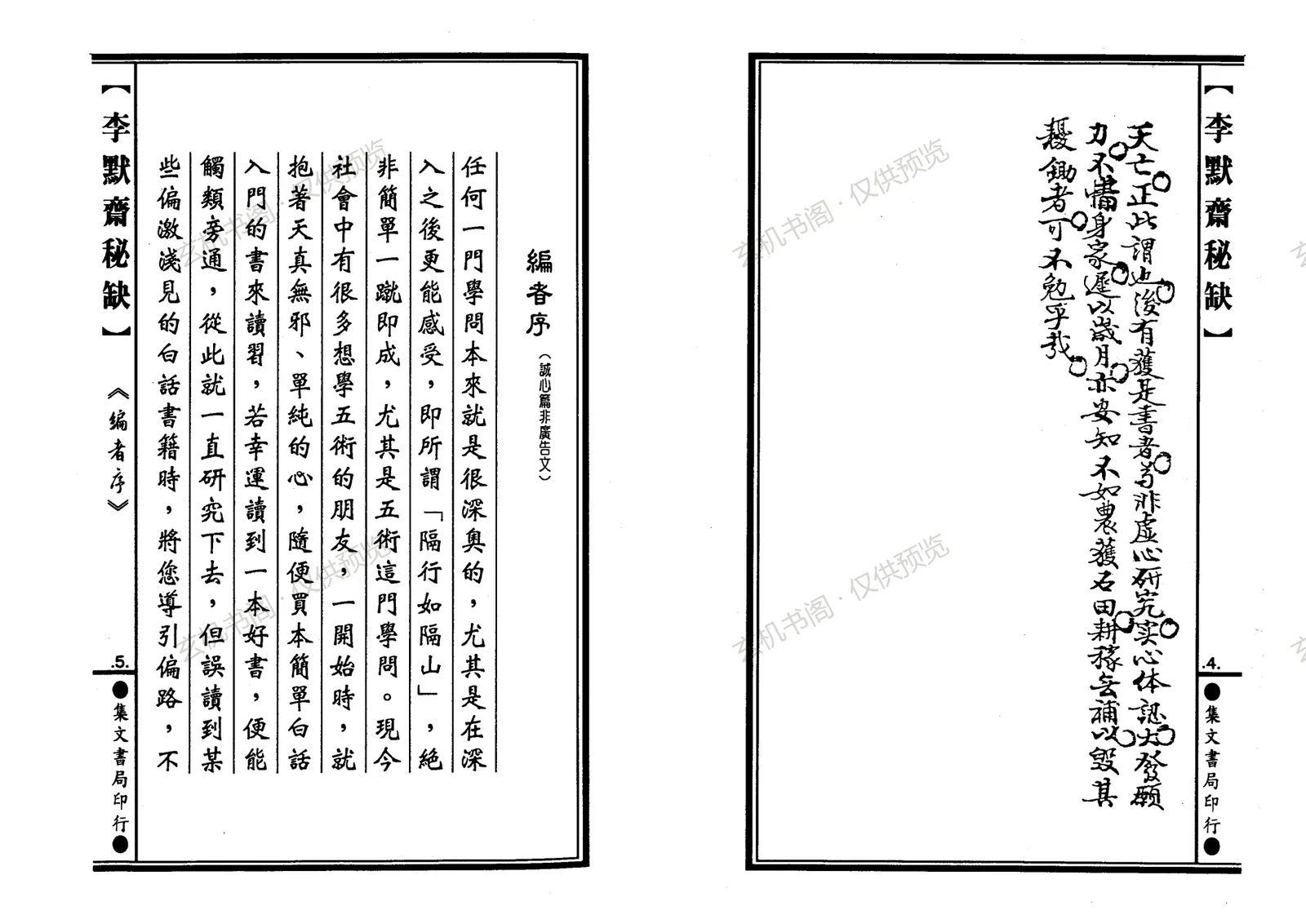
Editor's preface on entering the five arts and reading classics from easy to deep
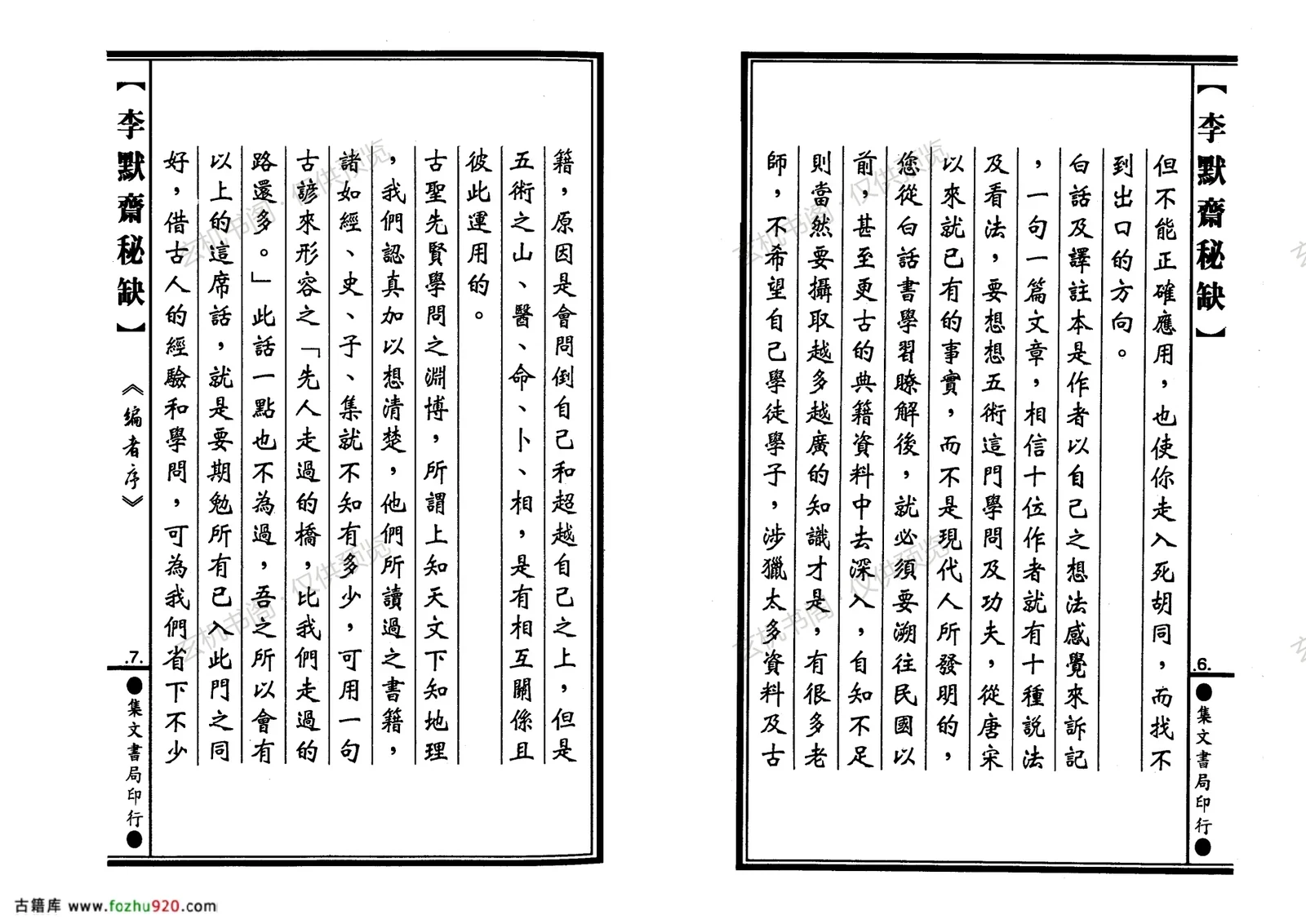
Continued editor's preface on the value of ancient experience and reference tools
Key Points
Dragon, cave, sand, water, and qi as core geomantic concepts
Advocates clear and accessible exposition for later students
Editor advises starting with vernacular introductions before classics
Warns against speculation and stresses ancient experience