Reading guide
Content guideOverview
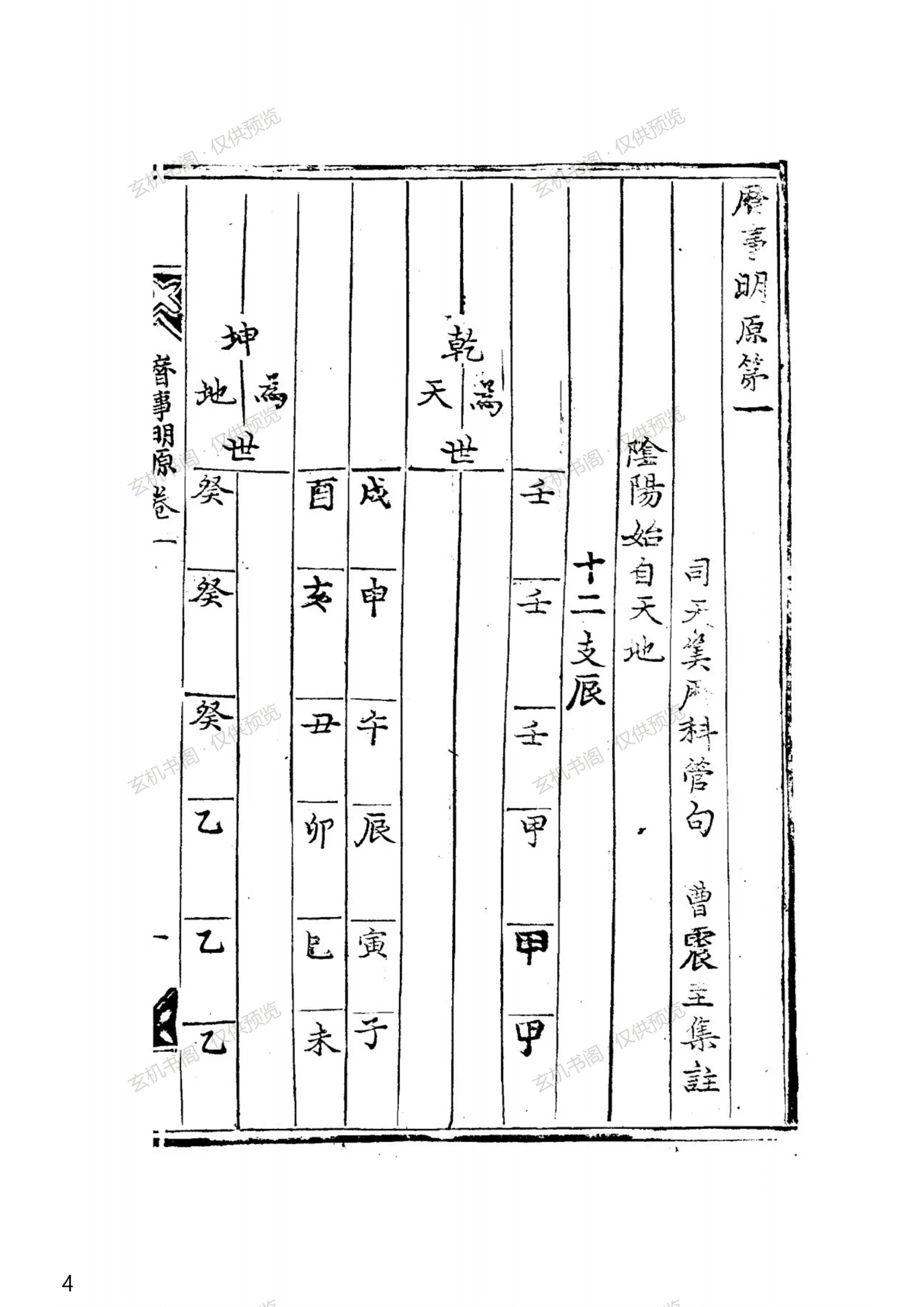
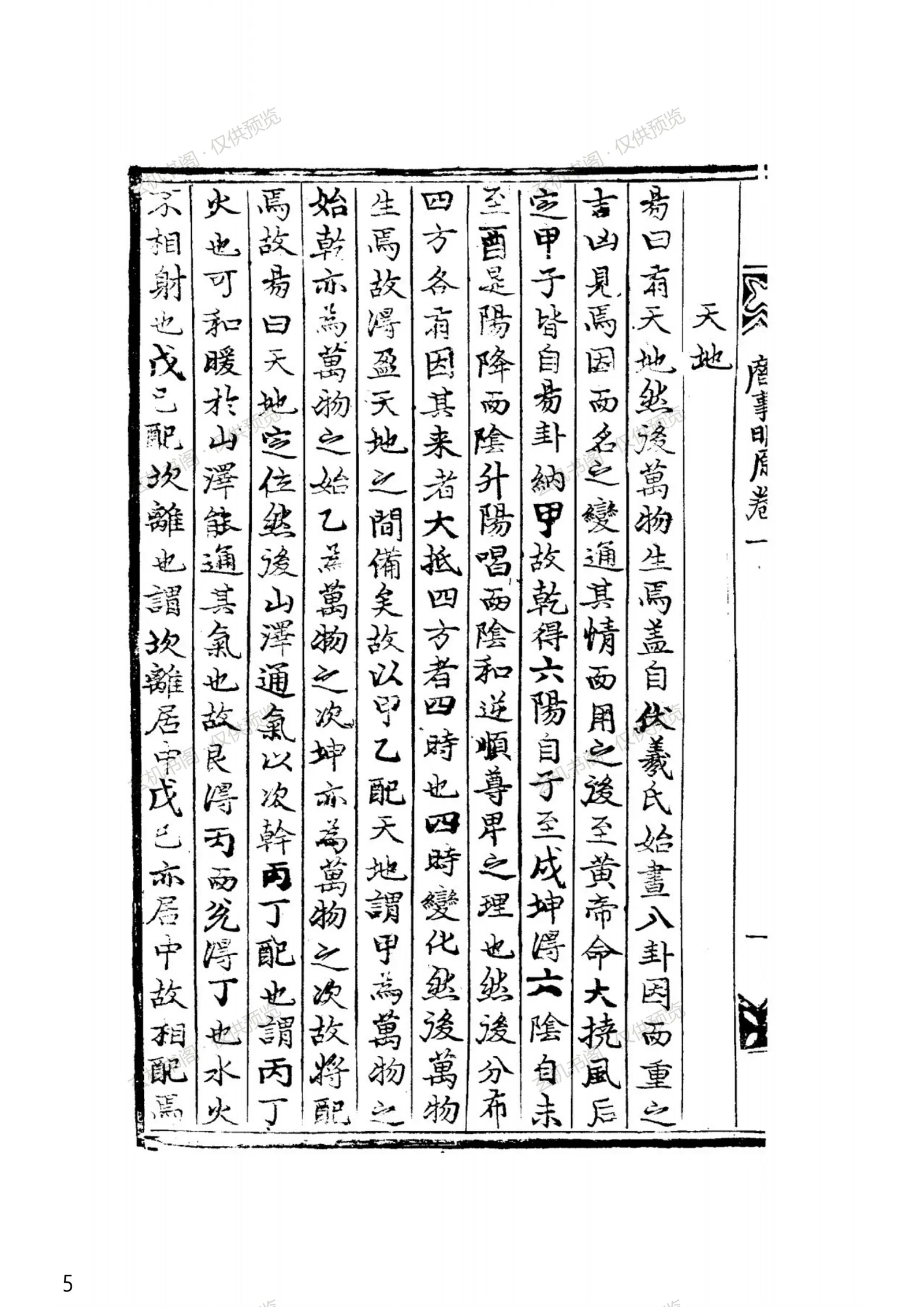
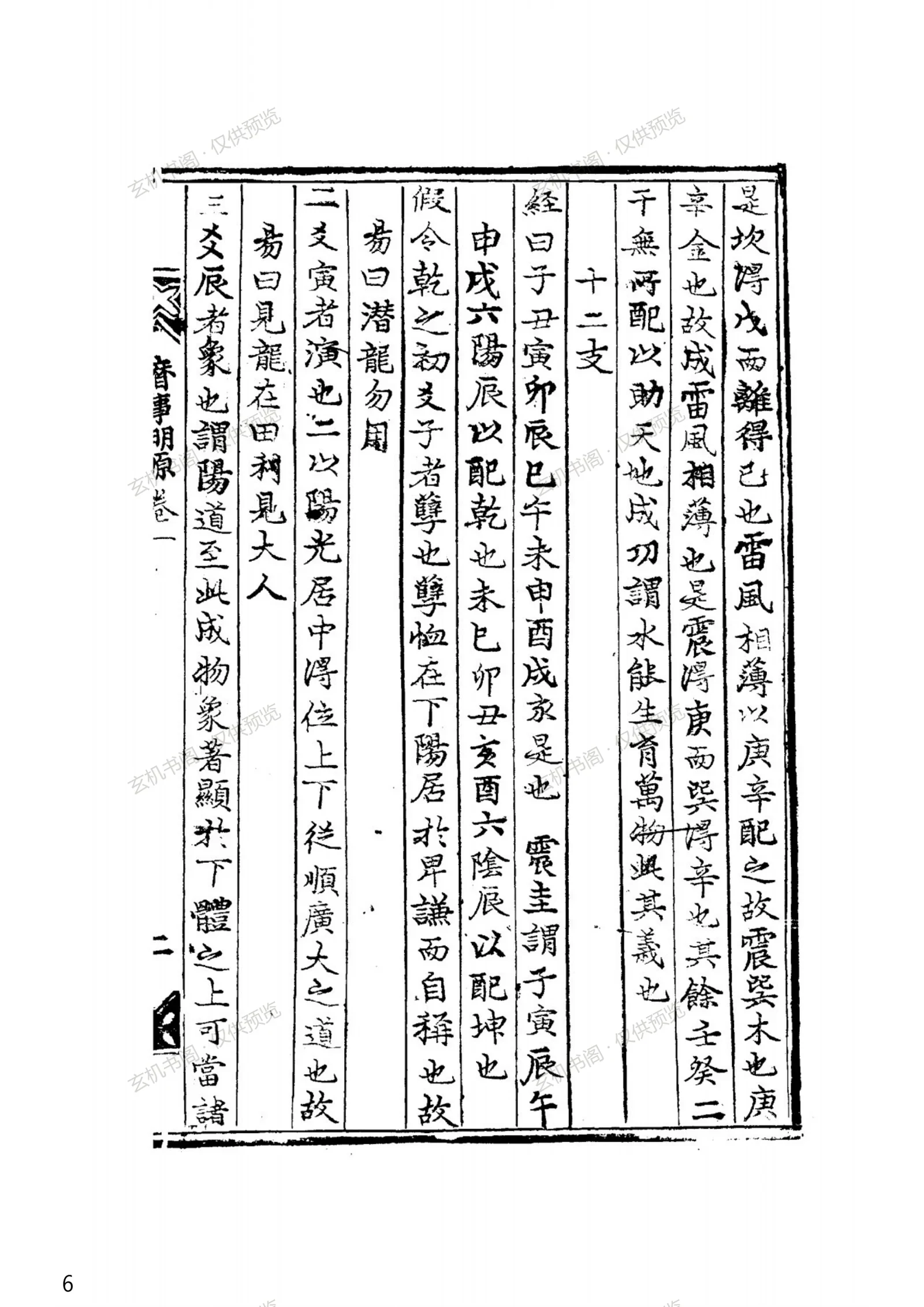
Lishi Mingyuan is a traditional Chinese text on the principles underlying calendrical divination and date selection. Volume One begins with discussions of yin-yang, the twelve earthly branches, and the sexagenary cycle in relation to the Tai Sui, then proceeds through Najia correspondences, the twelve-month hexagram qi transformations, the Tianyi nobleman, and a long series of calendrical spirits such as Sui Po, Sui Xing, Wu Gui, Bing Fu, Si Fu, Da Hao, Xiao Hao, Bao Wei, Fei Lian, Diao Ke, Sang Men, and Huang Fan. Rather than merely listing auspicious and inauspicious days, the main text uses a question-and-answer format, drawing on the trigrams, Najia, and the rise and fall of yin and yang to explain why these cycles and spirits arise. It is valuable for readers who already know the basics and want to understand the theoretical logic behind date-selection spirits.
Contents
Volume One contents: stems, branches, and Tai Sui
Yin-yang and the twelve earthly branches
Najia correspondences and the invention of the sexagenary cycle
Tianyi nobleman and various spirits
Tai Sui travel days, Sui Po and Sui Xing
Bing Fu, Si Fu, Da Hao, Xiao Hao and other inauspicious spirits
Key Points
Explains stems, branches, and Tai Sui through Najia and hexagram qi
Traces the origin of calendrical spirits rather than listing taboos
Covers common date-selection spirits such as Tai Sui and Wu Gui
Argues from Yijing hexagram lines, yin-yang ascent and descent