Reading guide
Content guideOverview
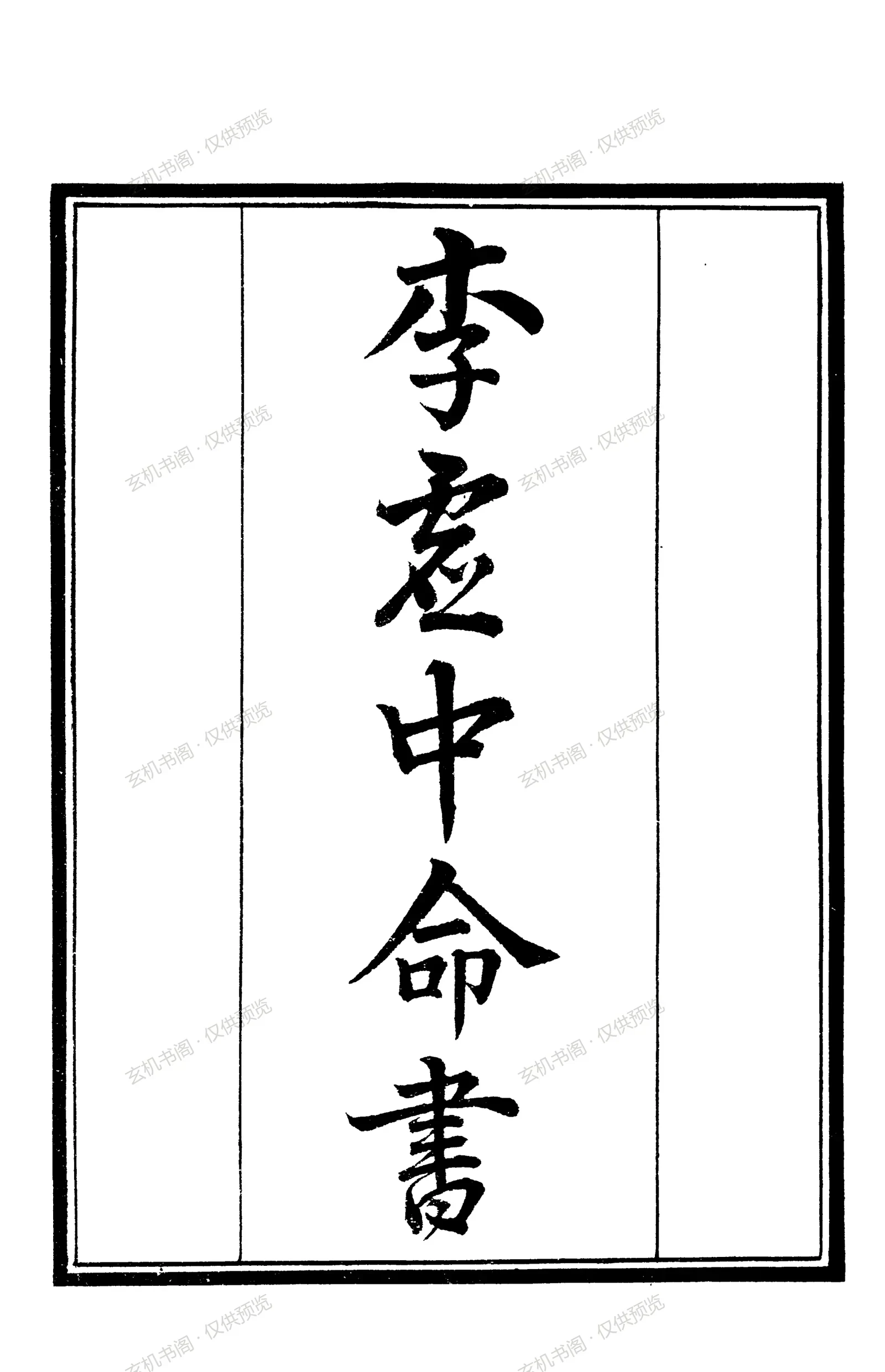
This is a classical Chinese fate-calculation text attributed to Li Xuzhong. The cover reads 'Mo Hai Jin Hu' (Golden Vessel in the Sea of Ink), while the inner title page reads 'Li Xuzhong's Book of Destiny.' The opening pages contain a Siku textual note that cites the Tang bibliography and Zheng Qiao's Tongzhi, describes Li Xuzhong's official career, and quotes Han Yu's epitaph for him: fate is judged by the mutual generation and conquest, rise and decline of the stems and branches of the birth year, month, day, and hour. This is an early form of the later four-pillar method. The note also distinguishes this text from later star-fate traditions, discusses its preface and nine surviving chapters, and examines discrepancies in editions and wording. The main text works through stem-branch relations to assess lifespan, nobility, and fortune, making it a key source for the early history of Chinese fate calculation.
Contents
Cover: Mo Hai Jin Hu
Inner title: Li Xuzhong's Book of Destiny
Siku note on authorship and office
Han Yu's epitaph quoted on the method
Comparison with later star-fate traditions
Notes on editions and textual errors
Key Points
A fate manual attributed to Guiguzi with commentary by Li Xuzhong
Judges lifespan and rank from birth stems and branches
Han Yu's epitaph is key evidence for authorship
The Siku note separates it from later star-fate works
The note examines edition and textual problems