Reading guide
Content guideOverview
This text begins by grounding divination in the philosophical idea that human affairs resonate with the Dao, and then moves into the Linggu Zi Yinfu Shenji secret formulas. Its core chapters explain how to assemble a divination chart from year, month, day and hour stems and branches, how to start the xun cycle and arrange the nine palaces and six harmony palaces, and how to assign trigrams and six relatives to judge matters past, present and future. A later section on the LUNFAN chapter discusses Fu Xi's eight trigrams in relation to the six harmony palaces, the rules for starting upper and lower trigrams, and the attribution of offspring, siblings and officials. Written in classical Chinese and dense with technical terms, the book is useful for readers of traditional divination who want to understand how Yinfu Jing concepts are applied to practical charting and interpretation.
Contents
Opening discourse on the Dao and divination
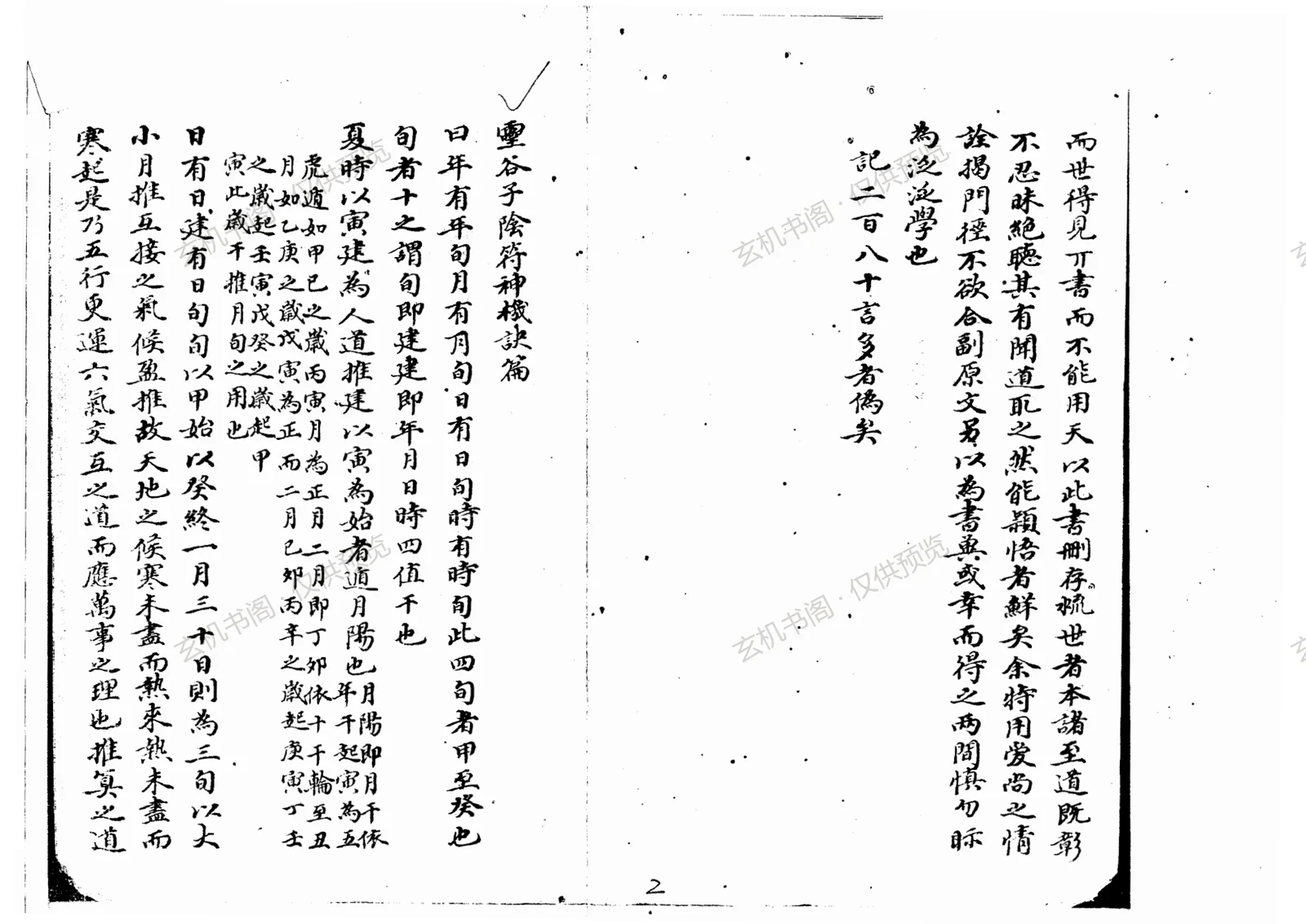
Yinfu Shenji chapter: four pillars, xun cycles and chart layout
Methods for selecting the use spirit and reading intentions
Forward and reverse calculations by year, month, day and hour
Lunfan chapter: eight trigrams and six harmony palaces
Assigning six relatives and judging fortune by palace
Key Points
Grounds divination in Yinfu Jing philosophy, insisting that method and principle are one.
Uses the four pillars of stems and branches, starting the xun cycle from the day and hour.
Provides a full procedure for taking the use spirit through the nine palaces and six harmony palaces.
Judges intentions and fortune by relational phrases such as 'what I produce' and 'what I overcome'.
Lunfan chapter maps the eight trigrams onto six relatives with specific starting rules.