Reading guide
Content guideOverview
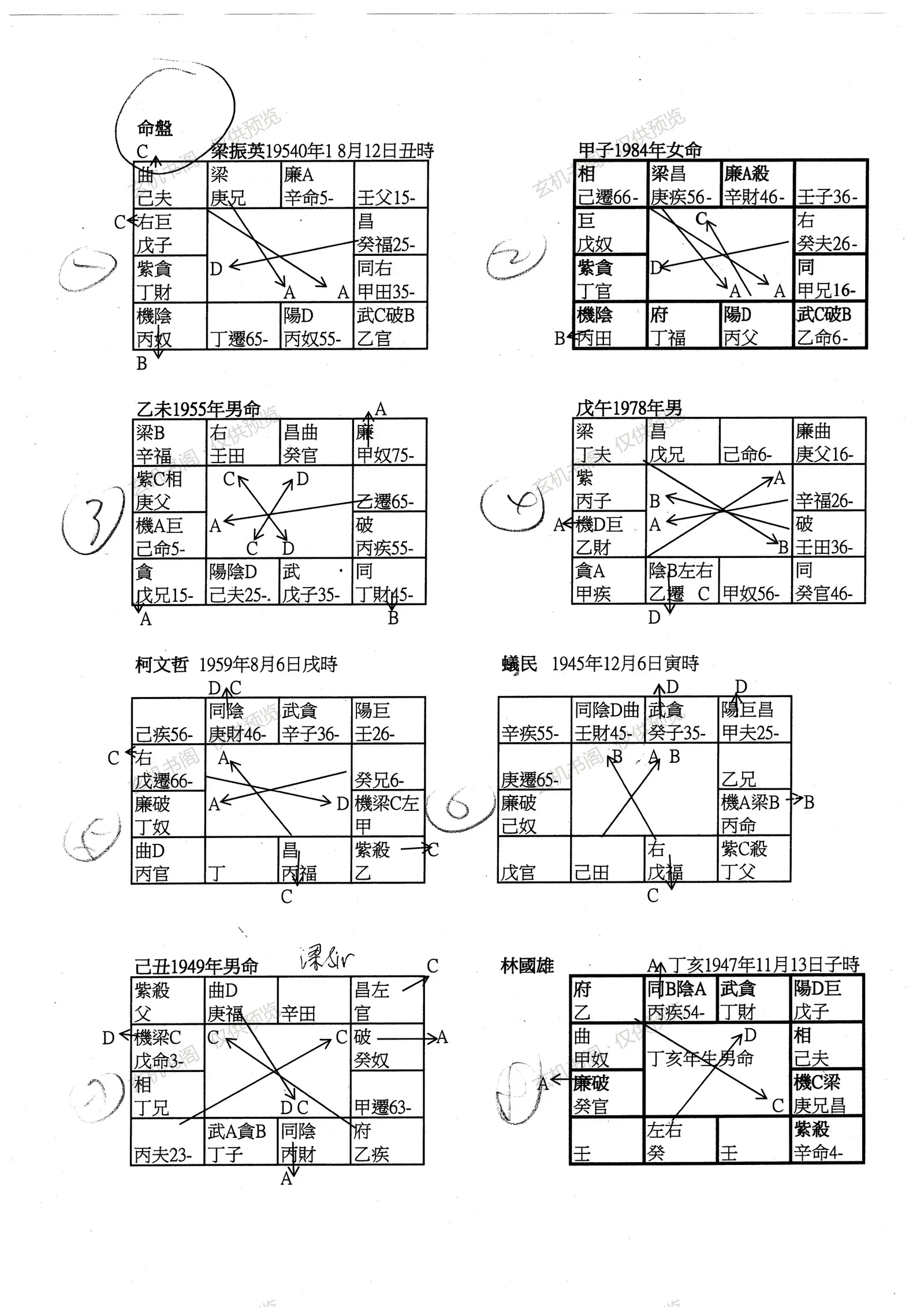
These lecture notes, compiled by Liang Jianhao from Liu Jinfu's self-transformation class, present a practical approach to the four transformations and self-transformation in Zi Wei Dou Shu. The text begins with the central position of the Zi Wei star, the Lu-Ji pattern of Lian Zhen, and the numerical and Najia foundations used to assign stars; it then explains male/female star classification, placement in the twelve palaces, the selection of transformation indicators, and tables of transformation nature and occupation. Several real charts are used to demonstrate how to locate transformations and interpret self-transformation in concrete cases. The material is diagram-heavy and classroom-oriented, aimed at readers who already know basic Zi Wei Dou Shu and want to study the flying-star and self-transformation techniques in depth.
Contents
Zi Wei as the central star and Hetu-Luoshu numbers
Lian Zhen Lu-Ji and the yin-yang male/female division
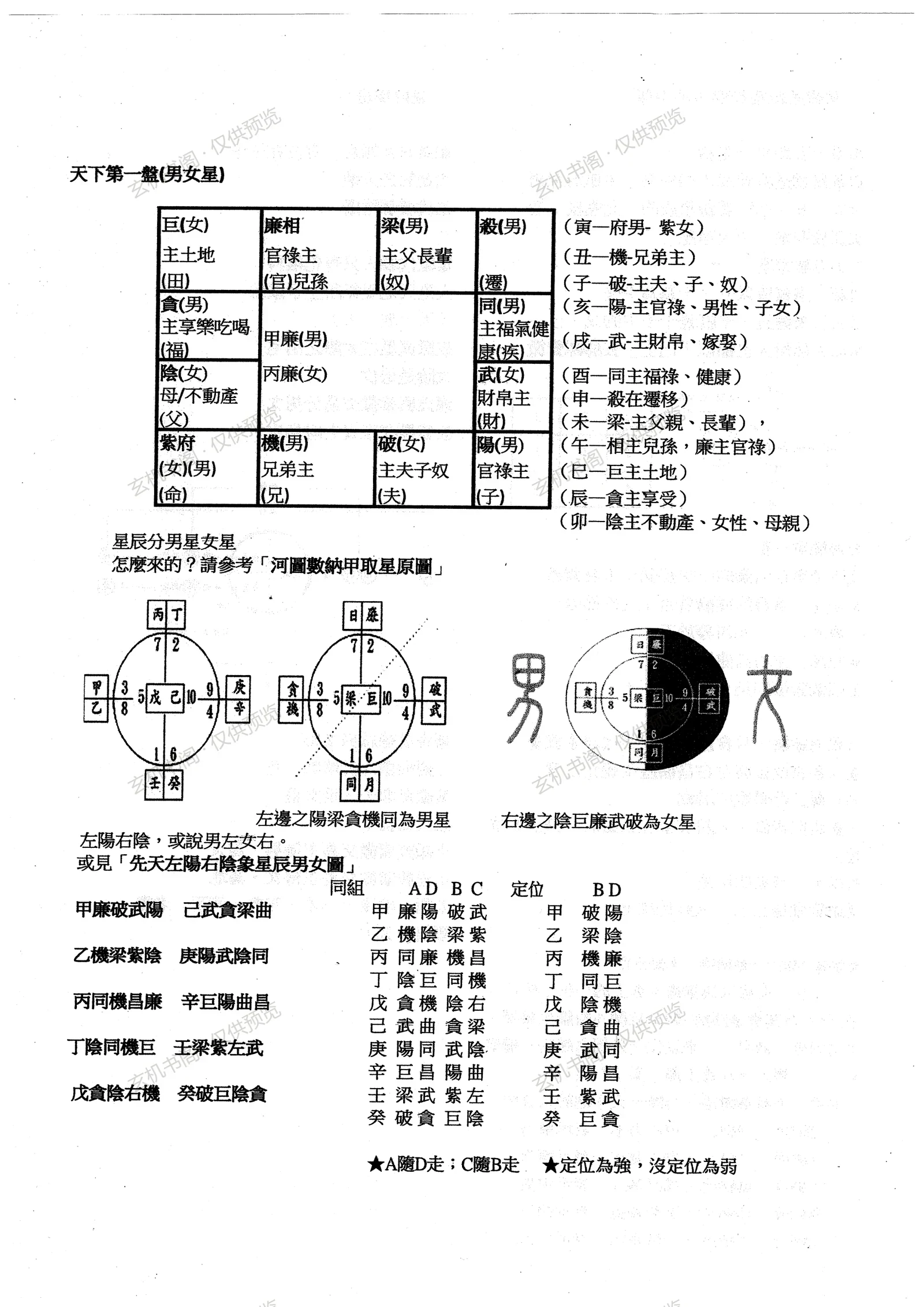
Male and female stars and the first chart layout
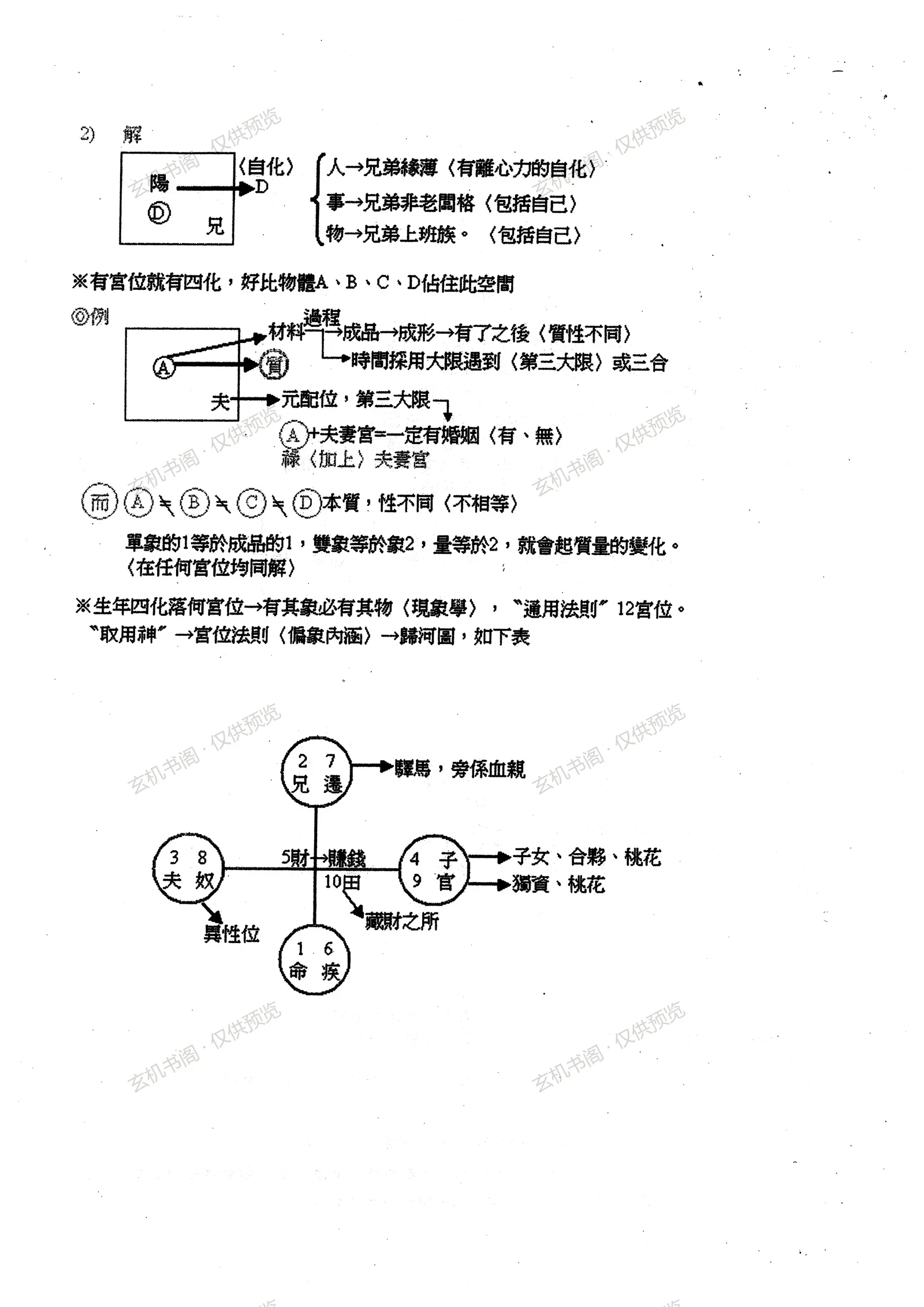
Selecting transformation indicators and palace rules
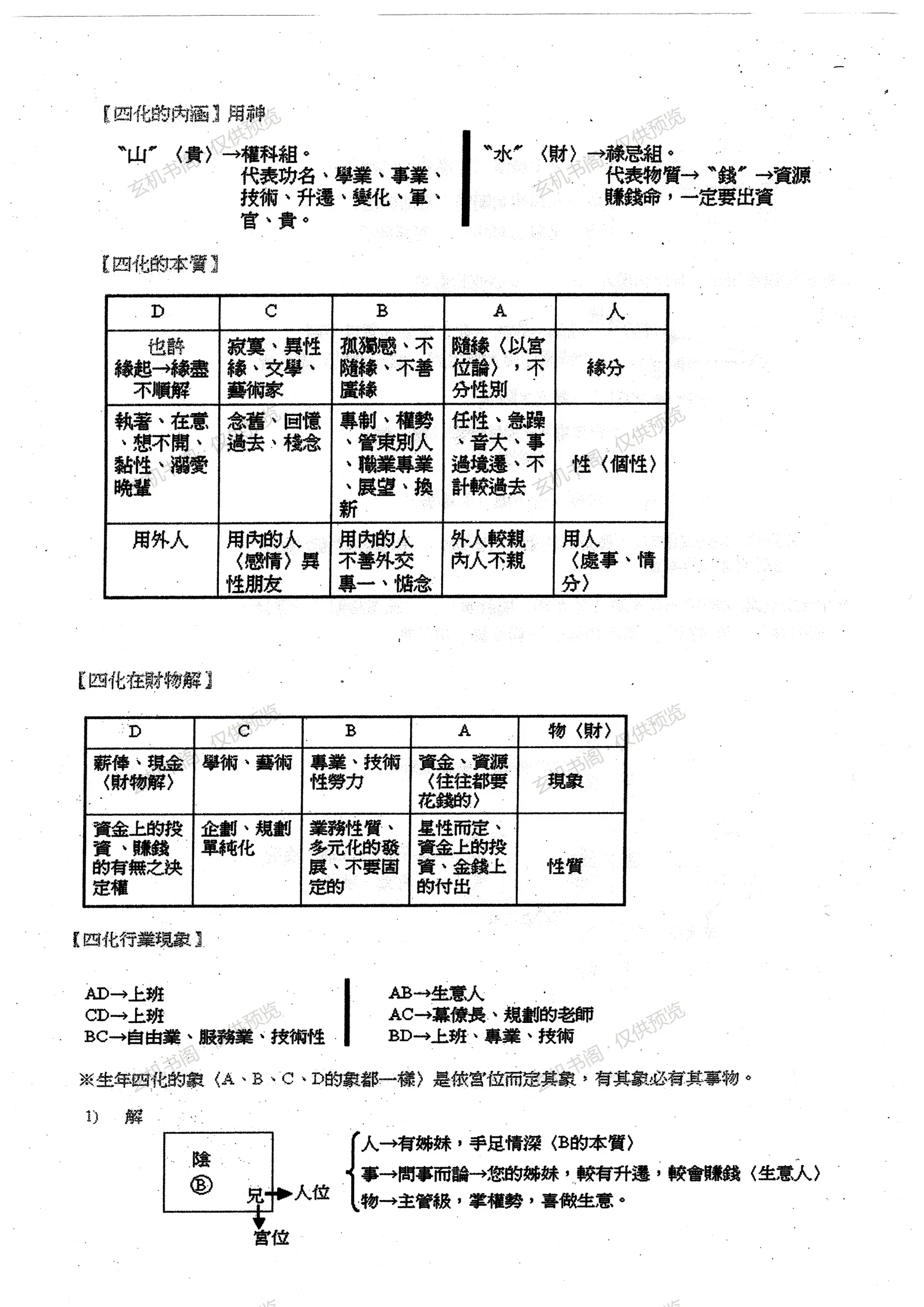
Transformation nature, essence, and occupational signs
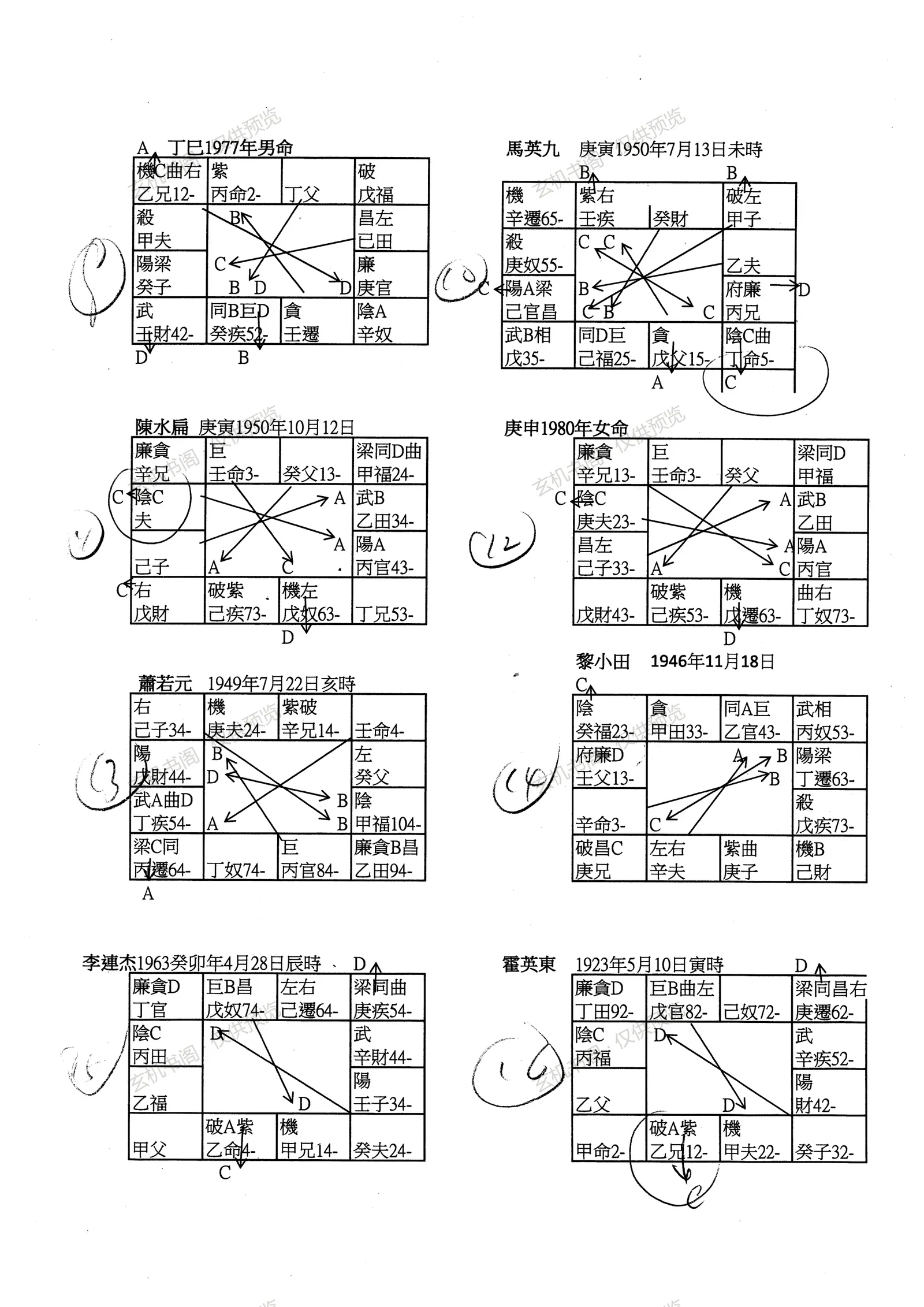
Worked examples and real natal chart demonstrations
Key Points
Zi Wei is treated as the central star, keyed to the numbers five and ten in Hetu-Luoshu.
The heavenly stems in Dou Shu are assigned by Najia, not by Five Phases.
Stars are classified as yin/yang male/female following Hetu numerical correspondences.
Wherever a transformation falls, it produces a corresponding phenomenon across the twelve palaces.
Real charts illustrate how to select and read transformations and self-transformations.