Reading guide
Content guideOverview
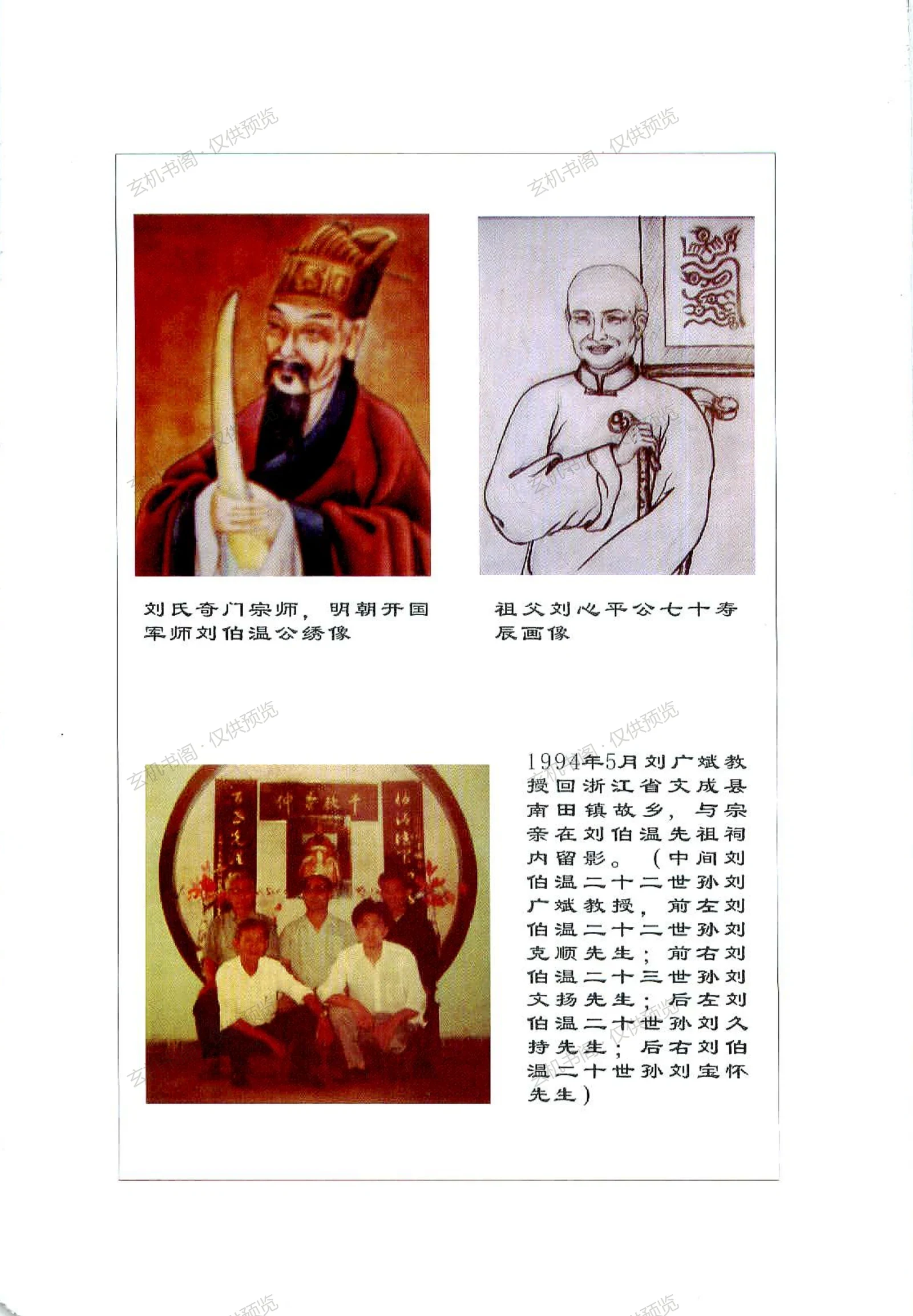
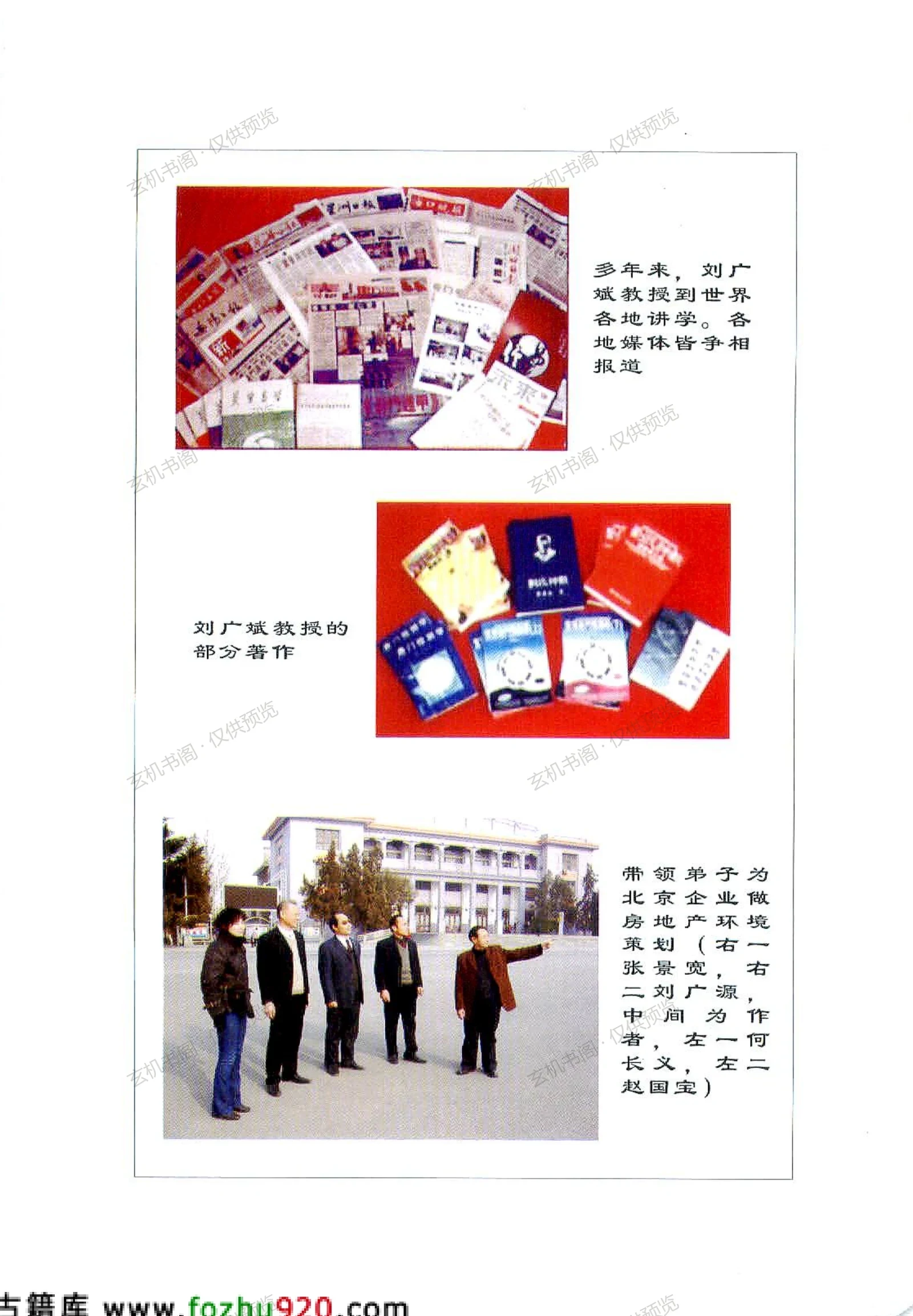
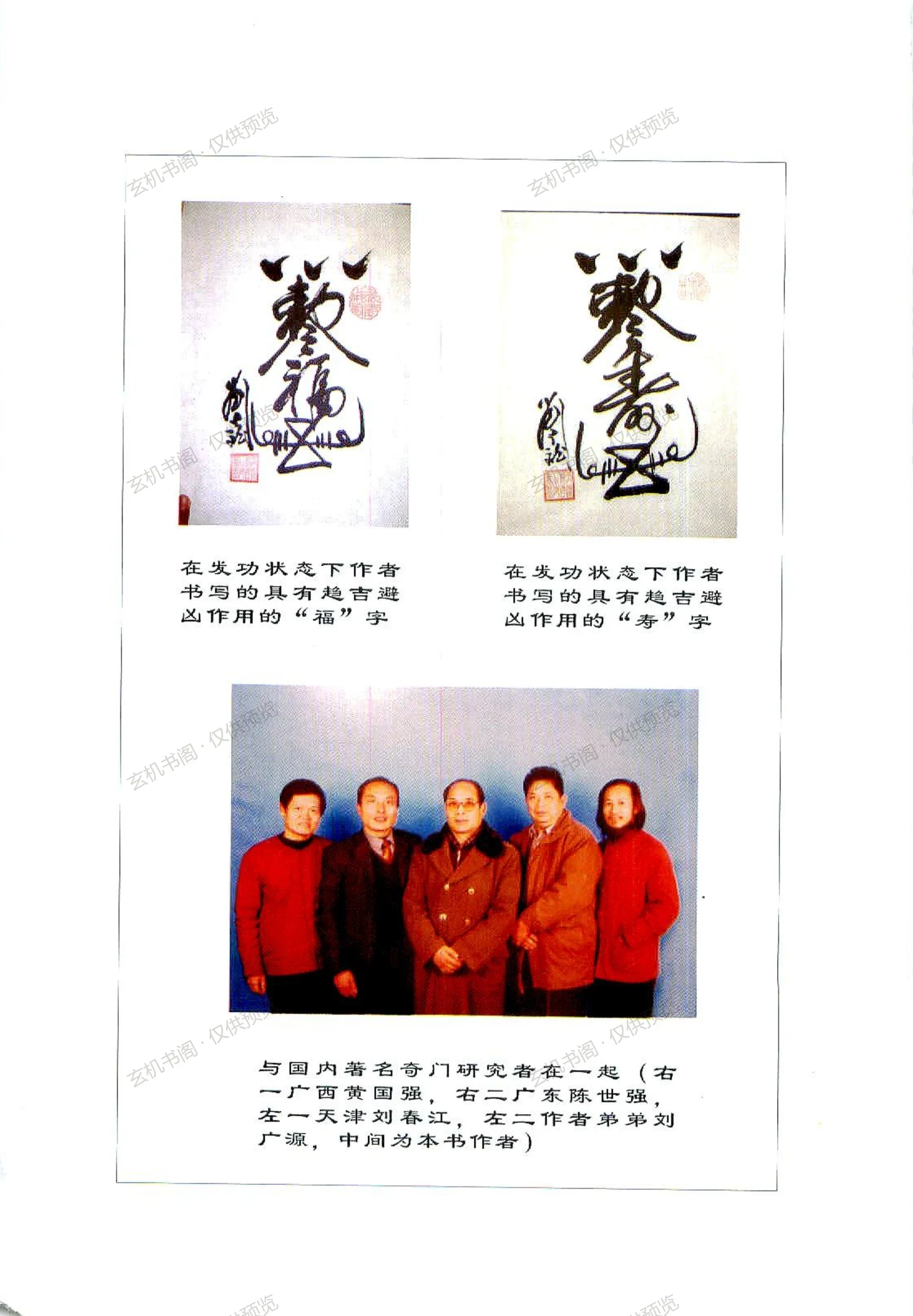
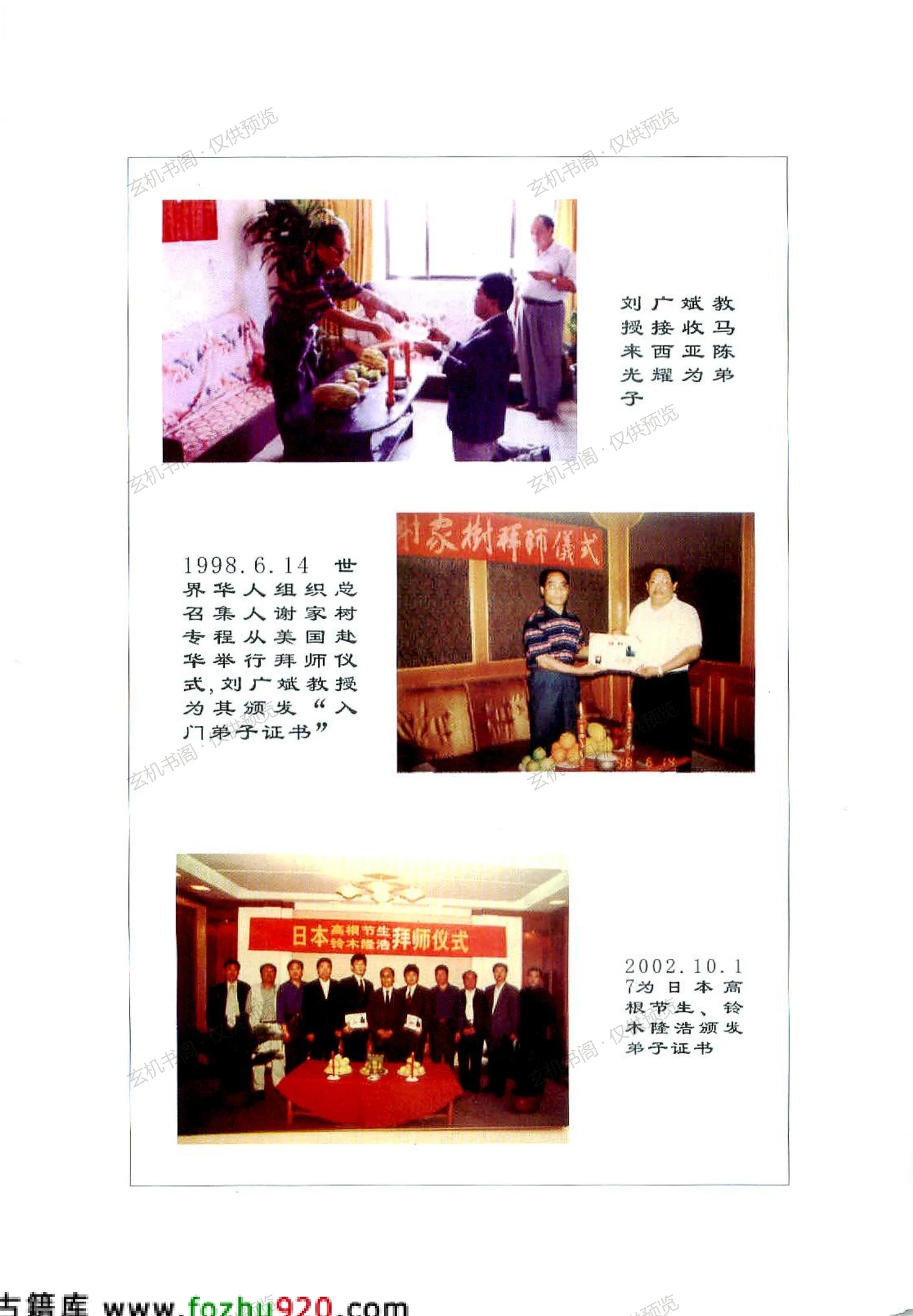
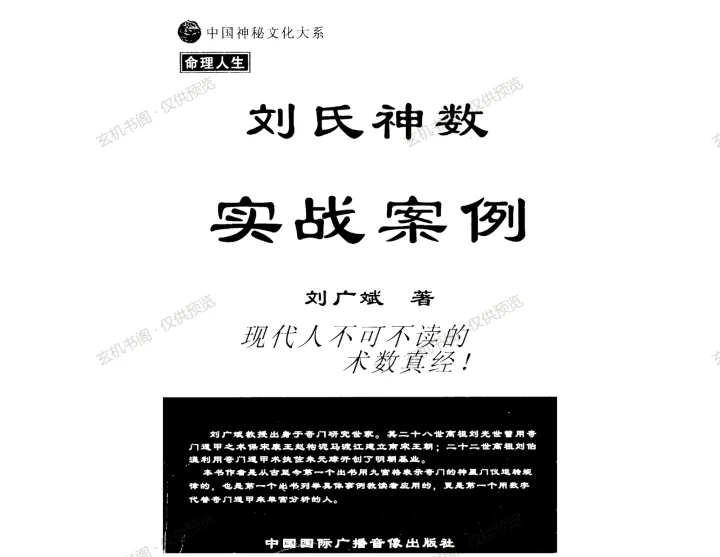
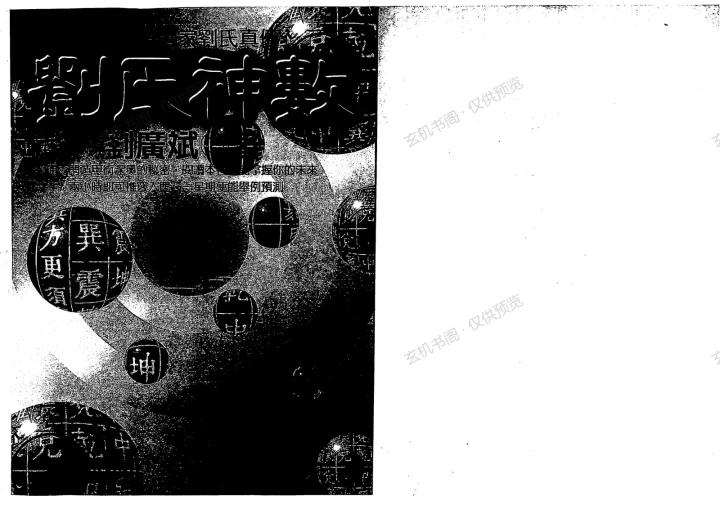
This book is presented as part of the 'Chinese Mystery Culture Series · Life and Destiny' and is written by Liu Guangbin. The cover claims that the author was the first to represent the cycles of Qimen's spirits, stars, gates and deities in a nine-palace grid, the first to teach application through concrete examples, and the first to replace Qimen Dunjia with numbers for single-palace analysis. Drawing on decades of personal practice and family Qimen materials, the author combines modern philosophy, mathematics, physics, statistics, topology, astronomy, geography, biology, information theory, systems theory, evolutionism and spacetime theory into a so-called 'spacetime numerical theoretical system.' The aim is to replace the cumbersome and hard-to-memorize full-chart Qimen analysis with a simpler single-palace numerical method. The first six pages contain the cover, a portrait of Liu Bowen, a portrait of the author's grandfather Liu Xinping, a 1994 group photo at Liu Bowen's ancestral hall in Wencheng County, photos of the author's works and lectures, calligraphic 'Fu' and 'Shou' characters written in a trance state, and several discipleship ceremonies, reflecting a strong family lineage and personal transmission flavor. The table of contents and body text are not shown in these pages, so the detailed chapter structure should be checked against the original book.
Contents
Cover: Chinese Mystery Culture Series · Life and Destiny
Portrait of Liu Bowen, ancestral Qimen master
Portrait of grandfather Liu Xinping at seventy
1994 photo at Liu Bowen ancestral hall, Wencheng
Photos of the author's works and lectures
'Fu' and 'Shou' written in a trance state
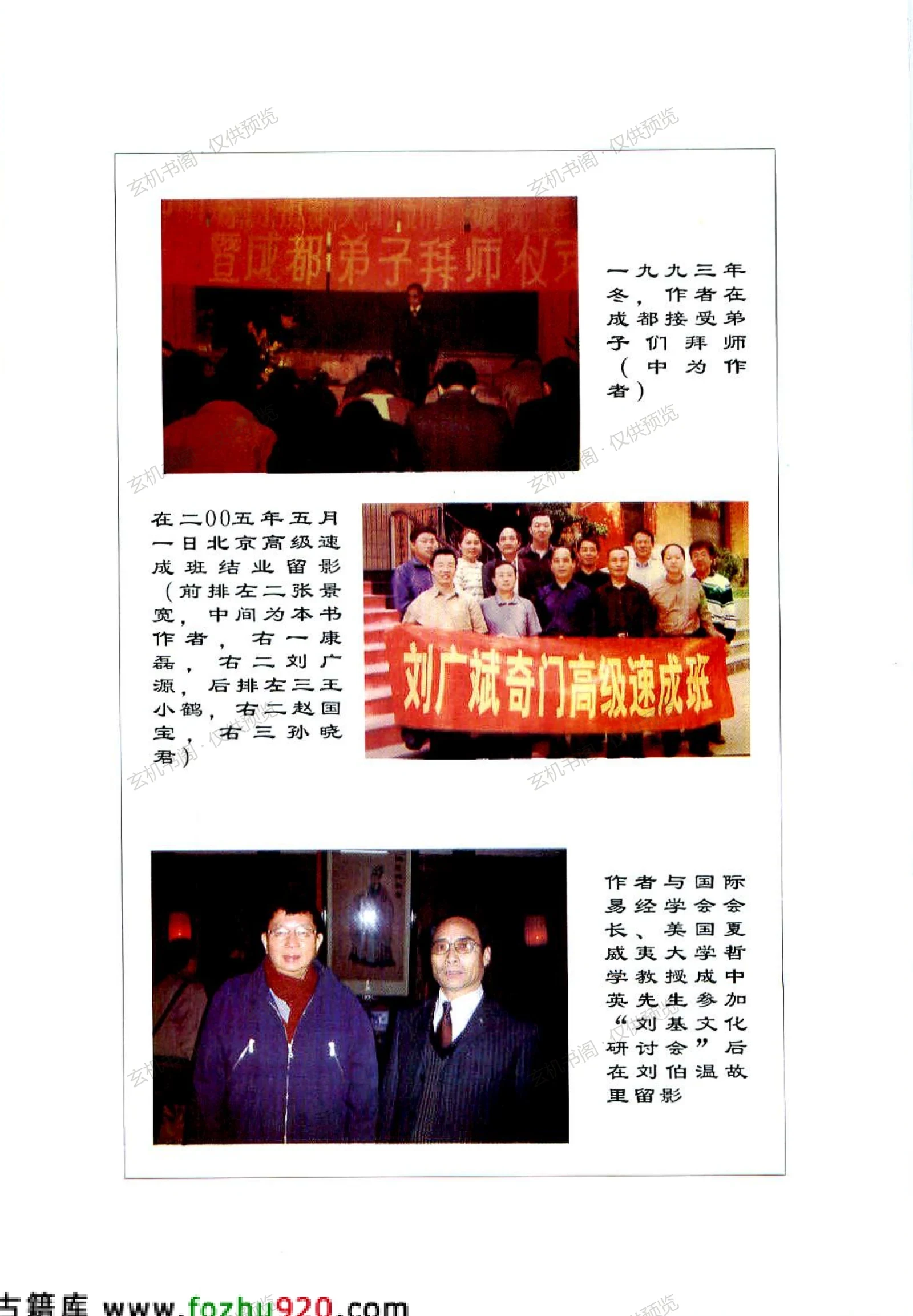
Photos of discipleship ceremonies
Key Points
Uses a nine-palace grid to represent Qimen spirit-star-gate-deity cycles
Replaces Qimen Dunjia with numbers for single-palace analysis
Combines family Qimen materials with personal practice cases
Attempts to integrate modern disciplines into a spacetime numerical theory