Reading guide
Content guideOverview
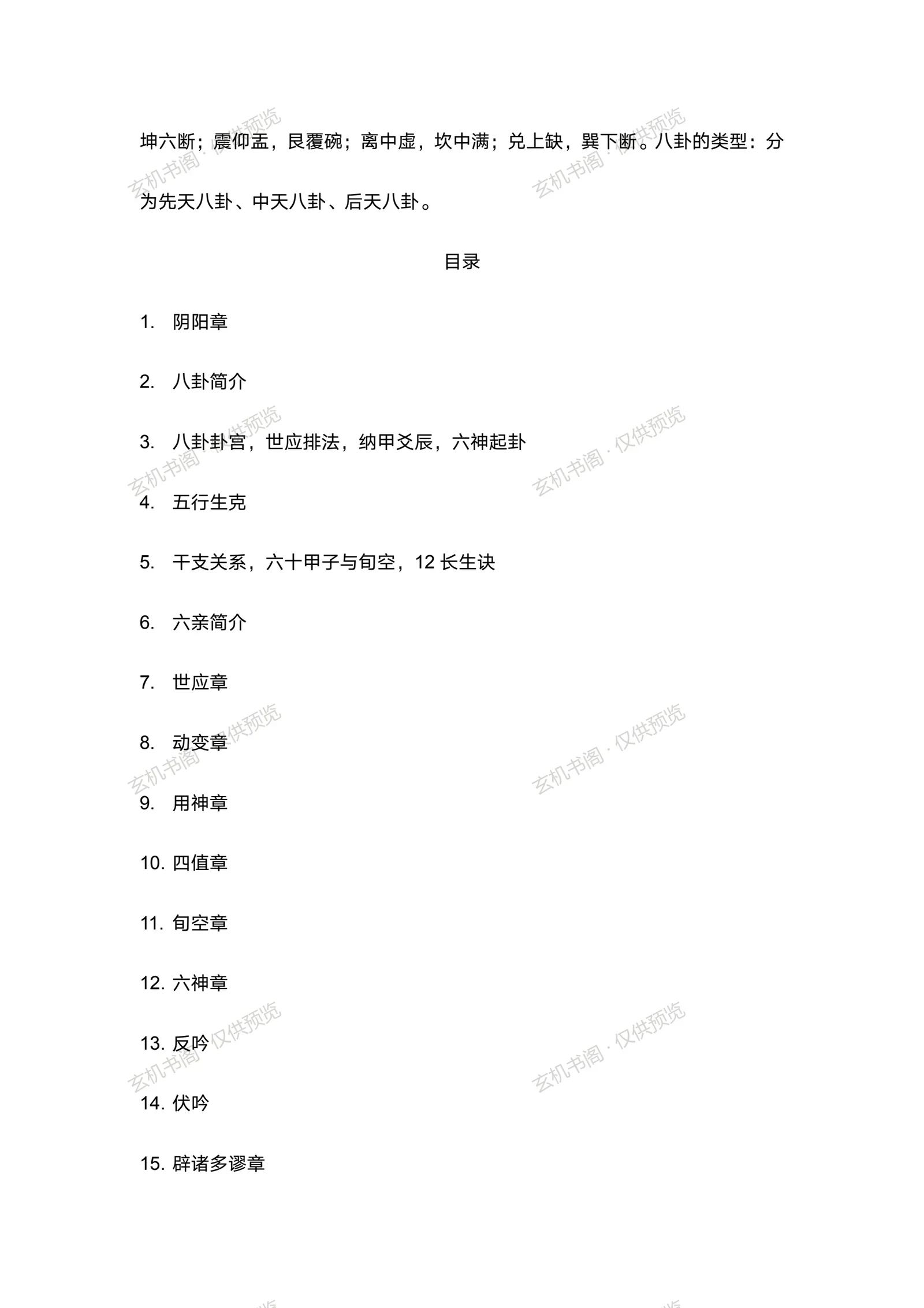
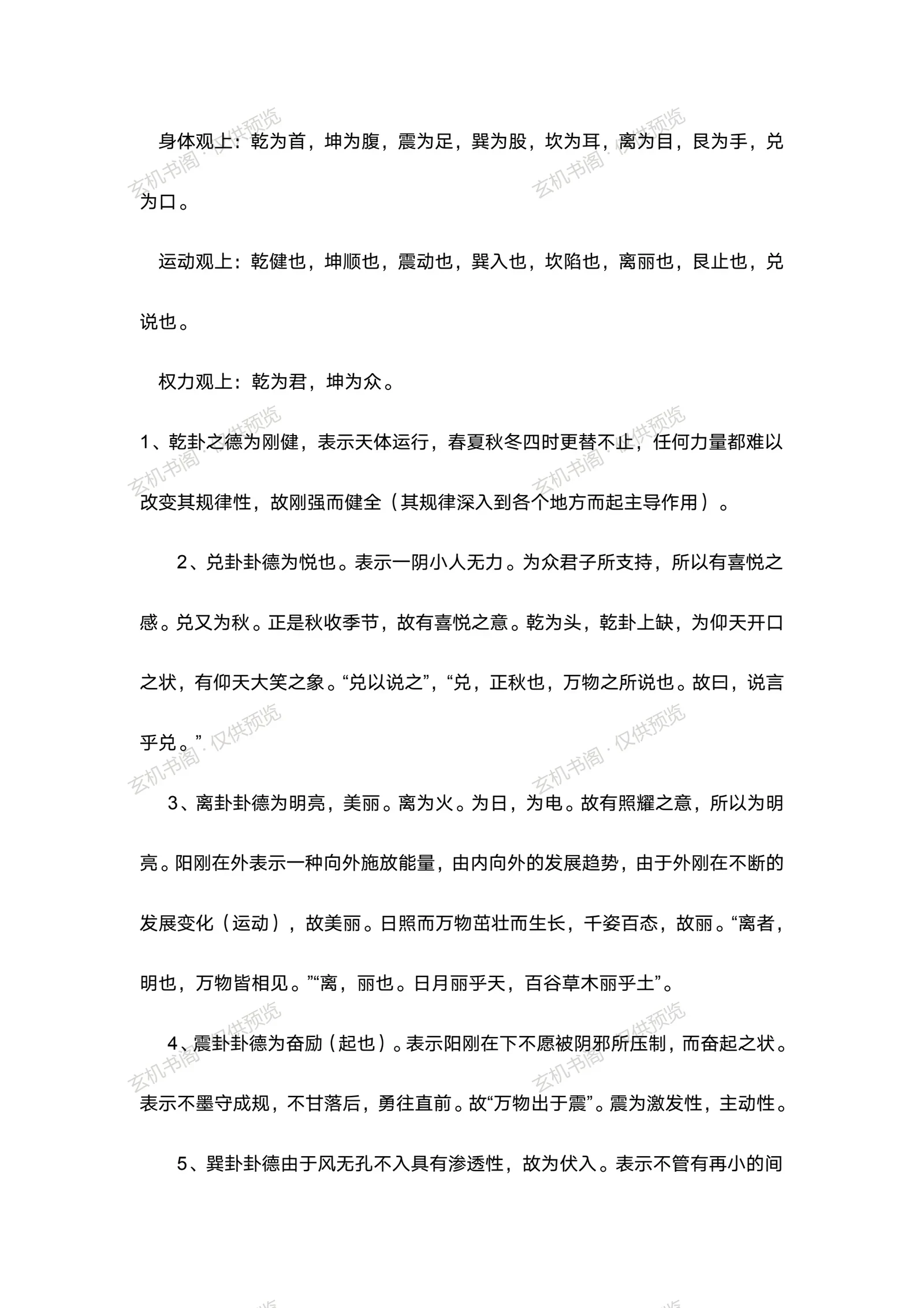
Attributed to Suihe, this is an introductory Six Lines (Liuyao) text aimed at newcomers. An opening note to new students stresses grounding in reality and mastering fundamentals rather than chasing multi-reading techniques. The book starts with yin-yang definitions and a Taiji evolution diagram showing how yin-yang, four images, and eight trigrams are generated, then gives Zhu Xi's mnemonic verses for trigram shapes and introduces the Former, Middle, and Later Heaven arrangements. The 17-chapter table of contents covers yin-yang, trigrams, palace and subject-response placement, stem-branch and spirit assignment, five phases, sexagenary cycle and void, twelve stages, six relations, moving lines, useful gods, four values, void, six spirits, reverse and hidden moans, refutation of errors, and case examples. The visible text expands the yin-yang and trigram chapters, summarizing trigram images and virtues from cosmic, family, animal, bodily, motion, and authority perspectives. It reads as a basic summary with personal notes, suited to beginners clarifying the symbol system.
Contents
Yin-Yang: symbols and Taiji evolution
Trigrams: mnemonic verses and arrangements
Palace, subject-response, stem-branch, spirits
Five phases, sexagenary cycle, void, stages
Six relations, moving lines, useful gods
Four values, void, six spirits, reverse/hidden moans
Refutation of errors and case examples
Key Points
Builds from yin-yang symbols and trigram images with a Taiji evolution diagram.
Uses Zhu Xi's mnemonic verses to memorize trigram shapes.
Lays out subject-response, stem-branch assignment, six relations, and useful gods.
Stresses practical grounding over chasing multi-reading techniques.
Ends with case examples and correction of common errors.