Reading guide
Content guideOverview
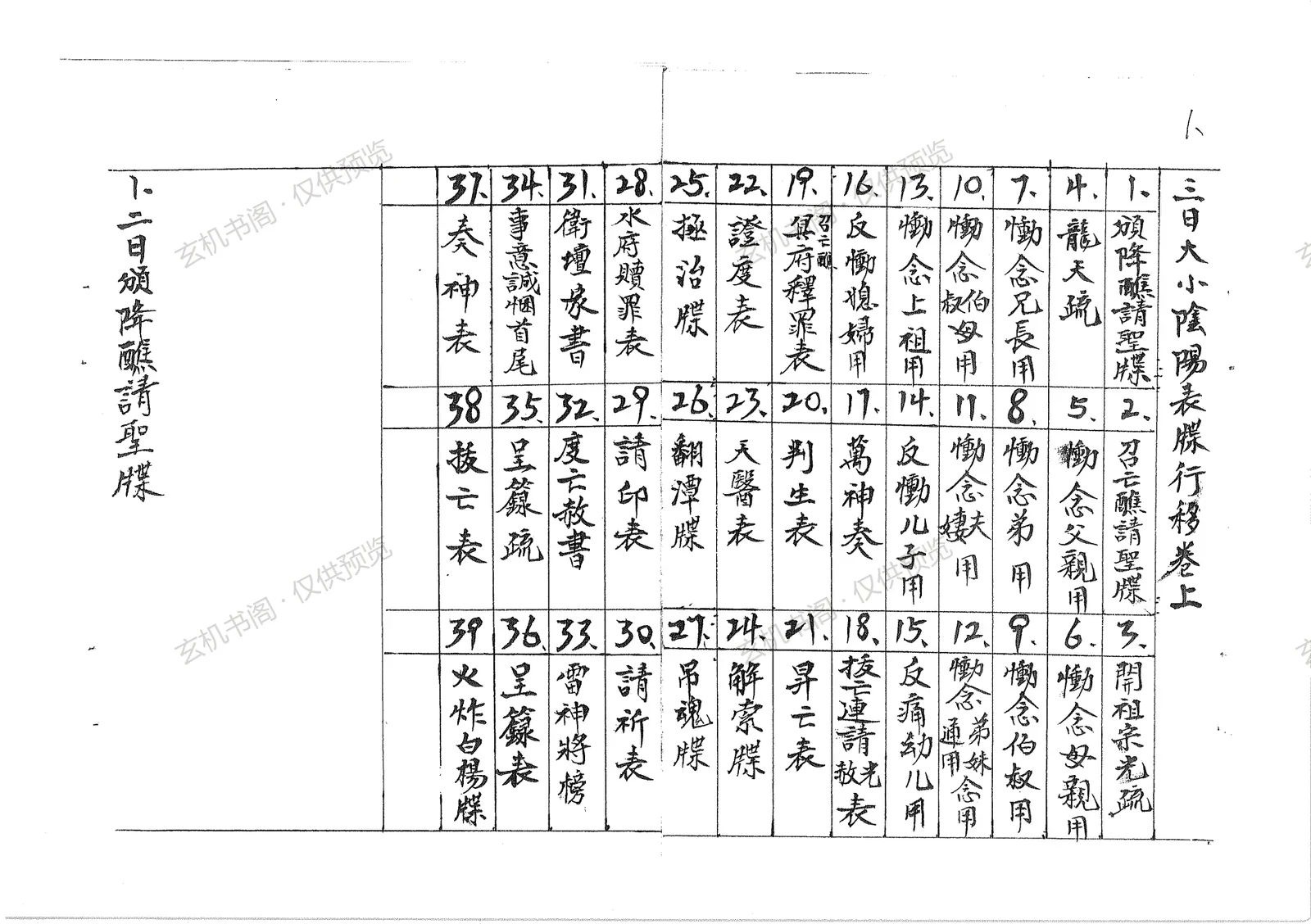
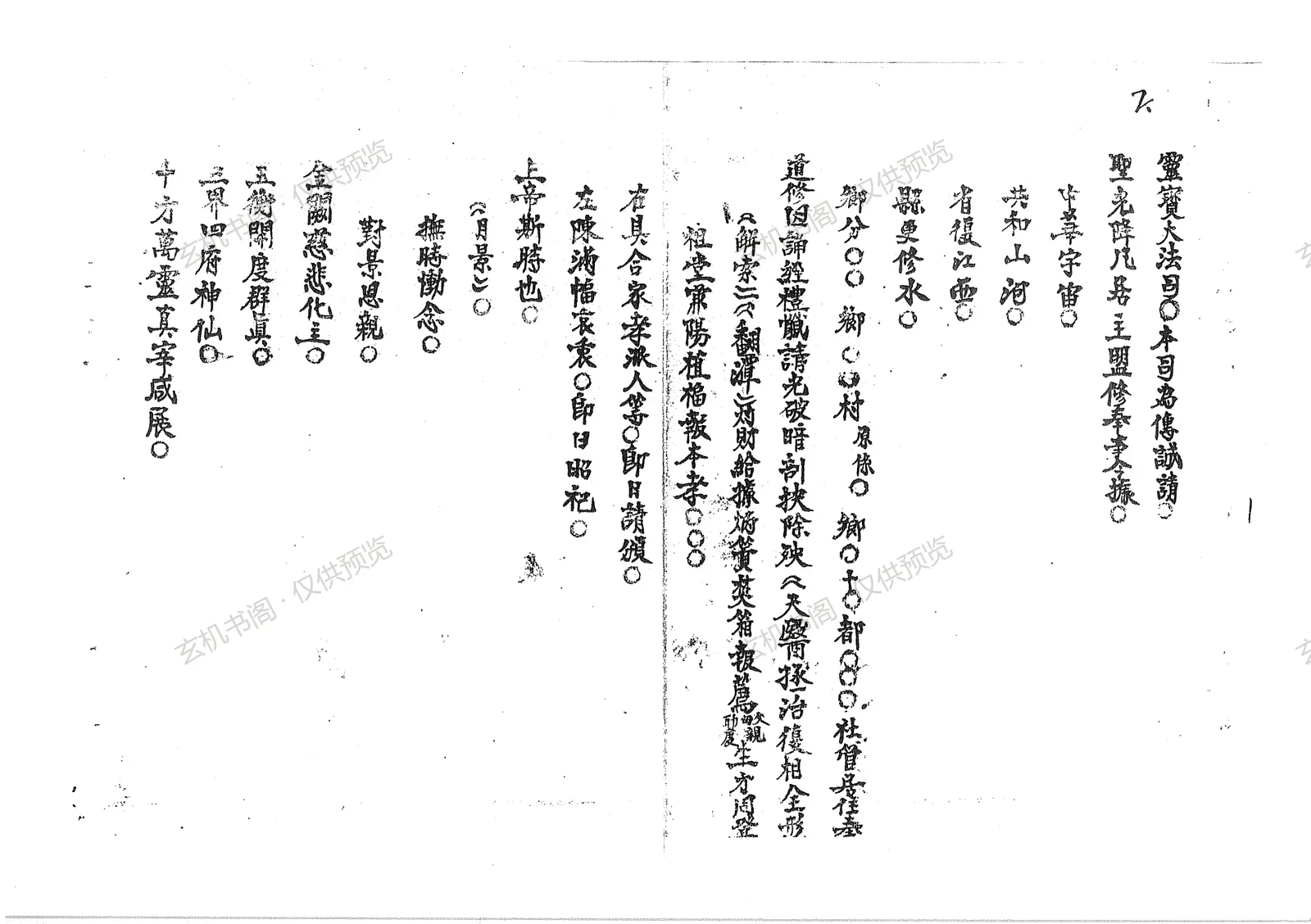
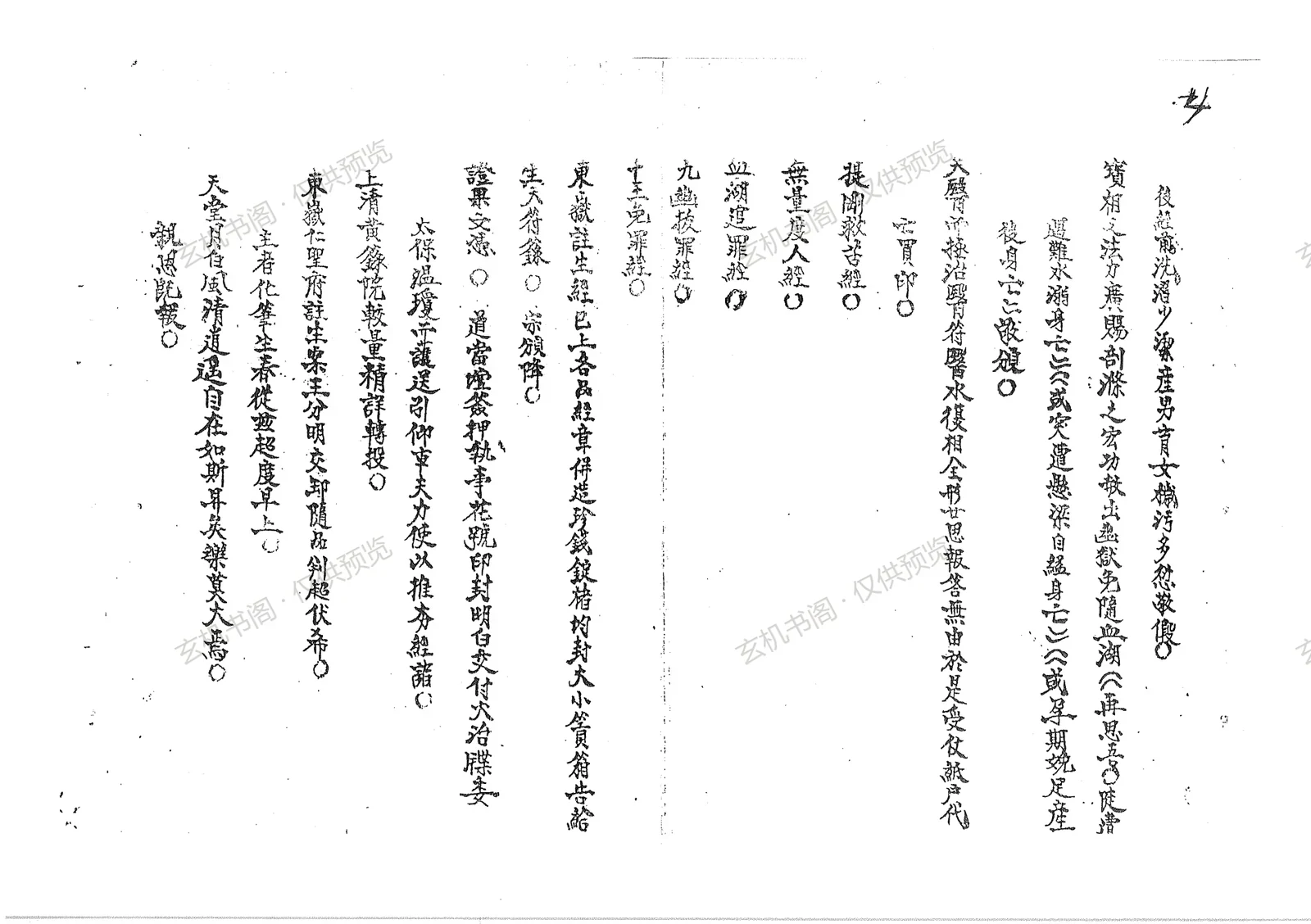
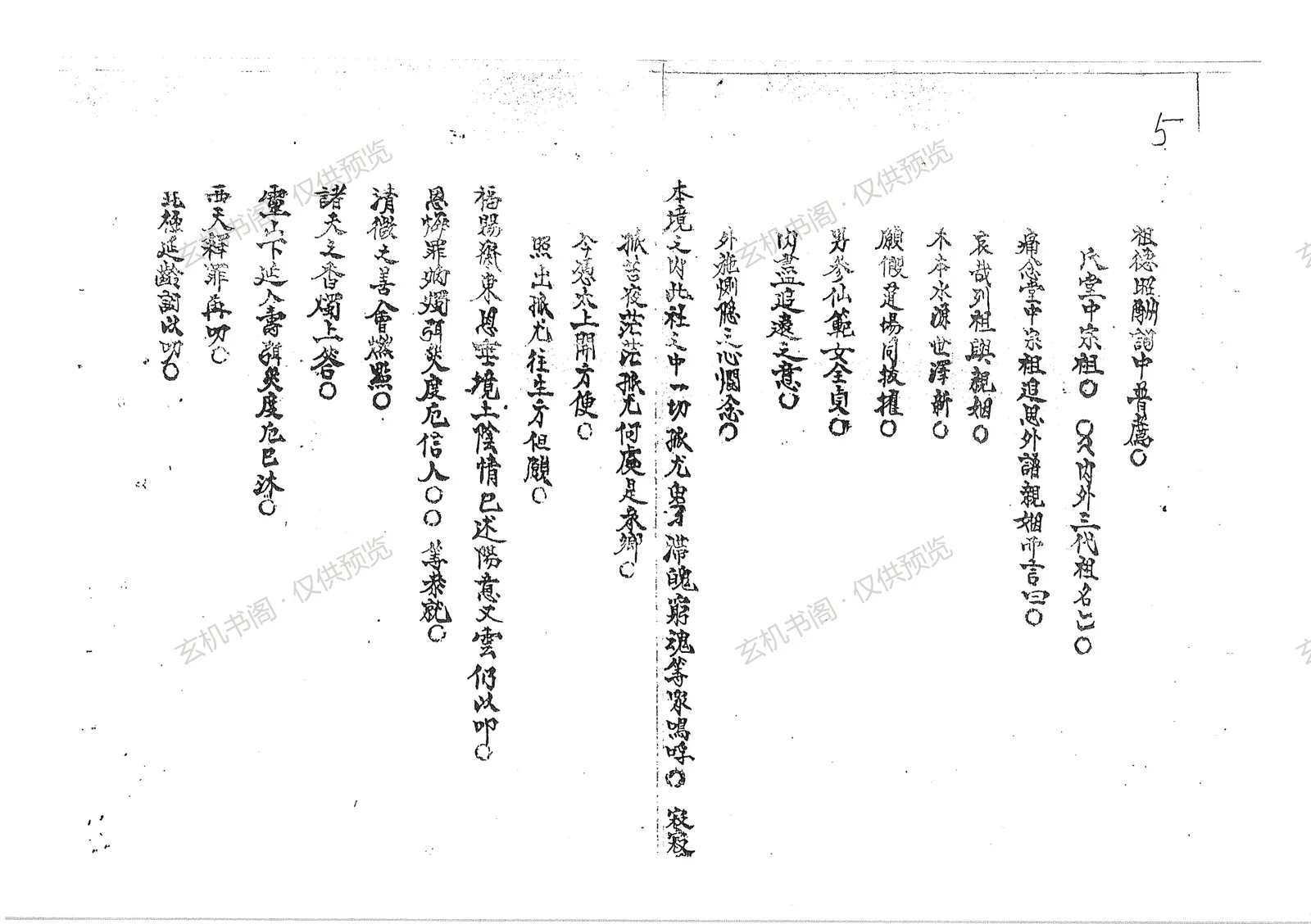
Linglong Pagoda is a handwritten Daoist ritual manuscript transmitted in the Xiushui area of Jiangxi. This volume, Part Two, Volume One, is titled 'Memorials and Official Documents for Three Days, Greater and Lesser Yin and Yang, Volume One' and is attributed to Dai Xiangliu of Xiushui, Jiangxi, with the religious name Xuandao Peiyong. The book systematically organizes the various memorials, official documents, petitions, and notices needed for Daoist rites in tabular and itemized form, covering ritual stages such as inviting deities, lamentation, deliverance of the dead, resolution of grievances, memorials to deities, proclamation of pardons, and prayers. Page 2 is a general table of contents listing thirty-nine types of memorials and documents by number, including 'Memorial Inviting Deities for the Altar,' 'Memorial Inviting Deities for Summoning the Dead,' 'Lamentation for Elder Brothers,' 'Lamentation for Parents,' 'Pardon Document for Deliverance of the Dead,' and 'Notice for the Thunder Deities,' indicating their intended subjects and occasions. Pages 3 to 6 provide concrete examples of official documents, including procedures for inviting deities, invoking sages, offering incense, requesting water, requesting scriptures, resolving grievances, delivering the dead, bathing, breaking hell, summoning souls, and exchanging documents, along with ritual terms such as 'Dao incense,' 'Heavenly incense,' and 'Daoist altar,' and mantras such as 'Om Ah Hum.' The text is mostly handwritten in cursive script, with circles marking procedural nodes, making it an important source for studying folk Daoist memorial systems and ritual practice.
Contents
General contents of Volume One: thirty-nine memorial titles
Formats for deity-invitation memorials and summoning-the-dead memorials
Lamentations for parents, elder brothers, younger siblings, and uncles
Pardon documents for deliverance, water-office crime memorials, thunder-deity notices
Rituals for resolving grievances, bathing, breaking hell, and summoning souls
Procedures for exchanging documents, sending off deities, and concluding rites
Key Points
The volume lists thirty-nine types of memorials in numbered tables for easy reference and use
It covers a complete ritual sequence including inviting deities, deliverance, resolving grievances, bathing, and breaking hell
Document formats include memorials, official documents, petitions, notices, and letters
The text preserves mantras such as 'Om Ah Hum' and ritual terms such as 'Dao incense' and 'Heavenly incense'
The attribution to Dai Xiangliu of Xiushui, Jiangxi, reflects local Daoist ritual transmission