Reading guide
Content guideOverview
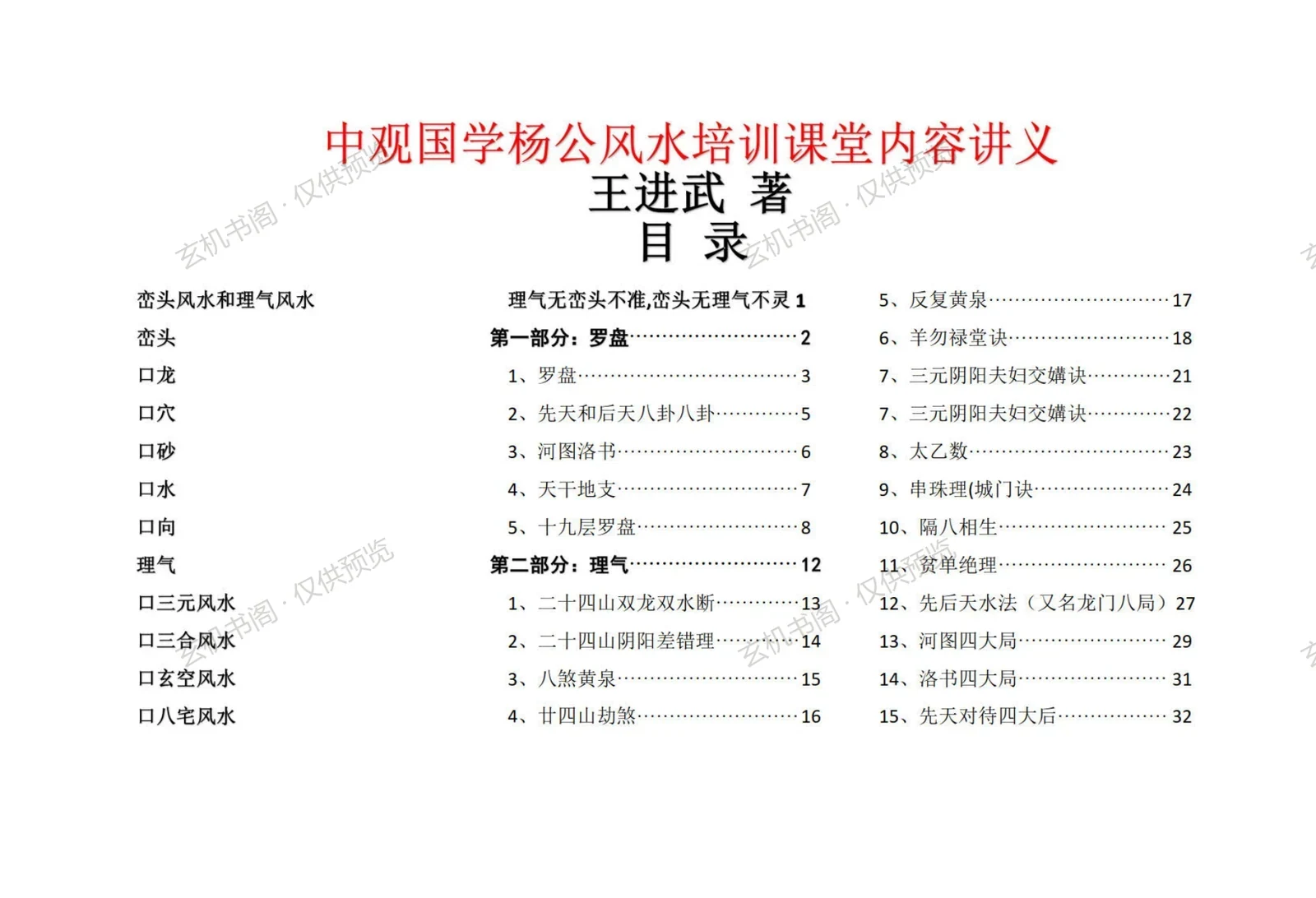
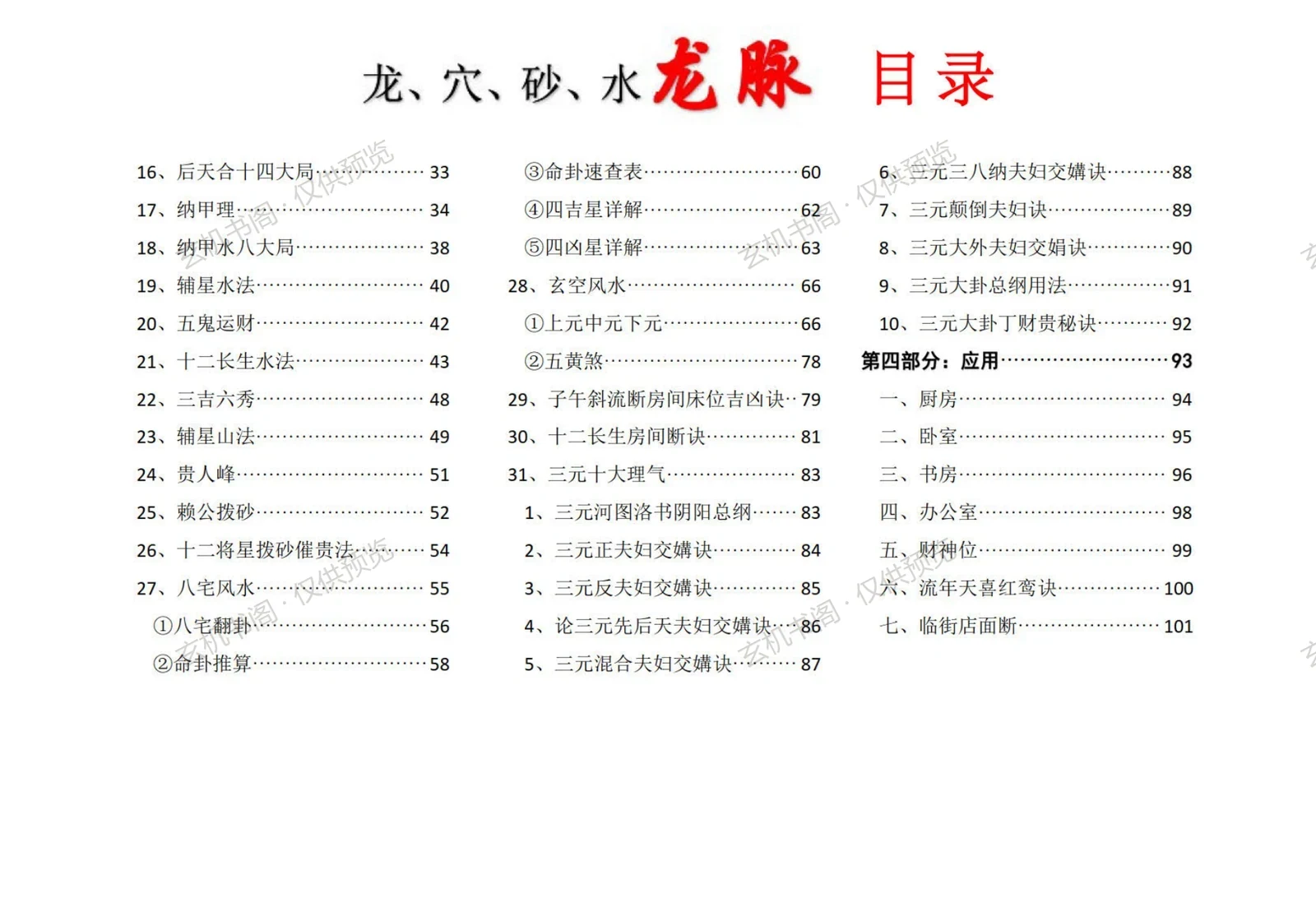
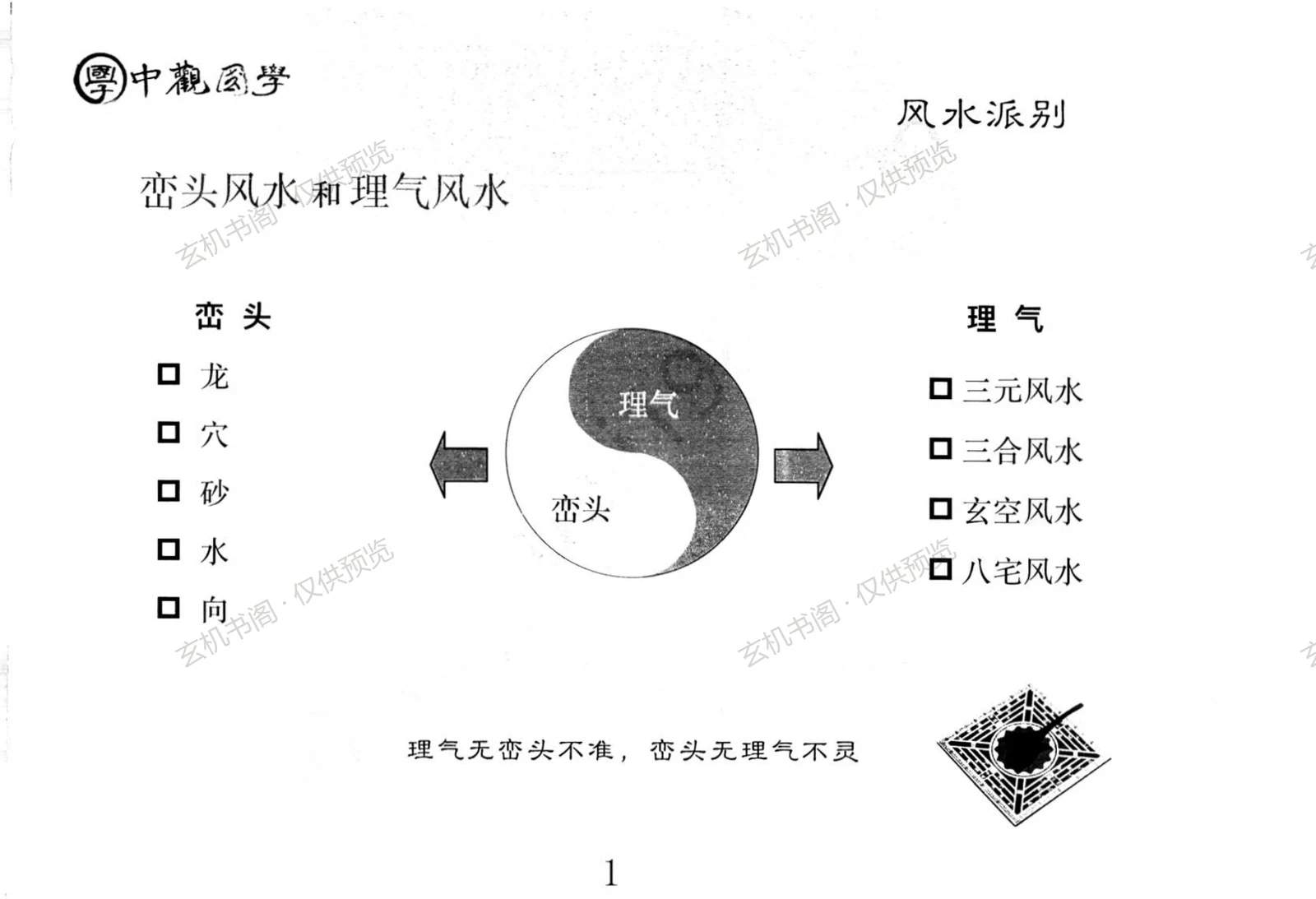
This book is compiled from Wang Jinwu's classroom lectures on Yang Gong feng shui at Zhongguan Guoxue. It opens by distinguishing the Form School (dragon, acupoint, sand, water, facing) from the Compass School (San Yuan, San He, Xuan Kong, Ba Zhai), stressing that form and qi must be used together. The main body is divided into four parts: the luopan and its foundational layers, including the eight trigrams, Hetu Luoshu, and heavenly stems and earthly branches; a large section on liqi covering the 24 mountains, double dragon and water judgments, yin-yang errors, the eight killing yellow springs, robbery sha, Najia water methods, Fuxing water methods, eight mansion feng shui and Xuan Kong feng shui; San Yuan liqi with Hetu Luoshu principles, couple union formulas, Tai Yi numbers and related secret formulas; and finally practical applications for kitchens, bedrooms, studies, offices, wealth positions and storefronts. The material is formula-heavy and designed as a companion handout for students of feng shui.
Contents
Distinguishing the Form School and Compass School of feng shui
Part One: The luopan and its basic layers
Part Two: Liqi, including 24 mountains, Najia and Fuxing water methods, Ba Zhai and Xuan Kong
Part Three: San Yuan liqi and couple union formulas
Part Four: Practical applications for kitchen, bedroom, study, office and shops
Key Points
Separates the Form School (dragon, acupoint, sand, water, facing) from the Compass School (San Yuan, San He, Xuan Kong, Ba Zhai)
Explains the luopan structure, the eight trigrams, Hetu Luoshu, heavenly stems and earthly branches
Liqi section focuses on 24 mountains, yellow springs, robbery sha, Najia water methods and Fuxing water methods
San Yuan liqi includes Hetu Luoshu principles, couple union formulas, Tai Yi numbers and related secret formulas
Applies theory to kitchens, bedrooms, studies, offices, wealth positions and storefronts