Reading guide
Content guideOverview
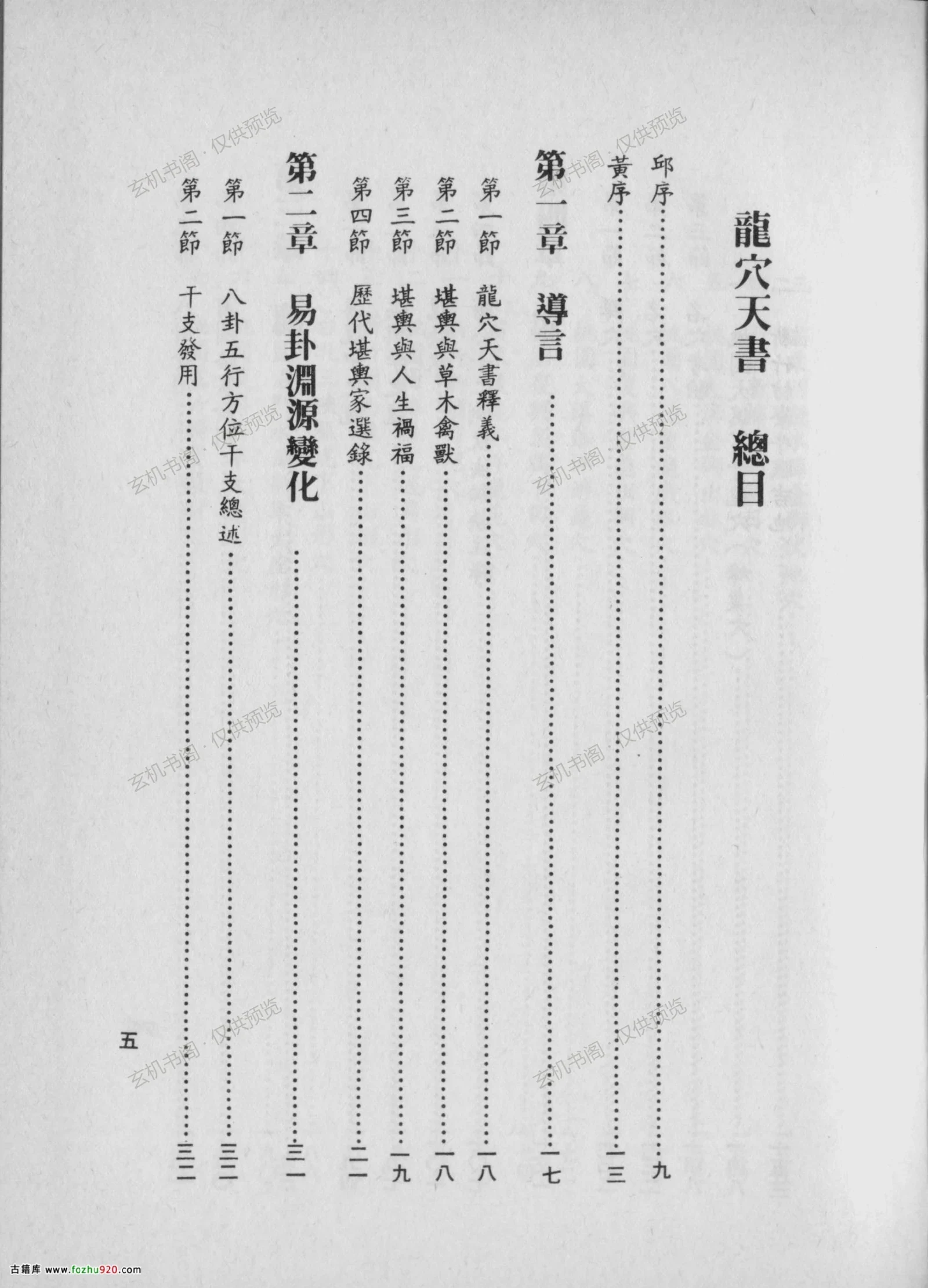
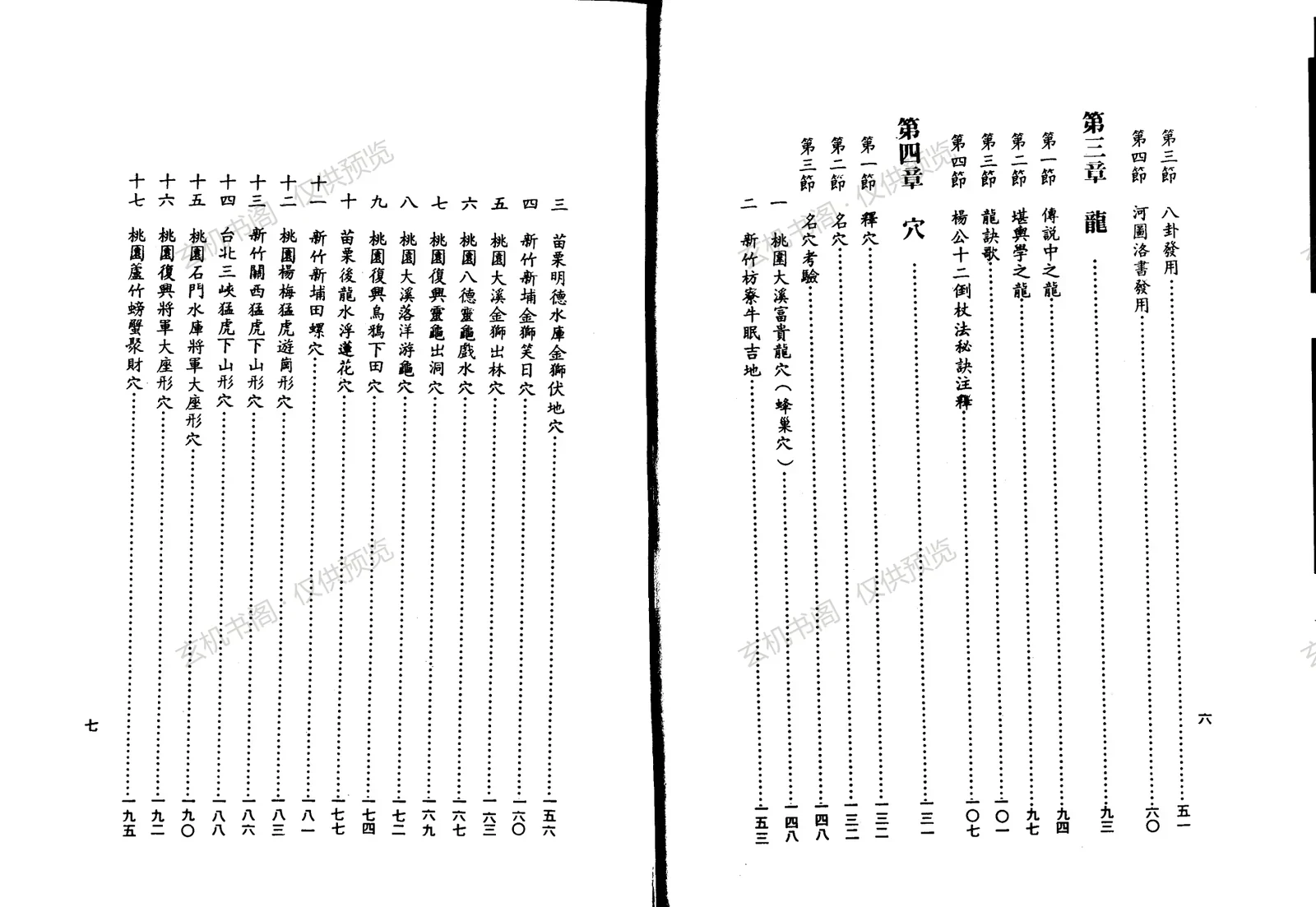
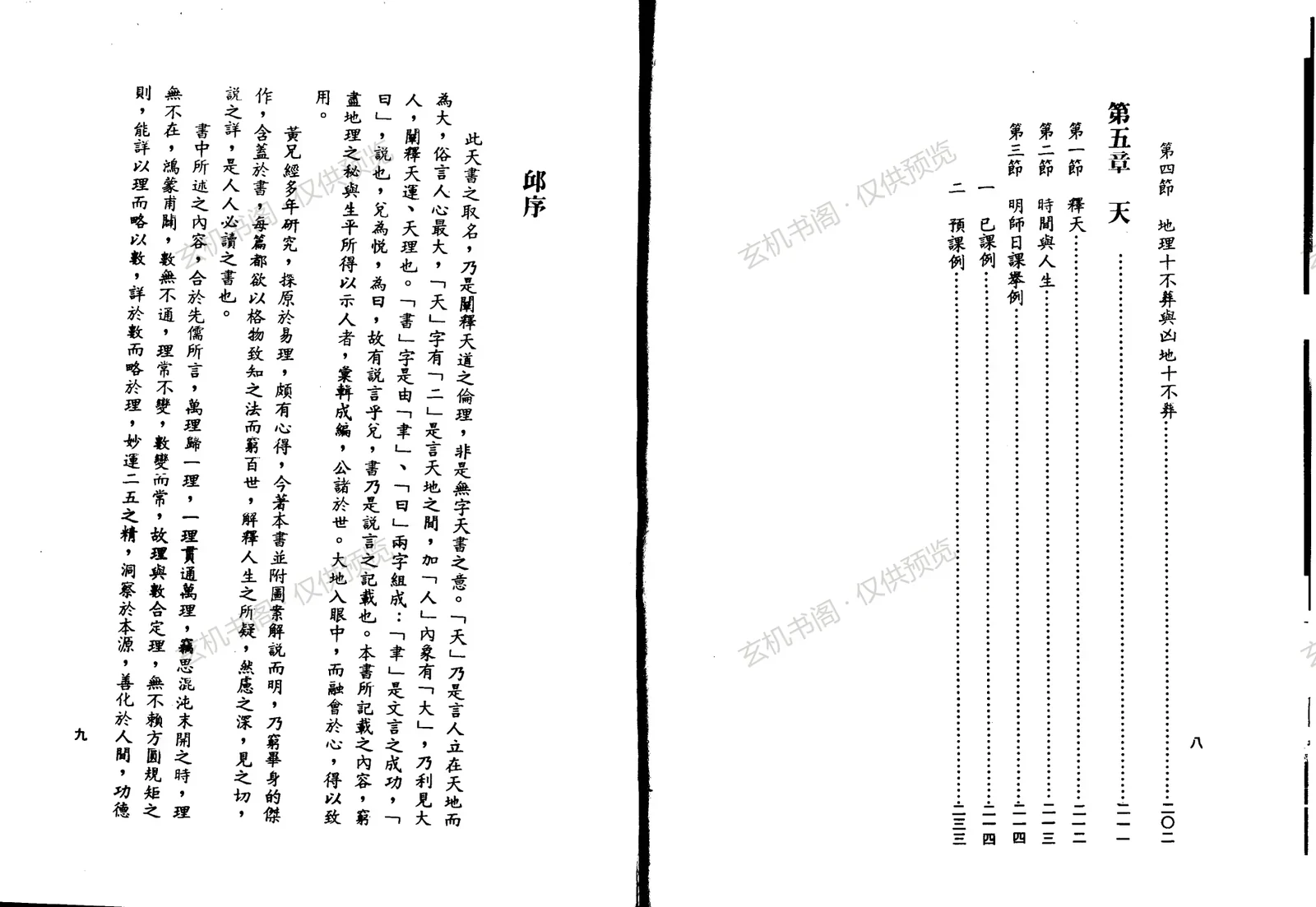
The Heavenly Book of Dragon Nests, co-authored by Qiu Sanyuan and Huang Yaode, opens with prefaces by both authors and a general table of contents. It begins by explaining the meaning of the 'dragon nest heavenly book,' discussing the relationship between feng shui, living things, and human fortune, and listing notable historical feng shui masters. Chapter Two covers the evolution of Yijing principles, including the directional arrangement of the eight trigrams and the use of the heavenly stems and earthly branches. Chapter Three is devoted to 'dragons,' covering legendary dragons, dragons in feng shui, dragon rhymes, and Yang Gong's twelve ditching methods. Chapter Four focuses on 'nests,' with sections on interpreting nests, famous nests, and field verification, including numerous named sites in Taoyuan and Hsinchu, Taiwan, such as the Fugu Dragon Nest in Daxi and the Golden Lion Smiling at the Sun site in Xinpu. Chapter Five discusses 'heaven,' including time and human life, examples of master date selection, and sample date charts. Overall, the book integrates Yijing theory with practical feng shui, making it suitable for readers interested in landscape-school feng shui, dragon-nest site selection, and local Taiwanese sites, though basic knowledge of trigrams, stems, and branches is helpful.
Contents
Chapter 1: Introduction—meaning of the title, feng shui and human fortune, historical masters
Chapter 2: Yijing origins—eight trigrams, five phases, stems and branches
Chapter 3: Dragons—legendary and feng shui dragons, dragon rhymes, Yang Gong's twelve ditching methods
Chapter 4: Nests—interpretation, famous nests, and case studies in Taiwan
Chapter 5: Heaven—time and life, master date-selection examples and charts
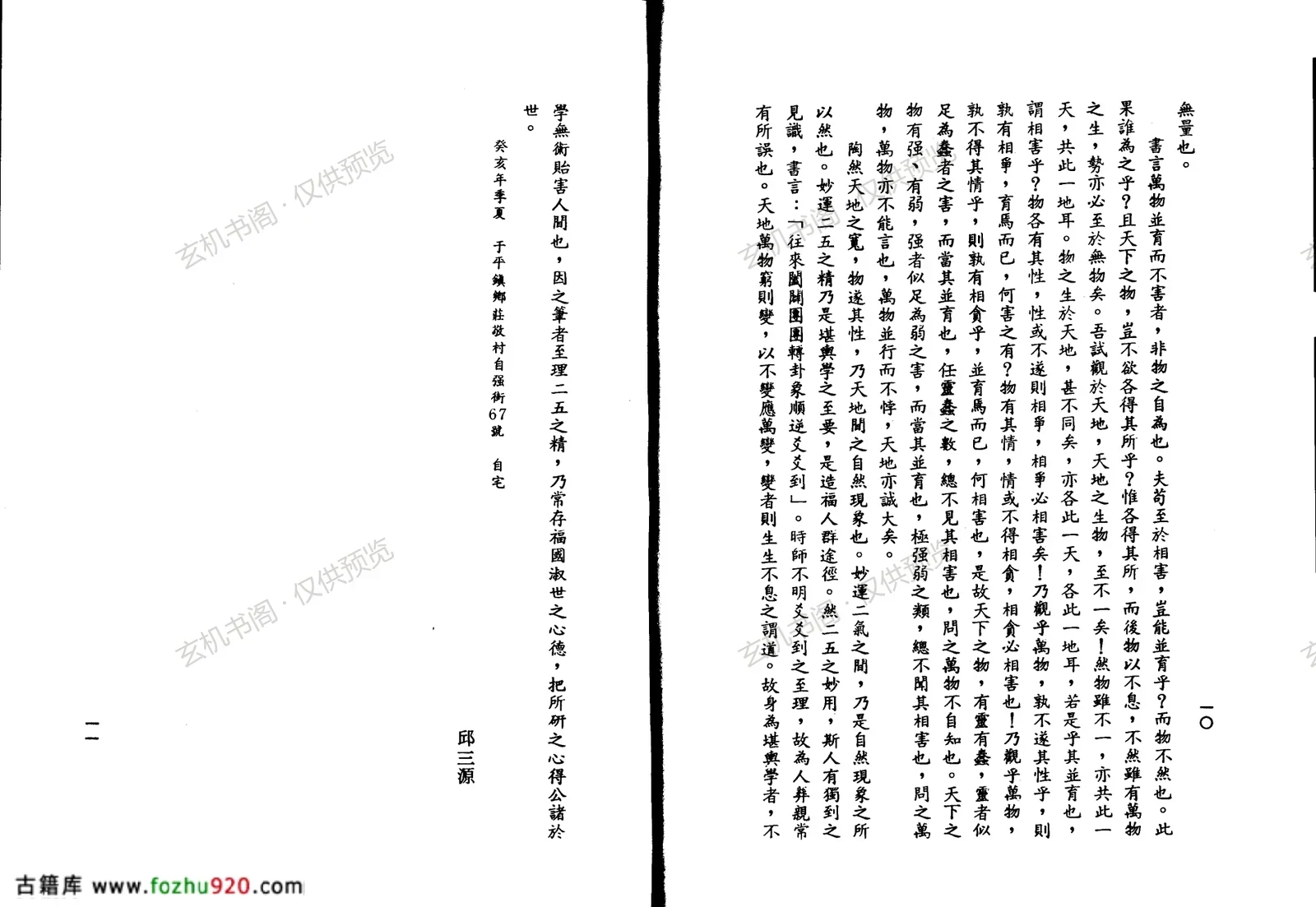
Prefaces by Qiu and Huang
Key Points
Uses Yijing trigrams and the sexagenary cycle as the theoretical foundation for evaluating dragon nests.
Chapter Three covers dragon methods, including dragon rhymes and Yang Gong's twelve ditching methods.
Chapter Four presents named sites in Taoyuan and Hsinchu, combining form and theory.
Chapter Five addresses date selection for burial and construction, with sample charts.
Emphasizes the correspondence between feng shui, human fortune, and natural terrain rather than mere superstition.