Reading guide
Content guideOverview
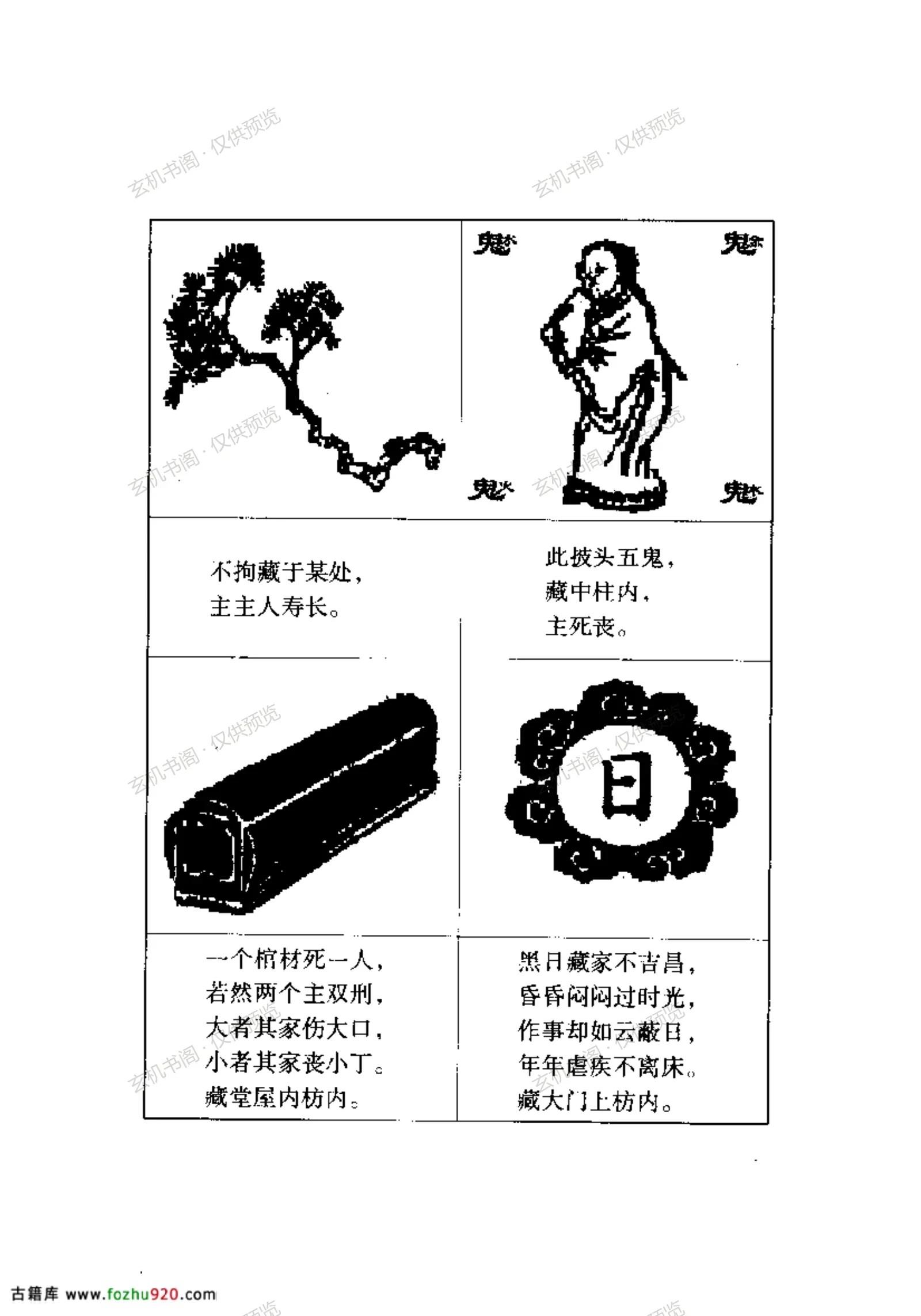
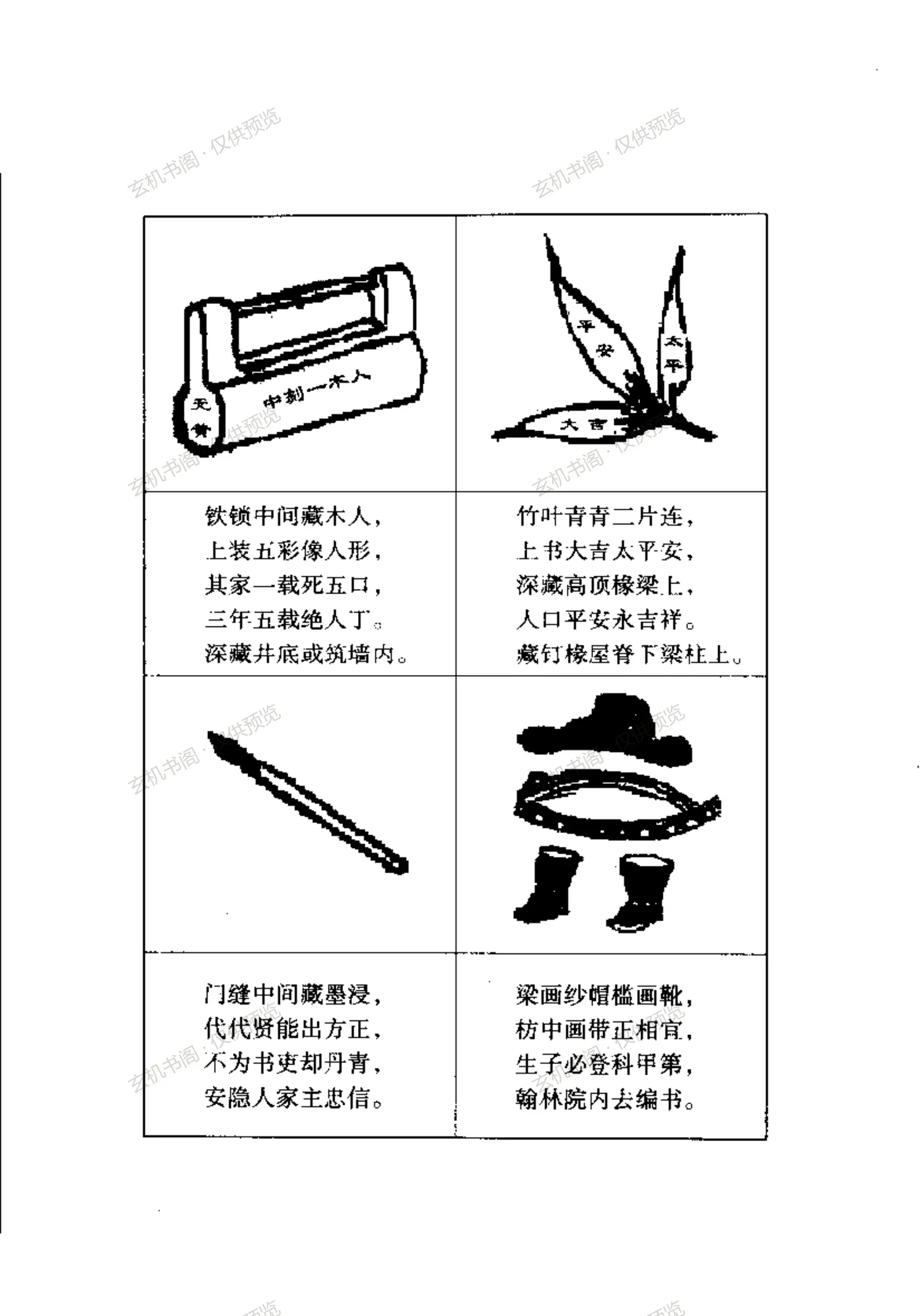
This section of The Luban Secret Book, titled 'Carpenter's Talismans and Spells' (a title not in the original), compiles folk craftsmen's apotropaic practices for construction. In a picture-and-text format, it lists the consequences of concealing specific objects in beams, pillars, brackets, dou-measures, door crevices, wells, and other parts of a house: hiding a boat prow, laurel leaves, rice, or paired coins brings wealth, academic success, and family prosperity; hiding coffins, five ghosts, sun symbols, knives, ropes, locks, or pottery shards portends death, illness, lawsuits, exile, or extinction of the family line. Each entry includes a mnemonic verse explaining the object's placement and orientation, such as 'the boat's prow facing inward brings wealth; facing outward, wealth retreats' or 'a white tiger seated in the main hall brings constant gossip and misfortune.' The illustrations are rough woodblock or hand-drawn sketches, and the text is in mnemonic style, easy for craftsmen to memorize. This fragment survives as a few single pages and can be seen as a section of the Luban Jing tradition specifically devoted to apotropaic object-hiding, offering reference value for the study of architectural folklore, craftsmen's beliefs, and talismanic culture.
Contents
General rules for craftsmen's object-hiding taboos
Auspicious and inauspicious verses for objects hidden in beams and pillars
Placement taboos at door crevices, wells, and beam seams
Diagrams of boats, coffins, knives, ropes, and other hidden objects
Methods for writing talismans and drawing them into seams
Key Points
Lists auspicious and inauspicious verses for craftsmen's hidden objects in picture-text pairs
Placement involves beams, pillars, brackets, dou-measures, doors, and wells
Auspicious objects bring wealth, academic honors, and longevity; inauspicious ones bring death, lawsuits, and illness
Preserves operational details such as 'boat prow facing inward/outward' and 'beam-head seam'